

A small French government outfit is dumping US tech. Jason Walsh suspects this is the start of a continental trend
Blogs
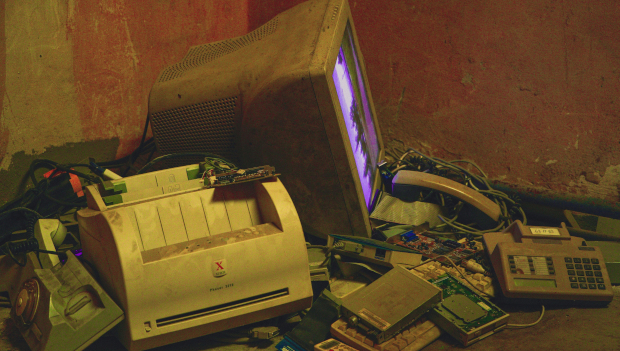
Image: Anastasia Latunova via Pexels
Big doings in France, that country everyone pretends to pay attention to but somehow misses is Europe’s information technology leader. France’s Interministerial Directorate for Digital Affairs (Dinum), has announced plans to reduce the government’s reliance on American technology, including developing a homegrown videoconferencing tool to replace Zoom and Teams, and switching from Windows to Linux across the public service.
In fairness, being Europe’s tech leader is not unlike being the strongest horse in the glue factory, but let’s take a win where we can get one.
At an interministerial seminar held on 8 April 2026 Dinum, along with several other agencies, announced its plan to drive down reliance on non-European technology. Concrete steps under way include Dinum itself ditching Windows for Linux, the national health insurance body migrating its 80,000 staff to French collaboration tools, and a plan to move the national health data platform to a sovereign solution by the end of 2026. Every ministry will be required to produce its own plan by autumn covering operating systems, collaboration tools, antivirus, AI, databases, virtualisation and network equipment, with the state procurement agency tasked with mapping dependencies and setting reduction targets, and a series of public-private industry meetings planned for June 2026 to formalise what the government is calling an alliance for European digital sovereignty.
Critics have, correctly, noted that the Linux operating system itself is overwhelmingly shaped by American companies, with Meta, Intel, Red Hat and Google among the top contributors to its kernel, suggesting that true technological sovereignty remains a rather more elusive goal than the announcement implies. Still, it is actually free software meaning that we can, you know, read what it is made of.
In addition, the directorate itself is not large, with staff numbered in the hundreds. What it is, however, is influential – and the plan is coherent, if not quite timely.
In Britain, meanwhile, concerns about foreign-controlled tech are being raised by a source that will be rather hard for critics to dismiss as anti-American or out of touch. Campaigners at the Open Rights Group say the problem of foreign domination is not just something that should unsettle the likes of civil libertarians, free and open source developers, Guardian readers or disgruntled heads of small software outfits.
The group’s new report, entitled Tech Giants and Giant Slayers: The case for Digital Sovereignty and the Digital Commons, flat out states that relying on foreign-based tech companies is a national security issue and an economic threat.
Pitching the problem as a matter of sovereignty is a good wheeze – principally because it is true. If you do not have access to the source code, but someone else does, then you are quite simply at their mercy. If you don’t design semiconductors then you are forced to use ones that you cannot stand over. If you do not manufacture semiconductors, if you do not run your own cloud services, if you do not develop the operating system, if you do not develop applications… on and on it goes.
With artificial intelligence things are even worse given the absolute opacity of not only source code but the training that is, effectively, the formation of the tool.
This applies to technology hailing from China as much as the US, frankly, and it is a concern that more and more people are waking up to.
Learn from history
As I have argued previously, Europe utterly dropped the ball on both computing and information technology a long time ago, and not through lack of interest. Europe, once home to thriving hardware and software ecosystems, produced everything from minicomputers to desktop PCs, as well as the software to run on them.
Politicians will talk of the network effect and the rise of the Internet, but the real reason we became passive consumers of technology was our own laziness, aversion to investment and misguided belief that what is happening at any given moment is a permanent state of affairs.
Once familiar names such as Nixdorf, Olivetti and Acorn have fallen out of our collective consciousness, but there was a time when offerings from European computer companies ran the gamut from minicomputers to the desktop. Today, success stories are limited to ASML, SAP, some chip shops targeting the embedded market and a few specialist software tools. Beyond these, the European tech market consists largely of managed service providers and wing-and-a-prayer start-ups.
The, now largely reversed, decision to transform secondary level computer science into training in how to be a good Excel drone was not the cause of the problem, but it was a symptom of the same malaise: ‘actual computing is boring, a bit like manufacturing, what we need is more people colouring in cells on a grid’.
Grumbling about this, whether from the likes of me or else from people who actually matter, is not entirely new. What is novel, though, is that the US is no longer viewed as a simply benign but quixotic trade partner.
The current US administration and its buddies in Silicon Valley, regardless of which is acting as the cat’s paw for the other, have badly overplayed their hand. The US tech giants are not only voracious, they are now engaged in overtly political actions and, moreover, are acting against a backdrop of unpredictability verging on hostility that makes long-term reliance on American platforms a risky business.
Tariffs imposed on nominal allies have concentrated European minds on supply chain vulnerability in a way that years of abstract digital sovereignty arguments never did. Meanwhile, the spectacle of US tech leadership visibly aligning itself with a particular political project has made it rather harder to lie to ourselves that technology platforms are neutral infrastructure.
In light of this, perhaps we should thank US president Donald Trump. After all, it seems it took several years of crises to slap our complacent brains into recognising that even a nominally friendly power cannot be trusted with infrastructure you cannot inspect – and that recognition has finally opened a window of opportunity for Europe, including its public, to rid itself of its dependency on murky blobs of instructions, whether typed and compiled or etched in silicon, that are impossible to examine.
When the tool and the toolmaker are both unpredictable, the prudent worker starts looking for alternatives.