

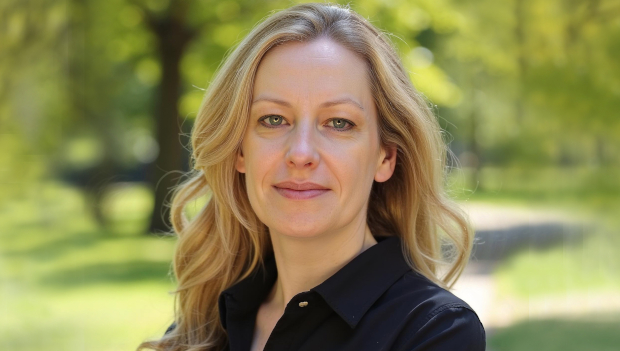
A successful AI implementation is rarely about tools, models, or platforms, says Sevtech director of innovation Fionnuala Healy
Voices
Fionnuala Healy, Sevtech
In association with SevTech
In her daily work at technology consultancy SevTech, director of innovation Fionnuala Healy spends a lot of time speaking with CIOs and heads of IT who understand artificial intelligence but find it difficult to turn that knowledge into something tangible.
“They know the technology. They’ve run pilots. They’ve experimented with copilots, automation, and analytics. And yet, many still ask the same question: Why does AI feel promising, but difficult to turn into something real?”
She says the the answer is rarely about tools, models, or platforms. It’s about what she calls the “opportunity recognition” or understanding where AI genuinely fits inside an organisation, and, just as importantly, where it doesn’t.
“When I begin working with a client, we don’t start with AI solutions. We start with how work actually gets done. Most AI initiatives struggle because they begin with questions like: Where can we use GenAI? Should we deploy an AI assistant? What’s our AI roadmap?”
Healy says, for many organisations, those questions come too early.
Instead, she works with leadership teams to look at workflows, decisions, and bottlenecks. “AI becomes relevant only after we understand where people are constrained, overloaded, or forced to rely on judgment under uncertainty.”
This shift from tools to work is often the first breakthrough, she says.
To make this repeatable, Healy uses a simple framework built around four lenses. These lenses help teams scan their organisation systematically, without brainstorming random ideas:
1. Friction: Where do skilled people spend time on repetitive, low-leverage tasks? Triage, handoffs, rework, manual checking. These tasks are often hidden in plain sight.
2. Uncertainty: Where are decisions made frequently with incomplete or noisy information? These are the classic ‘it depends’ moments where AI can augment human judgment with better signals.
3. Information asymmetry: Where do answers exist, but not at the point they’re needed? Policies, historical incidents, customer context, and operational knowledge often scattered across systems.
4. Scale mismatch: Where does demand grow faster than teams realistically can? Support, compliance, internal enablement, quality checks, personalisation.
“What’s striking, Healy says, is how consistently these patterns appear, across telecoms, financial services, and other industries. “The problems change; the shapes don’t.”
Healy explains that once opportunities are identified, the next step is discipline.
“Rather than launching large AI programmes, I help teams frame ideas as testable hypotheses, for example: If we apply AI to [task or decision], then we expect [measurable outcome], because [why AI fits]. This forces clarity. It shifts conversations from excitement to outcomes, and it makes prioritisation far easier for CIOs balancing risk, value, and capacity.”
A big part of Healy’s work is helping clients slow down before they scale – walking before they run, so to speak.
“It’s about validating ideas against a small set of practical questions: Is the task suitable for AI, or does it require perfection? Is the value clear and measurable? Will this remove steps from workflows, or add new ones? Are risk, trust, and governance designed in, not bolted on?
She explains that most failed AI initiatives collapse on one of these points, not because the model didn’t work, but because the organisation wasn’t ready to absorb it.
Over the years the feedback Healy has received from clients indicates that this approach gives them “an element of relief”.
“In this way, AI stops feeling like an all-or-nothing transformation and starts feeling like a capability they can build incrementally, through small experiments, clear metrics, and human-in-the-loop design.
And, what we’re seeing in general at SevTech is the organisations making progress aren’t the ones moving fastest. They’re the ones being most deliberate about where AI truly helps.”
We know AI creates the most value where there is friction, uncertainty, or scale, and where humans still matter.
“Opportunity recognition is the difference between AI as theatre and AI as impact. At SevTech, that’s where we focus our time, helping leaders ask better questions before they invest in bigger answers.”