

Thiel and Karp are open and honest about what Palantir is and does. Some more outrage from our political class would be appreciated, says Marie Boran
Blogs
Alex Karp, Palantir
For non-Tolkien fans: a palantir is the all-seeing orb through which the dark lord Sauron communicates his will across Middle Earth. Peter Thiel named his surveillance company after it. This, it turns out, was not a coincidence worth ignoring.
A word on the men involved, because context is useful here. Thiel has taken human growth hormone in a bid to live to 120 and expressed interest in transfusing young people’s blood into his own veins as a route to radical life extension. He has also invested in plans for floating libertarian city-states in international waters because.
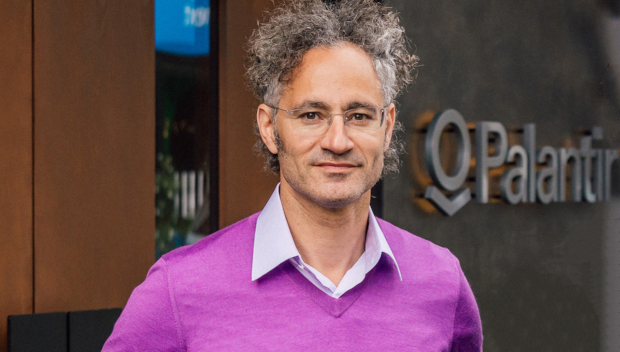
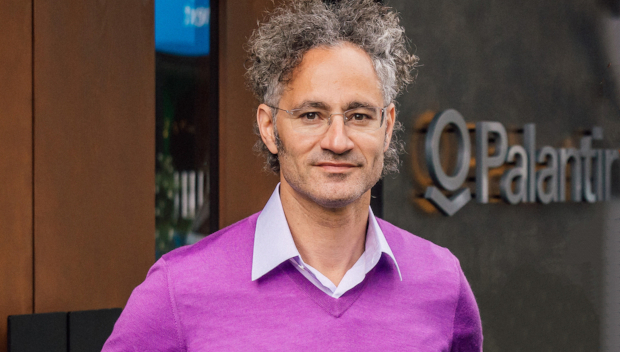
His co-founder and CEO Alex Karp, meanwhile, keeps Tai Chi swords in his office and was known to practice martial arts on co-founders in the corridors. He sometimes works from a barn in New Hampshire and has said the idea of starting a family gives him “hives”. These are the men who have decided to publish a manifesto on the future of Western civilisation.

Last month, Palantir posted a 22-point manifesto on X, described by UK MP Victoria Collins as the “ramblings of a supervillain”. This is not uncharitable. The post, framed as a ‘brief’ summary of Karp’s book The Technological Republic, prefaced with the breezy nonchalance of “because we get asked a lot”, declared that Silicon Valley has “an affirmative obligation to participate in the defense of the nation” (the US, unambiguously), that ethical debate about AI weapons is “theatrical”, that the “postwar neutering” of Germany and Japan was an error, and that “some cultures have produced vital advances; others remain dysfunctional and regressive”. Pluralism is “vacant and hollow”. All of this, apparently, because people kept asking.
More than 200,000 people in the UK have signed a petition to break government contracts – which include the NHS and Ministry of Defence – in response. In Australia, calls for a blanket ban on new state and federal contracts followed. Palantir’s answer was to describe itself as “just a software company”. This from a company that waxed hysterical on civilisational hierarchy and the historic blunder of German pacifism. As Eliot Higgins of Bellingcat put it, these points “aren’t philosophy floating in space, they’re the public ideology of a company whose revenue depends on the politics it’s advocating”. Nothing to see here. Just a software company that happens to have a manifesto.
Nothing to see here
I’ll bring it closer to home. The Irish state holds roughly €1 million in Palantir shares. Tánaiste Simon Harris has defended this. Sinn Féin TD Matt Carthy called it “wrong that the Irish state continues to invest in and profit from shares in Palantir”, pointing to the company’s role in supporting the Israeli military in Gaza – operations examined in a UN human rights report. There was also the Eoin Hayes affair where the Social Democrats TD was suspended for being misleading about when he’d sold his own Palantir shares. That personal connection proved politically ruinous. The state’s financial one has attracted considerably less scrutiny, which is interesting.
We can look at it like this: if a Chinese surveillance company embedded in US public services published an equivalent manifesto pledging allegiance to China, Washington’s response would be immediate. Ambassadors summoned. Congressional investigations launched. The works. Yet Palantir sits inside NATO’s Allied Command Operations war room, and European governments, our own included, remain largely unbothered that this tech has come with a side of not-so-well hidden shades of fascism.
The whole exercise is designed to create a false sense of inevitability and a mood of urgency and civilisational decline (clutch your pearls, Westerners) in which certain policies feel necessary rather than chosen. By the time most people notice the rhetoric, the contracts are signed and the servers are humming. Ireland holds shares in Palantir. The question isn’t whether this company has an ideology. Hello? It named itself after Sauron’s crystal ball! We’re simply choosing not to notice if we continue to use and invest in its services.