

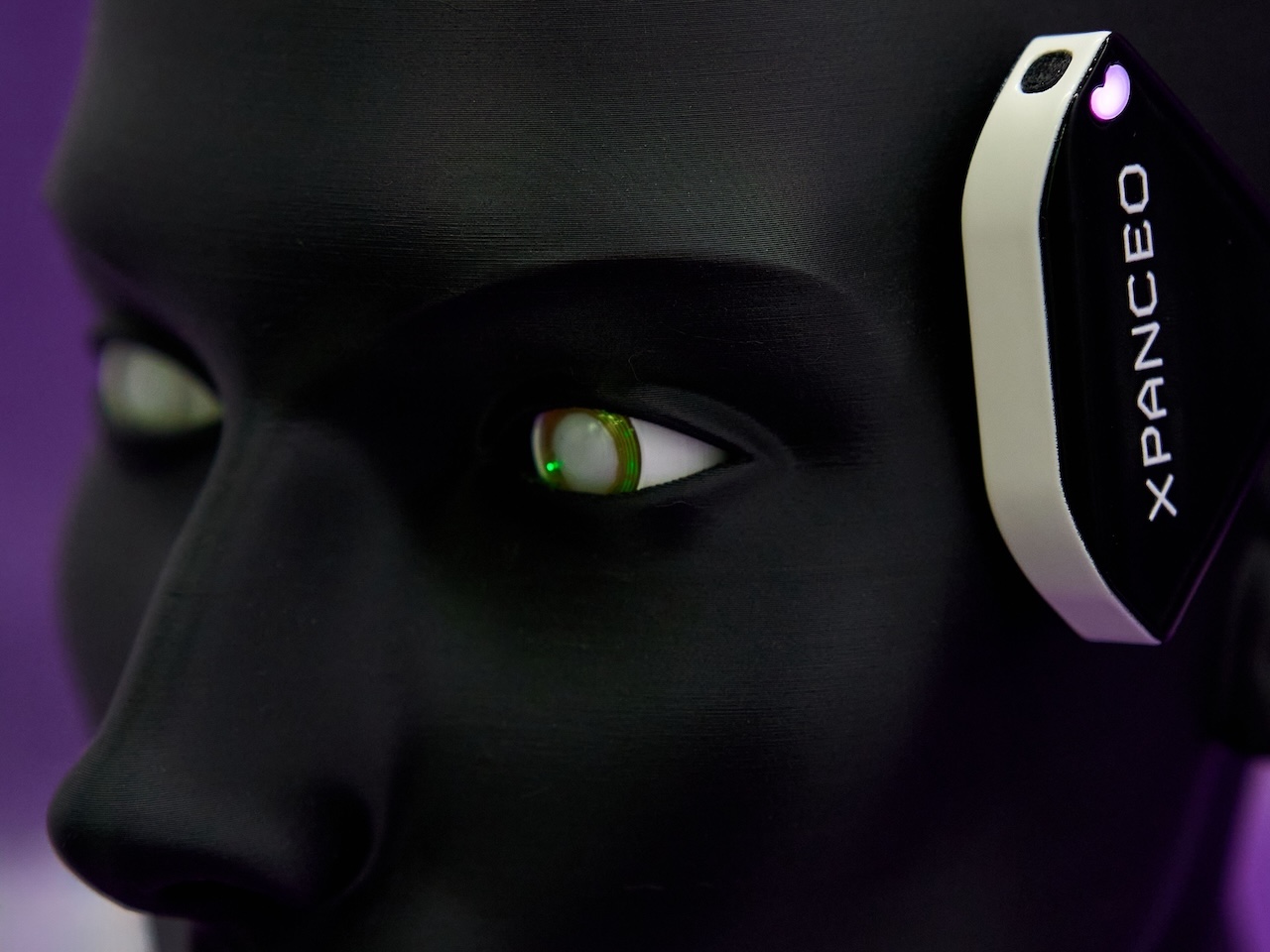
Xpanceo walked into MWC 2026 in Barcelona with something that makes smart glasses look like a halfway measure. The Dubai-based deep tech company brought five working smart contact lens prototypes to booth 6F16, each one solving a different piece of the invisible computing puzzle. The most consumer-ready version combines a micro-OLED display with continuous glucose monitoring. AR visuals and health tracking on your eyeball, no frames required.
Add The Gadgeteer on Google Add The Gadgeteer as a preferred source to see more of our coverage on Google.
ADD US ON GOOGLE
Xpanceo first turned heads at GITEX Global 2025, where it showed earlier versions of its lens technology alongside a $250 million Series A announcement that valued the company at $1.35 billion. That round is the largest Series A in the MENA region, the largest globally in AR/VR and wearables, and among the top three in hardware history.
The display lens gets interactive
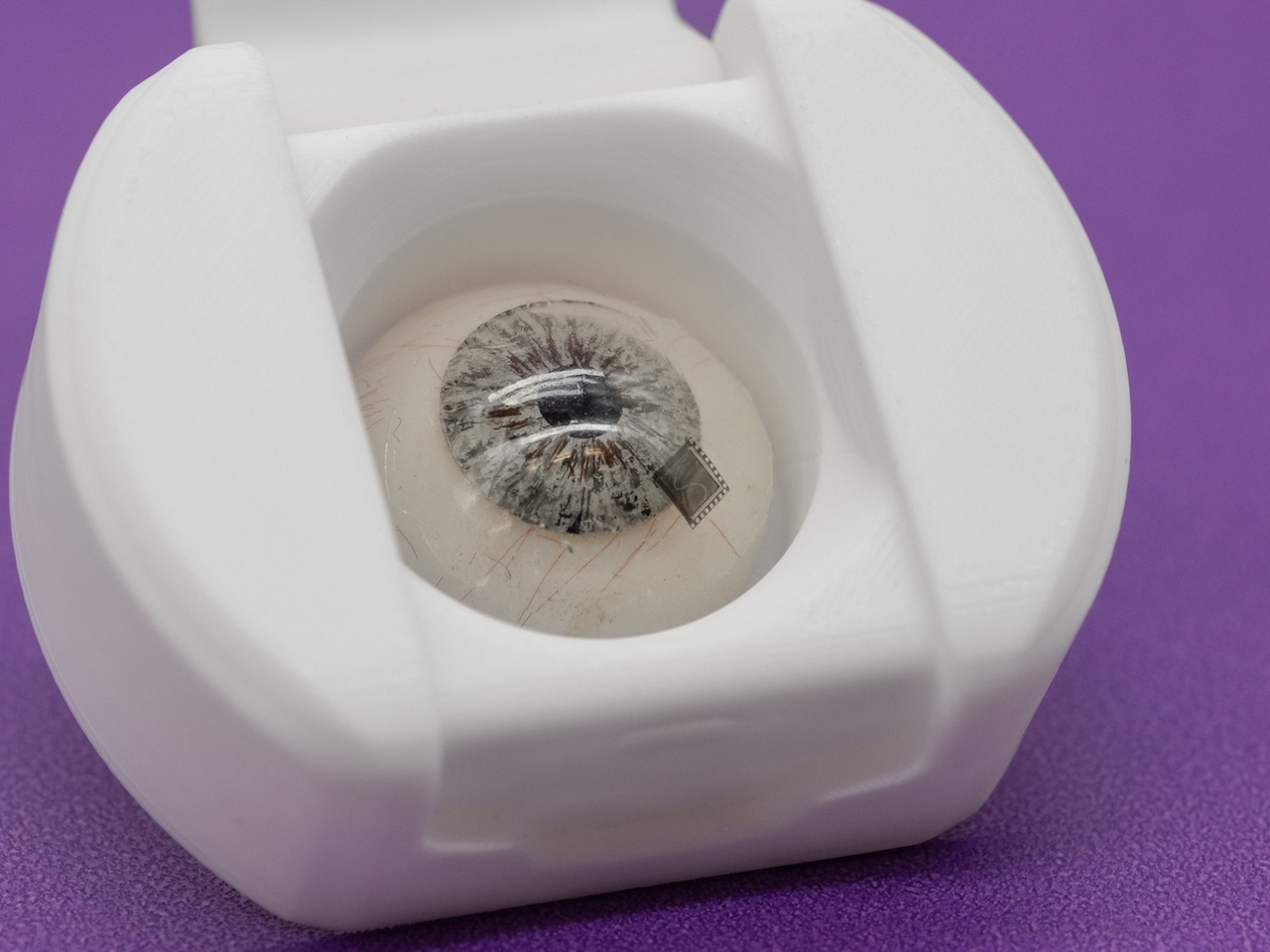
The star of the MWC 2026 booth was the Interactive Smart Contact Lens for AR Vision. It packs a microdisplay into the lens itself alongside an external sensor suite that handles spatial tagging and position tracking. You get context-aware AR visuals that respond to where you look and what you focus on.
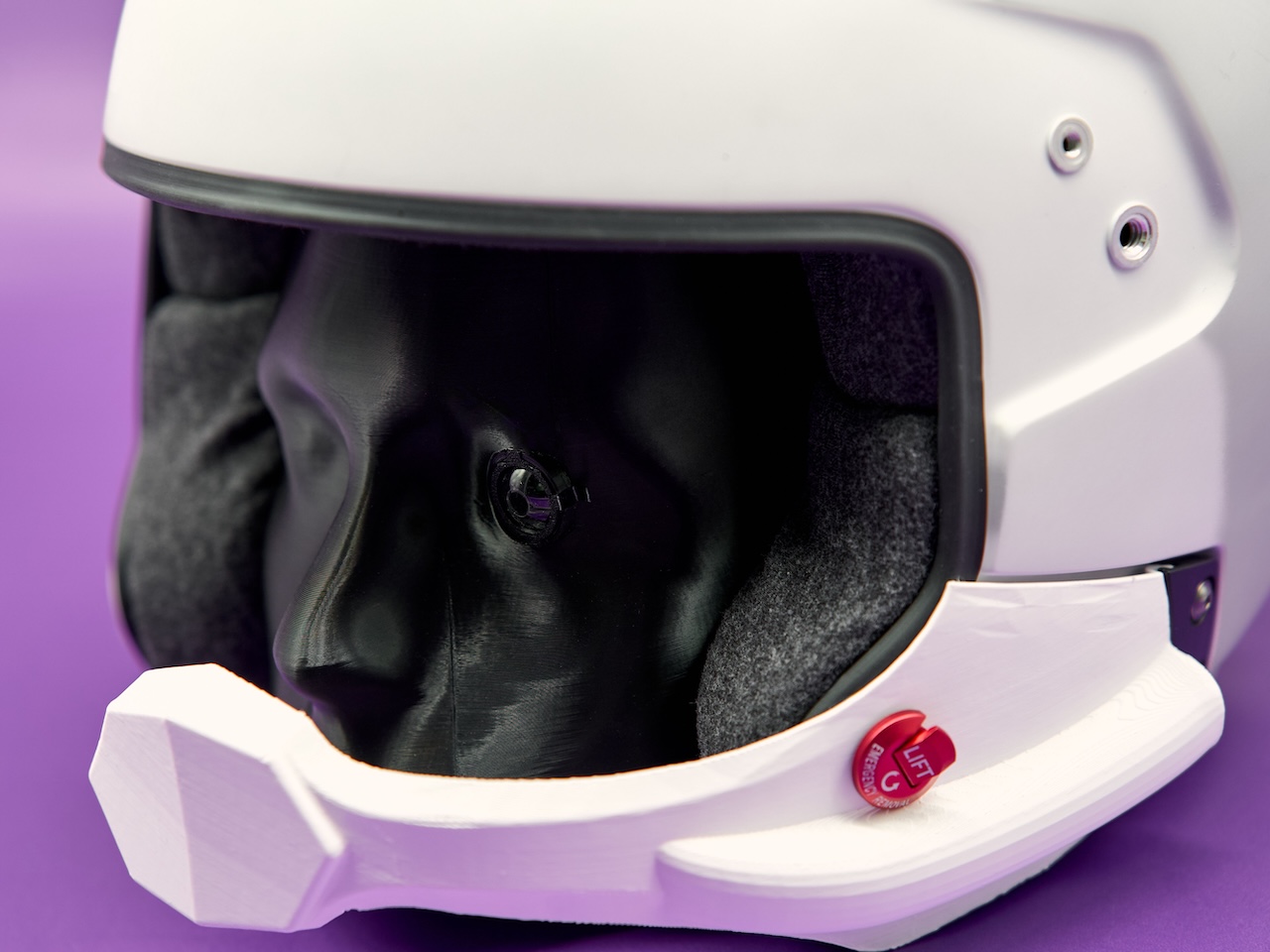
Xpanceo also showed a Holographic Smart Contact Lens paired with a helmet companion device that wirelessly sends power and content to the lens. That opens the door for environments where glasses aren’t practical, from extreme sports to the space agency partnership Xpanceo is already exploring.
Glucose monitoring through tear fluid
The health monitoring side is where things get genuinely significant. Xpanceo’s Smart Contact Lens for Health Readings uses a miniature electrochemical sensor that picks up glucose levels in tear fluid and wirelessly sends the data to a smartphone in real time. It works like the chemistry inside compact glucometers, but it runs continuously and invisibly from a contact lens. That’s a smart approach to a problem that affects hundreds of millions of people.
Calibration work is still ongoing, but the prototype already shows functional glucose detection. For the roughly 589 million adults living with diabetes worldwide, continuous monitoring without finger pricks or adhesive patches is a welcome shift in daily management.
Beyond glucose, Xpanceo showed a Smart Contact Lens with an IOP Sensor built for glaucoma monitoring. An embedded optical pattern reacts to intraocular pressure changes without affecting your vision, and you capture readings through an AI-powered companion app trained on more than 10,000 real IOP measurements. A third medical concept under development tracks drug levels with a precision that current methods can’t touch, which could change how oncologists set treatment dosages.
The power problem and how they’re solving it
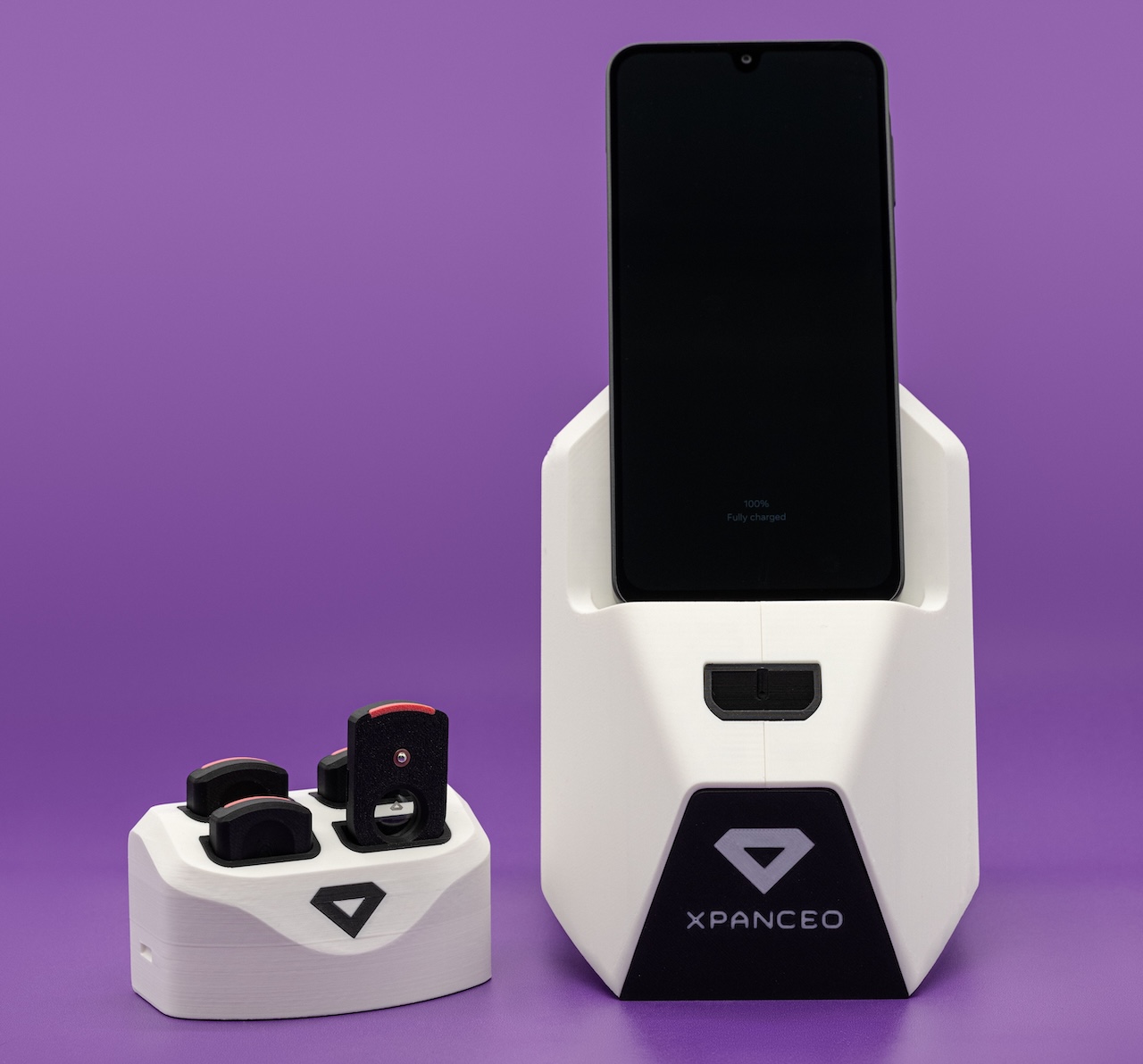
Powering a computer on a contact lens is one of the hardest engineering problems in the stack. Xpanceo showed three approaches at MWC. The current solution uses a companion device worn over the ear that sends power wirelessly, with a tiny onboard battery keeping basic features running when the companion isn’t in range. The Compact Companion prototype showed antenna tech that hits up to three times the efficiency of traditional wearable solutions.
A separate prototype used an integrated microbattery, the smallest off-the-shelf battery available, proving the lens form factor can handle its own power management. The longer-term goal is to drop the companion device entirely through body heat harvesting or solar-powered lenses, though both are likely still several years out.
Who built this
Xpanceo was founded in 2021 by entrepreneur Roman Axelrod and physicist Valentyn Volkov. The company has about 100 people on staff, with 80 in R&D and roughly half holding PhDs. More than 20 patent-pending applications are on file, and Nature Index 2023 ranked Xpanceo among the top 10 research institutions in the UAE. Based in Dubai, the $250 million Series A that closed in mid-2025 is funding the push from research prototypes toward commercial hardware. A consumer-ready prototype is targeted for 2027.
What it means for the category
Smart glasses have owned the wearable computing conversation for the past two years, from Meta’s Ray-Ban collaboration to Alibaba’s Qwen Glasses and everything in between. Xpanceo is making the case that glasses are the transitional form factor, not the destination. A contact lens that shows you AR visuals, monitors your health around the clock, and eventually runs on its own is a different product category than anything shipping today.
The 2027 timeline puts real hardware within reach, assuming calibration and regulatory milestones hold. Pricing hasn’t been shared, and the regulatory path for a medical-grade biosensing contact lens adds complexity that smart glasses never have to deal with. But five working prototypes at MWC 2026, each solving a distinct technical challenge, is not a slide deck promise. It’s functional hardware on a show floor, and the gap between that and a product on your eyeball just got a lot smaller.
Love our content?
Sign up for our newsletter today.
No ads, no spam, just links to our latest articles!