

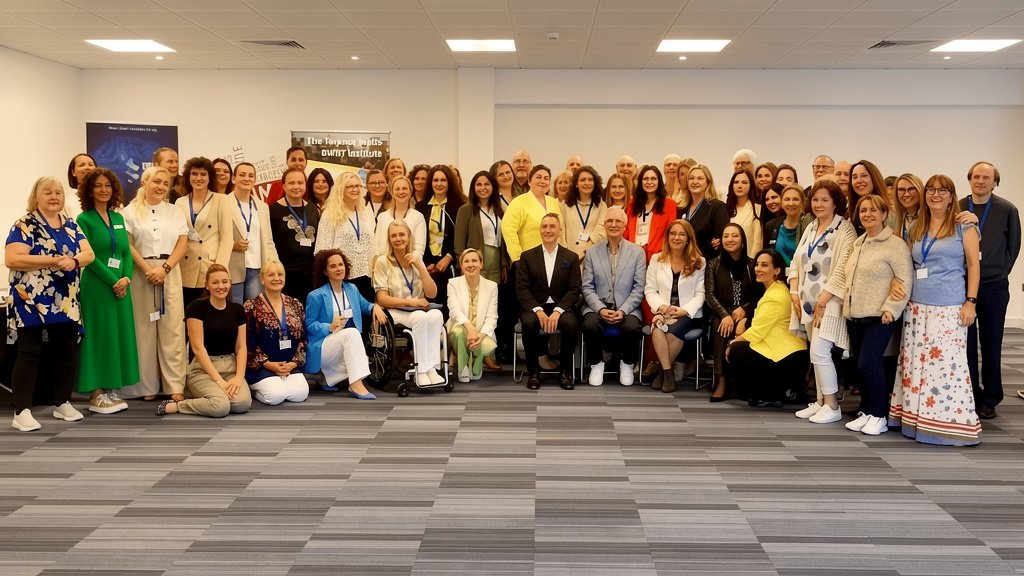
Quick summary: A international BWRT Congress taking place on 16th and 17th May at De Vere Wokefield Estate near Reading will bring together psychological professionals from the UK and beyond to share clinical insights and real-world applications of BrainWorking Recursive Therapy. This year’s programme includes a new presentation from BWRT founder Terence Watts on applying the model to ADHD-related symptoms, covering common misconceptions, clinical protocols, and emotional challenges such as anxiety and low self-worth. With NHS mental health referrals at record highs, the Congress reflects broader interest in neuroscience-informed therapies that offer faster, lasting results and support continued professional development across the field.
A major international therapy congress taking place just outside London this year will bring together practitioners to explore how mental health treatment continues to evolve, as services across the United Kingdom face increasing pressure and rising demand.
The annual BrainWorking Recursive Therapy (BWRT) Congress will take place on 16th and 17th May at De Vere Wokefield Estate near Reading, a historic venue set in 250 acres of Berkshire countryside. It will bring together psychological professionals from across the UK and internationally to share case studies, clinical insights, and real-world applications of the approach.
BWRT is a modern therapeutic approach grounded in neuroscience, designed to work with the brain’s automatic responses to create rapid and lasting change. It targets the brain’s initial reaction to triggers rather than exploring past experiences at length. Central to the model is the concept of a cognitive gap, a brief moment between an unconscious response and conscious awareness, where intervention can rewire unhelpful automatic patterns without requiring clients to relive distressing events.
The method draws on understandings of the reptilian complex, the oldest part of the brain responsible for instinctive survival responses. By using a controlled process that resembles the brain’s natural freeze response, practitioners neutralise problematic reactions and install more helpful ones. BWRT often delivers noticeable improvements in fewer sessions than traditional therapies, making it relevant at a time when NHS mental health referrals are at record highs.
Terence Watts developed BWRT in 2011 after encountering neuroscience research that challenged conventional views on consciousness and decision-making. His work has since expanded into a comprehensive system used by thousands of trained professionals worldwide.
Now in its ninth year, the Congress has become an established international forum for BWRT practitioners. This year’s programme includes a new presentation from Watts exploring how the model can be applied when working with ADHD-related symptoms.
Watts says: “As our understanding of how the brain creates automatic responses develops, we are seeing new ways to apply that knowledge across a wide range of issues, including ADHD-related symptoms.”
The session will examine the increasing prevalence of ADHD and common misconceptions surrounding it, including the distinction between clinical diagnosis and the real-world experience of symptoms. It will also introduce specific BWRT protocols to support clients effectively. Emotional challenges often linked to ADHD, such as anxiety, low self-worth, and difficulties with regulation, can be particularly responsive to targeted interventions.
Beyond the ADHD focus, the programme is expected to cover other emerging applications, building on BWRT’s established success with:
- Obsessive compulsive patterns
- Generalised anxiety
- Trauma responses
Attendees will engage in workshops blending theory with hands-on demonstrations, so they can integrate new protocols immediately.
Julie Watts, director of the International BWRT Institute, says: “The Congress has grown into a truly international event, with practitioners coming together from across the UK and around the world. It is about ensuring consistency, quality, and continued development within BWRT, while also exploring how the approach continues to evolve to meet modern challenges.”
Although the Congress is a closed professional event, registration details and further information are available through the official BWRT website for qualified practitioners interested in attending future events.