

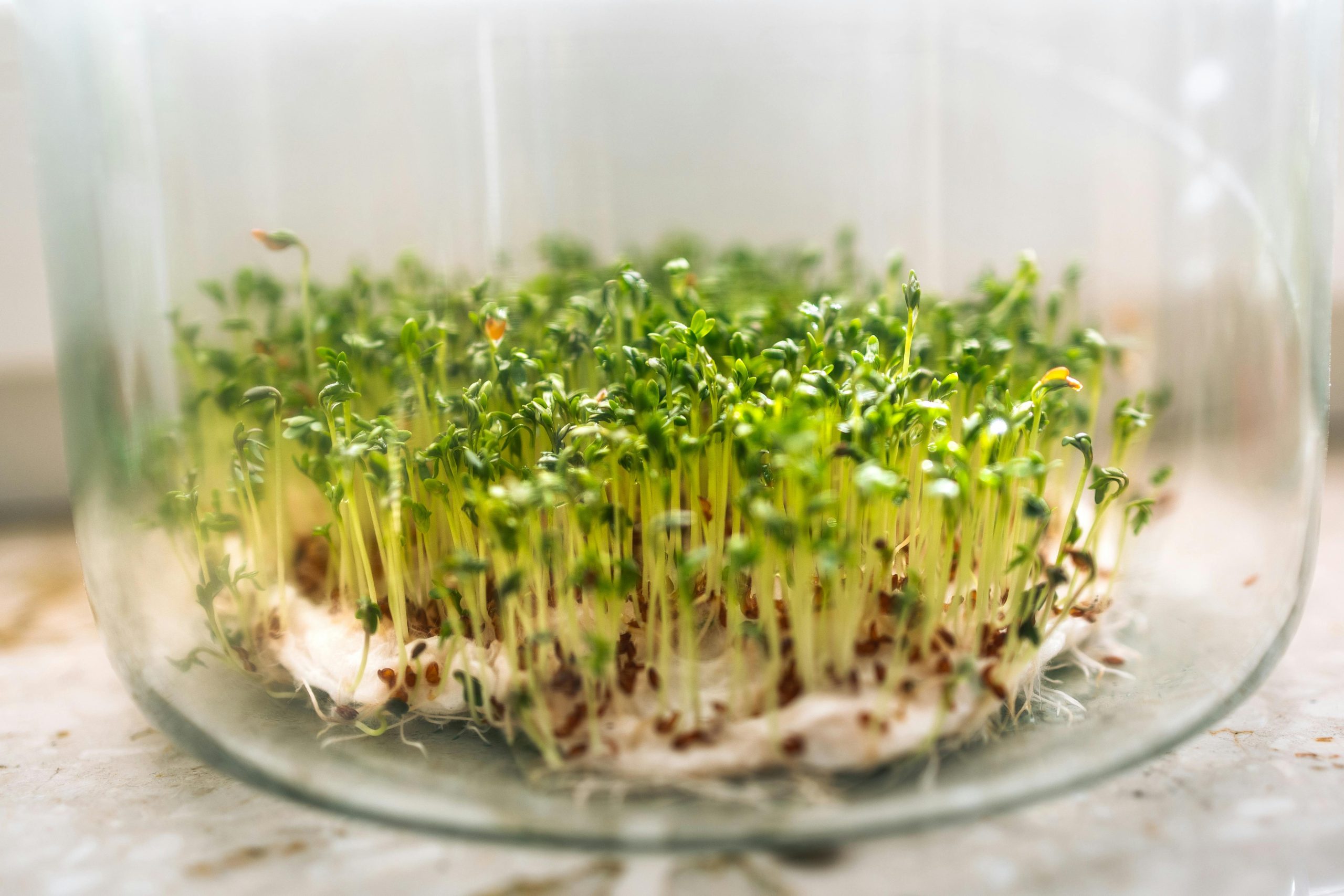
Quick summary: Garden cress seed gum shows potential to reduce inflammation, support digestion, and stabilise blood sugar, with possible benefits for long term physical and mental health. Its fibre and bioactive compounds may help regulate appetite, cholesterol, and gut health, making it relevant for managing chronic conditions and well-being. But most evidence comes from early stage research, so healthcare use and policy decisions require stronger clinical trials before widespread adoption.
Garden cress is the kind of plant that tends to get overlooked. It sits quietly in herb gardens and traditional kitchens, occasionally appearing in salads or alongside eggs, but rarely commanding serious attention. Yet its seeds have been used medicinally for centuries across South Asia and the Middle East, and researchers are now beginning to catch up with what traditional healers have long suspected.
The part of the plant generating the most scientific interest is its seed gum, a thick, slippery substance that forms when the outer layer of the seed comes into contact with water. This mucilaginous coating is not simply a textural curiosity. It is a complex polysaccharide with a surprisingly broad range of biological activity.
What the gum actually is
Garden cress (Lepidium sativum) belongs to the same plant family as broccoli and mustard. Its seeds, known as halim or chandrasur in parts of Asia, swell considerably when soaked, producing a gel-like coating. This coating contains arabinose, galactose, and uronic acids, alongside phenolic compounds and flavonoids. The combination gives the gum both its thick, water-retaining texture and its pharmacological potential.
Antioxidant and anti-inflammatory effects
Chronic disease is frequently tied to two underlying processes: oxidative stress and persistent low-grade inflammation. Garden cress seed gum appears to address both. Its phenolic content has been shown in laboratory studies to neutralise reactive oxygen species, the unstable molecules that damage cells over time. This places it in the same broad category as other plant polyphenols that researchers associate with reduced risk of cardiovascular disease, cancer, and neurodegeneration.
On the inflammation side, the gum has shown an ability to inhibit pro-inflammatory cytokines and prostaglandins. Its mucilaginous quality also lends it a direct soothing effect on inflamed tissues, particularly in the gut and the respiratory tract.
Digestive health
This is where garden cress has the longest track record. People in traditional medicine systems have used it for digestive complaints for generations, and the science offers some support for this. The gum coats the stomach lining, which may reduce irritation and lower the risk of ulcer formation. Its fibre content supports regular bowel movement and creates conditions that favour beneficial gut bacteria. Whether you call it a prebiotic or simply a fibre-rich food, the effect on the microbiome appears meaningful.
Blood sugar and the slow glucose question
One of the more interesting properties of viscous polysaccharides is their ability to slow the rate at which glucose enters the bloodstream. Garden cress seed gum works in the same way. When consumed, the thick gel it forms in the digestive tract delays carbohydrate absorption, blunting the spike in blood sugar that follows a meal. This is particularly relevant for people managing type 2 diabetes or trying to reduce postprandial glucose fluctuations. Some research also points to the gum’s bioactive compounds supporting insulin sensitivity, though this area needs further clinical investigation before firm conclusions can be drawn.
Cardiovascular effects
The soluble fibre in garden cress seed gum binds bile acids in the gut, encouraging the body to use cholesterol to produce more. This mechanism, well established in other soluble fibres like oat beta-glucan, is associated with reductions in LDL cholesterol over time. The seeds themselves are also a source of omega-3 fatty acids, which complement the gum’s cholesterol-lowering action. The combination may be useful for people looking to manage lipid levels through dietary means, though again, the human clinical data remains limited.
Satiety and weight
Because the gum swells considerably when it absorbs water, it creates a feeling of fullness in the stomach. This delays gastric emptying and may reduce overall food intake at a meal. For people trying to manage their weight, high-swelling dietary fibres like this one offer a low-calorie route to appetite regulation. The gum itself contributes very few calories while taking up considerable space.
Antimicrobial properties and pharmaceutical use
Early studies suggest the gum has activity against certain pathogenic microorganisms, attributed mainly to its flavonoid and tannin content. This has led to interest in using it as a natural preservative in food packaging and edible coatings.
Perhaps more significantly, the gum is attracting attention as a pharmaceutical excipient, that is, an inactive carrier used in drug formulations. Its biocompatibility, its ability to form gels, and its non-toxic profile make it a candidate for controlled-release drug delivery. Researchers are exploring whether it can encapsulate active compounds and release them in a targeted, sustained way.
Where things stand
Garden cress seed gum is generally considered safe at moderate intake levels. It has a long history of use in traditional food systems, which provides some reassurance. What is missing, for now, is large-scale clinical evidence. Most of the research to date has been conducted in vitro or in animal models, and the leap from laboratory findings to confirmed human health benefits requires rigorous clinical trials.
The extraction and standardisation of the gum at commercial scale also needs development before it becomes a practical ingredient in functional foods or pharmaceuticals.
None of this diminishes the genuine interest the compound warrants. For researchers working in natural product pharmacology or functional nutrition, garden cress seed gum represents an understudied resource with a credible scientific basis. For the general reader, it is a reminder that some of the most promising health-relevant compounds are still hiding in plain sight, attached to plants that have been growing in gardens for centuries.
Rohit Singh lives in Guam. He is a long-time Komodo dragon enthusiast from northern Myanmar. He speaks Vietnamese with a hint of a Ukrainian accent.
Dr Radhna Gupta lives in Nicaragua. He is a part-time pigeon whisperer from coastal Nepal. He washes his dirty clothes every Friday night.