

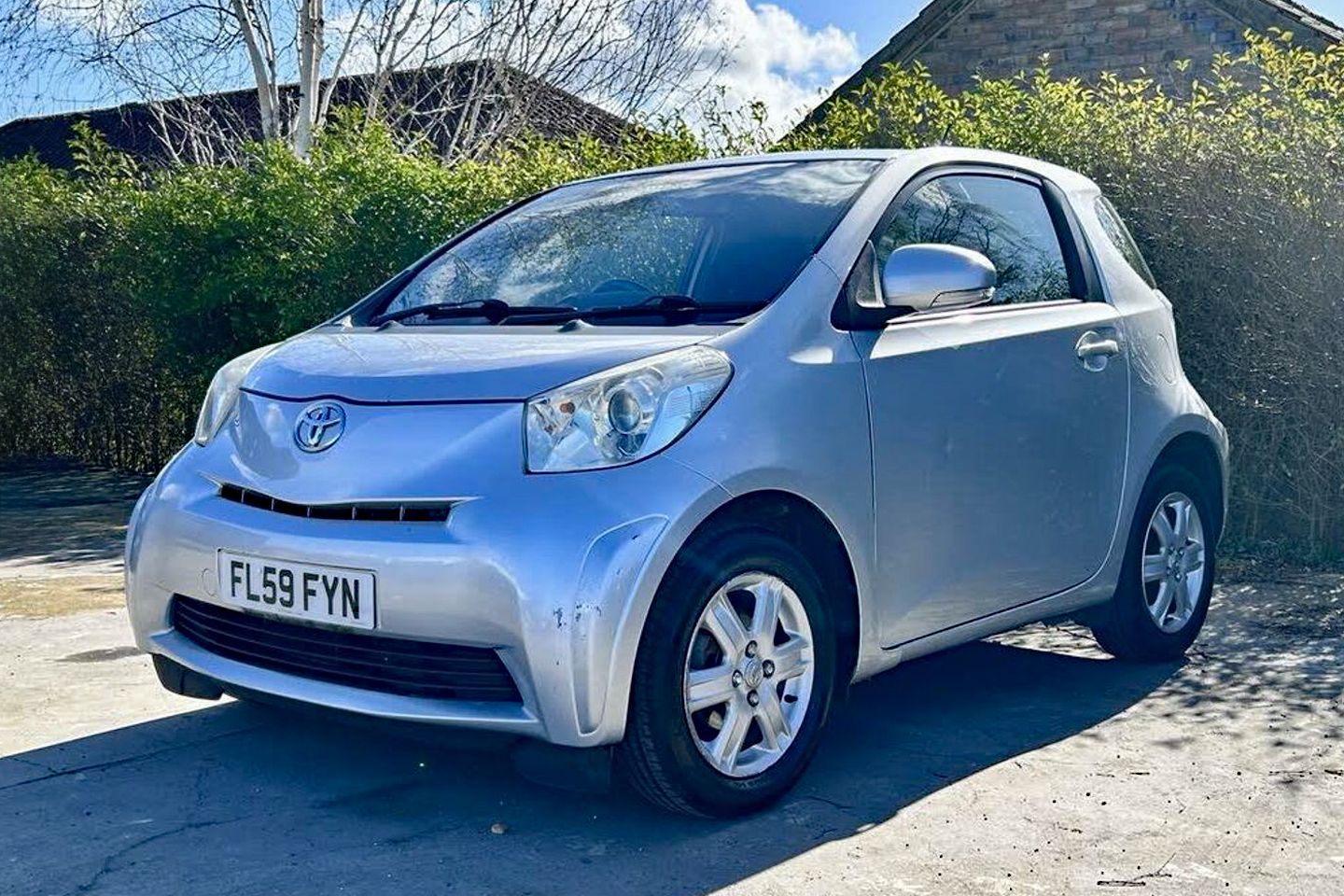
The two cars on Shed’s shortlist this week were about as far apart as it’s possible to imagine two cars to be: a Porsche Cayenne 4.5 at £1,250 or the car we ended up choosing to avoid blowing up PH’s part of the internet – i.e. the £1,995 Toyota iQ you are now scowling at in cheated rage.
Despite their diminutive size, meagre 93mph top speed and 14-second 0-60mph time, even the 68hp/67lb ft 1.0 iQs like this one were surprisingly good on autobahns and motorways thanks to their relaxed gearing and uncanny (for the size) stability. Aston Martin considered it a worthy starting point for its £31,000 Cygnet CO2-dodger, using the 1.3 four-cylinder engine option to boost power and torque to 97hp and 91lb ft, improve the top speed to 106mph, lower the 0-60mph to somewhere in the elevens and add some useful dart-arama in the city.
For those lusting after even more dartmungosity there was a 126hp GRMN-tuned supercharged iQ with a close-ratio six-speed box. One hundred of those were built. They occasionally pop up for sale in Japan at around £30k. There was even a 4.7 V8 Cygnet, as our Matt will quakingly confirm, but whatever engine it had the iQ was always super-titchy at under three metres long.

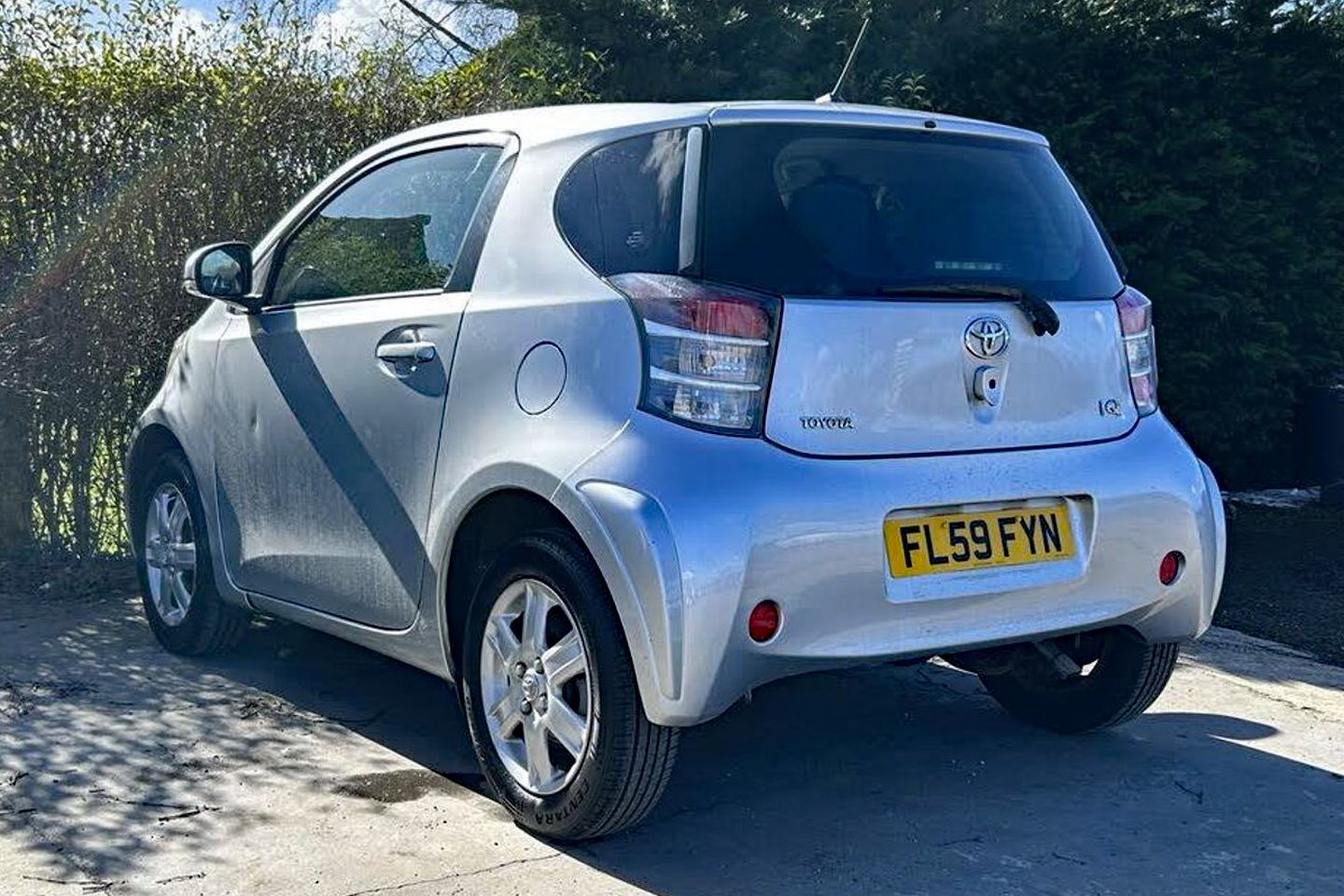
That made it shorter than an original Mini, though it was nearly a foot wider than the old ‘un. Unlike the 1.3, which tipped the scales at just over a tonne, the 1.0 weighed just 845kg. Hoisting either end up into the air therefore easily fell within Mrs Shed’s powerlifting range, ideally as a bench press from below rather than a potentially explosive squat lift. Squeezing her underneath the car in the first place would be the main issue.
The Toyota’s turning circle was 7 metres, just under 23 feet for non-decimal types, or a third of a chain in Shedworld. That’s tighter than the requirement for a London taxi, the benchmark vehicle for sudden and not at all dangerous U-turns in the middle of the road. A couple of years back, a London Assembly member put forward the suggestion that London taxis shouldn’t have such tight turnability built into their design, on account of how the engineering required to help them achieve such jaunty manoeuvres increased the taxis’ purchase price. London Mayor Sadiq Khan threw that one out on the grounds that a swift 180 to pick up a fare on the other side of the street was an integral, important and cost-saving part of the taxi experience, with minimal inconvenience to anyone other than maybe fingers-crossed bikers.
An excellent NCAP score of 91% for adult occupants meant that an iQ could actually have worked well as a London cab, as long as it was mainly picking up individual fares. It did have four seats, but they were in the smallest four-seater body on the market: realistically you could only wedge one bod in the back, and they’d be sitting sideways. Neither of your fares would have to be carrying much luggage either as the space provided for that was more shoebox than boot. Most iQ owners just folded the back seats down and didn’t bother having friends.
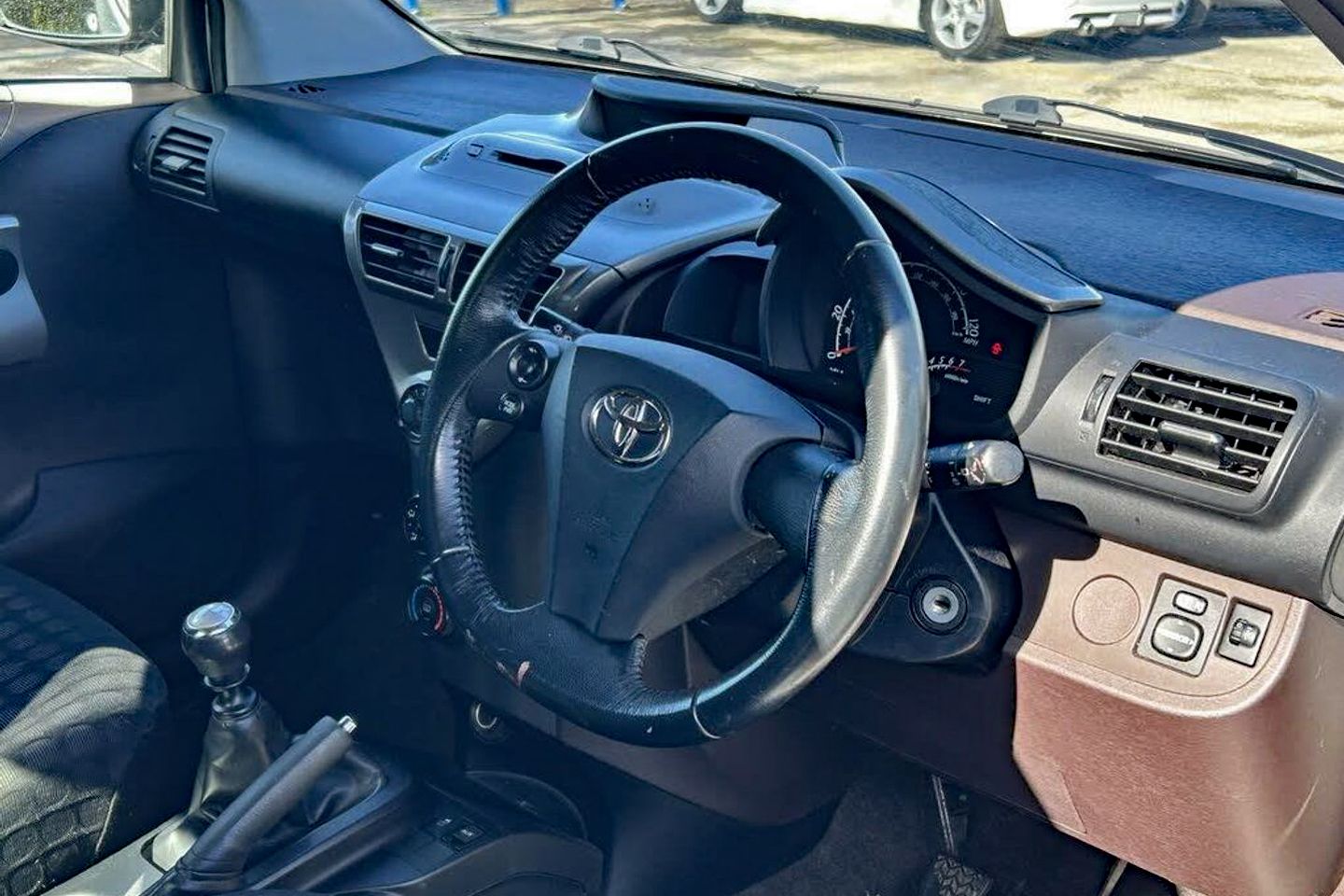
Generally speaking though, the iQ’s interior packaging was a triumph. The asymmetric dash, ultra-compact AC unit and detachable glovebox allowed Toyota to situate the passenger seat well forward in order to create more space behind it. On the other side of the car even tall drivers had plenty of room. There was more shoulder space between the iQ’s driver and front passenger than there was in the bigger Yaris.
Our shed failed its MOT in February on a major exhaust leak and a thin front brake pad, but both were fettled for a clean pass on the retest so it’s ready to add a few more body scuffs to its score. It could do with a clean, but then so could Bob the Binman and he’s never been short of lady action.
If you bought this iQ you could look forward to 64mpg, a full tank range of 450 miles, low insurance costs and a VED rate of just £20 a year. Parts are cheap, and you’ll not need many of them either as these cars have an excellent reliability record. The last iQ we had on here in 2024 is still happily sailing through its MOTs with no advisories. Just keep an eye on the oil level, touch up the paint when it peels, and feel smug that you’ve paid less than £2k for your iQ rather than £53k for one of the two Cygnets that are currently for sale in the UK.