

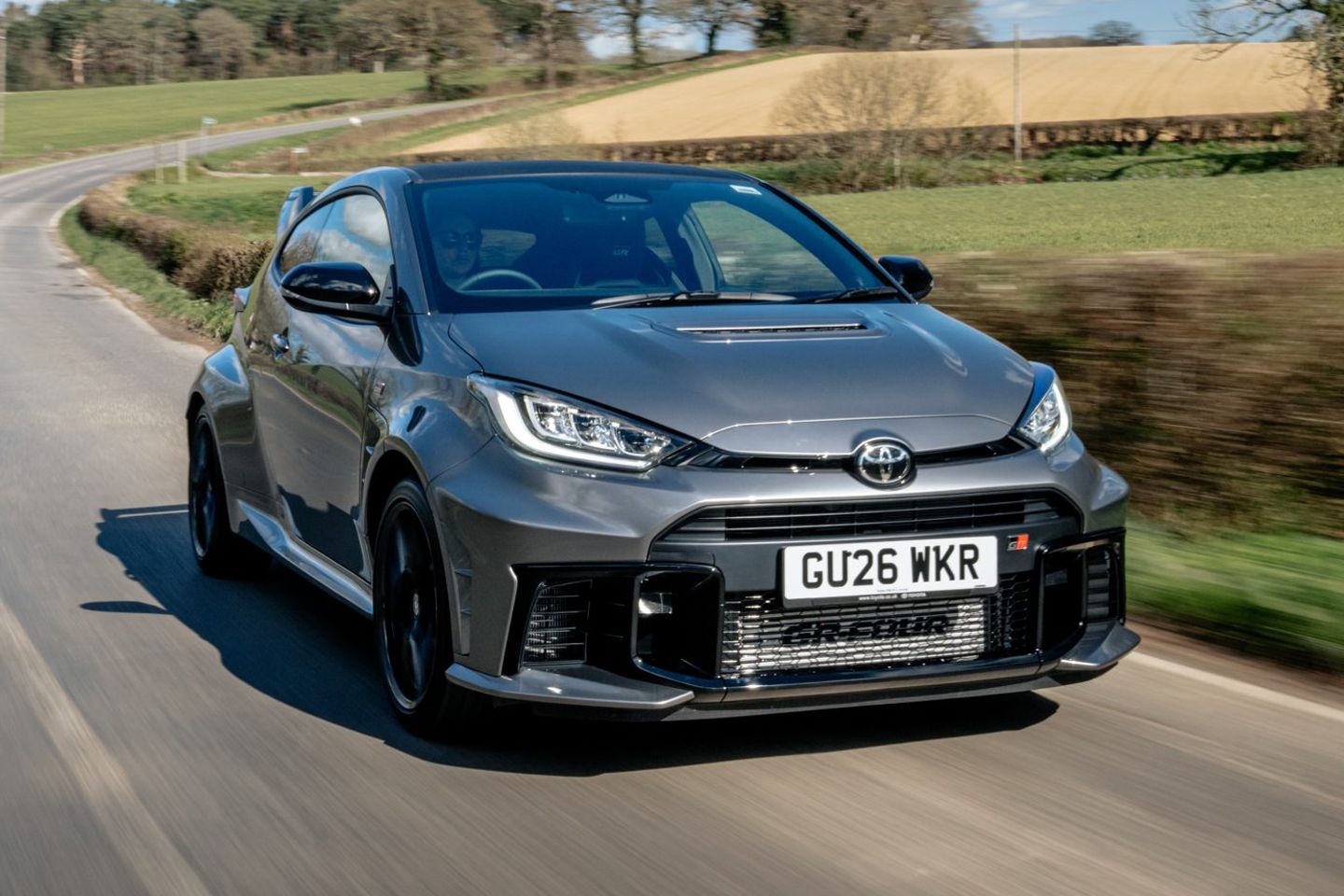
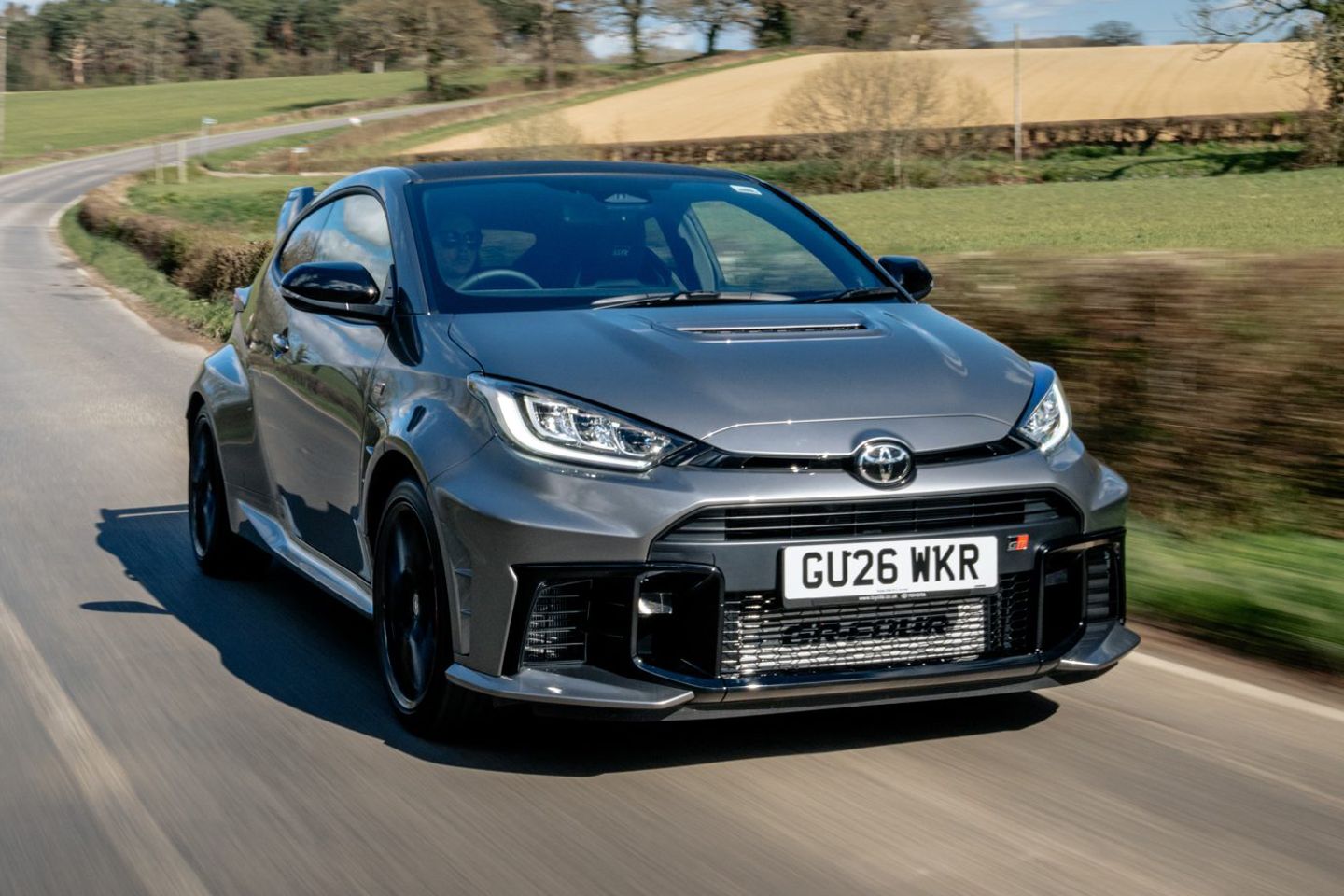
“I’ve been thinking about getting one.” You hear this a lot when driving a Toyota GR Yaris. This time it’s a chap in the petrol station, putting air in the tyres of a Land Rover Defender. He should, I tell him. He might be the perfect customer: middle-aged, middle-class and by the look of his hat and tinted windows, with disposable cash to burn. It’s good that he wants one because at £49,145 on the road, this is surely the niche audience being targeted by the new Aero Performance version. Who else has sufficient cheese to lavish so much of it on a puffed-up supermini?
When we first drove the Yaris, an aeon ago (2021), it was £33,495 with the Circuit Pack. We went mad for it. So did you. The forum originally devoted to the subject contained enough confirmed deposits to qualify as a small bank. Famously, of course, Toyota built the car with one eye on the WRC, and appeared content almost to let the commercial chips fall where they may. At any rate, it made a good job of seeming shocked when the customer stampede – many of them darkening a Toyota showroom door for the first time ever – kicked off. People wanted one bad.
If it is somewhat disheartening now to consider any Yaris as a £50k prospect, it is worth reminding yourself of the opposite end of the scale. For one thing, the model’s continued existence – in any format, and even allowing for Toyota UK’s extremely limited supply – seems a minor miracle. Virtually every other mainstream OEM has thrown in the towel when it comes to hot hatches, let alone those equipped with manual gearboxes, bespoke petrol engines and sophisticated AWD systems. For another, and despite an incentivised effort to foist an electrified alternative on customers, people are still intrigued by those ingredients. And evidently prepared to pay through the nose for them.

How satisfying then to report that much here is as it ever was. Vanishingly few cars currently for sale new rival its capacity for joy – especially if you like it delivered without airs and graces. The GR Yaris does not require you to be a dyed-in-the-wool, petrol-for-blood enthusiast to comprehend its greatness: it is small and fast and very nimble. And deceptively simple. Your nan would get something out of it. Though she would need you to explain why your Aero is different from the variants that have preceded it.
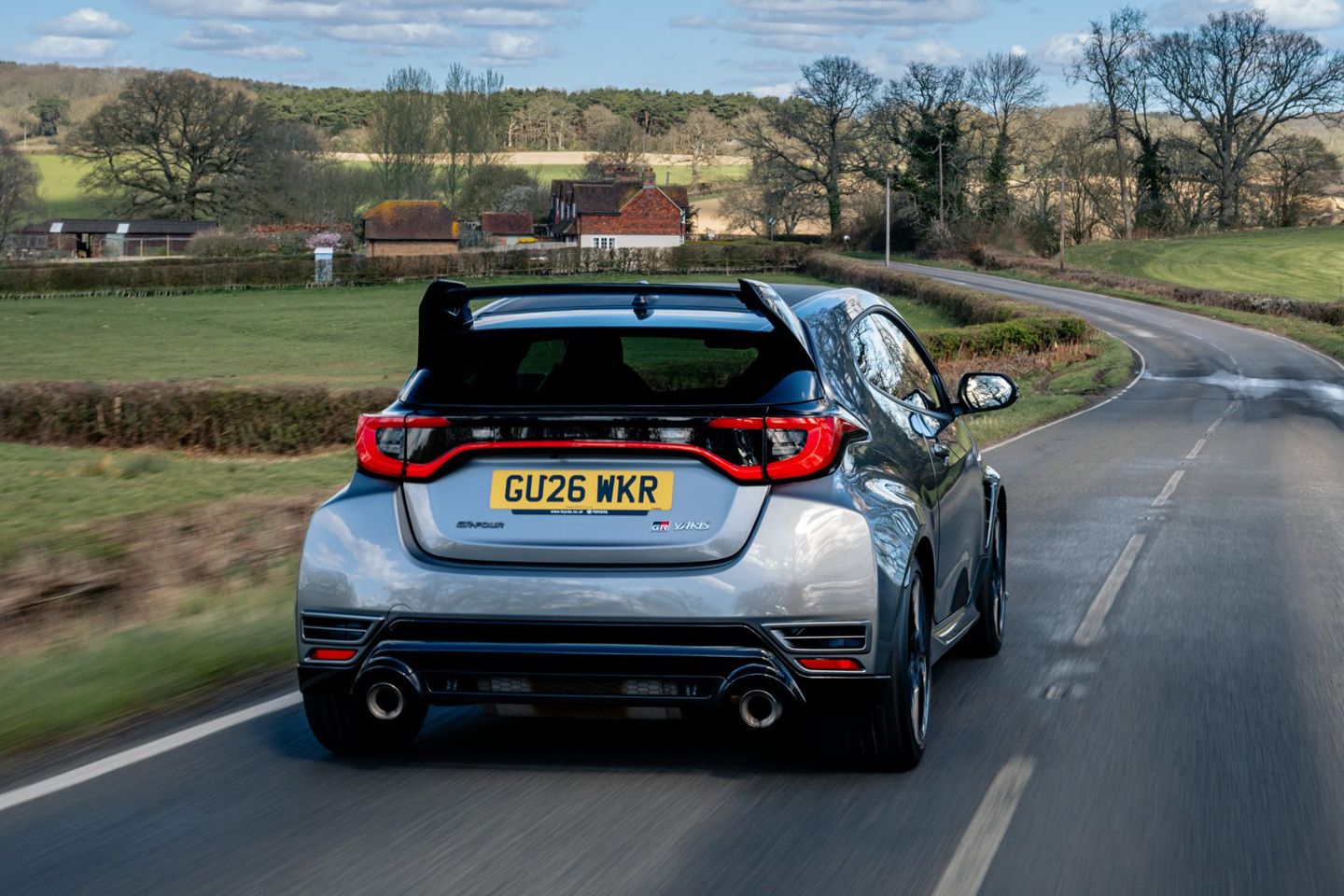
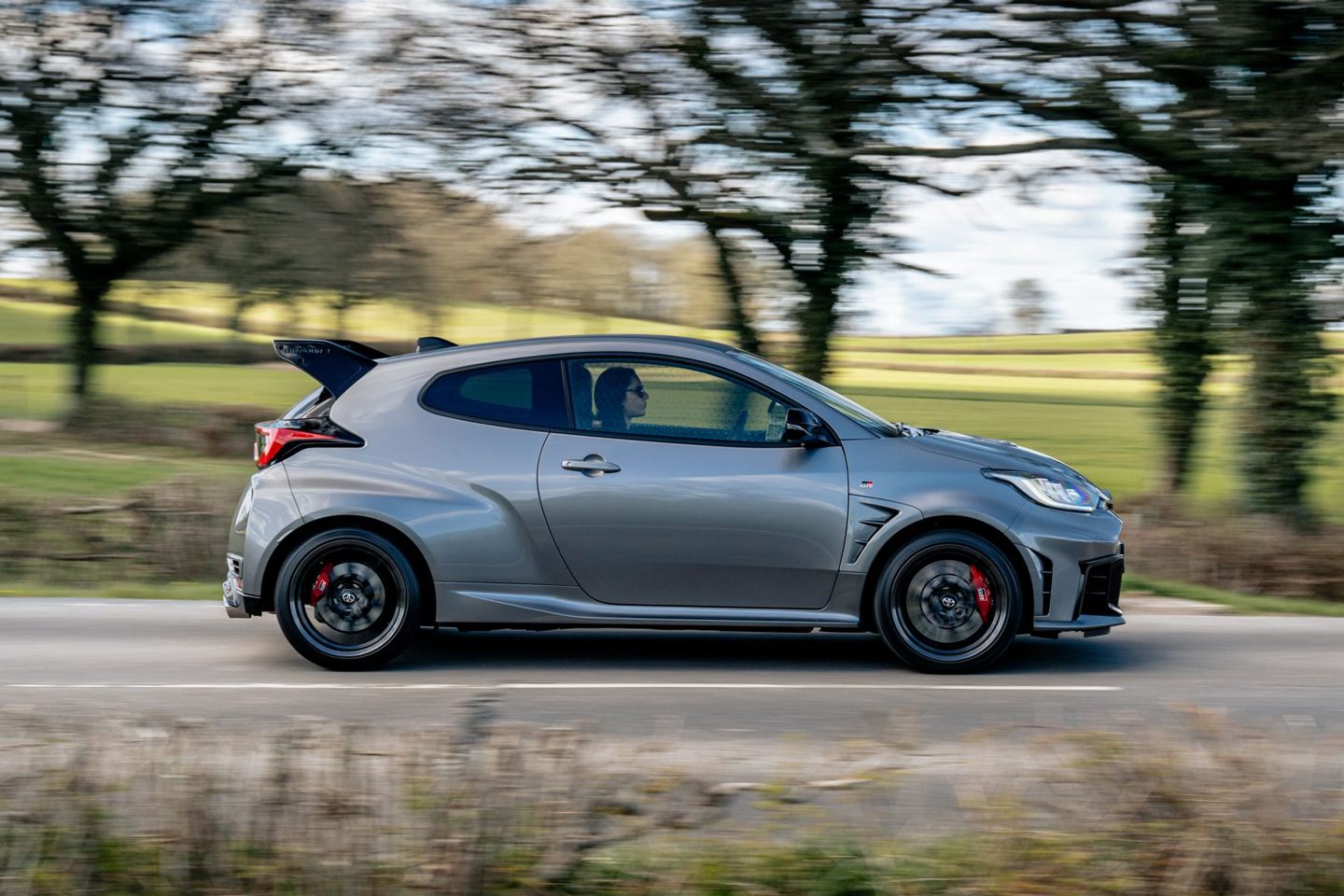
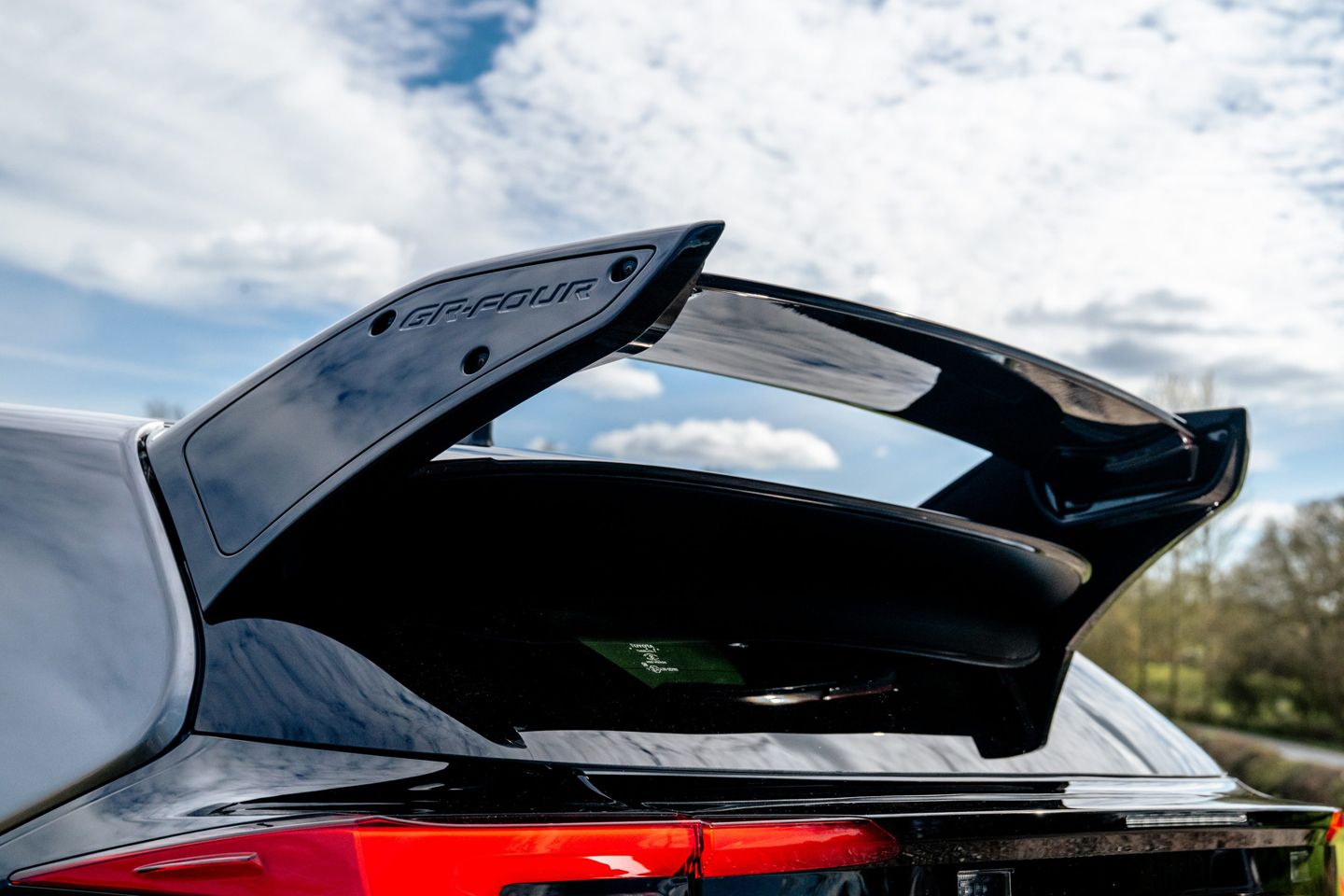
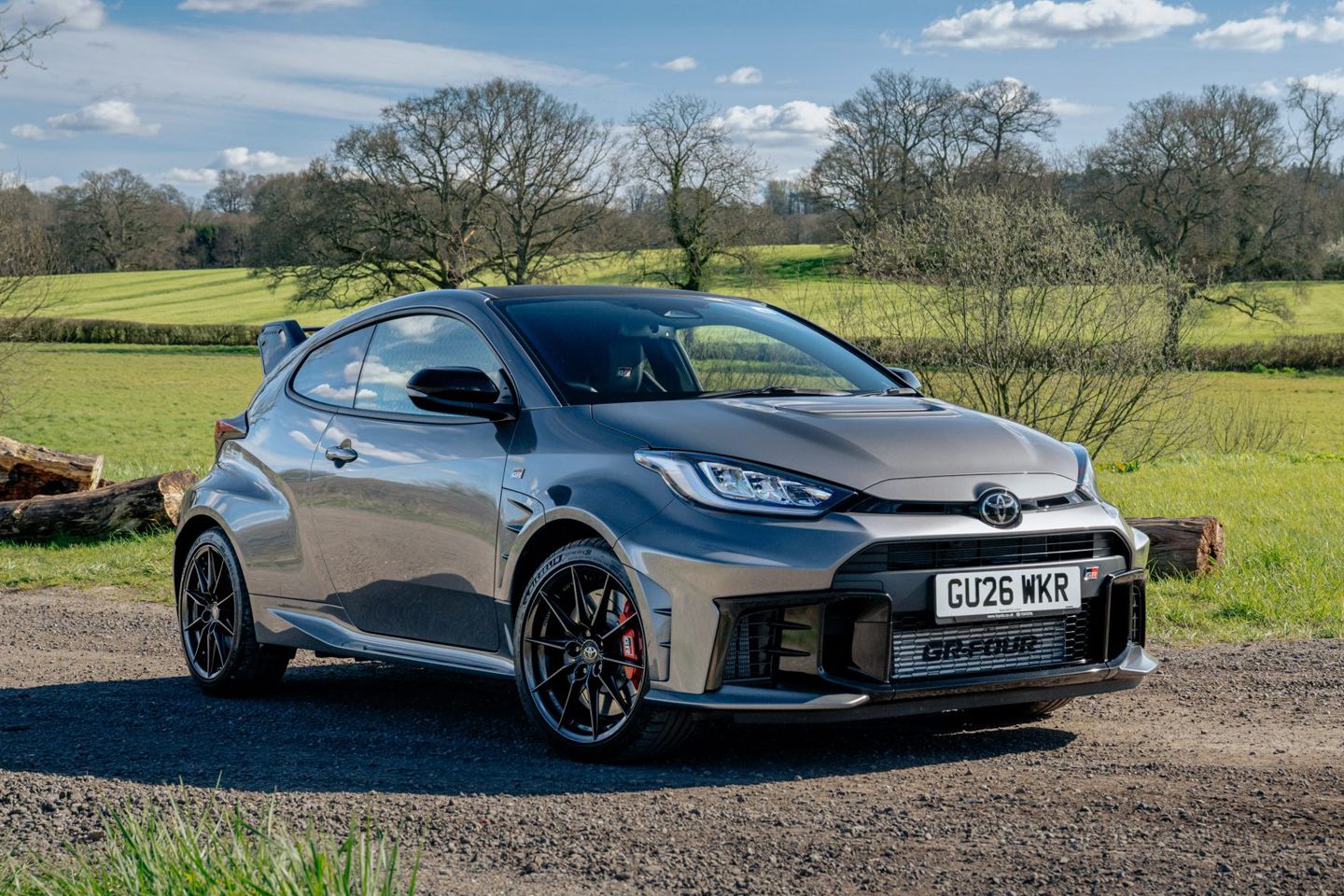
Mercifully, this would involve plenty of good-natured pointing. Most notably, the Aero gets a ‘large cooling duct’ atop the engine bay, one previously preserved for the GRMN. Elsewhere, it is about better harnessing the airflow, with a front lip spoiler, flat floor undercover and (yep) a three-way, manually adjustable rear spoiler. Smaller ducts proliferate elsewhere, too, in the front wings and either side of the rear bumper. Much of this, as you might expect, is the result of experience gleaned by Toyota in motor racing, and doubtless results in the sort of marginal gains that help to lower lap times.
In the real world, they serve the same purpose, of course, though the pleasure of looking at a chunkier, racier Yaris is perhaps the more noticeable upshot. The GR’s three-door body has always distinguished it from the standard model, but there is now an appreciable edge to proceedings, and even if these pass the average punter by, it’s frankly hard not to like a supermini with a large hole cut in its bonnet. It’s quite possible the Aero Performance might not get around the local one-way system any quicker than a non-Aero Performance car – but it will look like it has. And that’s half the battle.
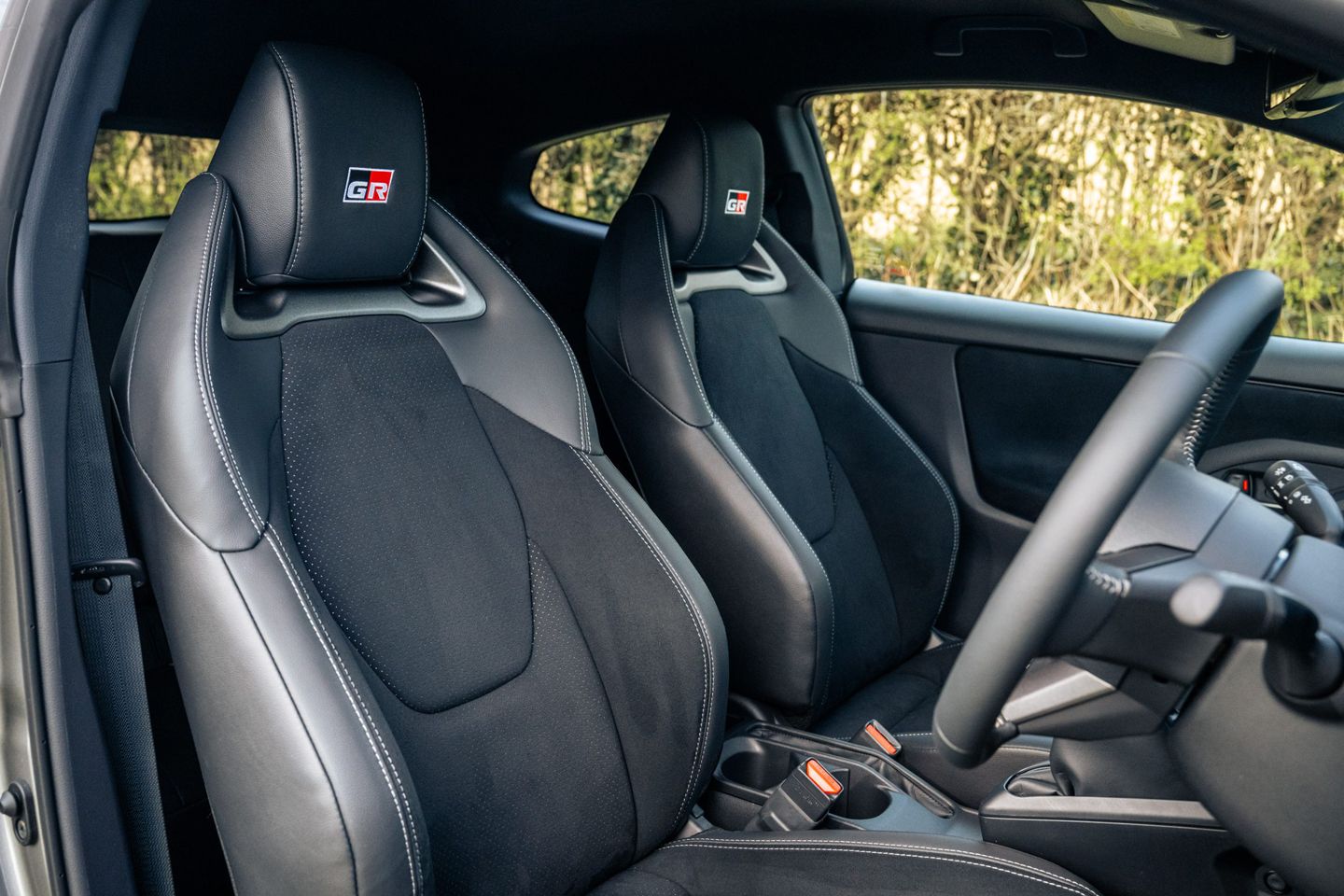
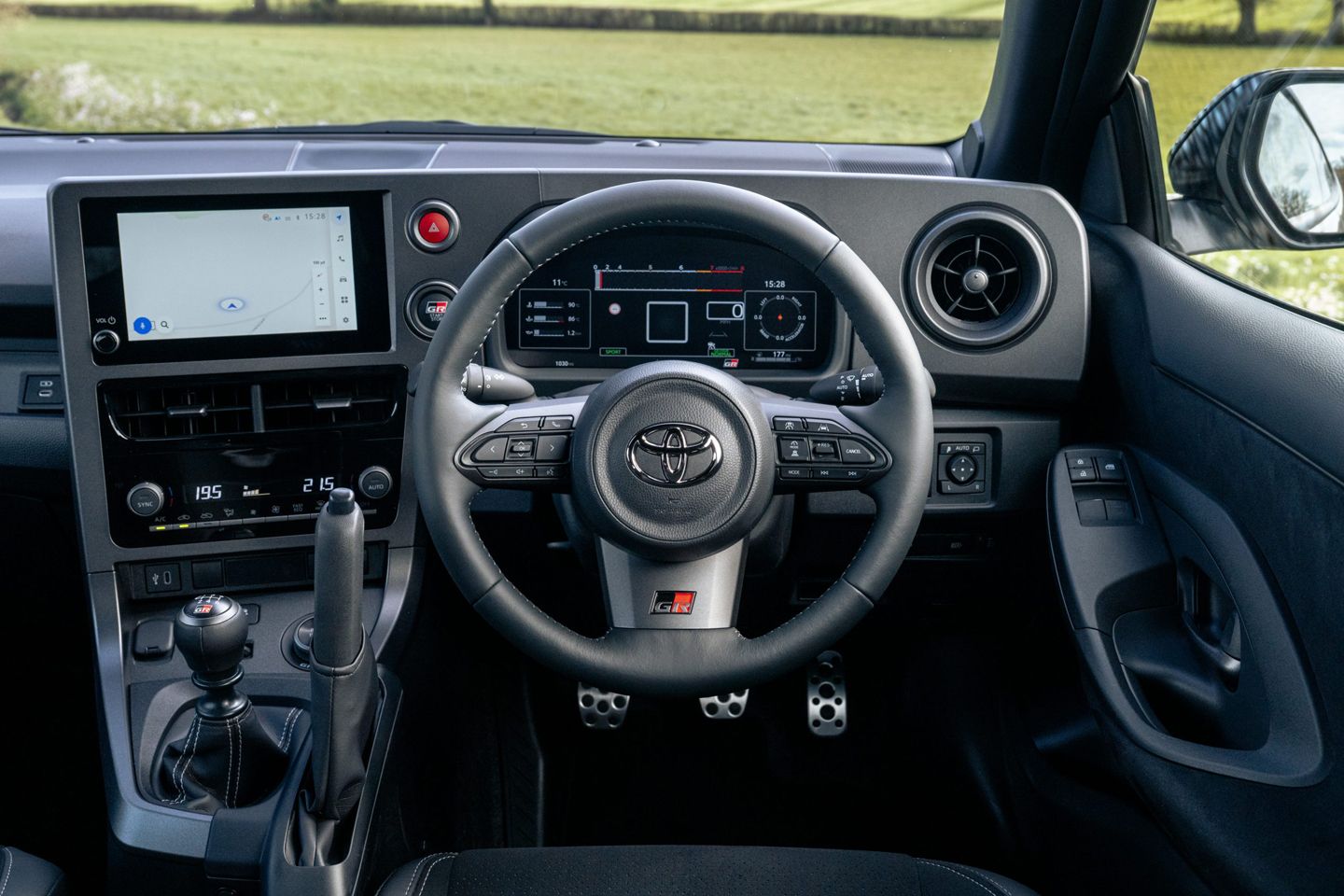
Considerably more might be made of the one item that Toyota previously glossed over: the presence of a ‘racing-style vertical handbrake’ adjacent to the gear lever. Technically speaking, there appears to be no difference to previous iterations (which would also enthusiastically lock the back wheels, though not hydraulically); except now it’s rerouted to be right there, practically daring you to pull on it. Clearly, we wouldn’t recommend you do this in full view of other road users, though if your commute involves negotiating umpteen deserted T-junctions or mini-roundabouts, the temptation will likely prove too great. Ditto the pay-off.
Either way, you’ll be enjoying yourself. There is simply too much to savour here for it to be any other way. Sure, the car’s vertical stiffness seems more abrupt than it was in 2021, the damper settings having again been tweaked (the Aero Performance is a midget gem best enjoyed alone, unless your other half has a high jiggle tolerance), but the GR still does a marvellous job of hunkering down without ever seeming like it’s running short of spring travel. It bobs and weaves congenially. And thanks to the unchanged limited-slip diffs front and rear, it corners voraciously. The amalgamation is as addictive as ever.
Reports elsewhere suggest that Toyota, in search of greater structural rigidity, might have found room for yet more spot welds. At any rate, the software overseeing the power steering has definitely been updated, and while a new, smaller-diameter wheel (by 5mm) doesn’t dazzle you with newfound feedback, it certainly feels weightier and happier for you to lean into it, especially under high loads. This is useful because you might be inclined to carry more speed in a car that, somewhere between 2024 and now, has been forced to lose 34lb ft of torque to satisfy the latest EU emissions regulations.
No shortfall in output is welcome in a hot hatch – particularly one so well equipped to cope with it – though it’s worth mentioning that you seldom reflect on a lack of clout in the new Aero. Probably because power is unchanged at 280hp (an amount you will encounter frequently, given the raspy appeal of remaining near 6,500rpm), but also because the GR seems so brilliantly attuned to pushing on in the UK. It is still furnished with more than enough energy to ask searching questions of its bushy-tailed chassis, yet not so much that you’re endlessly backing off to keep your speed in check. Added to which, of course, it is ideally sized to make the most of what little space the average B-road has to offer.
Granted, when considered alongside its familiar limitations, the reduction in peak twist does feel more of an issue at £50k than when the GR was closer to £30k. It remains perfectly usable on a motorway, but this is not the first car you’d recommend to someone clocking up considerable distances, and nor would you buy it if you were planning on regularly using the back seats for anything more cumbersome than a raincoat. The boot’s luggage capacity celebrates a single lifestyle, too, which is convenient because you won’t be impressing anyone with the interior decorating – relocating the handbrake may have gained the Aero a leather-lined pouch for your mobile phone, yet the flagship Yaris remains roughly on par with a flagship Transit in the quantity and quality of its dash plastics.
Is this a problem? Well, perhaps if the likes of the FL5 Civic Type R were still available for similar money, you might contemplate the superior practicality and (comparatively speaking) plushness of its cabin and secondary ride, among many other fortes. But it isn’t. Excluding the likes of the even costlier RS3, the alternatives are either electric (i.e. dross) or a Mini JCW (decent, but not in the same league) or a Golf R/GTI Edition 50, either of which would mean no manual gearbox. For our money, and for all the ways in which the GR prioritises driving nous over pretty much any ancillary concern, the Aero Performance justifies its cost. And if it cements the GR’s status as a coddled second car for the lucky few, then so be it. Succour for the rest of us, after all, can be found on sale in the classifieds, starting at £25k. Bargain, right?
SPECIFICATION | 2026 TOYOTA GR YARIS
Engine: 1,618cc three-cylinder, turbocharged
Transmission: six-speed manual, all-wheel drive
Power (hp): 280@6,500rpm
Torque (lb ft): 254@3,150-4,600rpm
0-62mph: 5.2 seconds
Top speed: 143mph
Weight: 1,280kg
MPG: 32.1
CO2: 197g/km
Price: £49,145