

New research from Stanford confirms AI is super smart, prone to error and mostly perplexing, says Marie Boran
Blogs
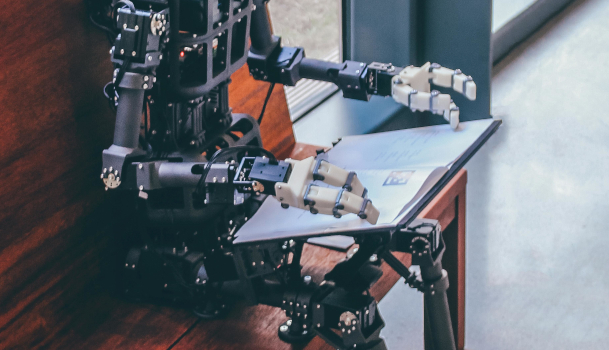
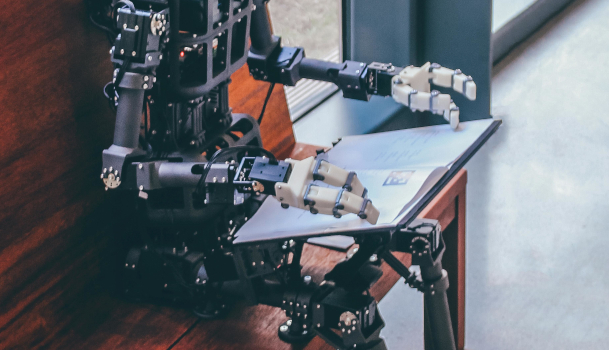
Image: Andrea De Santis via Pexels
Cast your mind back to November 2022. ChatGPT had just launched, Tech Twitter was losing its mind, and the rest of us were mostly bemused, asking it to write limericks about our colleagues and marvelling that it could. Three years on the Stanford AI Index 2026, which is the most comprehensive independent report on the state of AI, has just dropped and it makes for a fascinating read. Not because it tells a clean story of triumph or catastrophe, but because it doesn’t.
Start with the numbers that suggest we are, in fact, living through something historically significant. Generative AI reached 53% population-level adoption within three years. That’s faster than the personal computer. Faster than the Internet. Organisational adoption now sits at 88%, and four in five university students report using generative AI tools. Whatever your feelings about the technology, those numbers are difficult to dismiss.
And it keeps getting more capable. On a key coding benchmark AI performance rose from 60% to near 100% of the human baseline in a single year. Frontier models are now meeting or exceeding human baselines on PhD-level science questions and competitive mathematics. In a genuinely startling result, Google’s Gemini Deep Think earned a gold medal at the International Mathematical Olympiad.

But the report gets more interesting and the story of the GenAI era becomes considerably more complicated.
Jagged edge
That same gold-medal-winning model reads analog clocks correctly just 50.1% of the time. That’s essentially a coin toss. The Stanford researchers have a name for this: the ‘jagged frontier’ of AI where extraordinary capability sits alongside baffling incompetence, often within the same system. Robots, meanwhile, succeed in only 12% of household tasks. The robo-butler remains firmly in the realm of science fiction.
There are darker threads running through the report too. Documented AI incidents including failures, harms, and misuse, rose to 362 last year, up from 233 in 2024. Responsible AI benchmarks are reported far less consistently than capability benchmarks (which tells you something about where priorities lie, eyeroll emoji). AI data centre power capacity has now reached 29.6 gigawatts, comparable to New York state at peak demand. Annual estimates water use for GPT-4o alone may exceed the drinking water needs of 12 million people. And here we are casually using these apps to suggest dinner recipes based on what we have left in the back of the fridge.
And then there’s the labour market. Productivity gains of 14% to 26% are being recorded in customer support and software development, but in that latter field, US developers aged 22 to 25 saw employment fall nearly 20% last year, even as the headcount for older developers grew. The gains and the losses are not being distributed evenly.
Three years in, then, the GenAI era looks less like a revolution with a clear direction and more like the report’s co-chairs describe it: a field scaling faster than the systems around it can adapt. That’s not a reassuring conclusion. But it is probably an honest one. Imagine where we’ll be in another three years’ time.