

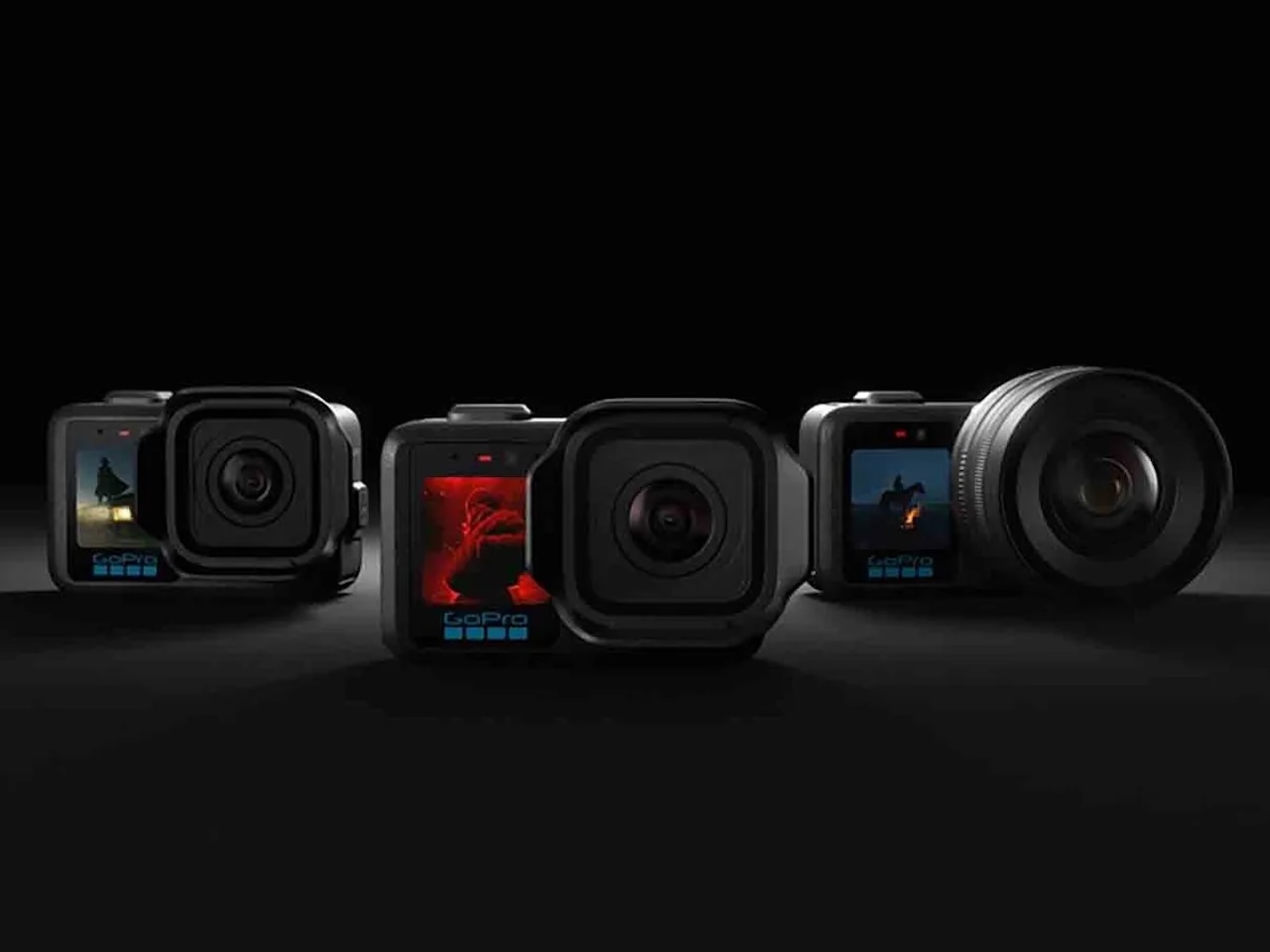
GoPro just made its most ambitious play yet. The company that built its name on tiny action cameras has officially entered the cinema camera market with the MISSION 1 Series, three compact cameras built around a new 50-megapixel 1-inch sensor and GP3 processor. One of them even has an interchangeable lens mount.
The lineup includes the MISSION 1, MISSION 1 PRO, and MISSION 1 PRO ILS. Preorders for the MISSION 1 and MISSION 1 PRO open May 21st, with global availability starting May 28th. The PRO ILS and bundle editions arrive in Q3 2026. Pricing has not been announced yet. GoPro will reveal it at NAB (April 19–22, booth C5519).
Add The Gadgeteer on Google Add The Gadgeteer as a preferred source to see more of our coverage on Google.
ADD US ON GOOGLE
What All Three Cameras Share
Every MISSION 1 camera uses a new 50MP Type-1 sensor with a Quad Bayer design. In Quad Bayer mode, pixels fuse into 3.2-micrometer clusters for significantly better light gathering. GoPro says the sensor delivers up to 14 stops of dynamic range, paired with the GP3 processor’s AI Neural Processor Unit for low-light video processing.
The GP3 is a 5nm chip, and the efficiency gains also address thermal management, which has historically limited sustained recording in small-body cameras. GoPro claims 5+ hours of recording at 1080p30 and 3+ hours at 4K30 on the new Enduro 2 battery (2150mAh), which is backward-compatible with the HERO13 Black.
All three capture 50MP stills in RAW or SuperPhoto, record 32-bit float audio across four microphones, and support Bluetooth 5.3 wireless audio. The body is waterproof to 66 feet (20m) without a housing (MISSION 1 and PRO), with a 159-degree field of view through a fixed 14mm lens, 14% larger OLED rear display, and raised buttons for gloved use.
MISSION 1 PRO: The Flagship
The MISSION 1 PRO is an 8K camera that shoots at up to 60fps in 16:9, which means native 2x slow motion at 8K. At 4K 16:9, it hits 240fps for 8x slow motion. There’s a burst mode capturing 1080p at 960fps (32x) in up to 10-second bursts, plus continuous 1080p at 480fps for 16x slow motion.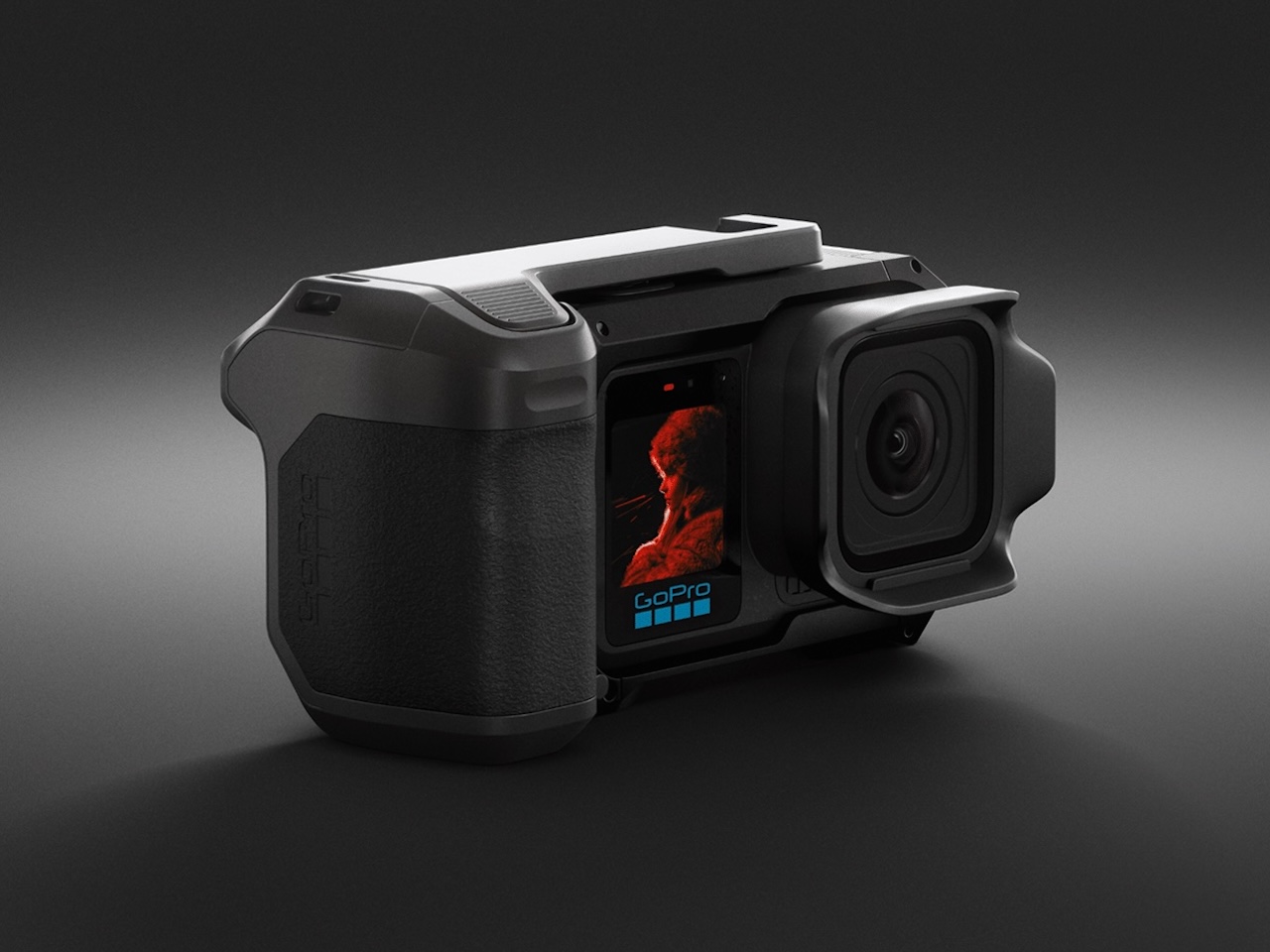
Open Gate recording uses the full 4:3 sensor area for reframing flexibility, supporting 8K30 and 4K120. Color science includes 10-bit GP-Log2, HLG-HDR, bitrates up to 240Mbps, and timecode sync for multi-camera shoots.
GoPro is selling the PRO in several configurations: standalone, Grip Edition (ergonomic grip converting into a metal cage with cold shoe and 1/4-20 mounts), Creator Edition (adds Media Mod, Volta 2 battery grip, and Wireless Mic Kit), and Ultimate Creator Edition (swaps the Volta 2 for GoPro’s Fluid Pro AI gimbal and adds Light Mod 2).
MISSION 1 PRO ILS: The Interchangeable Lens Wildcard
This is the model that will get the camera community talking. The MISSION PRO ILS is GoPro’s first MFT camera, swapping the fixed lens for a Micro Four Thirds mount and opening the door to telephoto, zoom, macro, and more through adapters.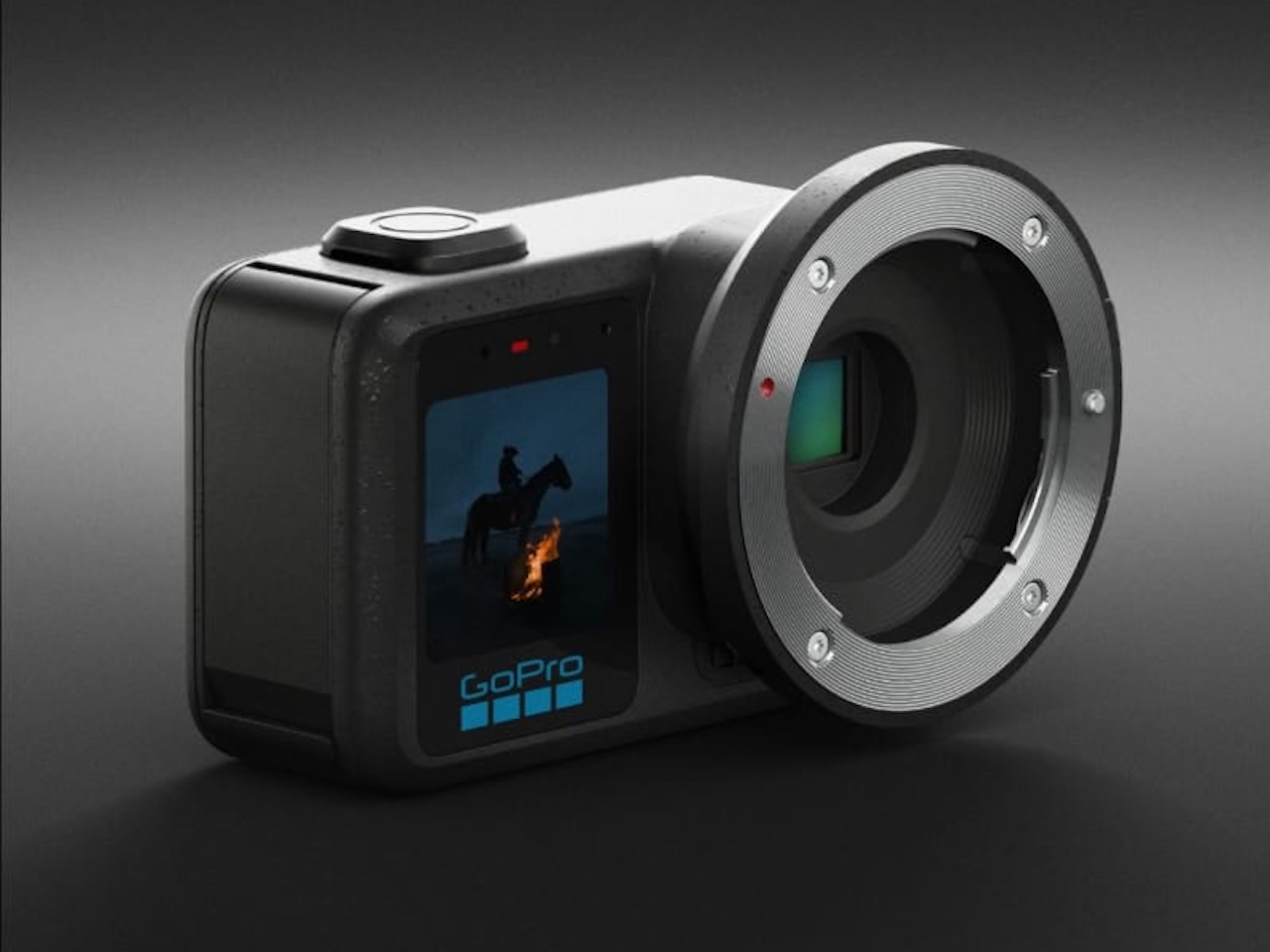
It shares the same 50MP sensor, GP3 processor, and all resolution and frame rate capabilities as the standard PRO. HyperSmooth stabilization works in-camera with any rectilinear prime lens. The ILS is weatherproof rather than fully waterproof, which makes sense given the exposed lens mount.
On paper, nothing else on the market combines this sensor size, these frame rates, and MFT compatibility in a package this small. Whether cinematographers adopt it depends on pricing, still unknown until NAB.
MISSION 1: The Entry Point
The base MISSION 1 shares the same 50MP 1-inch sensor, GP3 processor, Enduro 2 battery, waterproof build, and fixed 14mm lens as the PRO. The 50MP photo capabilities, 14 stops of dynamic range, 32-bit float audio, and 10-bit color with GP-Log2 are all identical. The only difference is frame rate ceilings.
In 16:9, the MISSION 1 captures 8K30, 4K120, and 1080p240. In Open Gate 4:3, it supports 4K120. That means you still get 8K video and 4x slow motion at 4K, but you lose the PRO’s 8K60, 4K240, and the extreme 960fps burst and 480fps continuous modes. For many creators, particularly those focused on travel, vlogging, or documentary work where ultra-high frame rates are less critical, these caps won’t matter.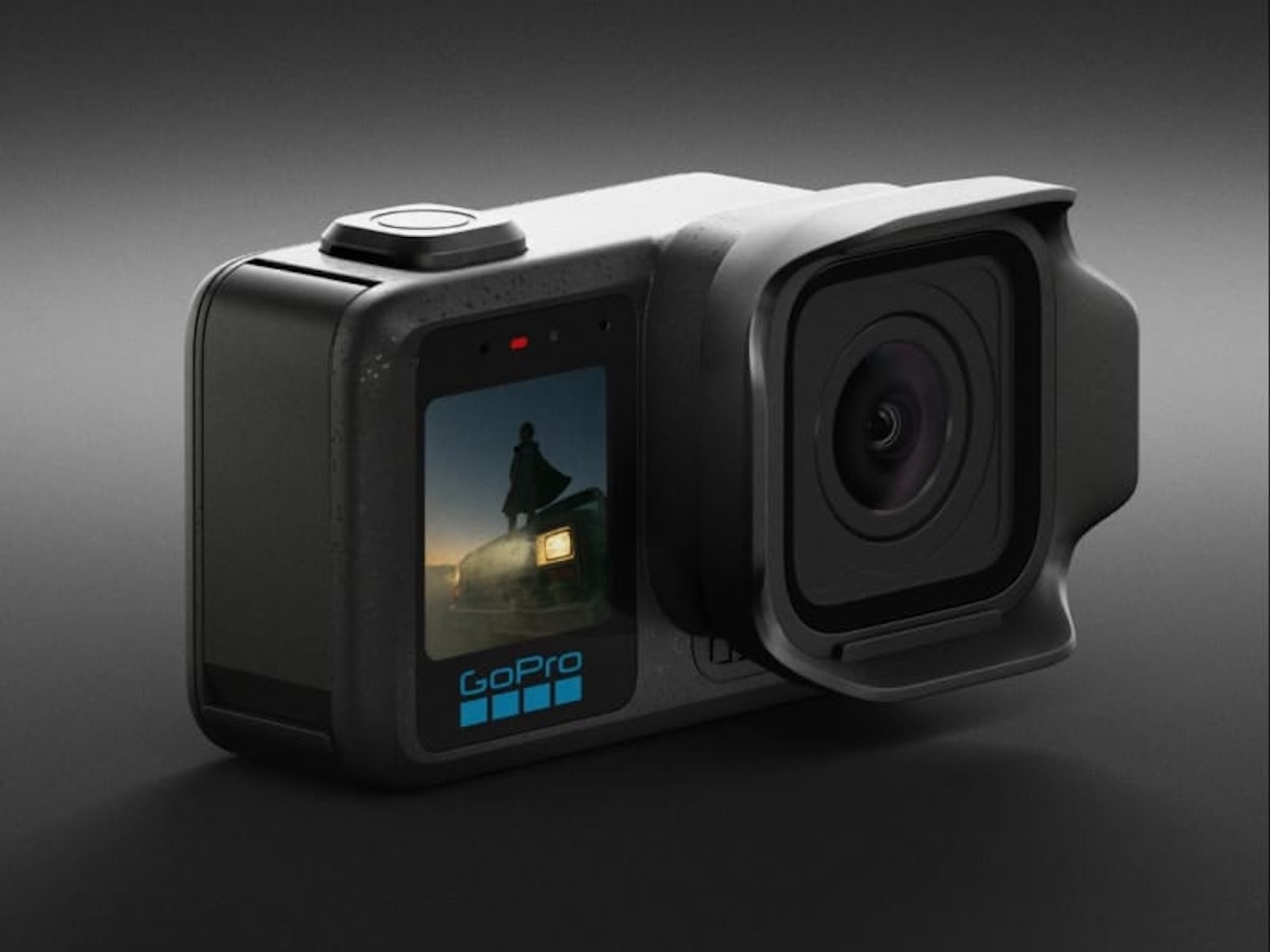
GoPro is positioning the MISSION 1 as the entry point for creators who want the image quality leap of the new sensor and processor without paying for the PRO’s top-end speed. If pricing reflects that positioning, this could be the volume seller of the lineup.
The Accessory Ecosystem
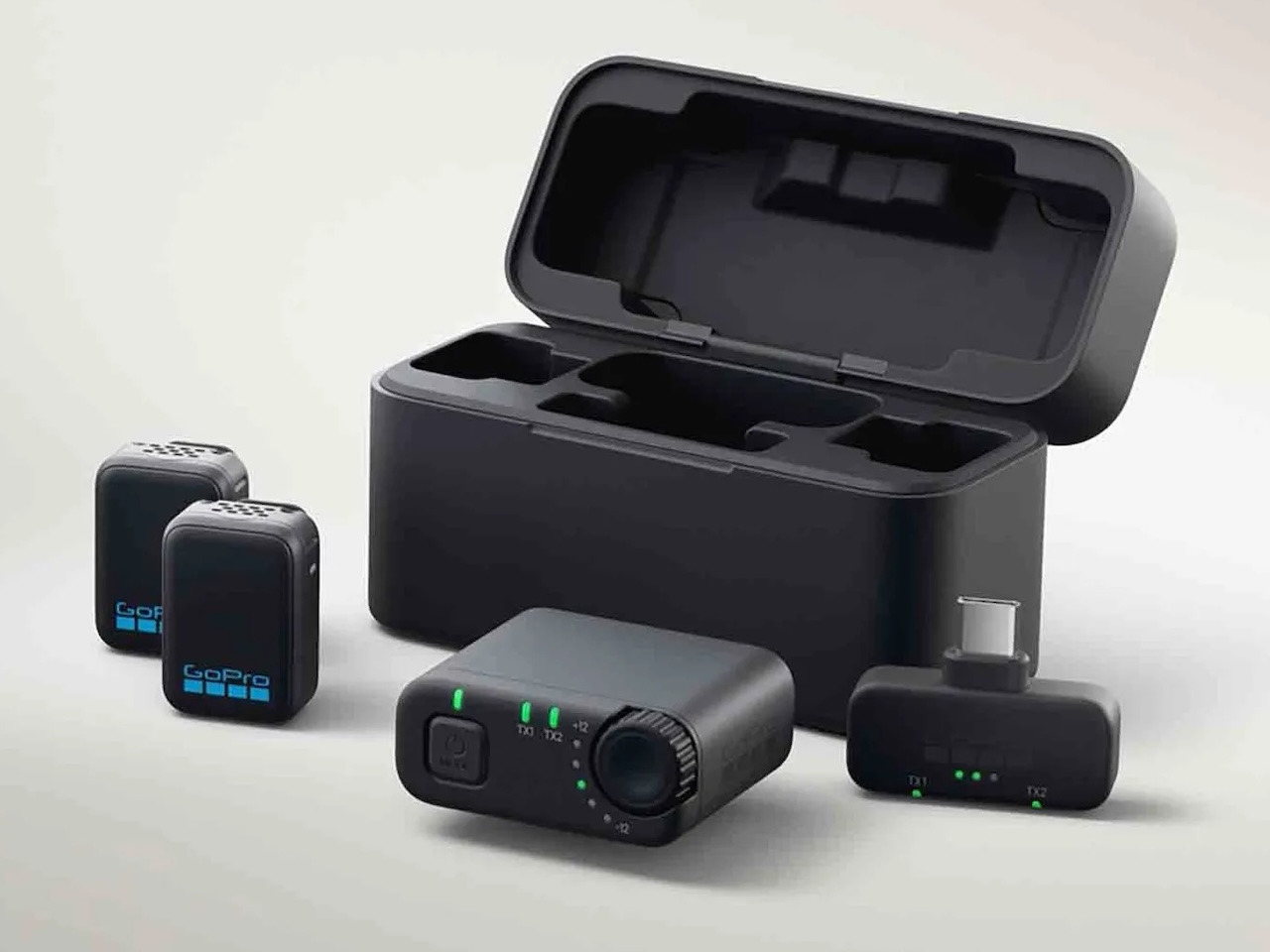 GoPro is launching accessories from May through Q3 2026: a Wireless Mic System with 10-gram magnetic transmitters (24-bit/48kHz, 150m range), a Media Mod with eight microphone patterns and micro-HDMI out, M-Series ND Filters (4-pack with auto-detection shutter adjustment), a Protective Housing rated to 196 feet (60m), the Volta 2 battery grip (5800mAh, up to 9 hours at 4K30), and a Light Mod 2 with 200 lumens and 100% longer runtimes. The entire system ties into GoPro’s Quik app for cloud uploads, automated highlight edits, and mobile-first workflows.
What This Means for GoPro
CEO Nicholas Woodman framed the launch as a response to years of requests from demanding users. “The MISSION 1 Series is designed to go to hell and back, and that’s exactly where our customers are going to take them,” he said. SVP of Product Pablo Lema added that the 1-inch sensor and GP3 processor combination “sets a new performance bar for compact cinema cameras, enabling resolutions, frame rates, low-light performance, runtimes and thermal capabilities never seen before in cameras this small.”
The timing is deliberate, announcing ahead of NAB and opening preorders weeks later. Whether MISSION 1 can carve out space in a compact cinema camera segment where Blackmagic has long set the benchmark depends on pricing and real-world image quality. The specs are genuinely impressive for the form factor. The proof comes when filmmakers get these cameras on set.
Love our content?
Sign up for our newsletter today.
No ads, no spam, just links to our latest articles!