


Samsung’s first smart glasses aren’t one product but two, on different timelines and built for very different buyers. The first pair, codenamed “Jinju,” is a display-free design that leans on AI, audio, and a single front-facing camera. It’s tracking for a 2026 launch and looks built to take Meta’s Ray-Ban line head-on. The second pair, codenamed “Haean,” is the ambitious one: a true AR set with a built-in micro-LED display, lined up for 2027 to go up against the newer Meta Ray-Ban Display tier.
A fresh wave of leaked renders, paired with on-record comments from Samsung’s mobile execs at the company’s late-January earnings call and a follow-up press interview during MWC, has given us the best look yet at what’s coming. A first reveal could come as early as Google I/O in May, or wait until Samsung’s July Unpacked event.
Here’s everything the leaks, spec sheets, and Samsung’s own statements have told us so far.
Add The Gadgeteer on Google Add The Gadgeteer as a preferred source to see more of our coverage on Google.
ADD US ON GOOGLE
1. Two pairs of glasses, two timelines
Internal codenames suggest Samsung’s splitting its smart glasses strategy in two. The first pair, codenamed “Jinju,” skips a built-in display and focuses on AI, audio, and camera features. It’s tracking for a 2026 launch. The second pair, “Haean,” will reportedly include a display for true AR overlays and arrive in 2027.
That two-step rollout mirrors Meta’s approach with its Ray-Ban line: ship a friendly display-free pair first, then layer in display tech once the form factor and software mature.
2. Leaked images show a Ray-Ban Meta rival
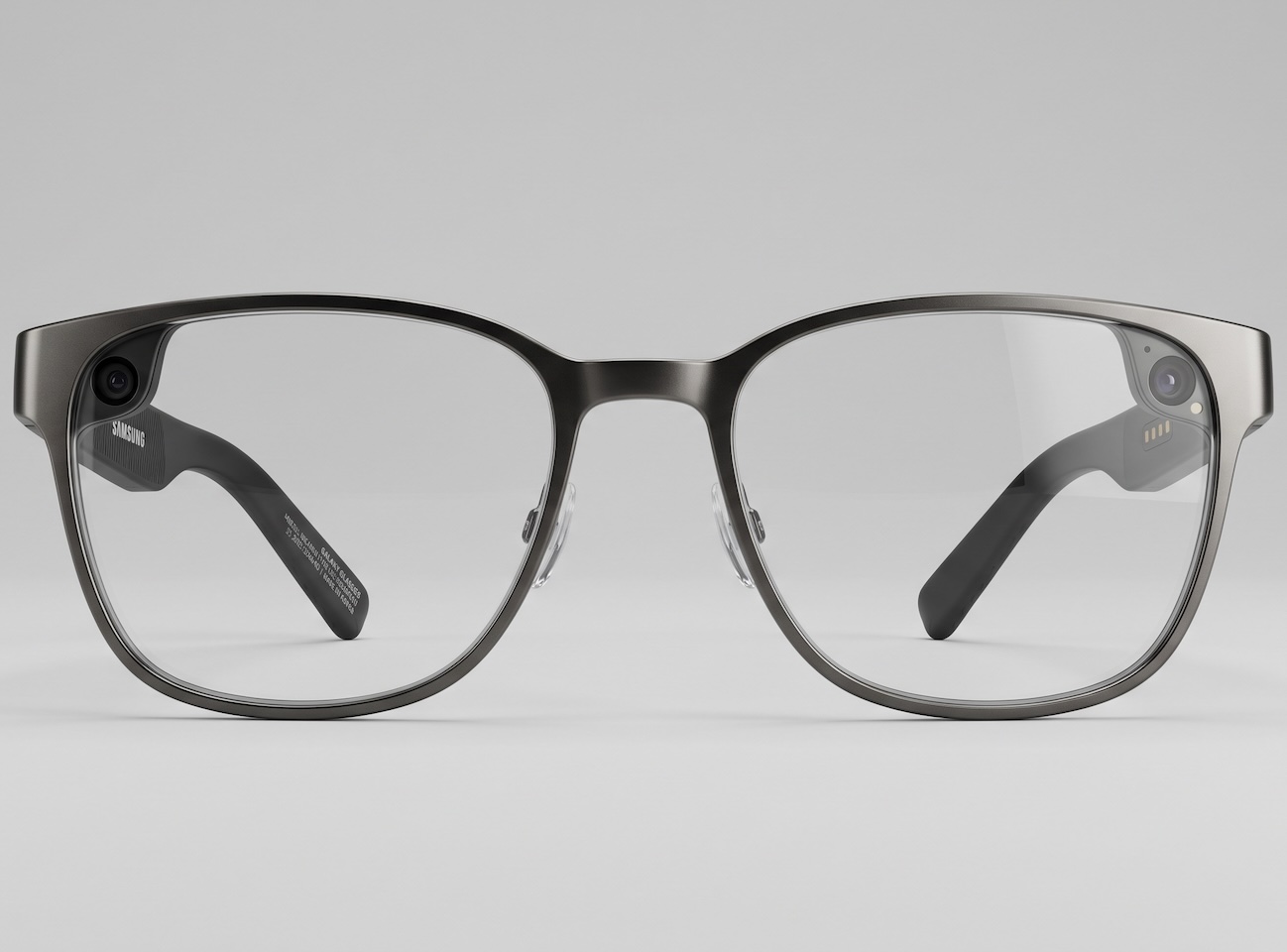
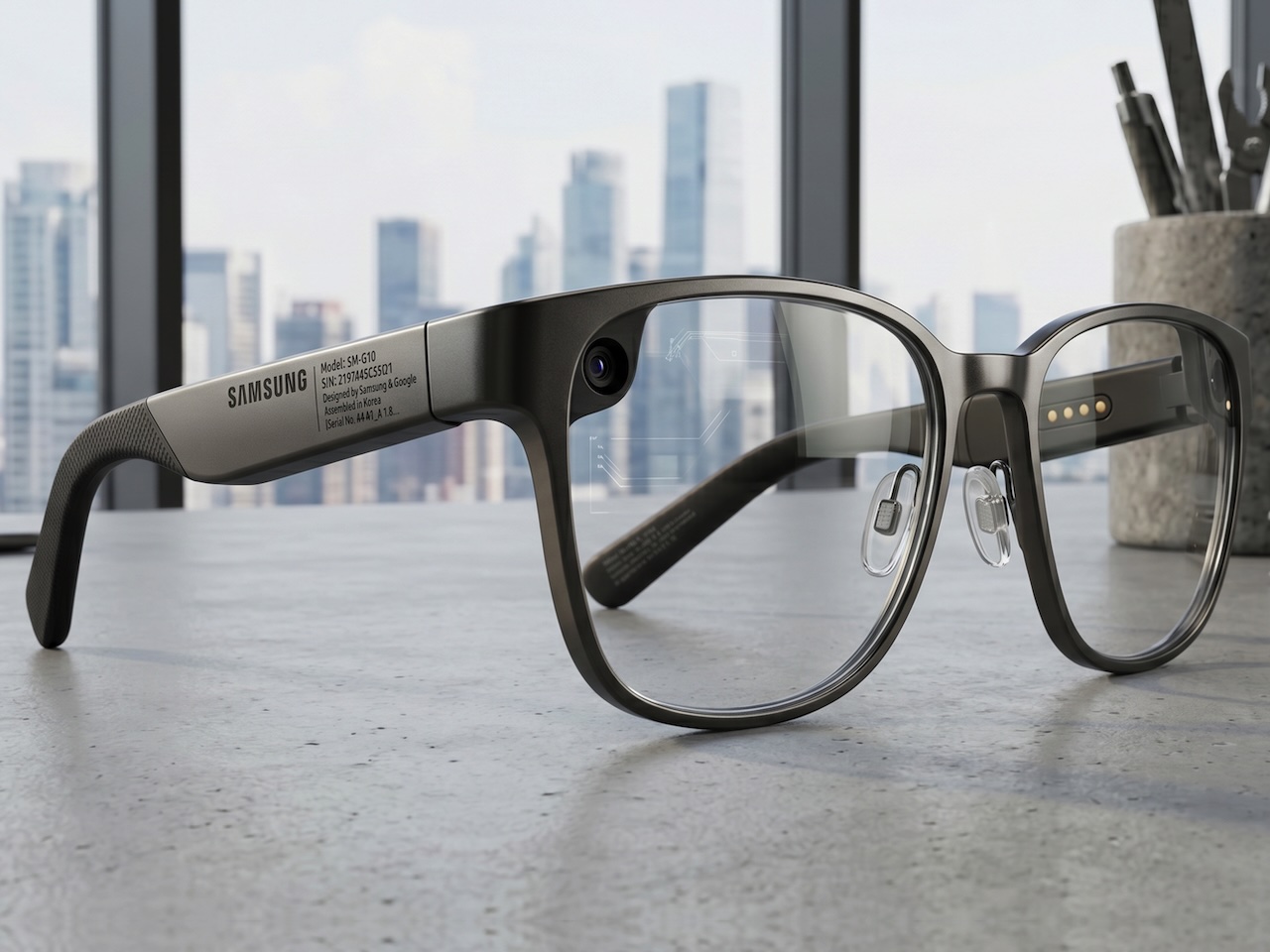
Leaked renders of Jinju show thick-rimmed frames with side-mounted cameras and a chunky temple housing for electronics, and the same images have lined up across multiple independent leaks. The look is closer to Meta’s Ray-Ban Meta glasses than to bulky AR headsets: regular eyewear styling first, tech tucked in second.
3. Inside the hardware
The leaks line up on a fairly specific spec sheet for Jinju. The glasses reportedly run on the Snapdragon AR1 chip, the same silicon Meta uses in its Ray-Ban Meta glasses. A 155mAh battery is sized for all-day light use, not heavy AR sessions. A 12MP Sony IMX681 camera handles stills and video capture. WiFi and Bluetooth 5.3 cover phone pairing and audio streaming. The target weight is around 50 grams, which puts them in normal-glasses territory, not headset-adjacent.
Audio reportedly runs through a mix of directional speakers in the temples and bone-conduction drivers. Photochromic transition lenses are also in the mix, so the same pair could work indoors and outdoors.
4. Android XR and Gemini at the core
Samsung’s confirmed the glasses will run Android XR, the headset and glasses platform it’s been building with Google and Qualcomm. The official word came from EVP Seong Cho on Samsung’s Q4 2025 earnings call in late January, with mobile EVP Jay Kim adding camera and smartphone-pairing details in a press interview during MWC in March. Gemini AI is the front-end: voice queries, visual lookup through the camera, translation, and contextual responses tied to whatever you’re looking at.
In practical terms, that means asking Gemini what you’re seeing and getting an answer through the speakers instead of a screen. It’s the same playbook Meta’s running, but with Google’s AI stack instead of Meta’s.
5. Pricing puts them in flagship-phone territory
The Samsung Galaxy Glasses price for Jinju reportedly lands somewhere between $379 and $499. That’s a wide range, but it puts the display-free pair in the same spending bracket as a mid-range smartphone. Haean, the 2027 model with a display, is expected to land between $600 and $900, which lines up with what early AR glasses tend to cost.
For context, Ray-Ban Meta Gen 2 frames currently run from $379 to $499, and Meta’s Oakley HSTN line goes from $399 for the standard model up to $499 for the Limited Edition. Samsung’s reported $379 to $499 lands directly inside that bracket, so Jinju is being priced for parity rather than undercutting.
6. A reveal at Unpacked or Google I/O
The Samsung Galaxy Glasses release date is the next question. Samsung’s own statements have pointed to a 2026 launch window since the Q4 earnings call, and reports suggest a reveal could come at the company’s July Unpacked event or earlier at Google I/O in May, where Android XR usually gets stage time. A summer reveal followed by a fall ship date would fit Samsung’s normal cadence for new product categories.
7. Samsung isn’t alone in the Android XR camp
Samsung’s also pulled in fashion partners. Warby Parker and Gentle Monster are both publicly tied to Samsung’s Android XR plans as eyewear partners, with both names surfacing alongside Samsung’s broader XR push in 2025. That suggests Samsung’s treating glasses the way it treats Galaxy Watch: a hardware platform that outside brands can skin with their own design language.
That’s a different bet than Meta, which has gone all-in on a Ray-Ban exclusive through EssilorLuxottica. Samsung’s hedging by working with multiple eyewear partners. Worth noting: Gucci’s parent Kering is also building Android XR glasses for 2027, but with Google rather than Samsung, which sets up competition inside the same platform.
8. A second Samsung XR pair already snuck into One UI
 Leak hunters have spotted references to another Samsung XR product hidden inside Samsung’s One UI 9 code. It’s separate from Jinju, and the working theory is that this is Haean making an early appearance in software before Samsung’s ready to talk about it publicly. References this early in a software cycle usually mean a product’s further along than the marketing suggests.
9. Privacy questions are already on the table
Smart glasses with always-available cameras run straight into the privacy conversation Meta’s been having for the past year. Meta’s currently facing a US class-action lawsuit tied to its Ray-Ban line, accused of routing private camera footage and voice recordings to overseas subcontractors in Kenya for AI-training review without users’ clear knowledge. Any Samsung pair with a 12MP camera in the frame will face the same scrutiny once it ships.
Samsung hasn’t said how Jinju will signal that recording’s active, but a recording indicator light is the bare minimum the category’s settled on so far, and bystander-consent norms are still very much unsettled.
10. The bigger picture
Samsung’s been circling the smart glasses category for more than a decade, going back to its ‘Gear Blink’ trademark filing in 2014, but Jinju and Haean are the first products that look ready to actually ship at scale. The hardware looks competitive on paper, the software stack is shared with Google and Qualcomm, and the pricing isn’t wild.
What’s still unclear: how the glasses handle phone-free use, whether Samsung will require a Galaxy phone for full functionality, and what the camera-recording UX actually looks like in person. Those are the questions a 2026 launch event needs to answer.
For now, Samsung’s first real smart glasses are no longer a rumor. They’re a roadmap.
Love our content?
Sign up for our newsletter today.
No ads, no spam, just links to our latest articles!