

Jobs was a visionary. Cook was low-key. Billy MacInnes wonders what qualities John Ternus will bring to make his time as Apple CEO noteworthy
Blogs
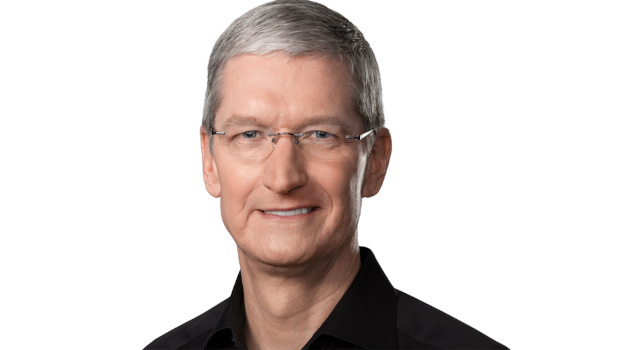
Tim Cook. Image: Apple
If I asked you to reel off a number of successful tech CEOs, you might start with some of the older names like Steve Jobs, Bill Gates, Larry Ellison and Michael Dell, although it’s more likely the newer ‘tech bros’ like Elon Musk, Mark Zuckerberg, Sam Altmann and Peter Thiel would be top of the list.
Some of those names would fall into the ‘visionary’ category and others into the ‘great salesmen’ column. In some cases, they might be both, in others they could be neither (and some might even be described as mad) but all of them would probably be accurately termed as ‘driven’. Most of them, but not all, are or were also blessed with, for want of a better word, charisma that special magnetic charm or appeal.
In many cases, their names are as famous, if not more, than the companies they head or those they led in the past. But more often than not, their names and companies have a symbiotic relationship until time finally dissolves the connective tissue between them.

As leaders, the successors of CEOs like Jobs and Gates have it harder because they’re not Jobs and Gates. When a company has become synonymous with one person, it’s hard for any successor to step out of his or her shadow. This is particularly true if the expectation is they should continue the company in the image of the leader they have replaced.
But continuity is not easy when you’re replacing someone who is viewed by some as irreplaceable. Remember that Apple tried it with Jobs back in 1985 but brought him back 12 years later and the rest, as they say, is history. Bill Gates was replaced by Steve Ballmer, a very different, much brasher personality, but current CEO Satya Nadella is probably closer in temperament to Gates.
That doesn’t mean there can’t also be a problem if the successor is too similar. Sometimes, the CEO is being replaced or has taken the decision to step down under pressure because the company’s shareholders and board members believe a change in direction and culture is required. Appointing someone who is too close in temperament to the ‘big name’ could be a recipe for disaster.
For the cause
These thoughts have been prompted by the news that Tim Cook is stepping down as CEO of Apple in September to be replaced by John Ternus, current senior vice president of hardware engineering. How should we define Cook as a CEO? He took over from Jobs in 2011 when the latter resigned due to ill health (dying six weeks later). Unlike other heirs apparent, Cook was willing to offer part of his liver in a transplant to his boss in 2009 to help Jobs overcome his cancer. Jobs refused his offer.
Judging by the manner of his leaving and the fairly muted coverage, you might consider Cook’s tenure pretty run of the mill. The Register greeted the news with the headline: “World’s blandest man steps down from CEO job to spend more time in tastefully appointed home”.
But as the article admitted, Cook’s performance on a financial basis has been very successful. “Apple’s stock is up over 18-fold. Annual revenues and profit have grown roughly 4x, to approximately $416 billion and $112 billion respectively in Cupertino’s last fiscal year ending 27 September. That’s massive growth from a massive base.”
It also acknowledged Apple’s achievement in becoming a designer of cutting-edge chips, with its own silicon used in macs, iPhones and other devices.
The big issue seems to be that Apple ‘lost its sizzle’ because Cook is not Jobs. As the article puts it: “Tim Cook is bland, and the company became bland under him. It would’ve been hard for anybody to follow the ultimate showman hustler, Steve Jobs, but Cook was like the anti-Jobs.”
Which brings us back to the question of how you define a successful tech CEO? Is not being Steve Jobs immediately disqualifying? Because there were times back in the day when, judging by some of the rather cynical reports in the wake of the latest announcement by the polo-necked supremo, being Steve Jobs wasn’t enough either, when his charismatic showcases were dismissively swatted aside with references to the so-called ‘reality distortion field’. Or ‘ultimate showman hustler’.
Sometimes, the mark of a leader is in choosing a successor who isn’t like him or her which, in Apple’s case, appears to have worked out very well. No one could ever accuse Cook of being a Steve Jobs clone. In that respect, it’s likely to be important that Ternus doesn’t turn out to be a Tim Cook II.
But before we get to find out, it’s probably worth noting that Cook has, for the most part, been a very successful CEO. And it’s probably to his enduring credit that he will not be mentioned in the same breath as Musk, Zuckerberg, Thiel or Bezos.