

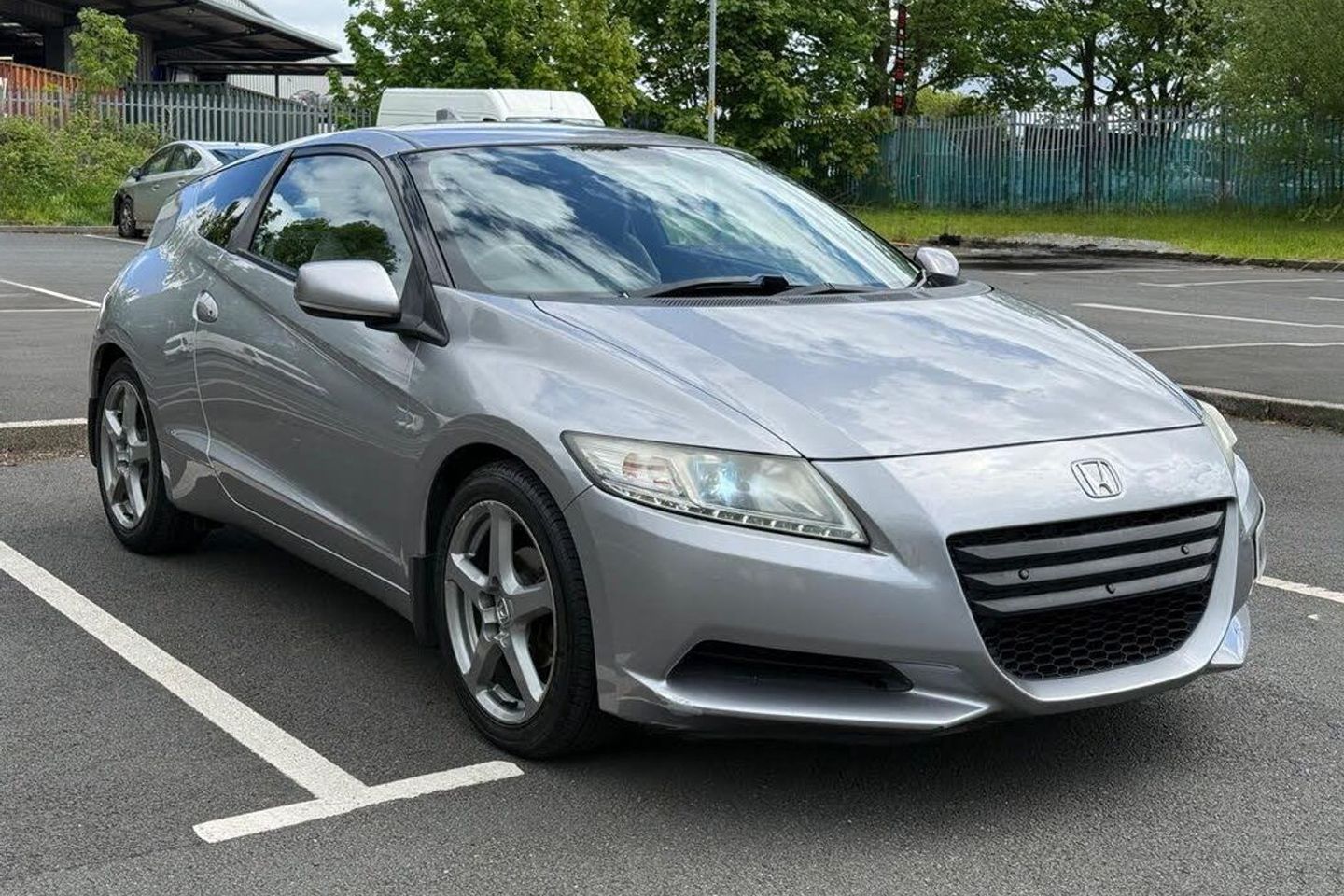
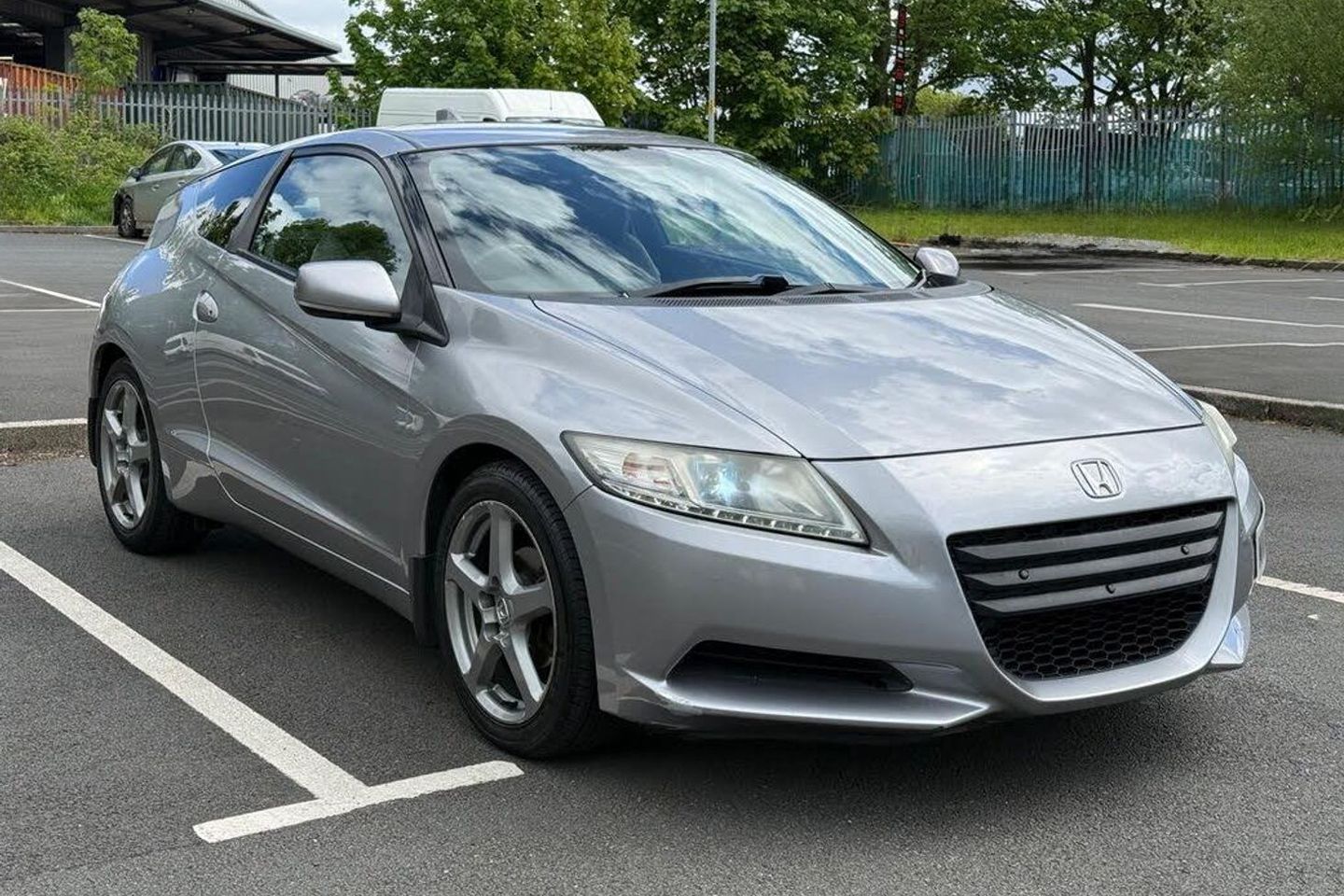
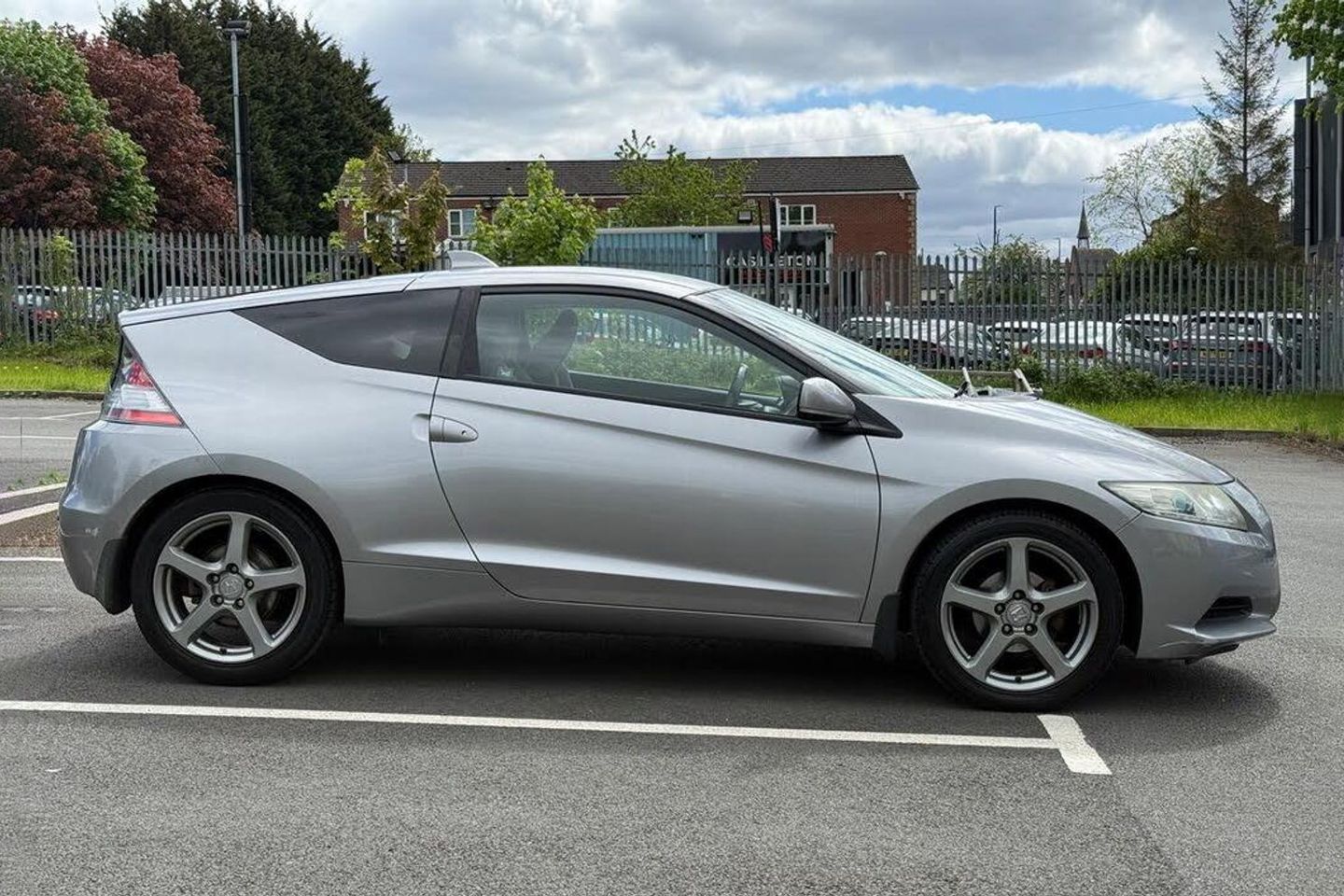
Another first-timer makes a soft landing in Shed’s world of sub-£2k MOTed cars this week in the intriguing and some would say misunderstood shape of Honda’s CR-Z. When this hybrid-assisted coupé came onto the market in 2010 the motoring press was a bit discombobulated by it. They liked its looks and the provision of a slick 6-speed manual gearbox but they didn’t understand how a 2+2 coop with hybrid assistance, albeit mild, would only have 123hp from a 1.5 i-VTEC engine/electric motor combo. They noted that it wasn’t that easy to see out of the back of it, with or without the nippers who were the only ones capable of fitting in the rear seats, but most agreed that the payoff for that was distinctive styling.
Hamstrung by its niche-ness, the CR-Z was phased out worldwide in 2015, and before that in the UK where you’ll struggle to find one registered later than 2013. You may have other views, but Shed thinks that it still looks fresh today. Admittedly he’s a Honda junkie, having sworn by many of their cars, superbikes, mopeds, scooters, quad bikes, mini tractors and lawn mowers over the years. Honda had the knack for creating interesting machinery once upon the rialto. What went wrong there?

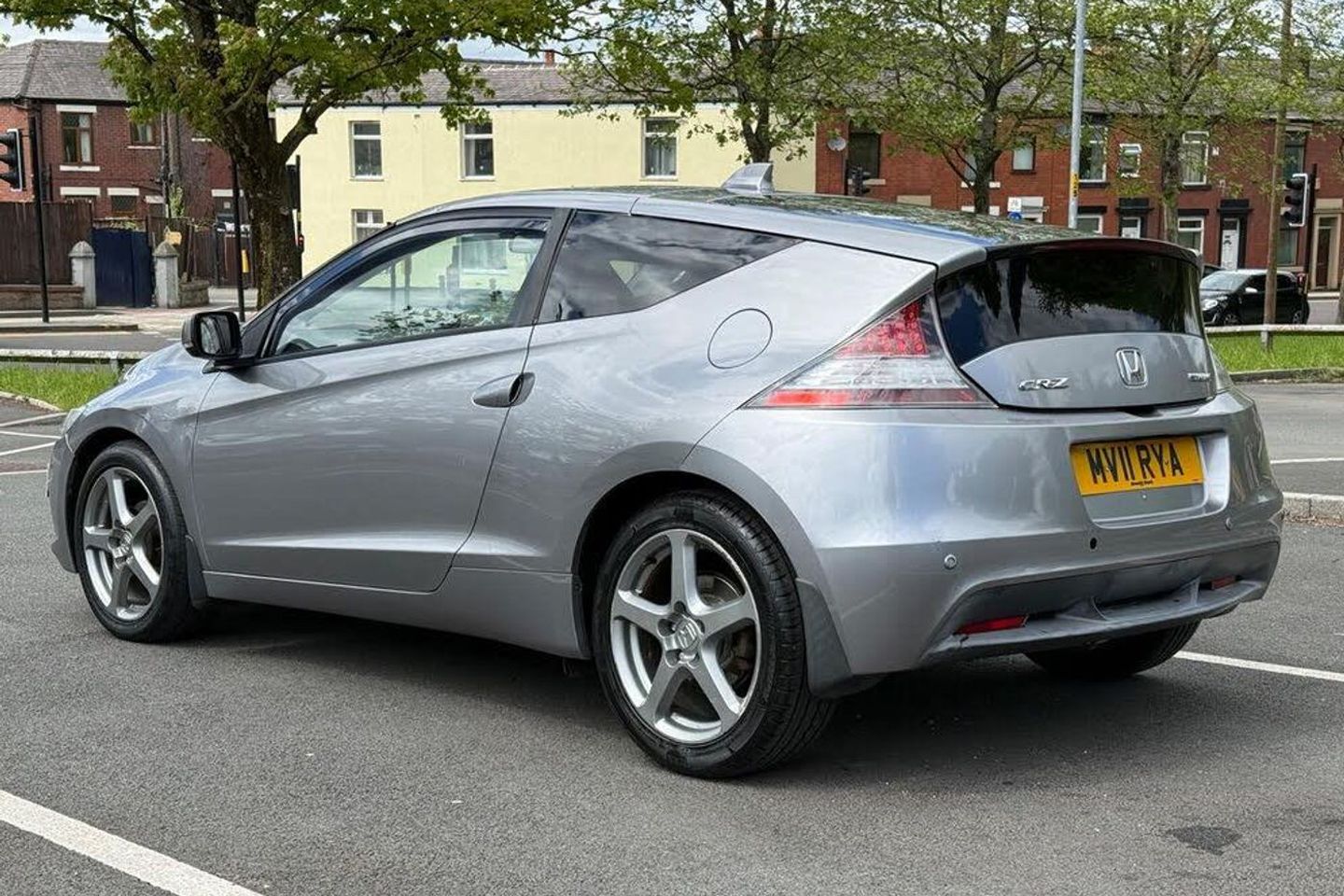
Couple of things to get out of the way with our shed. It’s been a Cat N car, and the engine management light is on. As you know, a Cat N vehicle is one that has been written off by insurers, not because of serious damage that has made it unrepairable but because of the disproportionate cost of fixing the car relative to its value. Damage to a Cat N car will generally be cosmetic and therefore nothing to be afraid of.
Some will bleat about N categorisation reducing the value of a car, although that’s hardly relevant when the price tag is already small. Our 140,000-miler from 2011 seems amenably priced at £1,995 and you could probably chip a bit off that to take it off their ‘ands etc. Shed did find a cheaper one at £1,950, a privately owned 2010 car with 10 months left on its MOT, but that had 154,000 on the clock and rust infesting both rear suspension mounts. Most decent CR-Zs will be nearer to £3,000 than £2,000, with low-milers typically coming in at between £5.5k and £7k.
Let’s say you do take the plunge on this one, what will you get? On paper, not a lot. You might just make it into the nines for the 0-60mph run, or make your way quite easily into them if you’re in one of the post-2012 facelift cars that were upgraded to around 135hp. More usefully, good efficiency, a smooth stop-start system, three driving modes and a weight of under 1,200kg will deliver average mpg figures in the mid-50s and an annual VED bill of just £35. That’s coming from the vendor, so don’t blame Shed if it’s wrong.
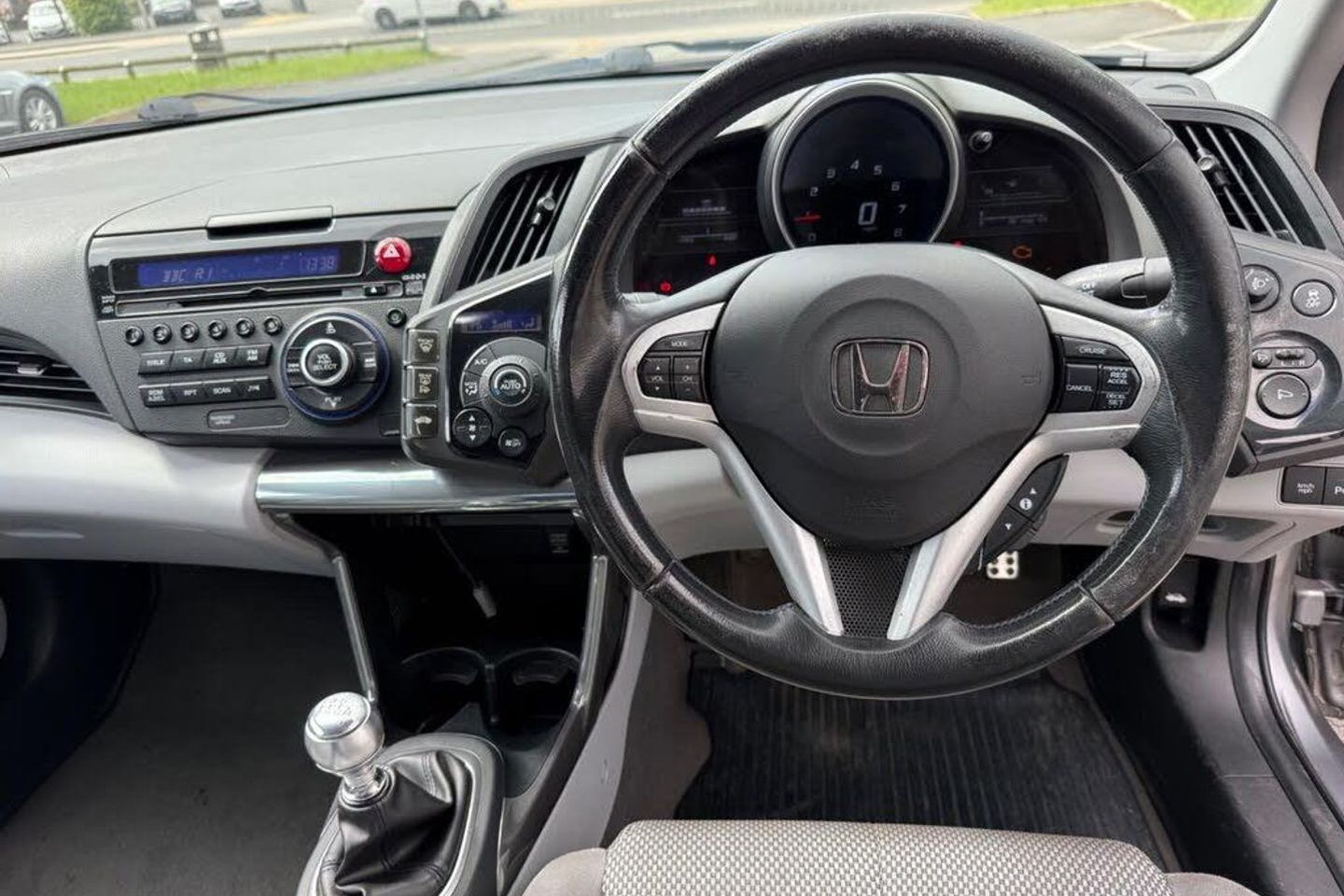
These CR-Zs might not set your pants on fire performance-wise but they do drive very nicely with lightweight suspension and a sporty driving position. They have a very good reputation for reliability, too. Shed found a CR-Z forum post from a US owner who had bought his CR-Z in 2011 with 237 miles on the clock. Fourteen years later it had done just under 406,000 miles, very little having gone wrong in that time. At that point he planned to give the car away as its original clutch was failing and he was looking at a biggish bill for a new one. The car was still on its original hybrid battery.
What about the illuminated EML on our shed? When it lit up in the aforementioned American mega-miler it turned out to be a solenoid issue, but if it’s a steady light here it could be nothing worse than a failing seal on the petrol filler cap. Changing that might well clear the alert. It could produce another one for emissions, but there’s a good chance that remedial action (i.e. changing the cap) will gradually clear everything up after a few more starts and miles.
Rusty rear ends like on that £1,950 car we talked about earlier are pretty common on CR-Zs, but there’s no indication of rot anywhere on our shed’s MOT history. Door handles are known for playing up, and if you’re not careful replacing them can generate new problems with window operation. Seat materials in either cloth (as here) or leather on Dynamic pack cars can wear through on high milers, but that’s normal for high mileage cars isn’t it? Just be grateful that your car has proved itself capable of lovely high mileages in the first place.
Insuring a Cat car can be challenging, but in Shed’s experience insuring any car these days is challenging. He remembers when you were rewarded for sticking with an insurance company, not mugged off for not changing like you are now. If he could find some way of self-insuring he would do it. The good thing about these CR-Zs is that they are in a low group, 17E if that means anything to you, so the intensity of the mugging-off experience will be less.
Not many CR-Zs were bought, but if the ‘how many left?’ websites are anything to go by most of the ones that were bought in the UK are still knocking about, the gradual downwards curve into oblivion that applies to the graphlines of most cars on those sites being replaced on the CR-Z’s by a near-flat plateau. Face-ripping performance might not be a CR-Z’s schtick, but sweet handling, low running costs and that increasingly rare and pleasant sensation that you’re the owner of something that’s both special and cheap surely count for something.