

Spring can be a dreadful time to be in school. The end of the year is in sight, but with weeks of mandatory work still to be done, daydreaming students are tempted by the miracle taking place outside to ditch their books and wish they were anywhere but the classroom. And their teachers wonder why they ever returned to the classroom instead of trying their hand at commercial fishing or anything else.
Most have learned to simply grit their teeth and push forward until the school year mercifully ends. But there’s another way, one paved by the toughest prep school in America, run by Benedictine monks in the ragged heart of Newark, N.J.
St. Benedict’s, widely recognized as a leader in urban education, shows that rather than being full of dread until the end of the school year, these weeks in May and June can be turned into a breakout session that highlights experiential learning, setting up students — especially those in secondary schools — for success in ways they never imagined.
I recently spent several years at the school reporting for a book, and I saw how this approach could be successful in other schools willing to give it a try.
After St. Benedict’s finishes its winter term at the end of April, it begins a five-week spring phase with its own curriculum and special schedule. Most classrooms are emptied, and teachers offer elective courses they designed. Some highlight practical life skills, such as “Real Men Cook.” Offerings including “Social Justice and Science” and “Art, Nature, and Protest” break out of educational silos to combine subjects in new ways that the students haven’t encountered before. Each class has reading and writing requirements, attendance is mandatory, and students receive grades as well as teacher evaluations.
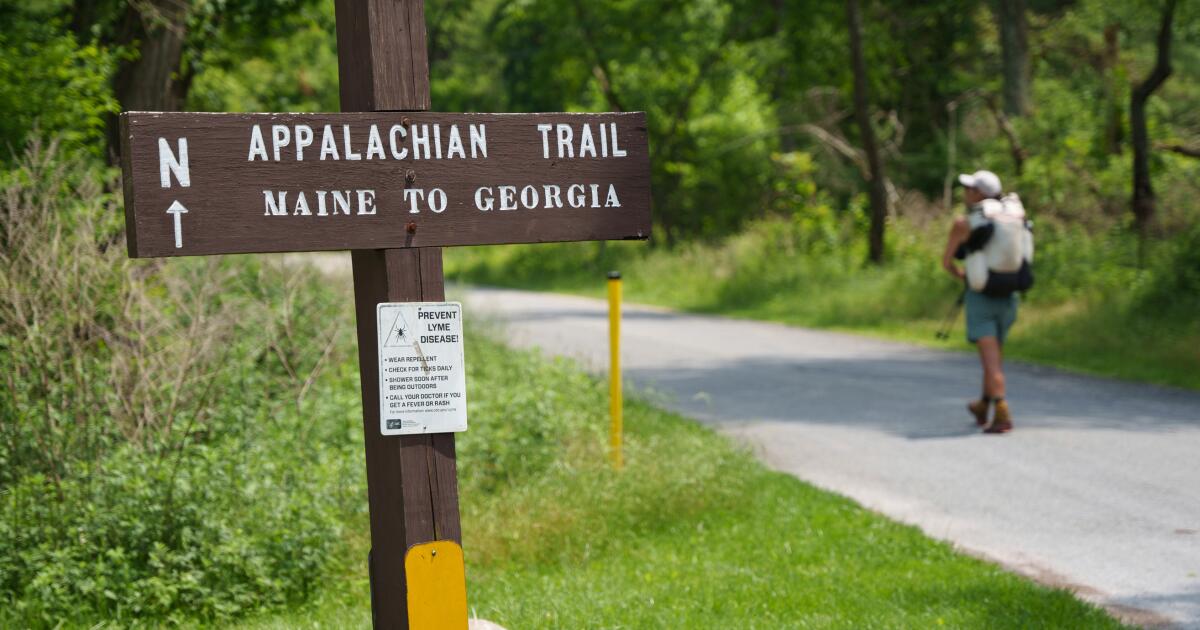
The most remarkable endeavor of St. Benedict’s spring term, the backpacking project, is a requirement for all freshmen to move on to their second year. For more than half a century, St. Benedict’s freshmen all have had to hike roughly 55 miles on the Appalachian Trail through the mountains of northwestern New Jersey, carrying on their backs their tents, sleeping bags, pots and pans, and everything else they need to survive the weeklong trek.
Many of the city-bound students have never spent a single night in the woods, but they all will have to make it to the end of the trail by week’s end. Before they step into the woods, the freshmen spend several weeks preparing. Glenn Cassidy, a 30-year faculty veteran and director of the backpacking project since 2007, assembles all 185 or so freshmen on the first day of spring term to read them the riot act about the project. “Rule No. 1,” he tells them, barking the order like a military commander, “is stay together.” He regales them with stories of backpacking mishaps over the years, including his own experience when he was a student at St. Benedict’s. A member of his hiking team who was responsible for carrying the tent poles missed the bus to the mountains, condemning the rest of his team to several miserable nights without a standing tent.
As I hiked with the students, I saw how the weeks of physical preparation and the drilling in teamwork prepared them to complete tasks they never imagined they could. I watched as leaders emerged, and I noticed how empathy seeped through the crowd as the heavy packs of laggards and weaker students were offloaded and distributed to others who were determined to ensure that everyone survived the weeklong test.
To complete the course and receive a grade, the students must keep a journal and write an essay on what the trail meant for them. Reading through many, I realized just how much this trek in the woods meant to these city-hardened kids. “Walking through forests and climbing mountains isn’t just about getting from A to B,” one 14-year-old wrote. “It’s about finding out who you really are.” He came back from the mountains saying, “If I could do the A.T., I can do anything.”
St. Benedict’s is itself a testament to survival. Founded in 1868, it was a cornerstone of Newark’s immigrant community. But after the 1967 race riots ripped apart the city’s social contract, enrollment declined and racial attitudes hardened. By 1972, the monks voted to close the school. Half then left for a suburban monastery.
But the other half stood fast, determined to reimagine what a prep school could be. They extended the school year to 11 months, instituted a strict honor code and set high academic standards. From those earliest days, the monks confronted the end-of-the-year syndrome pragmatically, replacing regular classroom instruction with out-of-classroom electives.
Most schools do not have the luxury of St. Benedict’s 11-month school year to experiment with a full term of elective courses. And public school districts would be hard-pressed to mandate a weeklong hike. But St. Benedict’s shows that shared experiences can be an effective method of teaching and learning. Incorporating a special project into regular courses would help keep students’ interests alive in any school. And there’s nothing better than the spring sun to cast new light on old subjects.
Anthony DePalma, a former education reporter and foreign correspondent for the New York Times, is the author of, among other books, “On This Ground: Hardship and Hope at the Toughest Prep School in America.”