

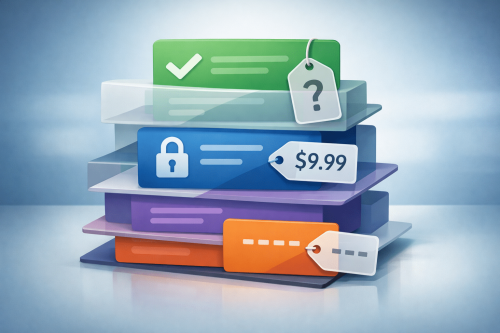
Subscription Pricing Is Changing Again
Your monthly tech bill keeps climbing, even when you add no new tools. That shift affects households, freelancers, and businesses that rely on digital services every day. Tech subscription pricing now changes faster than most people can track. Companies add tiers, bundles, and locked features that raise costs without clear benefits.
This change matters now because subscriptions replaced one-time purchases. Phones, apps, streaming platforms, and work tools all demand recurring payments. When pricing grows complex, people struggle to judge value. Some users pay more for features they never touch. Others lose access to basic tools unless they upgrade.
The risk runs deeper than higher costs. Confusing pricing erodes trust. When users stop trusting tech subscription pricing, they delay upgrades or cancel entirely. That behavior hurts both consumers and companies.
Over the past year, many major platforms adjusted plans at least once. They framed changes as flexibility or personalization. In practice, many plans removed features from lower tiers and sold them back as add-ons. That pattern now defines modern tech subscription pricing.
From Simple Plans to Layered Access
Early subscriptions followed a clear formula. One price unlocked everything. A higher tier added storage or support. That structure helped users decide quickly.
Today, tech subscription pricing favors layered access. Base plans now act as entry tickets, not complete products. Core features sit behind higher tiers. Advanced tools require add-ons. Some services charge extra for usage volume.
Software companies use this model to increase average revenue per user. Instead of raising prices across the board, they nudge customers into upgrades. A workflow tool might cap automation limits. A design app might lock export formats. A cloud service might restrict collaboration.
Bundles accelerate this shift. Companies group multiple tools into one package and present it as a deal. The bundle looks cheaper than buying tools separately. In reality, many users only need one or two features.
This approach changes how people evaluate tech subscription pricing. Price no longer reflects usefulness. It reflects access. Users pay to avoid limits rather than to gain value.
SaaS platforms lead this trend, but consumer tech follows close behind. Streaming services, fitness apps, and security tools now mirror enterprise pricing logic.
Bundles and Gated Features Are Becoming the Norm
Bundles solve one problem for companies. They reduce churn. When users rely on several tools inside one subscription, they hesitate to cancel.
For users, bundles introduce friction. A note app might come packaged with email, storage, and calendar tools. If you only need notes, you still fund the rest. Over time, that waste adds up.
Gated features create similar tension. Companies often move popular tools behind higher tiers. They do not add value. They relocate it.
This tactic works because switching costs feel high. Data, habits, and integrations lock users in. Tech subscription pricing relies on that inertia.
The Federal Trade Commission now watches these patterns more closely. Regulators warn that unclear pricing harms consumers and competition. You can read the FTC’s guidance on subscription transparency here:
Despite scrutiny, complexity continues to grow. Companies test price sensitivity in real time. They run experiments on feature placement and usage caps.
That experimentation explains why tech subscription pricing feels unstable. Users experience constant change without clear communication.
The Hidden Cost of Convenience
Subscriptions promise convenience. Automatic updates, cloud sync, and cross-device access sound appealing. Those benefits remain real. The cost hides in how companies price them.
Convenience reduces friction. Reduced friction increases spending. Users stop reviewing subscriptions because everything “just works.”
That mindset allows overlapping tools to pile up. A user might pay for two cloud storage services, three messaging apps, and multiple media subscriptions. Each fee feels small. Together, they strain budgets.
Tech subscription pricing exploits that behavior. Companies favor monthly pricing because it masks total cost. A $12 plan feels manageable. Over a year, it becomes $144.
Feature creep worsens the problem. Apps add tools to justify higher tiers. Many users never adopt those tools. They still pay for them.
For businesses, the stakes rise higher. Teams often subscribe at scale. A small pricing change multiplied by hundreds of seats can derail budgets. Finance teams now audit software more often because tech subscription pricing no longer stays predictable.
More Features Do Not Always Mean Better Outcomes
Product teams love features. Users love outcomes. Those goals rarely align.
When tech subscription pricing ties value to feature count, products bloat. Interfaces grow complex. Learning curves steepen. Productivity drops.
Many studies show that users rely on a small percentage of features in most software. Yet pricing often reflects the full feature set. That mismatch creates waste.
Feature overload also increases support costs and security risk. More code introduces more bugs. More integrations widen attack surfaces.
From a user perspective, better outcomes come from clarity. Clear pricing supports clear decisions. When plans confuse users, trust erodes.
Some startups now compete by simplifying tech subscription pricing. They offer one plan, one price, and one promise. That approach resonates with users tired of complexity.
How to Buy Smarter
Smarter buying starts with intention. You cannot control how companies design tech subscription pricing. You can control how you respond.
Below are practical steps that reduce waste and restore trust.
Audit actual usage
Check usage data inside each app. Many platforms show activity logs or feature adoption. If you never use premium tools, downgrade.
Track subscriptions quarterly. Set calendar reminders. Treat subscriptions like utilities, not background noise.
Avoid redundant tools
List tools by function. Keep one primary tool per category. Cancel overlaps.
Bundled features often duplicate tools you already own. Do not pay twice for the same outcome.
Favor clarity over bundles
Choose plans with transparent limits and clear value. Avoid bundles that promise savings without specifics.
If a company cannot explain pricing in simple terms, treat that as a warning sign.
Watch annual commitments
Annual plans lock in savings but reduce flexibility. Only commit after six months of consistent use.
Read pricing change histories
Some companies adjust pricing often. That pattern signals risk. Stable tech subscription pricing supports long-term planning.
Market and Cultural Implications
Tech subscription pricing reflects broader shifts in the tech economy. Growth now depends on retention, not acquisition. Pricing strategies adapt to that reality.
As markets mature, companies extract more value from existing users. That pressure increases complexity.
Culturally, users grow more skeptical. Social media discussions now call out confusing tiers and surprise price hikes. Trust becomes a competitive advantage.
Regulators also respond. Laws in several regions now require clearer cancellation flows and pricing disclosures. Those rules may force simpler tech subscription pricing over time.
Until then, users must stay vigilant.
Practical Takeaways
Tech subscription pricing will not return to simplicity soon. Companies benefit too much from layered access and bundles.
You can still protect your budget by auditing usage, avoiding redundancy, and choosing clarity. Treat every subscription as a business decision, even at home.
Trust grows when value feels obvious. Spend where outcomes match cost. Cancel the rest.