


Spring travel season starts messy. Airports are busier, timetables slip, hotel Wi-Fi is still the same lobby-bar nightmare it was last year, and that 5W wall charger you’ve been dragging around since 2019 can’t keep up with a modern phone, let alone a phone and a laptop and a pair of earbuds.
The good news is that the best travel tech got a lot better in the past twelve months. GaN chips shrank chargers to pocket size. Portable routers started shipping with real throughput. Global data plans stopped being a scam. And power banks finally learned to tell you what’s going on inside them.
Here are six pieces of travel tech worth the suitcase real estate this spring.
Add The Gadgeteer on Google Add The Gadgeteer as a preferred source to see more of our coverage on Google.
ADD US ON GOOGLE
TESSAN Voyager 205 Universal Travel Adapter
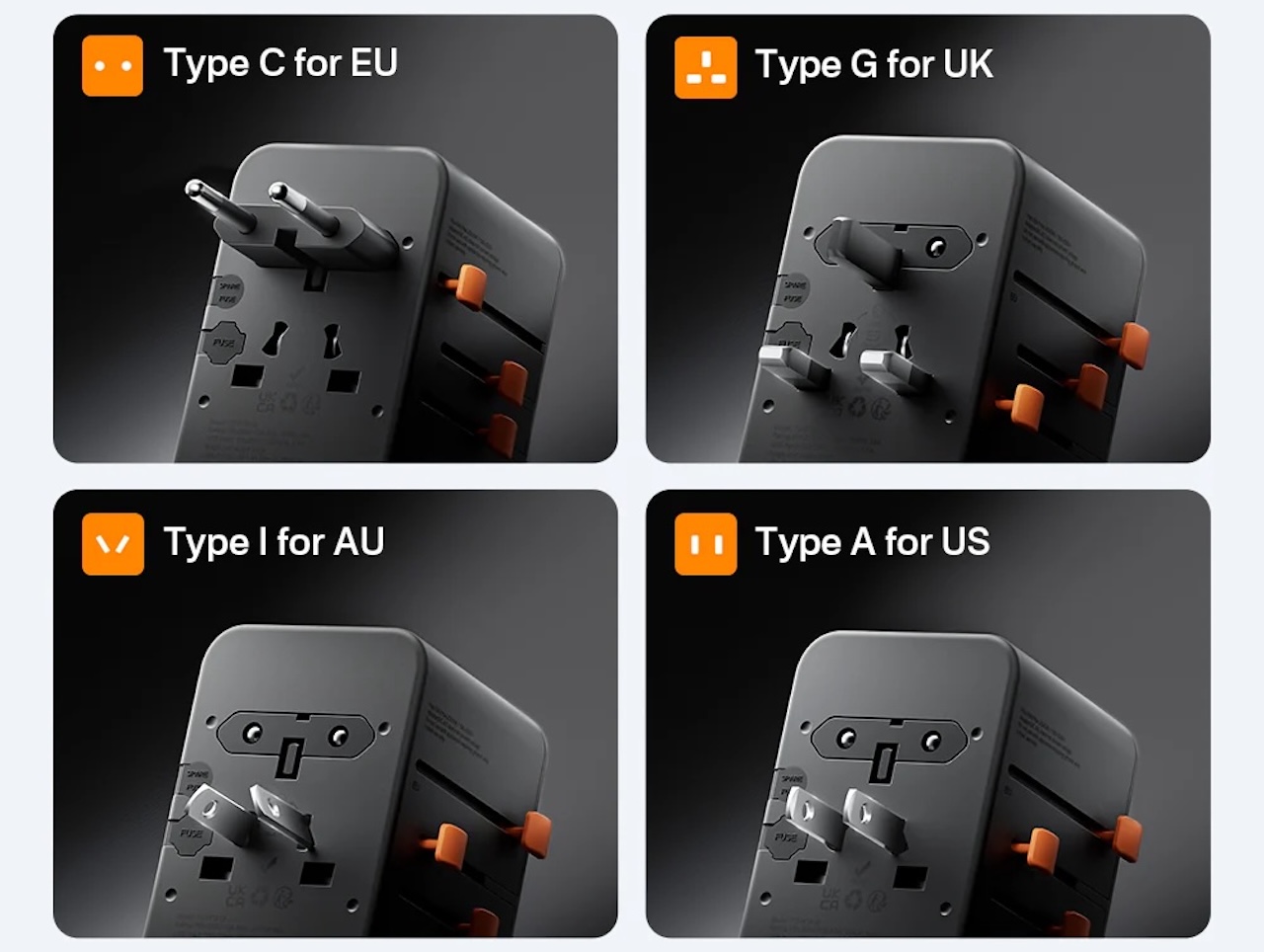
Tessan’s Voyager 205 is the one to beat in the do-it-all travel adapter category. Launched July 2025 and shown at IFA 2025, it’s a 7-port GaN charger (six USB-C, two rated 140W PD 3.1, plus a USB-A) with a universal plug system for 200-plus countries. 205W of GaN output runs a MacBook Pro and tablet at full speed, with dual-fuse protection on the safety side.
Price: $119
Where to Buy: Tessan
It’s also large. That’s the tradeoff. If you’re packing a kid’s tablet, a laptop, a phone, a watch, and earbuds for a family trip, the math works. If you’re carrying one phone and a Kindle, it’s overkill.
UniFi Travel Router
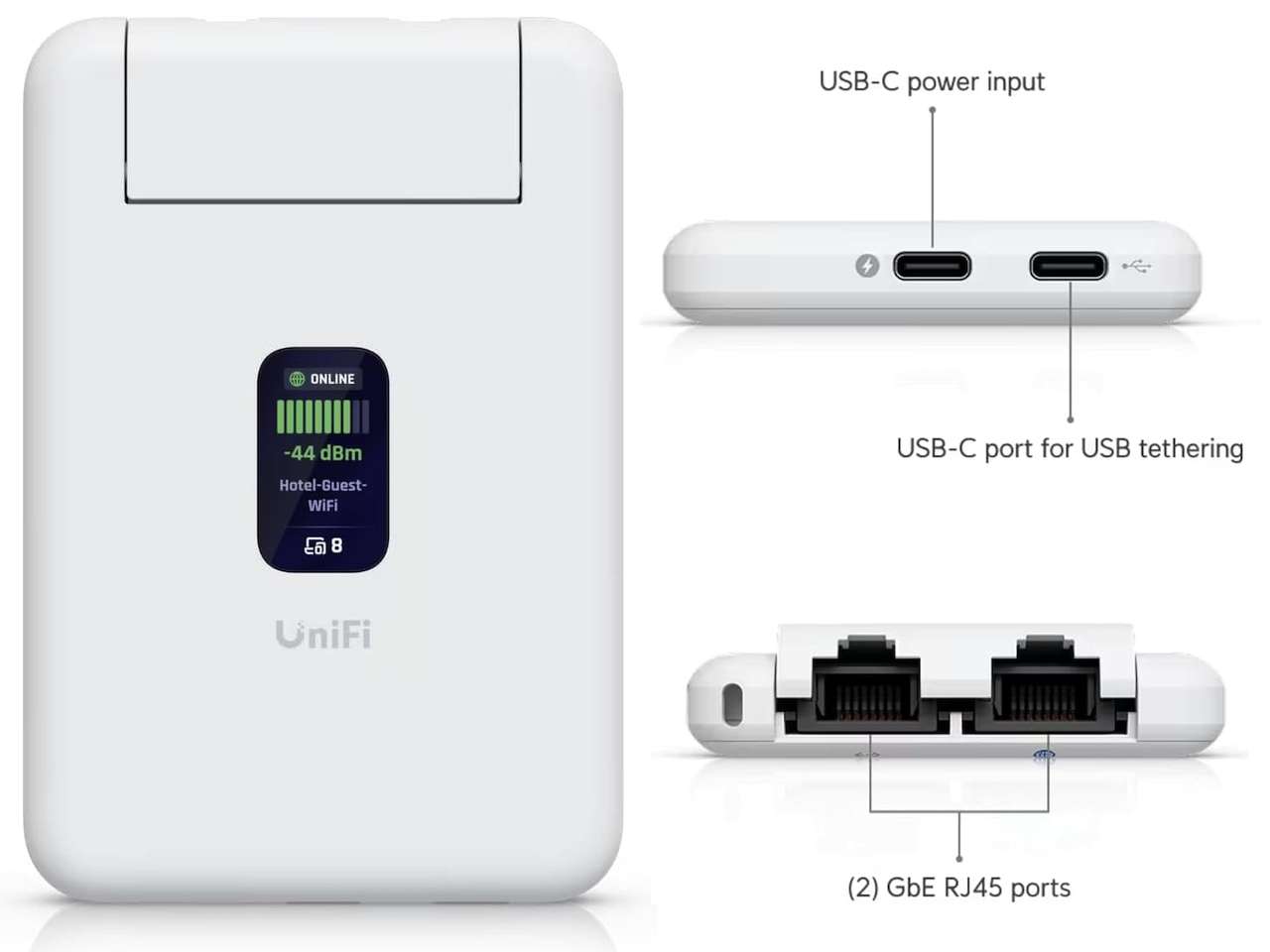
Ubiquiti’s UniFi Travel Router (UTR) is the thing you didn’t know you needed until the first time hotel Wi-Fi asks you to click a captive portal on six different devices. It’s a palm-sized slab (3.8 x 2.6 x 0.5 inches, 89 grams) that sits between your gear and whatever network you’re connecting to, so you log in once and every device comes along. A 1.14″ front status display shows connection state at a glance.
Price: $180
Where to Buy: Amazon
Built-in WireGuard VPN tunnels your traffic home, so geo-blocked streaming and work VPNs behave. It plays nicely with a UniFi setup but runs stand-alone with no account. Connectivity is dual-band Wi-Fi 5 plus two Gigabit Ethernet uplinks, with WPA2/WPA3. It’s USB-C bus-powered at 5V/2A (no battery, adapter not included). Launch MSRP was $79; as of April 2026 it’s a #1 New Release in Routers on Amazon, running around EUR 173 via AmazonGlobal import.
ASUS ZenBook A14 (2026)
Sub-kilogram laptops usually come with compromises: dim screens, hollow keyboards, batteries that tap out before lunch. ASUS’s ZenBook A14 refresh skips that math. It comes with an all-metal chassis that weighs under one kilogram, packs Qualcomm’s new Snapdragon X2 Elite with 18 CPU cores, and is rated for more than 28 hours of video playback. For carry-on travelers who want a real laptop without paying the weight tax, it’s the most interesting ultraportable pitch we’ve seen this year.

Price: $824
Where to Buy: Amazon
The battery figure is the one worth watching. Twenty-eight hours is transpacific flight plus layover plus first day on the ground without finding an outlet, which is the travel edge case that kills most laptops. The A14 also ships with Windows 26H1 preinstalled, and per ASUS the emulation layer now handles most legacy x86 apps without the drama that dogged earlier Arm laptops.
Huawei MatePad 12 X (2026)
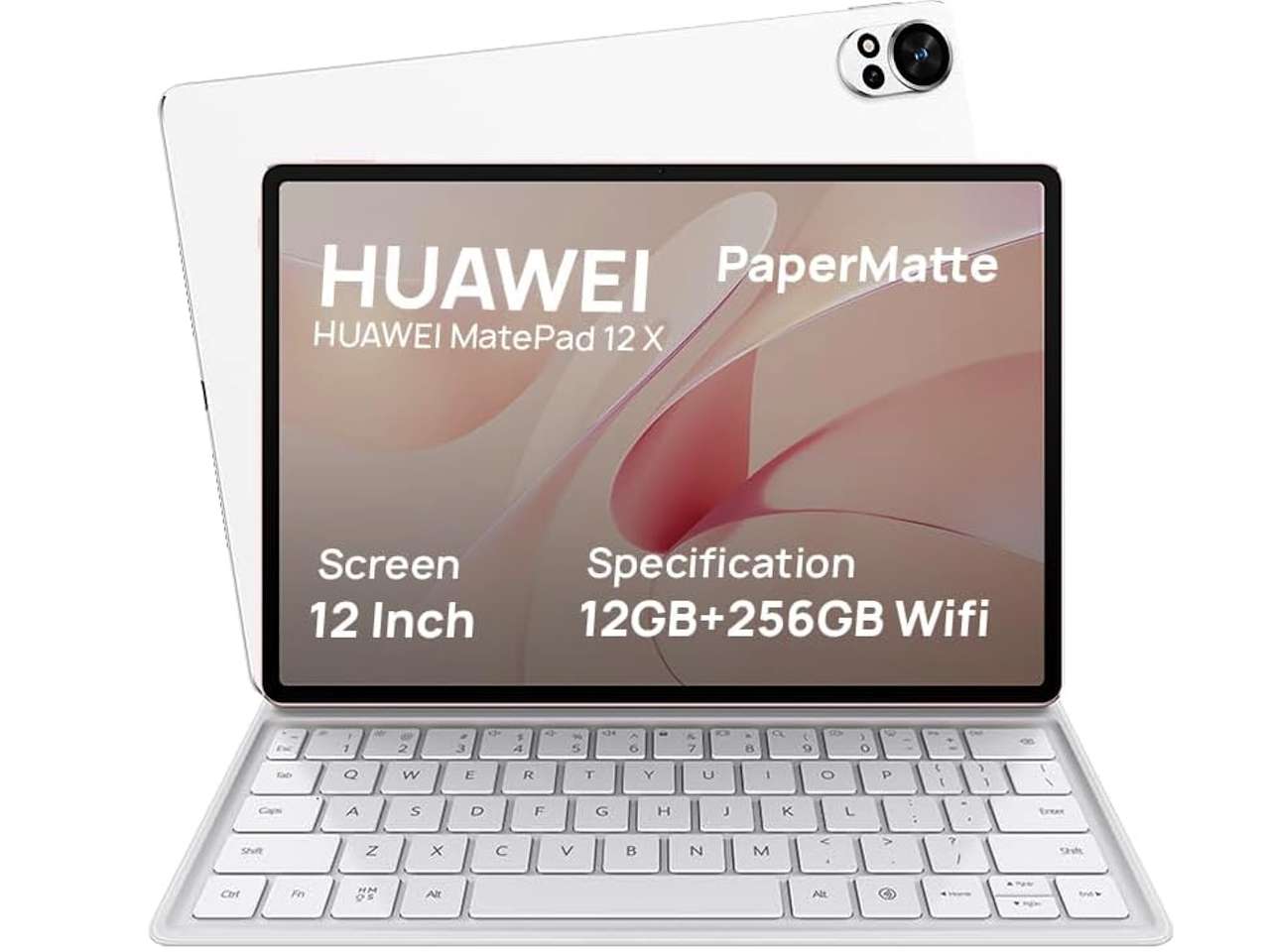
For travelers who’d rather not drag a full laptop across a time zone, the MatePad 12 X is the most credible “ditch the laptop” tablet pitch we’ve seen this spring. Per Huawei’s press material, it’s a 5.9mm-thin 12-inch tablet with a 1000-nit PaperMatte display that cuts glare by 50% through nanoscale etching, a magnetic keyboard that powers via pin contacts over a low-latency nearlink connection (so there’s nothing extra to charge), and M-Pencil Pro support with 16,384 pressure levels and three interchangeable tips for in-flight note-taking or sketching.
Price: $1,999
Where to Buy: Amazon
It’s positioned squarely at the carry-on productivity crowd: something you can pull out on a tray table without flipping into your neighbor’s wine, run a full day of email and document edits on, and still use as a movie screen on the flight home. Tablet, keyboard, and stylus together weigh around 863g, and the 10,100mAh battery is rated for 14 hours of video playback. The keyboard’s 1.5mm key travel is the detail that makes or breaks a tablet-as-laptop replacement, and Huawei’s lands on the better end of the category.
The catch for US travelers: Huawei isn’t selling the MatePad 12 X (2026) through US retail. It started shipping in Malaysia at RM 2,499 (~$530) and rolled out across Asia from late November 2025, with grey-market import prices starting around $417. It also runs HarmonyOS rather than Android, so common Western travel apps like Uber, Google Maps, or US banking apps need to be accessed through web versions or sideloaded, which is something to weigh before committing it to a long trip.
MeowGo G50 Max Global Hotspot
If you’ve ever paid $15 a day for hotel Wi-Fi on top of $12 a day for in-flight Wi-Fi on top of your phone’s international roaming charge, the G50 Max is the kind of device that pays for itself on the first trip. It runs 5G roaming across 80-plus countries with coverage in more than 200 regions, shares Wi-Fi 6 to 16 devices at once, and, most interestingly, has NTN satellite fallback plus in-flight Wi-Fi support for the times you’re somewhere the cell networks aren’t.
Price: $169.99
Where to Buy: Amazon
The satellite piece is the headline, with a caveat: per uCloudlink, the NTN mode handles two-way messaging and Emergency SOS via Skylo across 38 countries, not full broadband. You stay reachable off-grid, but you’re not streaming Netflix on the trail. On cellular, 5G peaks at a theoretical 3.4Gbps on Qualcomm’s SM4490, and the 4,850mAh battery is rated for about 15 hours. US retail pricing and GlocalMe’s North America data tiers for the G50 Max haven’t been finalized as of MWC 2026, though GlocalMe already sells no-contract packs for its existing hotspots.
BAGSMART Blast Pro 40L Travel Backpack
Not every piece of travel tech has to run on batteries. The Blast Pro 40L is BAGSMART’s pitch at the one-bag week-trip crowd, and the stand-out detail is the laptop sleeve: it’s suspended, velvet-lined, fits up to a 15.6″ laptop, and is TSA-lock compatible (lock not included), which is an unusually thoughtful combination for a sub-premium travel pack. Price: $109.99
Where to Buy: BagSmart
At $110 ,$39, 2.98 lbs, and 13.0″ x 17.7″ x 8.7″, it fits the standard 22″ x 14″ x 9″ US carry-on envelope, though hands-on reviewers peg the usable capacity closer to 32-35L once the ventilated shoe compartment is in play. The suitcase-style clamshell zip beats top-loader excavation, and it ships in eight colorways. For travelers still pairing a 30L daypack with a rolling carry-on, this is the one-bag argument.
The best travel tech pick if you only buy one
If you’re picking one, make it the MeowGo G50 Max or the ZenBook A14. The hotspot solves the biggest recurring headache in international travel, which is paying three different providers to stay online. The ZenBook solves the biggest one at the workstation, which is needing a full day of real work from a plane, a hotel lobby, or a café without hunting for an outlet. Everything else on this list is an upgrade on something you’re already carrying. These two replace something entirely.
Love our content?
Sign up for our newsletter today.
No ads, no spam, just links to our latest articles!