

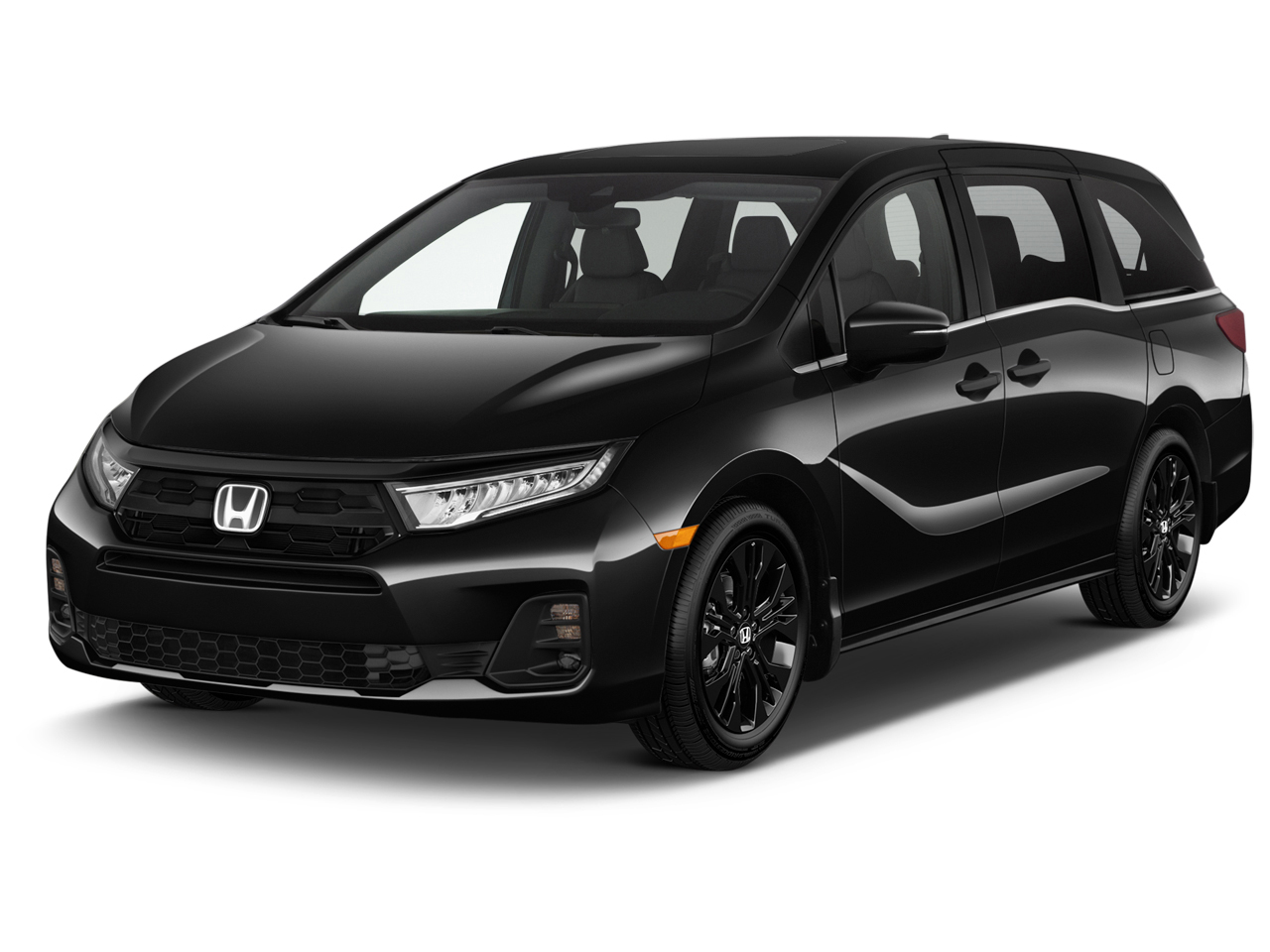
The 2026 Honda Odyssey leans hard into its core strengths: relaxed road manners, a quiet cabin, and a powertrain that never feels strained even with a full load of people and stuff. The 3.5-liter V6 delivers 280 horsepower, and the 10-speed automatic shifts with a polished, unobtrusive feel that suits long drives. There is plenty of reserve power for merging or climbing grades, yet fuel economy stays competitive with other V6 minivans, especially on the highway.
Ride quality is a highlight. The suspension soaks up broken pavement and expansion joints with an easy, gentle motion that will win over motion-sensitive passengers. On smoother surfaces, the Odyssey settles into a calm lope, closer to a big luxury sedan than a work van. Noise levels are low most of the time, with only some extra wind and tire roar on coarse pavement, and the V6 stays in the background with a smooth hum even when you lean on it.
Front seats are broad and inviting, and it is simple to dial in a good driving position thanks to generous seat and steering wheel adjustment and standard four-way lumbar support for both front occupants. Visibility is another strength. Slim front pillars, an extra little quarter window, and a large rear glass area help ease lane changes and parking, backed up by standard blind spot warning, rear cross traffic alert, and a multi-angle backup camera.
Family-friendly touches are where the Odyssey earns its reputation. The second row seats slide laterally once you remove the middle chair, so you can create a wide pass through to the third row or pull an outboard seat closer to the front for easier access to a child in a car seat. The third row itself folds into a deep well in the floor, so you can convert from people hauler to cargo van without wrestling heavy seats into the garage. Even with all rows up, that well swallows strollers and grocery runs without drama.
The tech story is straightforward rather than flashy, which is exactly what you want on a busy weekday morning. Every Odyssey now carries a 9-inch touchscreen with large icons, bright graphics, and an intuitive tile layout that you can rearrange like a smartphone home screen. Wireless Apple CarPlay and Android Auto are standard, and there is a physical volume knob, so basic tasks do not turn into multi-tap distractions. A helpful on-screen overlay can explain various functions, a nice nod to less tech-savvy drivers or grandparents who borrow the van.
Safety kit is generous across the board. Honda Sensing packs in forward collision warning, automatic emergency braking with pedestrian detection, lane keeping and lane centering help, road departure mitigation, and adaptive cruise control on every trim. Blind spot monitoring and rear cross traffic alert are also standard, so you do not need to climb the trim ladder just to get modern driver assistance. A rear seat reminder and rear belt minder add extra peace of mind when you are juggling kids and cargo.
The 2026 Odyssey lineup centers on four trims, each using the same 280 hp 3.5-liter V6 and 10-speed automatic. All seats up to eight passengers and drive the front wheels, with no hybrid or All Wheel Drive option offered. Pricing starts with the EX-L at a bit over the low forties, then steps through Sport-L and Touring before topping out with the Elite, which lands in the low fifties. The powertrain, basic seating layout, and safety suite are consistent from bottom to top, so your real choice is how much convenience and family tech you want to pay for.
The EX-L is the value sweet spot for many shoppers. It already brings leather upholstery, power-adjustable heated front seats, power sliding doors, a power liftgate, a power moonroof, memory settings for the driver’s seat and mirrors, and side sliding second row seats. You also get tri-zone automatic climate control, wireless phone charging, and multiple USB ports, including both USB-A and USB-C connectors up front and in the second row. For families moving out of an older three-row SUV, this trim will feel like a big leap in comfort and ease without looking extravagant.
The Sport-L adds a bit of attitude without changing the mechanical recipe. Think darker exterior trim, a slightly more assertive look, and additional USB-C ports for the third row so every device-hungry passenger has a place to plug in. It keeps the same generous safety suite and core convenience gear as the EX-L, so you are paying mainly for style and a smidge more rear cabin usability. If you like the blacked-out look but do not care about built-in navigation or advanced rear entertainment, Sport-L hits a nice aesthetic and functional middle ground.
Move to the Touring trim and the Odyssey becomes a road trip machine. Touring adds built-in navigation that displays turn information and street names clearly, though it takes a moment to load at startup. More important for many parents is the addition of CabinWatch, which uses two cameras to monitor the rear seats on the center screen, even in low light, along with the CabinTalk intercom that pipes the driver’s voice through the speakers or rear headsets while ducking the music. Touring also brings upgraded USB coverage in the third row and a more sophisticated rear entertainment system that can stream content directly from the internet or a connected phone.
The Elite trim takes the fully loaded approach. On top of Touring equipment, it adds touches that make daily life just a bit easier and more pleasant: ventilated front seats, a heated steering wheel, and a hands-free power liftgate that opens with a wave of your foot. Cabin materials get a slight bump, and LED headlights have been standard across the range since earlier model years, so Elite drivers enjoy strong lighting along with every tech feature Honda offers on this van. If you live where winters are harsh or you spend endless hours behind the wheel, Elite can feel worth the extra spend, but many families will be content with Touring.
The biggest dynamic weakness is handling. The Odyssey feels safe and predictable, which matters more than anything when kids are on board, yet it never encourages you to enjoy a twisty road. Body lean shows up in routine cornering, steering response is a bit lazy, and feedback through the wheel is muted. In quick lane change tests, it behaves securely but without the surefooted agility of some rivals, especially the Toyota Sienna with its available All Wheel Drive or a well-tuned three-row crossover. If you care about driving fun, this minivan will not change your mind about the breed.
Inside, the design is sensible but not particularly special. Materials are decent, and build quality feels solid, yet the overall presentation lacks the warmth and flair found in a Chrysler Pacifica or some top-tier SUVs. Hard plastics on the doors, plain carpeting, and flimsy floor mats remind you that Honda prioritized function over style. The sliding center console lid glides with a nice action, but small details like slippery cup holder bases that let bottles slide around look like they missed a round of real-world testing.
Ergonomics mostly works well, though a few choices frustrate. The push-button gear selector uses a row of differently shaped buttons that demand a bit of thought every time you want to shift, especially for new drivers in the family. The climate panel is clear at a glance, yet several buttons are very small, and the hazard light switch is hidden too far to the right for easy reach in a panic stop. None of these are deal breakers, but they feel like missteps in an otherwise user-focused cabin.
Third row practicality is a mixed bag. Space is decent once you are back there, and the seats split and stow neatly into the floor, yet the seating position is low with simple cushions and little contouring. Access is only generous if you remove the second row middle seat and slide an outboard chair inward to create a wider path. If you leave the full bench in play for eight passenger duty, climbing to the way back becomes more of a squeeze than in some competitors. For kids in boosters or adults on occasional trips, it works, but it is not the most gracious setup in the class.
Families juggling multiple child seats may also hit a few snags. Every second row position has lower LATCH anchors, which is great, but the fabric can partially hide the anchors on the outboard spots, so you need to dig and tug to secure the connectors. The center shoulder belt routing and flexible buckle can make some rear-facing installs tricky. Third row tether anchors are best reached from the cargo area, which is awkward when you are leaning over the folded seats. Three seats across the second row are possible, yet installing any restraint in the third row is something you will want to avoid doing often.
Safety credentials are strong overall, though not perfect. The Odyssey scores well in most IIHS crash tests, but it earns a Poor rating in the updated moderate overlap evaluation that targets improved protection for rear passengers. Honda equips second row outboard seats with pretensioners and load limiters and extends side curtain airbags to the third row, which helps, but careful shoppers with teen riders in the back will want to weigh this result against alternatives like the Sienna or Pacifica when making a final call.
Our Take
The 2026 Honda Odyssey sticks close to a proven formula: a strong V6, effortless ride comfort, and a cabin packed with family-friendly features that actually get used. It is not the flashiest van, nor the most fun to drive, and interior richness trails the best from Chrysler and Toyota. Yet as a long-distance family tool, it still feels like one of the most thoughtfully engineered options on the road. If you value quiet, comfort, and smart packaging more than edgy styling or hybrid bragging rights, the Odyssey deserves a very close look, especially in EX-L or Touring form.