


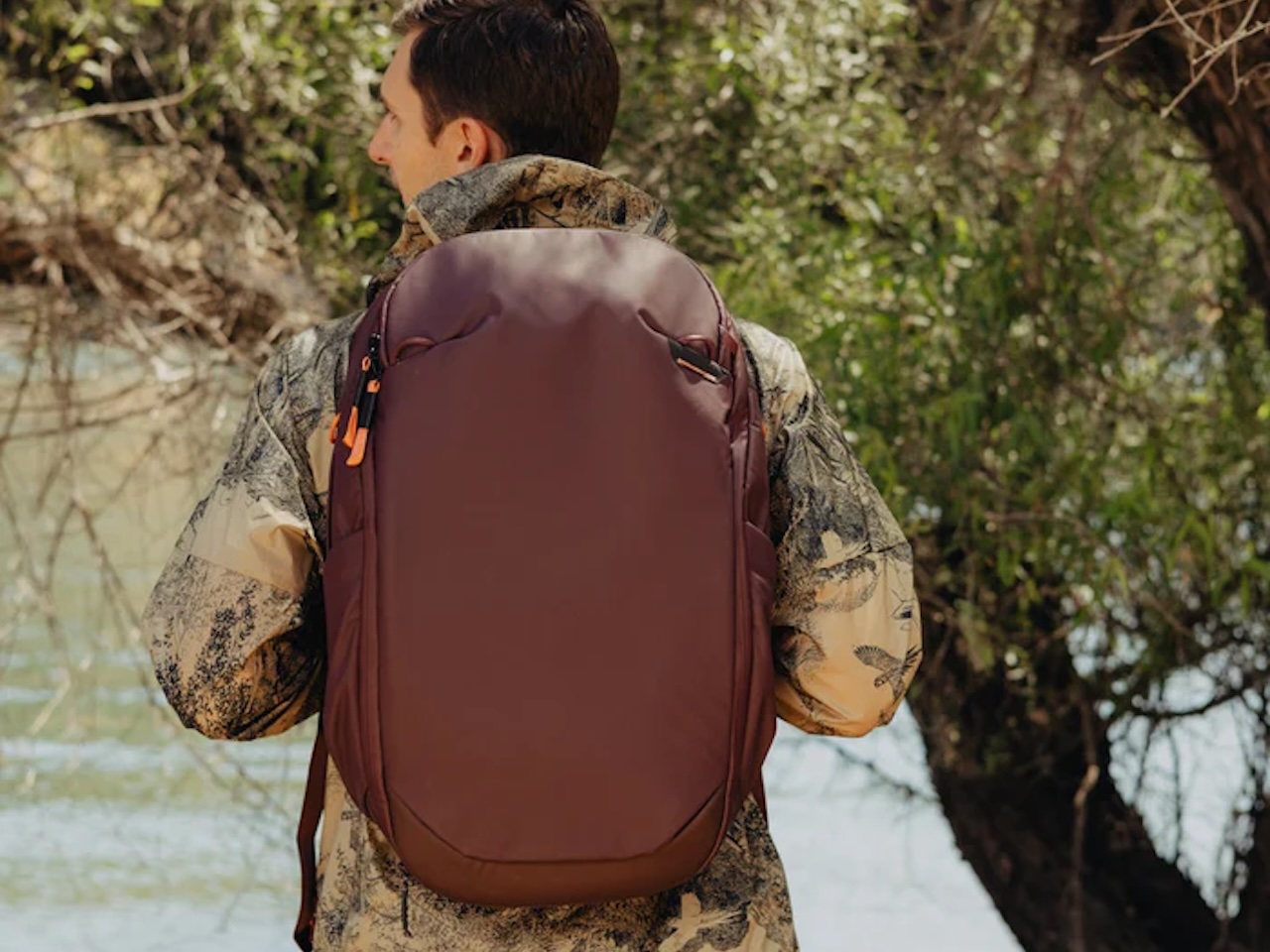
There’s a travel forum where people argue about backpacks the way sports fans argue about draft picks. And in that world, the Peak Design Travel Backpack has become the bag that everyone either swears by or has a very specific opinion about. It regularly shows up in “best travel backpack” threads, and a recent post titled “Peak Design 45L is the Best Travel Bag, Change My Mind” pulled in more than 100 comments.
Price: From $239
Where to Buy: Peak Design
So what’s the deal? Why does a $299, 45-liter backpack inspire that kind of loyalty? Here are seven things that set it apart from the rest of the carry-on backpack crowd.
Add The Gadgeteer on Google Add The Gadgeteer as a preferred source to see more of our coverage on Google.
ADD US ON GOOGLE
1. Clamshell access that works like a suitcase
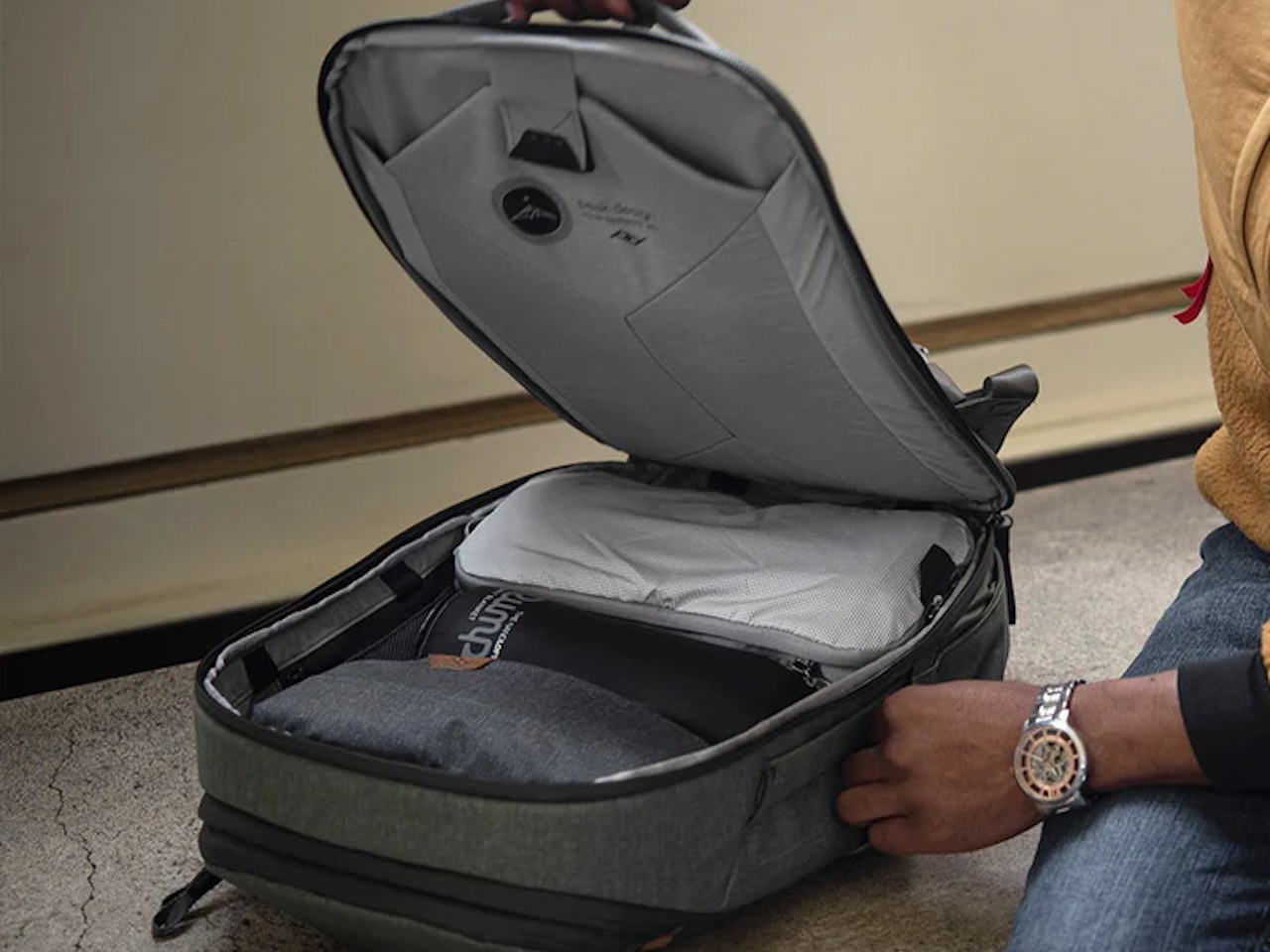
Most backpacks make you dig. You reach in from the top, rummage around, and hope for the best. The Peak Design Travel Backpack opens with a full clamshell zip, laying completely flat like a suitcase. That means you can see everything at once and pack in layers, which is how most people actually prefer to organize their stuff.
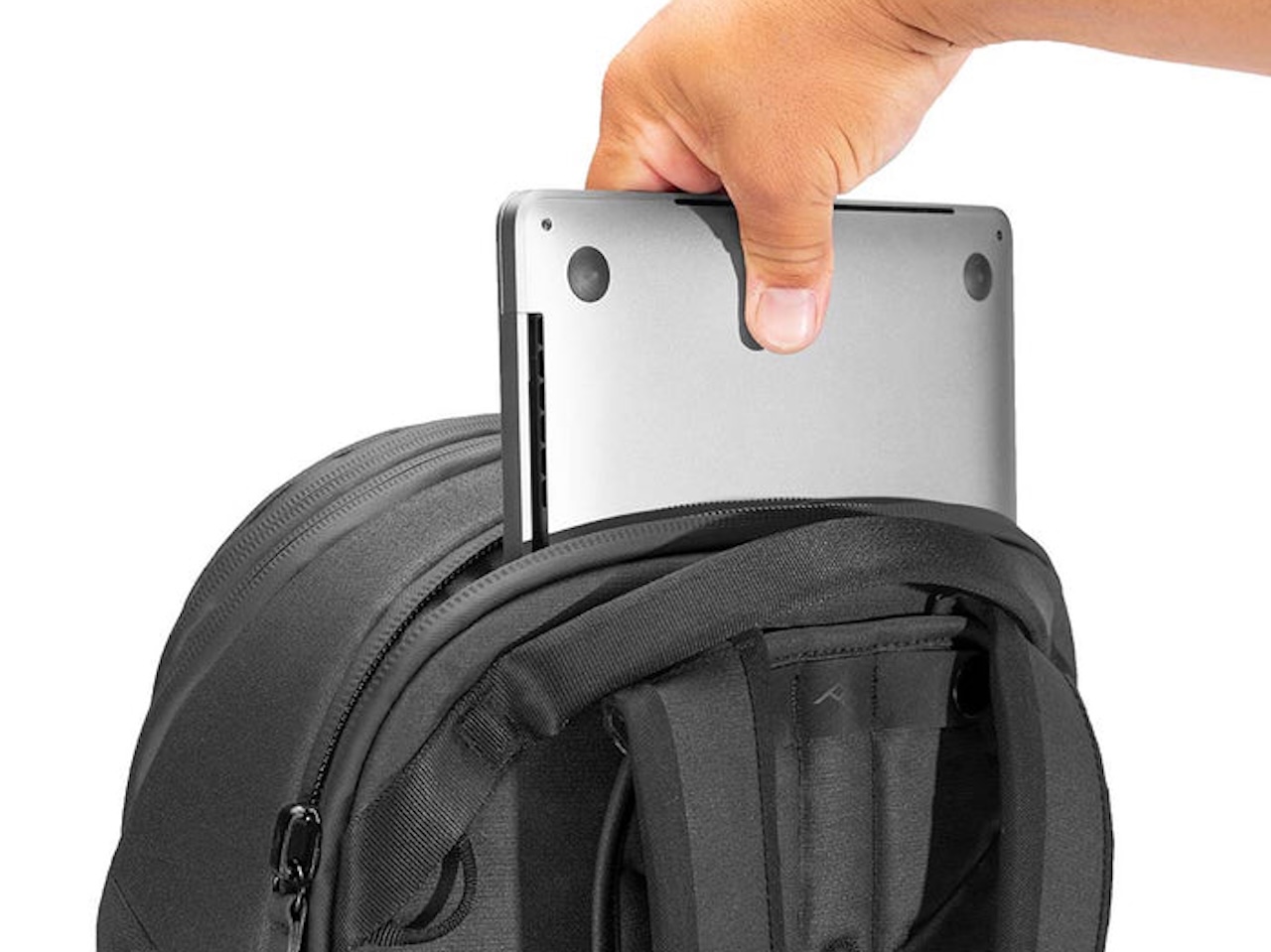
It also has separate access points from the top, side, front, and rear. Four ways into one bag. That side zip is the one people tend to love most, because you can grab your laptop or a jacket without opening the whole thing.
2. The 45L expands and compresses to carry-on size
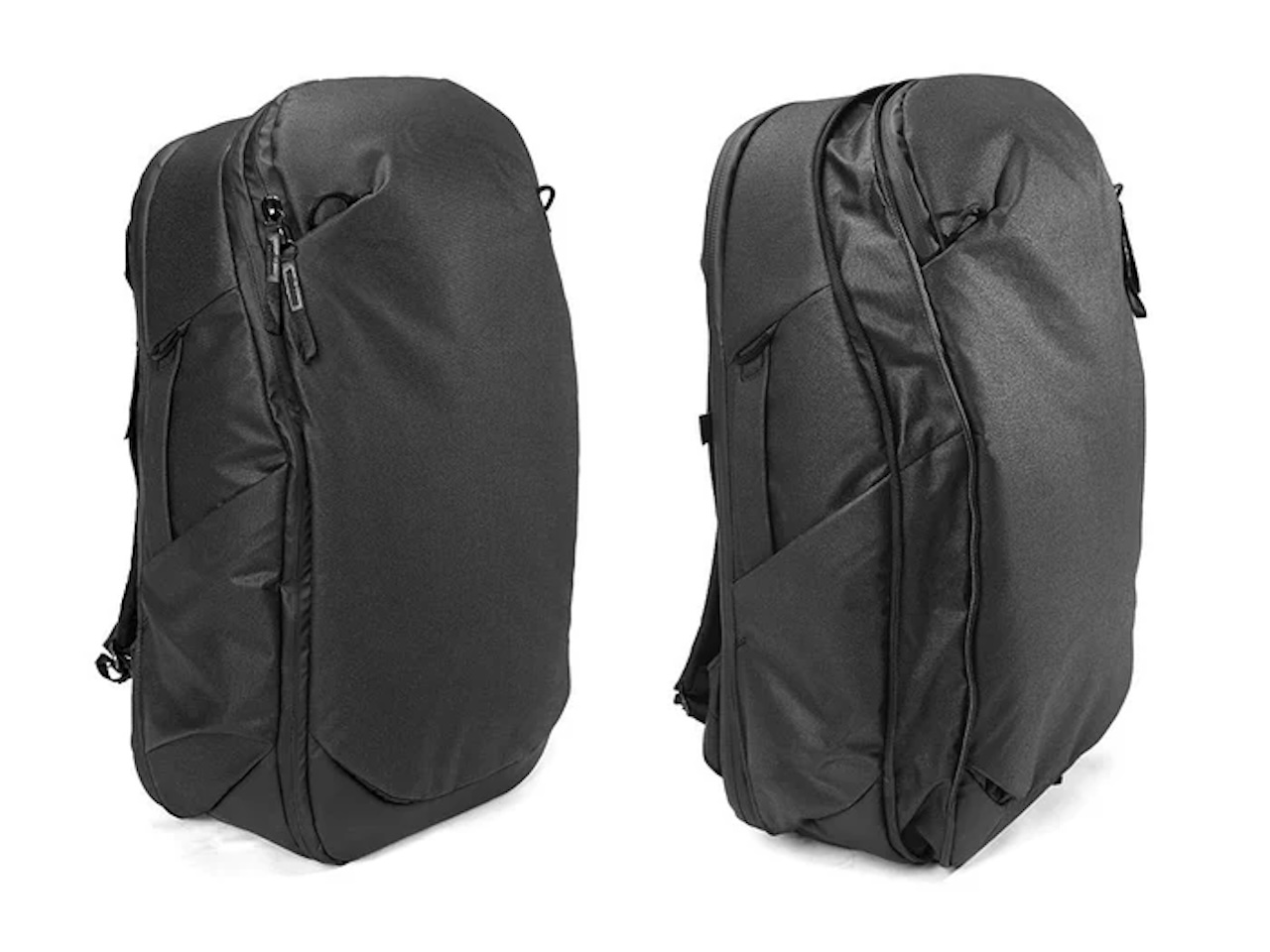
The 45L version doesn’t always look like a 45-liter bag. When you’re not using all the space, external compression straps cinch it down into something much slimmer and more streamlined. When you need the full capacity, it expands out without looking like it’s about to burst.
The 30L version ($239.95) does the same trick in a smaller package, expanding from 27 to 33 liters. Both sizes meet international carry-on requirements when compressed, which matters if you’re the kind of traveler who’d rather walk past the check-in counter than stand in line at it. The Cotopaxi Allpa 42L ($250) uses a similar clamshell layout, but it doesn’t compress nearly as flat and skips the modular accessory system that gives the Peak Design its edge.
3. The zippers are designed to outlast the bag
Peak Design uses what they call UltraZips, a proprietary weatherproof zipper built with abrasion-resistant thread. They’re rated to withstand decades of use, which sounds like marketing until you read the long-term reviews from people who’ve been using these bags for years and report zero zipper issues. The main compartment uses heavier #10 zippers, while secondary access points use #8s. Both are weatherproof.
4. The straps disappear when you don’t need them
One of the biggest complaints about travel backpacks is that they look like hiking gear when you’re trying to walk into a hotel. The Peak Design solves this by making the shoulder straps and hip belt fully stowable. Tuck them behind the back panel, and the bag turns into a clean, grab-handle-equipped piece of luggage. It has 360-degree grab handles, so you can pick it up from any angle without fumbling.
5. A camera cube system that ties the ecosystem together
Peak Design built an entire travel system around this bag. Packing cubes that fit the interior dimensions exactly. Camera cubes for photographers who want to carry gear without a dedicated camera bag. A tech pouch, a wash pouch, a shoe pouch. You don’t need any of them to use the bag, but if you’re the type who likes everything to have a designated slot, the ecosystem is there.
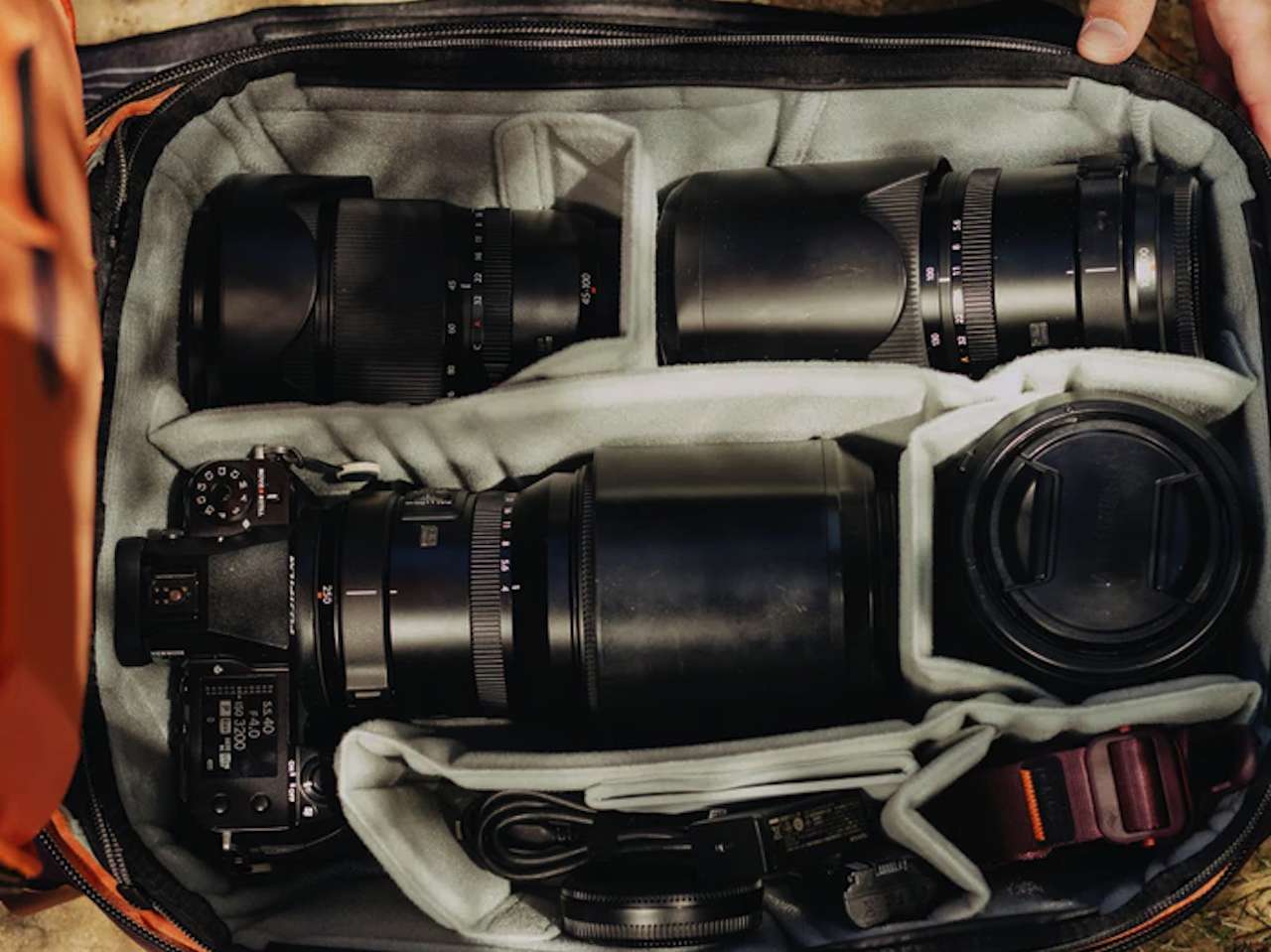
The camera cube integration is a big part of why the bag has such a strong following in photography communities. You can convert it from a travel bag to a camera bag and back again in about a minute. The medium cube fits most mirrorless bodies with a lens attached, while the large cube handles a full DSLR setup with two to three extra lenses. Once you’ve got the layout down, swapping configurations takes closer to 30 seconds.
6. It’s built from recycled materials
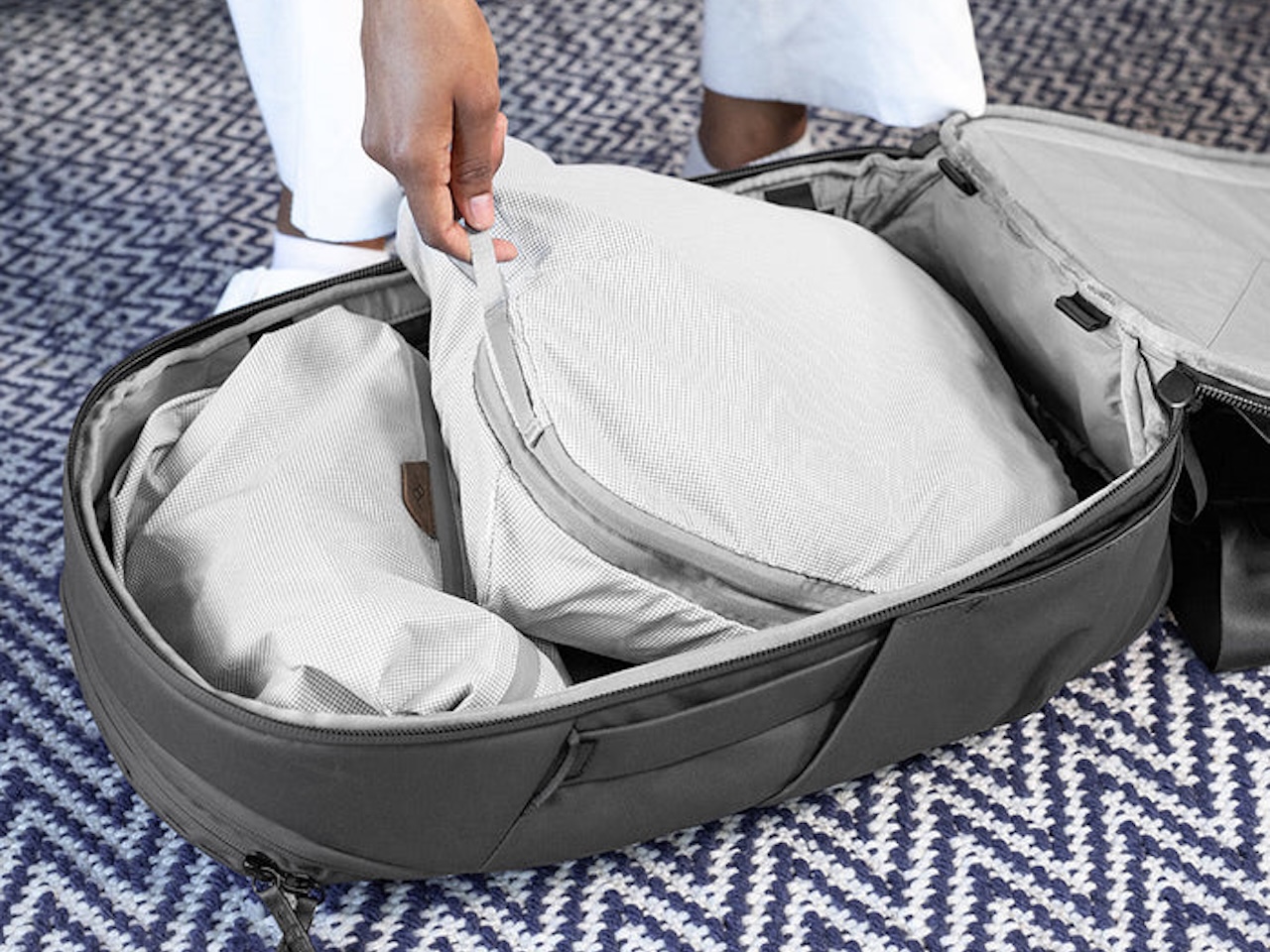
The shell is made from 100% recycled 400D nylon canvas with a DWR coating for weather resistance. The interior lining is recycled as well. Peak Design has been a certified B Corporation since 2019 and donates 1% of revenue to environmental nonprofits through its 1% for the Planet membership. For a segment where sustainability claims can be vague, Peak Design is one of the few brands that actually publishes its supply chain and environmental impact data.
7. The community keeps finding new uses for it
Pilots use it as a flight bag. Digital nomads live out of it for weeks at a time. Photographers use it as their entire mobile studio. A recent thread on a pilot forum specifically discussed fitting the 45L as a side bag in a 737 cockpit. Another user on a travel website documented fitting an entire week’s worth of travel into the 45L with room to spare.
That’s the thing about the Peak Design Travel Backpack. It wasn’t designed for one type of traveler. It was designed to adapt, and the community has taken that idea and run with it.
Price: From $239
Where to Buy: Peak Design
The Peak Design Travel Backpack 45L is available for $299.95 and the 30L for $239.95, both through the Peak Design website and retailers like REI.
Love our content?
Sign up for our newsletter today.
No ads, no spam, just links to our latest articles!