

Share

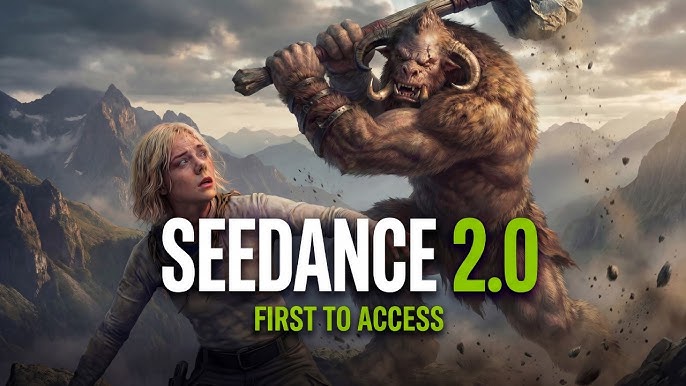
In February 2026, the release of Seedance 2.0 marked a significant shift in the generative AI landscape.
Developed by ByteDance, the model has gained international attention for its ability to generate high-fidelity video content that challenges traditional production methods. Its arrival has prompted immediate reactions from major media organizations and industry bodies regarding copyright and the protection of digital likeness.
What is it and who developed it?
Seedance is a generative AI video model developed by the Chinese technology giant ByteDance, the parent company of TikTok. The 2.0 version, launched in early 2026, is an evolution of ByteDance’s “Seed” ecosystem of foundation models. It is currently integrated into ByteDance’s creative suite, including Jianying, the Chinese counterpart to the video-editing app CapCut.
What are its technical capabilities?
Seedance 2.0 is capable of generating hyper-realistic video clips up to 15 seconds long. Unlike previous models that relied solely on text-to-video, this model utilizes a multimodal “@ reference system.” This allows creators to provide specific anchors for the AI to follow, including:
-
Face Reference: Users can upload a photo to ensure a character’s face remains consistent across different scenes.
-
Motion Reference: A separate video can be used to dictate specific choreography or physical movements.
-
Audio Integration: The AI can synchronize visual movements with provided audio tracks.
By using these specific references, the tool solves the “consistency problem” that previously plagued AI video, where characters’ features would often drift or change between frames.
Why is the film industry concerned?
The primary concern for the film industry is the precision with which Seedance can replicate the likeness of established actors. Shortly after its launch, a viral video surfaced showing Tom Cruise and Brad Pitt in a cinematic sequence. The realism of these “digital twins” was high enough to spark a swift response from industry unions and advocacy groups.
Legal and Ethical Issues:
-
Consent and Likeness: Labour union SAG-AFTRA has raised alarms over the ease with which the tool can infringe on an actor’s right of publicity. The union argues that the ability to generate a performance without the actor’s physical presence or consent threatens the livelihood of human performers.
-
Copyright Infringement: The Motion Picture Association (MPA), representing studios like Disney and Paramount, has alleged that ByteDance likely trained the model on vast amounts of copyrighted film and television content without authorization. Legal representatives for Disney and Paramount have reportedly issued cease-and-desist notices to address these training data concerns.
What is the broader impact?
The tension surrounding Seedance 2.0 highlights the widening gap between rapid technological advances and existing legal frameworks. While ByteDance has stated it intends to implement safeguards and respect intellectual property, the efficiency of the tool is undeniable.
Production analysts estimate that while a traditional visual effects shot can cost thousands of dollars, a Seedance-generated clip costs less than a dollar. This economic shift, combined with the technical ability to maintain character consistency, is forcing a fundamental reassessment of how digital content is protected and produced globally.
Disney threatens ByteDance with legal action over AI tool, Four new astronauts arrive at the ISS
Related Posts
Discover more from Tech Digest
Subscribe to get the latest posts sent to your email.