

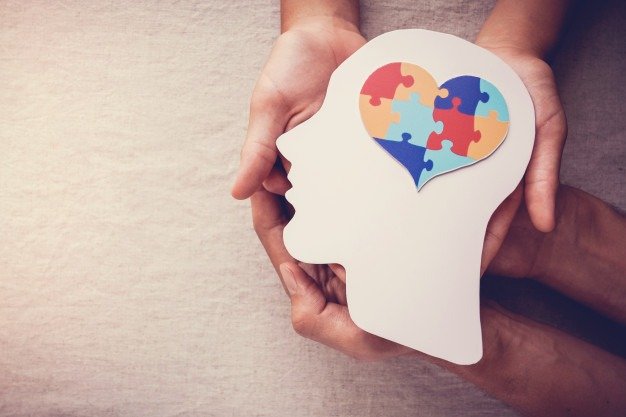
Quick summary: Personality typologies such as Jung’s 12 archetypes have long offered a map of psychological patterns, but they fall short by treating awareness as a fixed quantity rather than a variable. Combining archetypes with a 12-level consciousness scale produces 144 distinct profiles that capture not just what a person does but the degree of self-awareness they bring to it, with direct implications for how growth and change are understood in therapeutic and coaching contexts. The model argues that meaningful psychological development requires measuring both the shape of a person’s character and the altitude from which they inhabit it.
Most personality frameworks tell you what type you are. They place you in a category and stop there. But anyone who has spent time in genuine self-examination knows that the category only takes you so far. Two people can share the same archetype and be entirely different human beings. The variable that accounts for this is consciousness.
The limitation of flat typology
Carl Jung’s 12 archetypes remain one of the most durable models in personality psychology. The Hero, the Sage, the Rebel, the Caregiver: these patterns appear across cultures and individual lives with striking consistency. Jung understood them as fundamental structures of the collective unconscious, recurring templates that shape how we think, act, and relate.
The limitation is not with the archetypes themselves but with how they are typically applied. They describe pattern without depth. A Hero at their most defended is arrogant, restless, and incapable of rest. A Hero at their most integrated is courageous, principled, and genuinely self-aware. Conventional typology treats both as the same type. They are not. The difference is not personality. It is the level of consciousness brought to that personality.
Adding a vertical axis
David Hawkins, a psychiatrist writing in the tradition of consciousness research, proposed a developmental scale running from shame and apathy at the lower end through to love and enlightenment at the upper end. The specific numerical calibrations he attached to each level have been criticised, and rightly so, as the methodology behind them does not hold up to academic scrutiny. But the underlying insight is more defensible. Developmental psychology has long established that human awareness unfolds through recognisable stages, moving broadly from reactive and fear-driven to integrated and compassionate.
Simplified into 12 levels, from Apathy through Grief, Fear, Desire, Anger, Pride, Courage, Neutrality, Willingness, Acceptance, Love, and Enlightenment, this scale offers something archetype theory lacks: a vertical axis. Personality describes the shape of your psychology. Consciousness describes the altitude from which you operate within it.
144 unique profiles
Map 12 archetypes against 12 levels of consciousness and you get 144 distinct psychological profiles. This is where the model becomes genuinely useful.
A Sage at Fear hoards knowledge as a defence mechanism. They intellectualise emotions they cannot face and use analysis to manufacture a sense of safety. A Sage at Willingness draws on that same analytical disposition to mentor others and remain curious in the face of uncertainty. Same archetype, entirely different person.
A Caregiver at Anger gives compulsively but keeps a private ledger of resentment. They sacrifice until they collapse, then use that sacrifice as evidence against those they were serving. A Caregiver at Love gives freely, from genuine abundance, because they have learned to apply the same care to themselves. Same caregiving pattern, opposite relationship to it.
The archetype tells you what you do. The consciousness level tells you why you do it and how much awareness you bring to the doing.
The problem of self-report
Any model is only as useful as its measurement tools. Self-report questionnaires have a documented weakness: people tend to present an idealised version of themselves, and most of that idealisation is invisible to the person doing it.
A few approaches help address this. Paradox detection cross-references stated values against actual choices in scenario-based questions. If someone reports that they never become defensive but consistently selects self-protective responses when faced with conflict scenarios, that gap is informative. Shadow acknowledgement, Jung’s term for the parts of ourselves we push out of conscious awareness, can be assessed directly. Willingness to name one’s own flaws correlates meaningfully with genuine self-knowledge.
Dimensional profiling also helps. Rather than producing a single consciousness score, measuring across several dimensions separately, including self-awareness, ego detachment, emotional regulation, compassion, and applied wisdom, produces a more honest picture. When the lowest scoring dimension sets the ceiling for overall level, no single area of strength can obscure a significant blind spot.
A growth map, not a label
The practical value of combining archetypes with consciousness levels is that the result is a developmental map rather than a fixed description.
When someone identifies as an Explorer at Pride, they are not simply learning their personality type. They are learning their current ceiling and the specific mechanism keeping them there: the restlessness that mistakes itself for freedom, the avoidance of depth dressed up as open-mindedness.
The growth path for a Pride-level Explorer differs from that of a Pride-level Ruler. The Explorer needs to discover that depth is not a trap. The Ruler needs to discover that control is not security. Same level, different work required.
This specificity is what flat typology consistently misses. Knowing you are an Explorer gives you a mirror. Knowing you are an Explorer at Pride, with a ceiling held in place by unexamined self-regard, gives you a direction.
Why the combination matters
Psychology has historically treated personality and consciousness as separate lines of inquiry. In lived experience, they are not. Who you are and how aware you are of who you are operate together, shaping behaviour in ways that neither framework captures on its own. The 144-profile model is one attempt at that integration, and an imperfect one. But it points toward something that flat typology has long needed: a way of asking not just what type a person is, but what that type looks like when it is, and is not, examined.
James Whitfield is a psychologist and writer specialising in personality development and consciousness research. He is based in London.