

Share

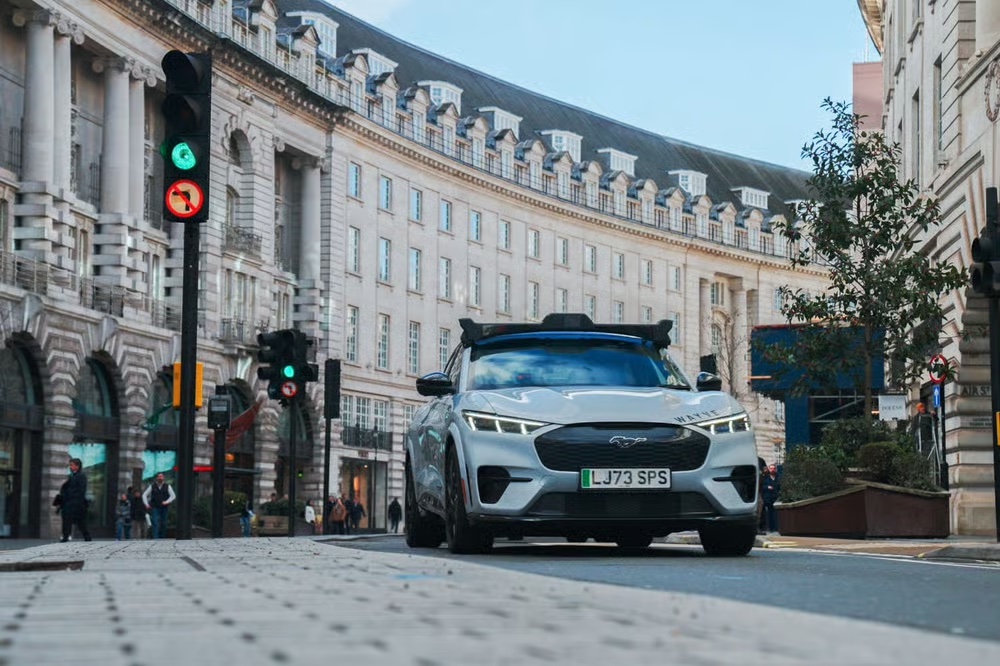
London-based autonomous driving startup Wayve has secured a massive $1.5 billion (£1.1 billion) investment, marking one of the largest funding rounds in British tech history.
The capital injection, led by a Series D round, catapults the company’s valuation to approximately $8.6 billion (£6.4 billion) and cements its position as a global frontrunner in the race to bring self-driving vehicles to commercial reality.
The funding round drew an elite roster of backers from the upper echelons of the global tech and automotive industries. High-profile investors include Microsoft, chip-making giant Nvidia, and Uber, the latter of which contributed additional funds specifically to accelerate its driverless taxi ambitions.
The deal also saw significant participation from institutional investors, including SoftBank Vision Fund 2, Baillie Gifford, and the British Business Bank, alongside major car manufacturers including Mercedes-Benz, Nissan, and Stellantis.
This financial boost is intended to supercharge Wayve’s commercial expansion, beginning with the launch of robotaxis in London later this year through a strategic partnership with Uber. Unlike many competitors that rely on rigid, pre-mapped routes, Wayve’s “supervised autonomy” software uses advanced artificial intelligence to learn from its environment in real-time.
By processing vast amounts of video and sensor data, the AI recognizes patterns to navigate complex urban settings – a capability CEO Alex Kendall claims is robust enough to handle the UK’s unique challenges, from the winding streets of central London to rural potholes.
The investment signals a major shift in market confidence, suggesting that autonomous technology has reached commercial maturity. Wayve plans to transition from its 2026 robotaxi trials to deploying its software in consumer vehicles by 2027, with the ultimate goal of making the technology “drive anywhere.”
However, the road ahead is not without obstacles. Wayve faces stiff competition from US rivals, including Google’s Waymo and Lyft, both of which have set their sights on the UK market for later this year and 2027. Furthermore, the speed of rollout will depend heavily on whether government regulation can keep pace with the rapid technological advancements.
Despite these hurdles, Wayve’s leadership remains bullish on the future of transport, predicting that all cars will eventually become autonomous as the company targets a total addressable market spanning “every vehicle that moves.”
Related Posts
Discover more from Tech Digest
Subscribe to get the latest posts sent to your email.