


ARTICLE – You spend 10 hours a day staring at a screen, and it shows. It hits around 2 PM, sometimes earlier. Your eyes glaze over, your shoulders tighten, and your brain shifts into that foggy autopilot mode where you’re technically working but not really present. You grab another coffee. Maybe you step outside for five minutes if you’re lucky. Then you sit back down and do it all over again.
That daily energy crash isn’t just about sleep or caffeine intake. It’s about light, or more specifically, the kind of light you’re not getting while you’re stuck indoors. Natural sunlight contains a broad spectrum of wavelengths, including near infrared light. Researchers have studied these wavelengths for their effects on cellular activity, particularly how they interact with mitochondria inside cells.
Sitting under fluorescent panels and staring at blue-light screens all day? That’s not doing the job. Your body knows something is missing even if your brain hasn’t caught up yet.
An Amsterdam-based deep tech company called SunLED thinks they’ve figured out how to address that problem. Their first product, the SunBooster, is a standalone near-infrared light device that sits on your desk and is designed to deliver a slice of the sunlight spectrum you do not get much of indoors. I got a hands-on demo at MWC 2026 in Barcelona, and it earned our Best of MWC 2026 award for a reason.
What the SunBooster actually does
The pitch is deceptively simple. The SunBooster emits near-infrared light through proprietary LEDs developed by SunLED’s team. Near infrared wavelengths can penetrate skin and interact with cellular processes associated with energy metabolism. Researchers studying photobiomodulation believe these interactions may support mood and alertness, although the field is still evolving.
It delivers wavelengths that are also present in natural sunlight, through a device small enough to sit next to your monitor. The broader field studying these effects is called photobiomodulation, where specific wavelengths of light are used to influence cellular activity.
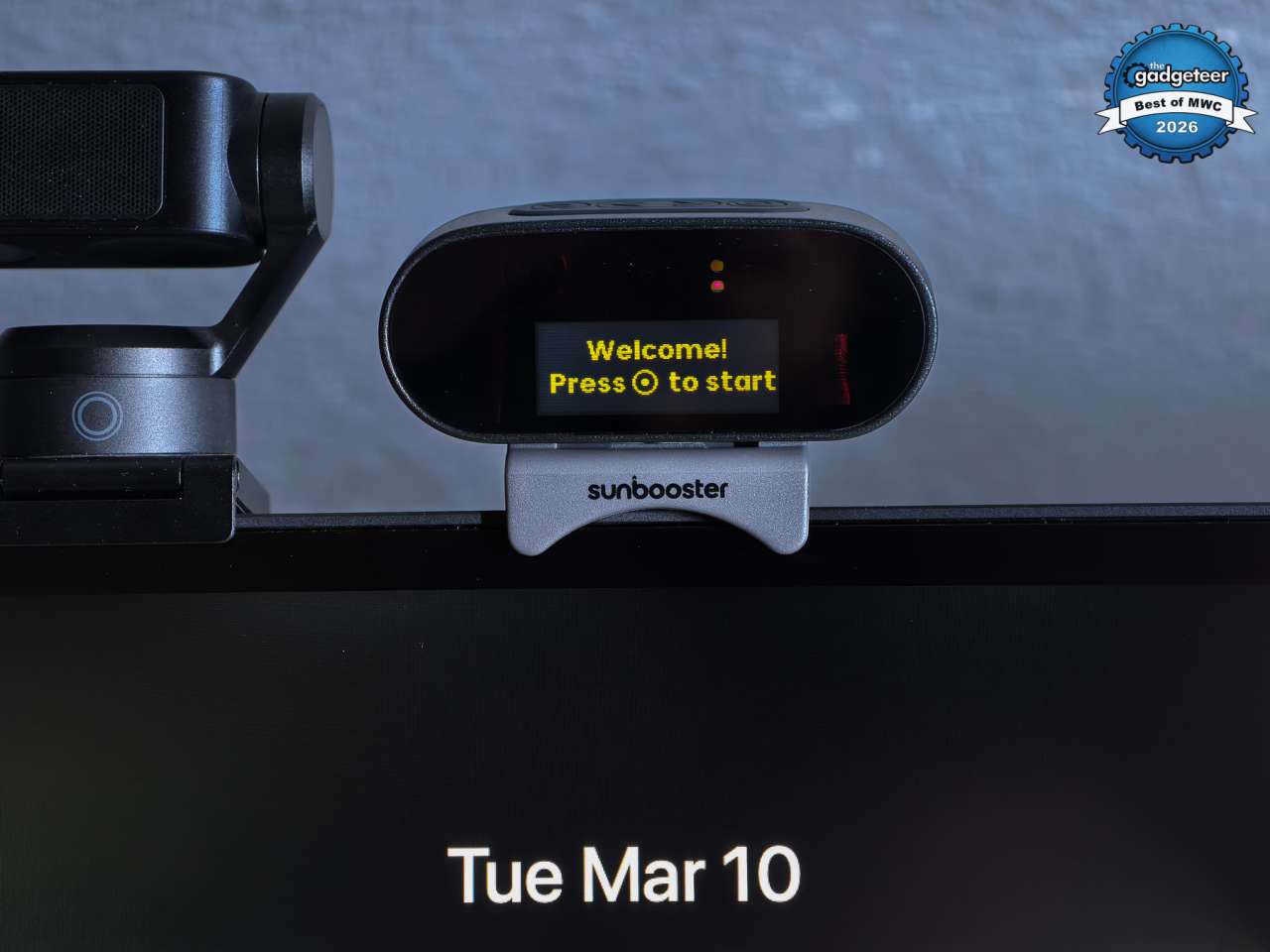
Here’s the part that caught me off guard during the demo: you can’t see it working. Near-infrared light is completely invisible to the human eye. Geertjan Woltjes, who walked me through the demo at MWC, had to use a special visualization tool just to prove the light beam was actually there. When the SunBooster detected his presence, it activated automatically. When he stepped away, it shut off.
The whole interaction felt almost sci-fi, except the underlying concept is part of an active research field and the evidence is still evolving.
According to SunLED, the device emits near infrared light without ultraviolet wavelengths, meaning it does not produce the kind of UV exposure associated with sunburn. No medication involved, no supplements, nothing you need to ingest or apply. You just sit in front of it and let the near-infrared wavelengths do their work. That simplicity is a huge part of the appeal.
The scientist who built it from personal frustration
Dr. Anne Berends isn’t your typical tech CEO. She’s a nanomaterial scientist who co-founded SunLED after years of feeling the seasonal mood and energy shifts that come with living in the Netherlands. Amsterdam gets roughly 1,600 hours of sunshine per year, compared to about 2,500 in Los Angeles.
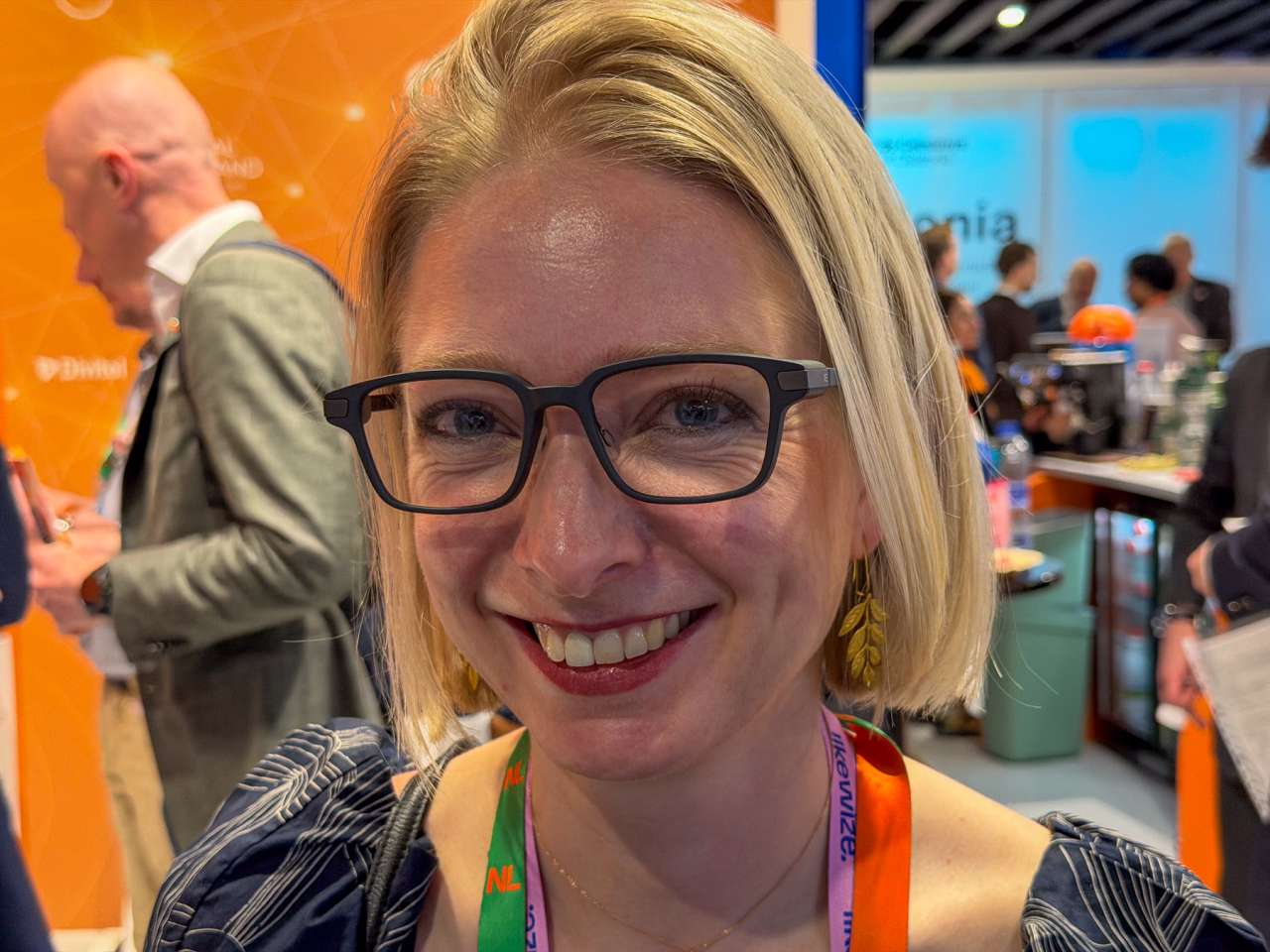
If you’ve ever lived through a Dutch winter, you understand why someone would dedicate their career to bringing sunlight indoors.
“I’ve been feeling the difference in mood and energy levels when the seasons shift for a large part of my life,” Dr. Berends told me at the booth. That personal motivation drove her to pivot from pure nanomaterials research into studying how natural sunlight affects health and well-being. The goal was ambitious: replicate the mood and energy benefits of spring and summer sunlight, then make those benefits available year-round.
The journey from concept to product wasn’t smooth. SunLED ran full clinical studies, recruiting participants and designing rigorous protocols. That process alone cost what Dr. Berends described as “a lot of blood, sweat, and tears.”
But the results justified the effort. In our conversation, SunLED described clinical studies showing mood improvements after one day of exposure, although the full research details have not yet been publicly published. Individual timelines vary, with some people noticing changes within days and others taking two to four weeks. As presented, the studies support SunLED’s confidence in the approach, but outside readers should treat the one-day result as a company claim until full details are available.
Why ceiling lights won’t cut it
SunLED’s original plan was to integrate their near-infrared technology into ceiling luminaires. That makes intuitive sense, right? People spend hours under indoor lighting, so why not make that lighting healthier? The problem is physics.
Near-infrared light is only biologically active when your skin cells absorb it directly. Spread it across an entire room from ceiling height and you’d need an absurd amount of energy to deliver a meaningful dose to anyone sitting below. Dr. Berends put it bluntly: “You’d need a nuclear plant, basically.”
That realization forced a pivot. Instead of trying to flood entire rooms with invisible light, SunLED focused on proximity. A device that sits within arm’s reach, directed at your exposed skin, can deliver a concentrated and effective dose without wasting energy. The SunBooster’s presence detection means it only activates when someone is actually sitting in front of it, which keeps power consumption reasonable.
It’s one of those design decisions that sounds obvious in hindsight but required SunLED to abandon their original business model entirely. The ceiling approach would have been easier to sell to architects and building developers. The desk approach is harder to market but actually works.
The bigger play: licensing to laptop and monitor makers
The SunBooster is SunLED’s first consumer product, but it isn’t the endgame. The company is actively licensing its NIR technology to monitor manufacturers, laptop makers, and device companies. At MWC, they showed two concept products that hint at where this is heading: a phone case with built-in NIR LEDs and a laptop with the technology integrated directly into the display housing.

Think about that for a second. You’re already sitting in front of your laptop or monitor for eight to ten hours a day. If that screen could simultaneously deliver near-infrared light to your face, hands, and arms while you work, you’d get the mood and energy benefits without needing a separate device at all.
“We want to bring this healthy light to people globally in the most effortless way,” Dr. Berends explained. The SunBooster proves there’s a market for NIR wellness technology. The licensing model scales that proof into every desk, every lap, and eventually every doctor’s office.
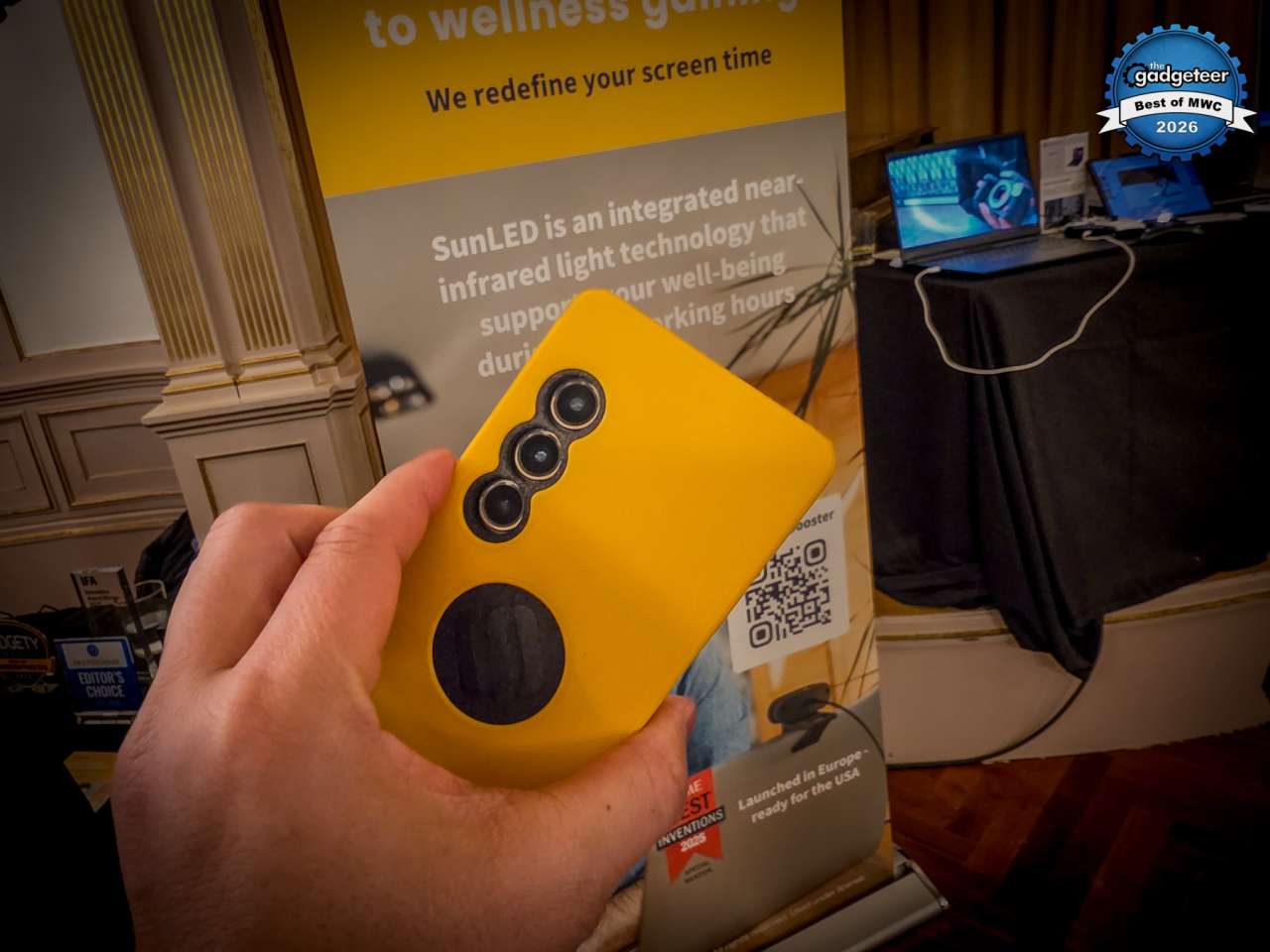
The technology would just be part of your daily workflow, completely invisible and completely passive. Medical devices, monitors, laptops: SunLED’s vision is to embed near-infrared light into the objects people already use for hours every day. If even one major monitor brand integrates this, the standalone device becomes a proof of concept rather than the main product.
Near infrared vs. red light therapy: what’s the difference
If you’ve been following the wellness tech space, you’ve probably seen red light therapy panels everywhere. They’re marketed for pain relief, skin rejuvenation, muscle recovery, and about a dozen other claims. Most of those devices combine red light (visible, around 630 to 660nm) with near-infrared light (invisible, around 810 to 850nm) in large panel formats you stand in front of for timed sessions.
Many red light therapy products combine visible red wavelengths with near infrared light, but SunLED is focusing specifically on the near infrared portion of the spectrum. The SunBooster takes a fundamentally different approach. It focuses exclusively on near-infrared wavelengths, and it targets mood and energy rather than physical recovery.
You don’t stand in front of it for a prescribed session. You just use it while you work.
The presence detection handles activation, and the near-infrared light does its thing while you answer emails, hop on calls, or grind through spreadsheets. That passive delivery model is what separates SunLED from the red light therapy crowd. Traditional panels require dedicated time and space. The SunBooster requires neither. It’s a subtle but meaningful distinction for anyone who wants the benefits of light therapy but doesn’t want another wellness routine to manage.
Clinical results and what to expect
SunLED’s headline claim is that its internal clinical studies measured mood improvements after a single day of near-infrared exposure. It’s intriguing, but the full study details have not been publicly published.
But Dr. Berends was careful to set realistic expectations during our conversation. “There is an immediate effect,” she said. “But whether you feel it immediately is a question mark because that changes from person to person.” Some users notice a difference within days. Others take two to four weeks.
She compared it to going to the gym or taking vitamins: you might not feel a dramatic shift overnight, but the long-term benefits accumulate. That honesty actually increased my confidence in the product. Companies that overpromise on wellness tech usually have something to hide.
Dr. Berends acknowledged the variability, pointed to the clinical data as the foundation, and framed the SunBooster as a long-term investment in daily well-being rather than an instant fix. That’s a refreshing pitch in a category full of miracle claims.
Why we gave it Best of MWC 2026
MWC is overwhelming. Hundreds of booths, thousands of products, and enough press releases to wallpaper a stadium.

Picking a Best of MWC winner means finding something that genuinely surprised us, solved a real problem in a new way, and felt like it could actually matter six months from now. The SunBooster checked every box. The concept is grounded in a real research field, and SunLED pointed to internal clinical data behind the approach, even though the full details are not publicly available yet. The form factor makes sense for how people actually work today.
The licensing model shows a path to massive scale without requiring consumers to buy yet another standalone gadget. And the founding story, a nanomaterial scientist frustrated by Dutch winters who built a clinically validated product, is exactly the kind of origin that makes you root for the company.
I walked into that demo expecting another wellness gimmick. I walked out genuinely curious about what my afternoons would feel like with a SunBooster sitting on my desk.
That shift in perspective is what earned the award.
The SunBooster is expected to launch in the US in April 2026
SunLED told me the SunBooster will be available in the US starting April 2026. Pricing details haven’t been finalized for the US market yet, but the product is already generating attention from its MWC showing.
I have a unit in hand and I will be putting it through a real-world test. Check back in 30 days for my results and a full review.
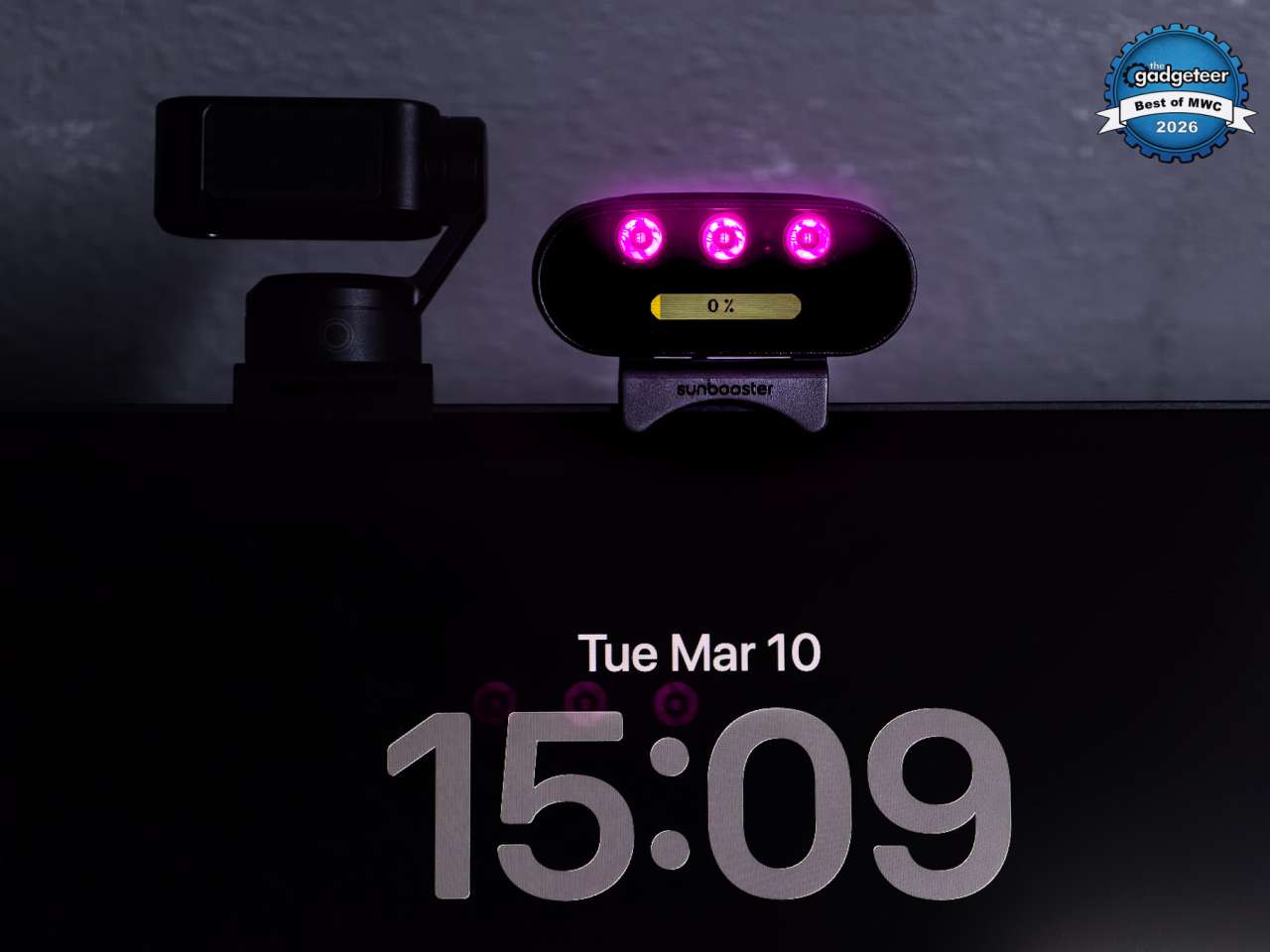
For anyone spending long hours at a desk and wondering why they feel drained by mid-afternoon, near-infrared light is a space worth paying attention to. The SunBooster is not positioned as a replacement for sleep, coffee, or a walk outside. SunLED pitches it as a way to bring a component of natural sunlight into indoor work hours. Based on what I saw at MWC, the concept is compelling, and the execution is surprisingly polished.
Love our content?
Sign up for our newsletter today.
No ads, no spam, just links to our latest articles!