


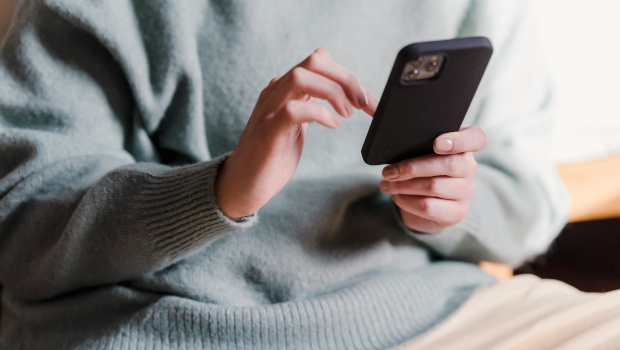
As the world grows more chaotic, people are retreating from social media. New research explains the numbers but the reasons run deeper, says Jason Walsh
Blogs
Image: Tim Samuel via Pexels
Social media use is down, with new research finding just half of users are now actively posting online, while a majority are likely to believe being online is more of a risk than an opportunity.
The report by Britain’s telecoms regulator Ofcom, found that social media account use remained more or less flat – and high, frankly. However, there is some nuance to be found in the findings.
This has been in the air for some time. Following Elon Musk’s purchase of Twitter, fleeing users floundered before eventually, to an impressive degree, settling on Bluesky. But the mood music has changed. Critics of Bluesky typically dismiss it as an echo chamber. Perhaps it is. The real problem, though, is that it just never captured the cultural moment.
In its pomp, Twitter was a genuine phenomenon. While it would be an error to eulogise it too effusively, the site did offer people all over the world a method of consuming and disseminating news and, for both better and worse, redefining what actually counted as news. Clearly X, the social network formerly known as Twitter, has lost that ability, and Bluesky has not been able to emulate it.
It’s not just a case of people moving on, though obviously they have done. However, something has shifted. As social media has transformed into a revenue opportunity (at least for those at the top of the pyramid) our lingering 1980s-era delusions of computer-mediated communication reshaping public life to become more democratic, participatory and horizontal seem fanciful.
Reality intrudes
At precisely the same time, social media’s deleterious effect on society has been laid bare: even leaving aside the scammers, propagandists and other bad actors, Ofcom’s report found that barely a third of users believe social media is good for their mental health, a figure that has been falling for years and shows no sign of recovering.
There is also a widespread acceptance that the very architecture designed to keep us posting also keeps us enraged, because rage, it turned out, is the most effective engagement mechanism of all. There is also an inchoate but growing sense that social media harms us not merely in the familiar ways of anxiety, addiction and harassment, but in a way that is harder to name: a systematic degradation of our shared sense of what is actually true.
In truth, social media was always a falsehood machine. A fun house mirror, angled outward to display a distorted image of ourselves, yes, back to ourselves but also out into the world. This was always going to be a hard sell as the world became more and more obviously chaotic.
Today, when governments trade offensive memes as part of actual wartime propaganda strategies, the unreality of social media has become our actual reality, or some version of it. Read the news today and it’s Baudrillard meets Ballard against the backdrop of a war no-one can quite believe. Influencers filming themselves fleeing Dubai as Iranian warheads fell was Vermilion Sands gone even more wrong: beautiful people in a fully automated luxury resort in the actual desert, performing their own panic for an audience. Others, as Bellingcat documented, were performing something more scripted. Content to the last.
Which is not to say the bombs were not real. They were, and it makes perfect sense that people caught up in events would film them. But watch the footage and something uncomfortable becomes apparent: the event and its documentation become almost indistinguishable. Yes, reality asserts itself, but it is immediately absorbed, the two visions overlap without ever fully merging.
Of course, social media did not create our chaotic world, and things were always more unsettled than they appeared to be. Nevertheless, as the stakes rise it makes perfect sense that social media users, likely nursing something of a hangover, navigate away from the text field and video upload button. Perhaps many will even choose to close the laptop or shove the phone back into their pockets.
Is it the end of the social media era? In a way, yes. Yesterday, walking past the Bibliothèque Nationale de France, the reflective glass curtain wall was, as it does every day, playing host to young people recording and livestreaming dance routines. Likewise, all manner of actors continued to post, upload videos and memes in an attempt to brute force their way into the public sphere. In those senses, the social media genie won’t be going back into the bottle.
What won’t be coming back is social media as a genuine, shared commons. Private forums, group chats and passively following the famous are not likely to be mistaken for the public sphere.
There is one other thing, though. Plenty of users will still be chatting away, just to a large language model rather than to random strangers on the internet. Indeed, Ofcom found that one in eight AI users already turns to these tools for conversation rather than information. Whether or not that is an improvement, we shall see.