

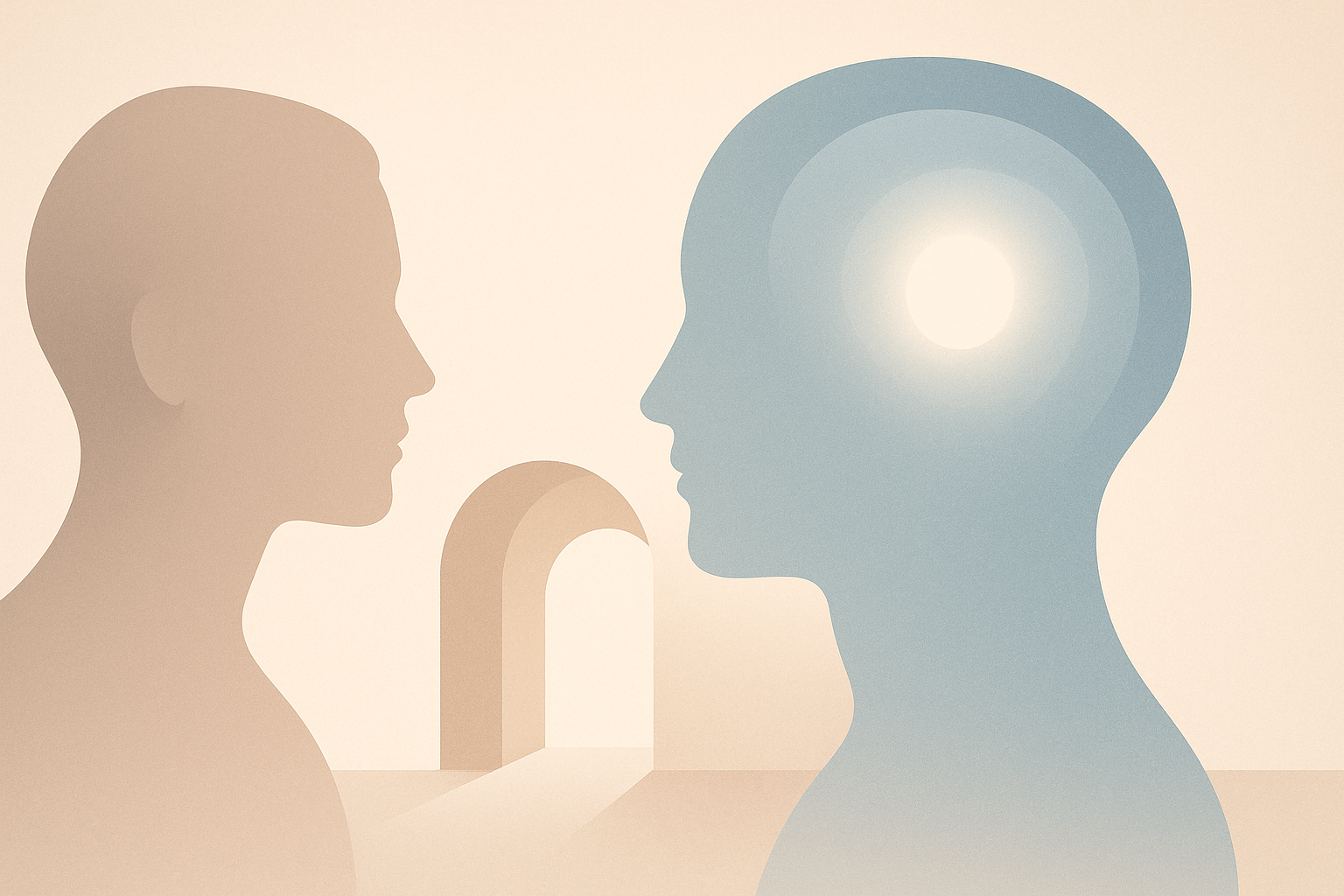
Quick summary: Peer support professionals bring something to mental health care that clinical training alone cannot provide, namely the authority of lived experience and the kind of connection it makes possible. Their role is built on mutuality rather than hierarchy, with both the professional and the person seeking support contributing to a partnership oriented towards recovery. Integrating peer support into clinical settings strengthens services not by replacing traditional care but by complementing it, and healthcare teams that treat peer professionals as specialists in their own right tend to deliver more effective and person-centred outcomes.
Peer support professionals occupy a quietly significant place in mental health care, one that is easy to overlook precisely because their work does not look like traditional clinical practice. They do not diagnose, prescribe, or treat. What they offer is something harder to systematise: the credibility that comes from having been there yourself.
The premise is straightforward. Someone who has navigated their own mental health challenges brings a kind of understanding to the role that no amount of academic training can fully replicate. That shared experience creates a different quality of connection, one where the person seeking support feels less like a patient being managed and more like someone being genuinely met.
Mutuality matters
Unlike the typical clinical relationship, peer support is not structured around expertise flowing in one direction. It is a partnership. The peer support professional is not the authority in the room; both people bring something to the exchange. This matters because it changes the dynamic entirely. Recovery feels less like something being done to you and more like something you are working towards with someone who already knows the terrain.
What the role actually involves
In clinical settings, peer support professionals are trained in confidentiality and ethical boundaries, and those boundaries are taken seriously. People sharing their experiences need to know they are in a safe space, free from judgment or the risk of that information travelling further than it should. At the same time, the role has clear limits. Peer support professionals do not diagnose or treat mental health conditions. That is not a gap in their practice; it is the shape of it.
They also function as advocates. Part of the work involves helping individuals find their voice within their own treatment, encouraging active participation in care rather than passive receipt of it. For people who have historically felt unheard in clinical environments, that shift can be significant.
The relationship with clinical care
Peer support works best when it is understood as complementary rather than competing. Clinical professionals bring one form of expertise; peer support professionals bring another. Problems arise when either side treats the other with suspicion or condescension. Peer support professionals are not simply service users who have been given a job title. They are practitioners with specialised knowledge, and clinical teams that recognise this tend to build more effective, more humane services.
The goal is not for each model to stay rigidly in its lane so much as for both to move in the same direction, with the person receiving care at the centre of that shared effort.
Rev. Dr Phillip Fleming is the chief executive officer and director of the division of peer support services at Mindful Living. He holds credentials in peer support, EFIT, and an honorary Doctor of Divinity.