

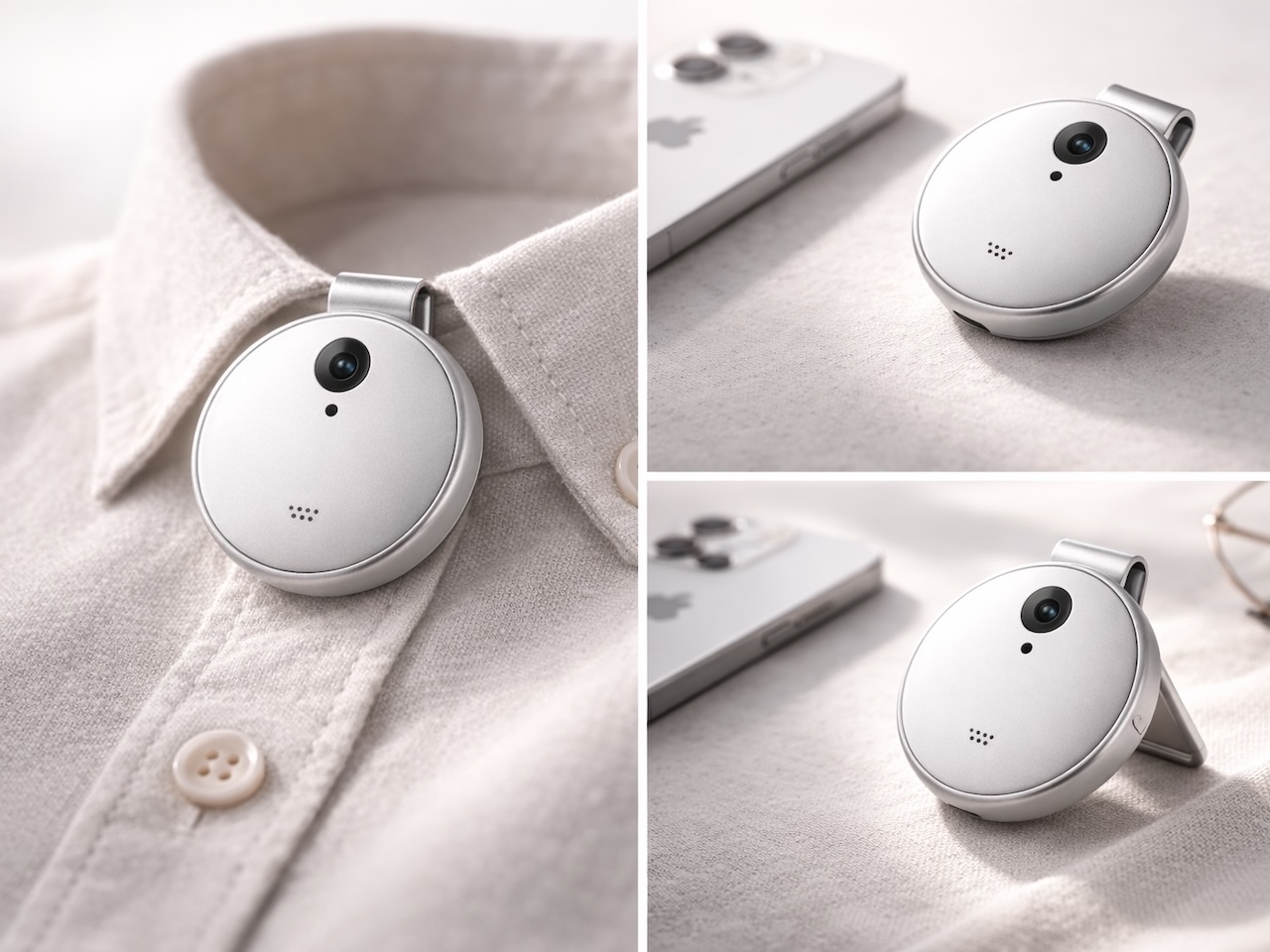
 The Humane AI Pin was supposed to change everything. A tiny, screenless computer pinned to your chest, ready to answer questions, take photos, and replace your phone. It launched in spring 2024 to brutal reviews and struggled to gain traction. By 2025, the company was reportedly exploring a sale. The AI pin, as a concept, looked dead on arrival.
Now Apple wants to try it.
According to a report from Bloomberg’s Mark Gurman, Apple is developing an AirTag-sized AI pendant that would clip to your shirt or hang from a necklace. It’s one of three AI wearables Apple is reportedly fast-tracking alongside smart glasses and camera-equipped AirPods. Tim Cook apparently told employees at an all-hands meeting in February that the company is “extremely excited” about these new product categories.
But here’s the thing that separates Apple’s approach from Humane’s spectacular flameout: Apple isn’t trying to replace your phone. It’s trying to extend it.
A very different kind of AI pin
The Humane AI Pin tried to be a standalone device. It had its own cellular connection, its own projector, its own subscription plan. It cost $699 plus $24 a month. And it couldn’t do most of the things your phone already does, except worse and slower.
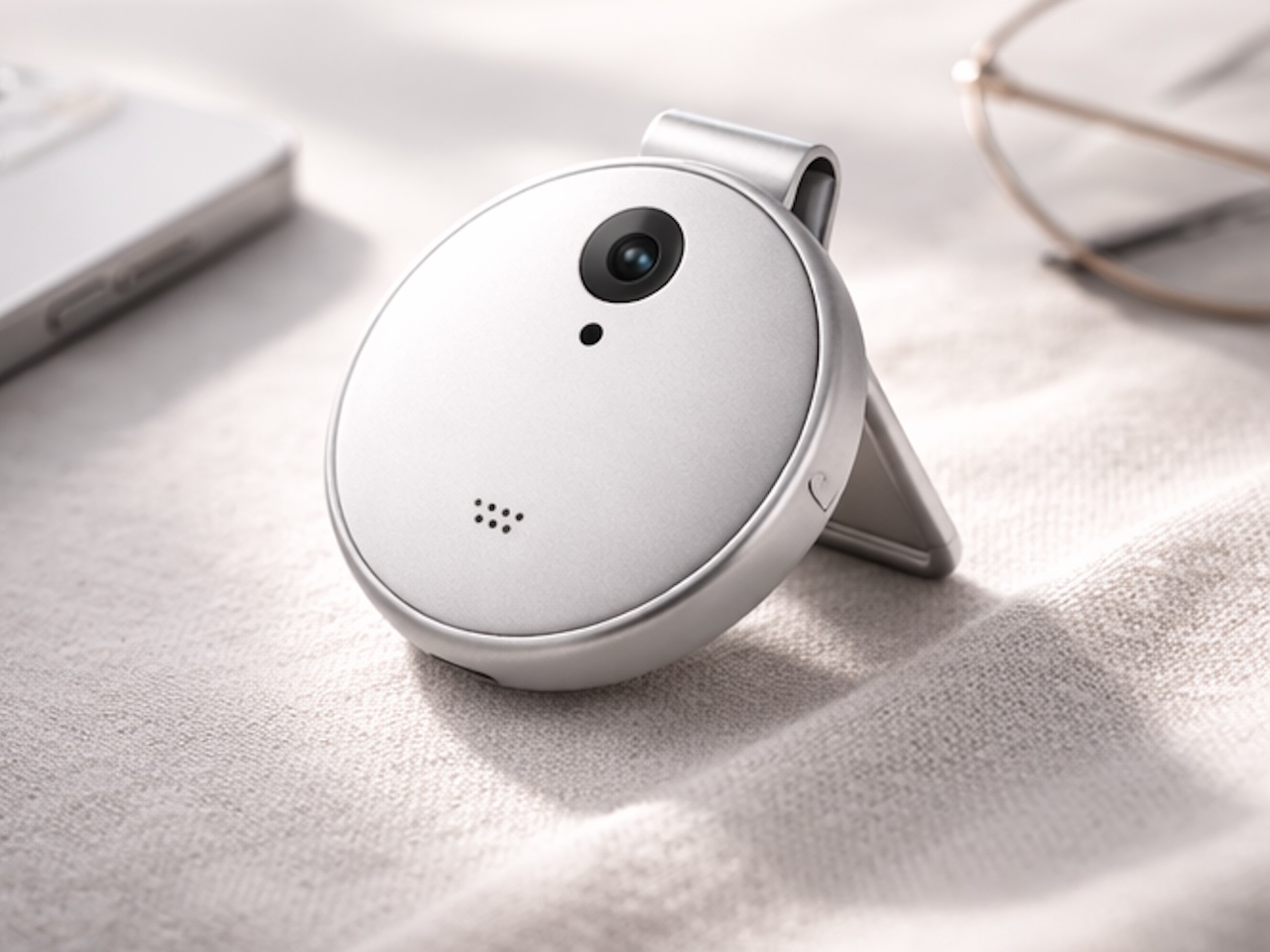
Apple’s pendant takes the opposite approach. Bloomberg describes it as an iPhone accessory, not a standalone product. It’s got a camera for giving Siri visual context about your surroundings and a microphone for voice interaction, but the heavy lifting happens on your iPhone. The dedicated chip inside the pendant is reportedly closer to AirPods silicon than Apple Watch, which tells you exactly where Apple sees this thing in the product hierarchy.
Some Apple employees internally describe the pendant as the “eyes and ears” of the iPhone. That framing matters. Humane sold its pin as a phone replacement. Apple is positioning this as a phone companion, something closer to AirPods in philosophy than to a miniature computer.
What it actually does
The pendant’s camera won’t be taking your vacation photos. It’s a lower-resolution lens designed to feed visual information to Apple’s AI, not capture memories. Think of it as always-on context for Siri. You could look at a restaurant menu and ask what’s gluten-free. Walk past a building and ask what it is. Spot a plant and get it identified.
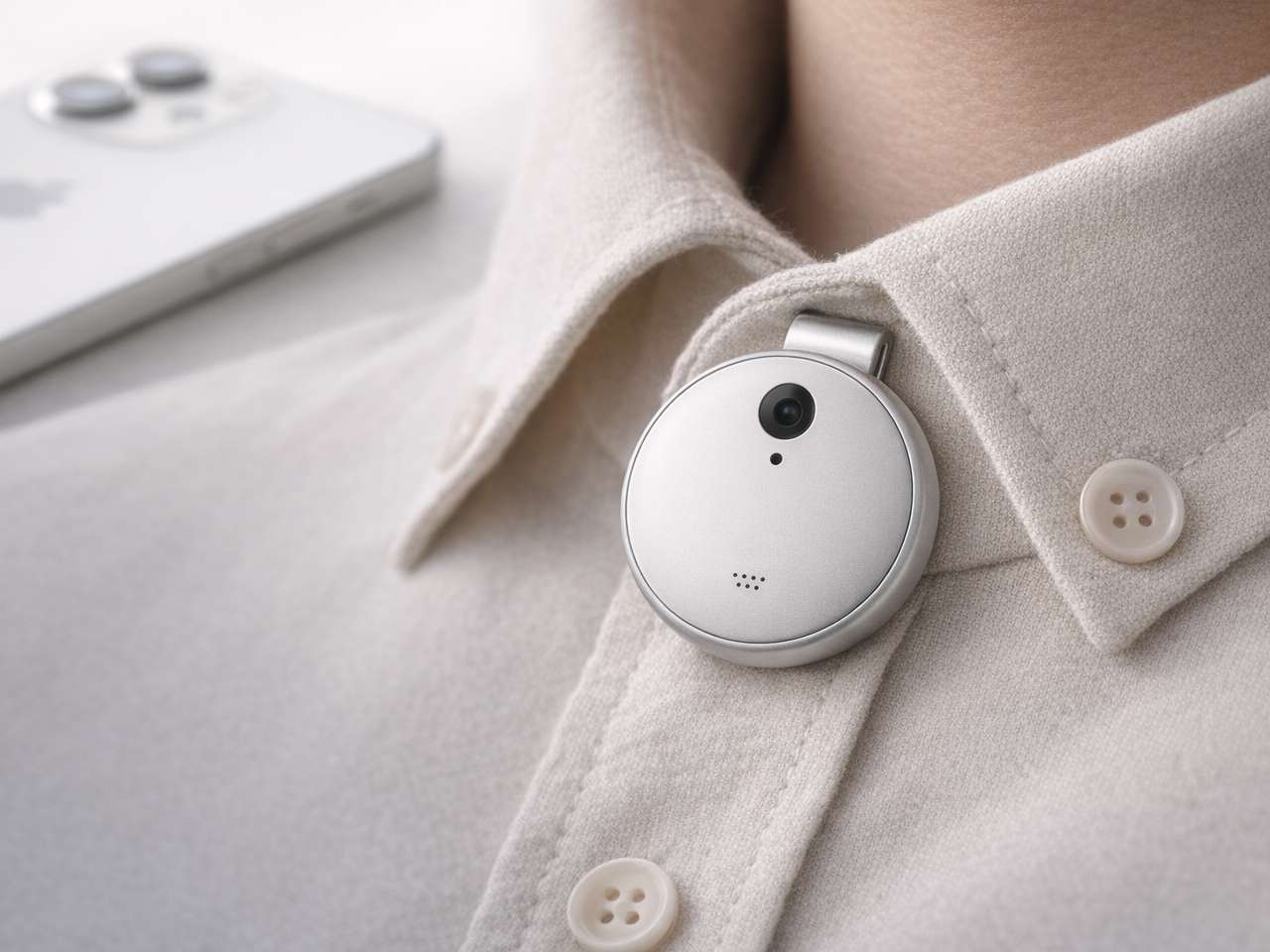
If that sounds familiar, it’s basically Visual Intelligence from the iPhone 16, except you don’t have to pull your phone out and point it at things. The camera just sees what you see.
Apple hasn’t decided whether to include a speaker. With one, you could have back-and-forth conversations with Siri without reaching for your phone or wearing AirPods. Without one, the pendant becomes a silent observer that routes everything through your iPhone’s screen or your earbuds.
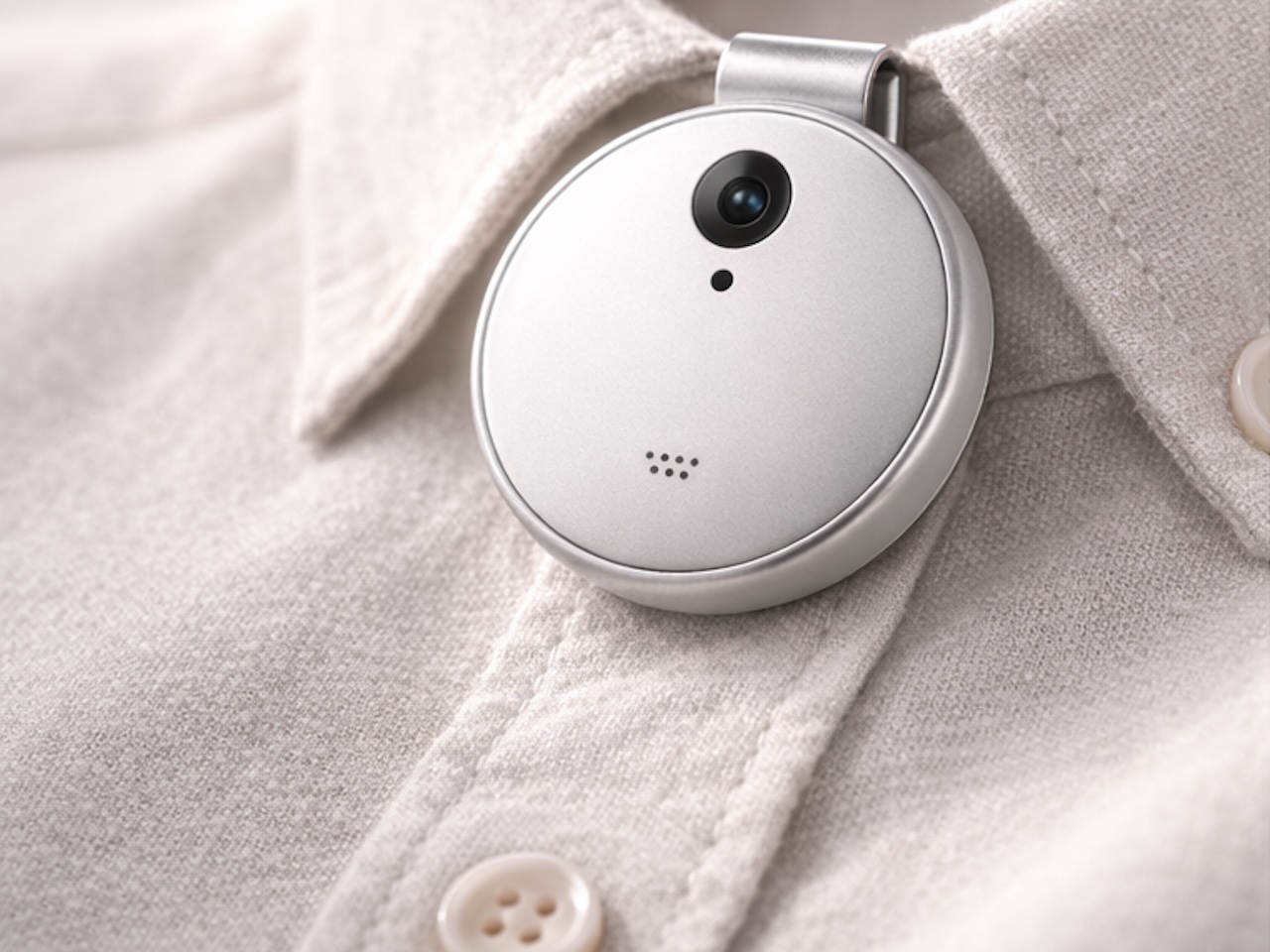
The Industrial Design Team is leading development with input from the Vision Products Group. For wearing it, Apple is testing two options: a clip that attaches to clothing or a bag, and a hole in the hardware that lets you thread a necklace through it.
The elephant in the room: Siri
All of this hardware depends on Siri actually being good. And that’s where the story gets complicated.
Apple’s voice assistant has been the punchline of the AI world for two years running. While ChatGPT and Gemini sprinted ahead, Siri stumbled through delayed feature rollouts and underwhelming Apple Intelligence updates. The chatbot-style version of Siri that would make this pendant genuinely useful isn’t expected until iOS 27, and it’ll reportedly rely on Google’s AI models under the hood.
So Apple is building hardware for an AI assistant that doesn’t fully exist yet. That’s either bold long-term planning or a risky bet, depending on how much faith you put in Apple’s ability to ship AI software on schedule. Their track record over the past two years doesn’t exactly inspire confidence.
The AI wearable landscape in 2026
Apple isn’t entering an empty market. The AI wearable space has gotten crowded, and the results so far have been mixed at best.
Humane’s AI Pin launched at $699 and was effectively dead within a year. The product couldn’t find an audience willing to pay that much for something that worked that poorly.
The Friend pendant took a different approach, positioning itself as a passive companion that listens and texts you its thoughts. Limitless built an AI wearable focused on meeting capture and memory, and Meta liked the idea enough to acquire the company.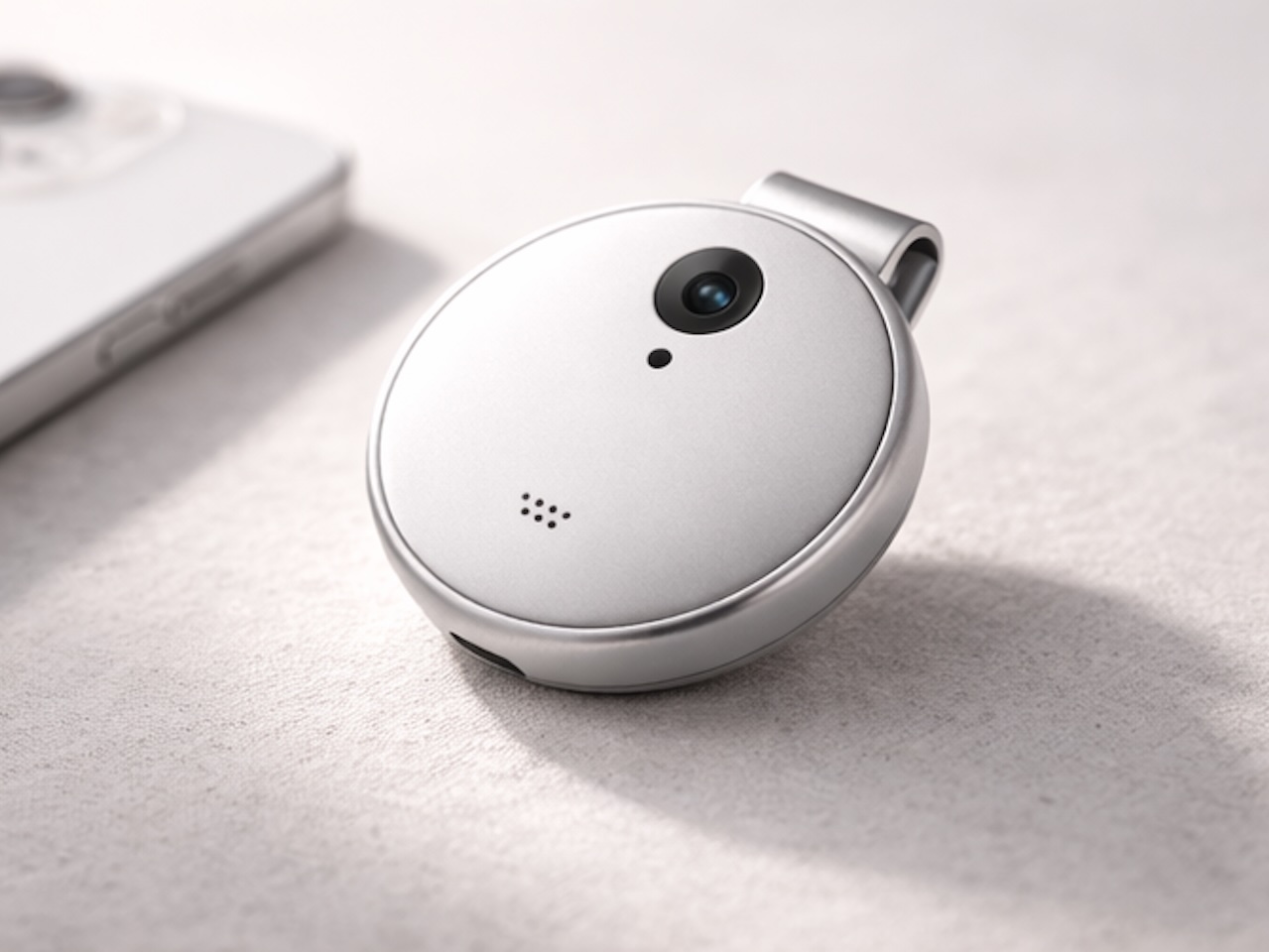
Meta’s Ray-Ban smart glasses are probably the closest success story in this category. They’ve managed to make camera-equipped glasses that people actually want to wear, largely because they look like normal Ray-Bans and pair with Meta’s AI for visual queries. Apple is reportedly developing competing smart glasses targeting a 2027 launch, with production possibly starting as early as December 2026.
Then there’s the OpenAI device, designed in partnership with a firm started by former Apple designer Jony Ive. Details are thin, but it’s reportedly in the works.
Can Apple actually pull this off?
The pendant project is still in early stages, and Bloomberg notes it could still be canceled. If it moves forward, the earliest possible launch would be 2027.
Apple has a few things working in its favor that Humane didn’t. An existing ecosystem of hundreds of millions of iPhones. A hardware design team that’s proven it can miniaturize technology (see: AirPods, AirTag). And the good sense not to position a tiny camera pendant as a phone replacement.
But there’s a fundamental question Apple hasn’t answered yet: do people actually want an always-on camera pinned to their chest? The privacy conversation around Google Glass killed that product over a decade ago. Meta’s Ray-Bans have mostly avoided that backlash because they look like regular sunglasses. An AirTag-sized pendant hanging from your neck is a lot more conspicuous.
The camera AirPods, reportedly further along in development and possibly arriving later this year, might actually be the more interesting play. People already wear AirPods everywhere. Adding low-resolution cameras to them for AI context is a smaller conceptual leap than convincing people to wear a new type of device entirely.
For now, Apple’s AI pendant is a bet that the company can succeed where Humane failed. Not by building a better standalone AI device, but by building a better accessory for the one you already have. Whether that’s enough to make people pin a camera to their shirt remains an open question.
Disclaimer: The images shown are rendered concepts of the AI Pin and do not represent the final hardware.
Love our content?
Sign up for our newsletter today.
No ads, no spam, just links to our latest articles!