

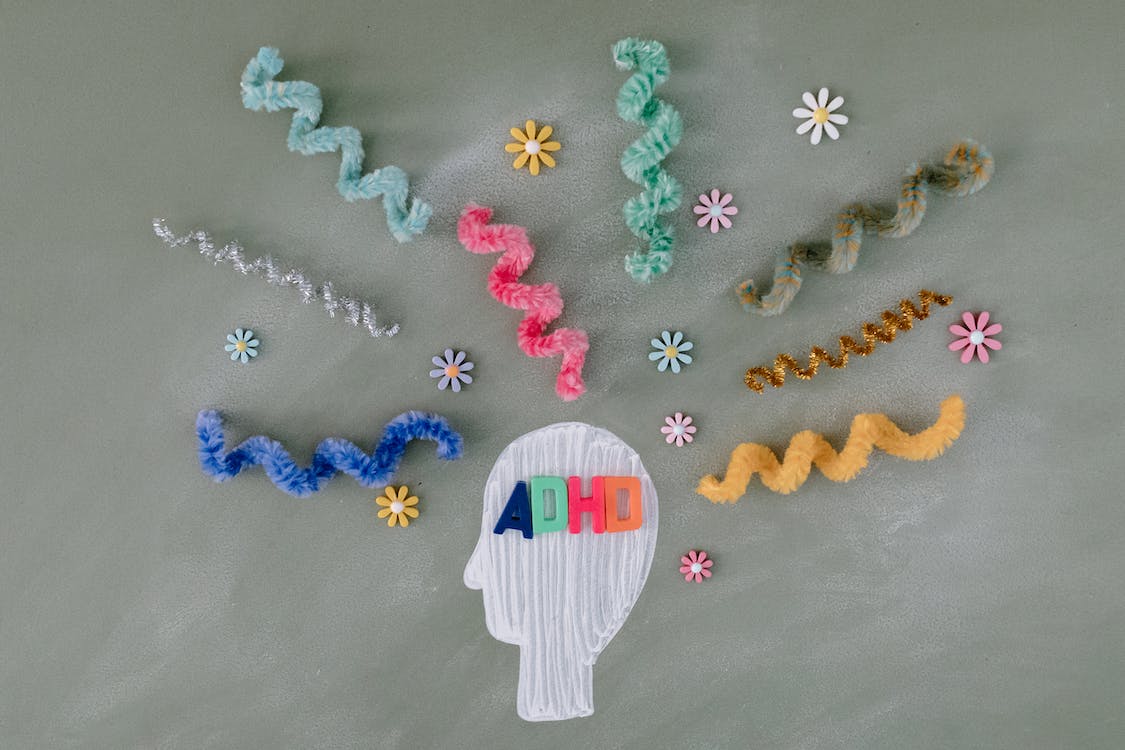
If you spend any time around ADHD content online, you will eventually see the claim that ADHD is basically a “dopamine deficiency”, a brain that “doesn’t make enough dopamine,” and therefore craves stimulation, novelty, scrolling, sugar, risk, you name it. It’s tidy, intuitive, and (for many people) oddly comforting.
It’s also a misleading oversimplification.
To be clear: dopamine is relevant to ADHD. Dopaminergic circuits are implicated in attention, motivation, reward learning, and motor activity (all domains that can be affected in ADHD). But the leap from “dopamine is involved” to “ADHD is a dopamine deficiency” is not supported by the evidence, and it sets people up to misunderstand both the condition and its treatment.
This matters because the dopamine story is not merely a harmless metaphor. It is routinely used to sell supplements, justify pseudoscientific interventions, and generate confident-sounding explanations that outrun what neuroscience can actually say.
The true dopamine story
ADHD is a clinical diagnosis. We diagnose it by symptoms, impairment, developmental history, and context, not by a lab test. “Low dopamine” sounds objective, measurable, and mechanistic, the sort of explanation people wish psychiatry could always provide. There is a long-running “dopamine hypothesis” of ADHD, but even sympathetic scholarly reviews stress its limitations. A recent review explicitly evaluates the evidence and (importantly) distinguishes between dopamine’s role in ADHD and a crude deficiency model, also noting that stimulant pharmacotherapy affects both dopamine and norepinephrine systems.
This is the recurring problem: dopamine is implicated, but the common media translation turns implication into a single-cause, single-chemical explanation.
When people say “dopamine deficiency,” they usually imply something like: (1) people with ADHD have globally reduced dopamine, and (2) restoring dopamine fixes the disorder. Neither claim holds up.
The evidence points to dysregulation and heterogeneity
Across neuroimaging, pharmacology, genetics, and neuropsychology, ADHD looks like a heterogeneous neurodevelopmental condition with multiple pathways and substantial individual variation. Even advocates of dopamine-centred models have long warned that the dopamine-deficit theory is too weak to be treated as a settled fact.
Some Positron Emission Tomography (PET) imaging studies have found group-level differences in dopamine-related markers in subsets of adults with ADHD, particularly in reward-related circuits. These findings are often interpreted as evidence of altered dopamine signalling rather than a simple shortage.
But “group-level difference” is not the same thing as “a diagnostic biomarker,” and it is certainly not the same as “your dopamine is low.” Neuroscience rarely licenses that kind of one-size-fits-all inference.
Treatments don’t support a single-chemical model
Moreover, stimulants are effective for many people with ADHD, and dopamine is part of their pharmacology. But the idea that they simply “replace missing dopamine” is not how these medications work.
Methylphenidate, for example, blocks the dopamine transporter (DAT) and increases extracellular dopamine availability in key regions; imaging work has shown substantial DAT blockade at therapeutic doses. However, stimulant effects are not dopamine-only. Standard stimulant treatments also affect norepinephrine signalling, and amphetamines have additional mechanisms (including increasing dopamine release).
If ADHD were simply a dopamine deficiency, we would expect:
- a cleaner mapping between dopamine measures and diagnosis,
- a much more uniform treatment response, and
- straightforward biomarkers usable clinically.
We do not have those things.
One reason the dopamine trope persists is that it’s easier to communicate than “frontostriatal networks, executive function, salience assignment, reinforcement learning, and arousal regulation.”
ADHD involves brain networks, and dopamine is one piece
But the brain does not organise itself by social-media-friendly neurotransmitters. It organises itself by networks and computations. A major international consensus statement frames ADHD as a valid disorder with a strong evidence base and highlights how misconceptions distort public understanding and care.
Dopamine matters. But it is part of a broader story involving multiple neurotransmitter systems, developmental trajectories, and context-dependent impairment.
The dopamine trope is not spreading because it is the most accurate description. It spreads because it is the most marketable description.
A vaguely defined “dopamine problem” is remarkably flexible. Once accepted, it can be used to justify almost anything: supplements said to “boost dopamine,” restrictive dietary regimens, so-called “dopamine detoxes,” expensive coaching programmes wrapped in neuroscience branding, and audio or EEG-based products that claim to “optimise” brain function. The common thread is not strong clinical evidence, but a reliance on basic neuroscience concepts stretched far beyond what they can reasonably support.
Once “dopamine deficiency” becomes the explanatory umbrella, the burden of proof quietly disappears. The narrative itself becomes the evidence.
What does the evidence actually support?
Dopamine signalling is clearly relevant to attention, motivation, and reward learning, and differences in dopamine-related measures have been observed in people with ADHD at the group level in certain research contexts, particularly in reward-processing pathways. But ADHD is a heterogeneous neurodevelopmental condition, and no single neurotransmitter-based account explains all presentations. Even influential reviews caution that the dopamine-deficit framing is too strong and too simplistic for the available evidence.
Pharmacological treatments also argue against the idea that ADHD is simply a matter of having too little dopamine. Medications that are known to be effective do not act on a single chemical in isolation.
Instead, they influence broader brain systems involved in attention, motivation, and self-regulation, particularly signalling pathways that involve both dopamine and norepinephrine. Their clinical effects cannot be accurately described as “replacing” or “topping up” a missing neurotransmitter, but rather as altering how these systems function and interact in specific brain networks.
Conclusion: Neuroscience deserves better than slogans
“ADHD is a dopamine deficiency” is not a careful scientific statement. It is a slogan, one that compresses a complex neurodevelopmental condition into a single-chemical morality play about willpower, stimulation, and hacks.
Slogans are not harmless when they shape treatment decisions, fuel stigma, or provide cover for snake oil.
If we want a more science-based public conversation about ADHD, we should start by being comfortable with a slightly less satisfying truth: dopamine is involved, but ADHD is not reducible to dopamine. And anyone claiming otherwise is either overselling the science or selling something else.
Dr Darren O’Reilly is a chartered psychologist and founder of AuDHD Psychiatry. He writes about ADHD and autism with a focus on clear, practical guidance for families and adults.