

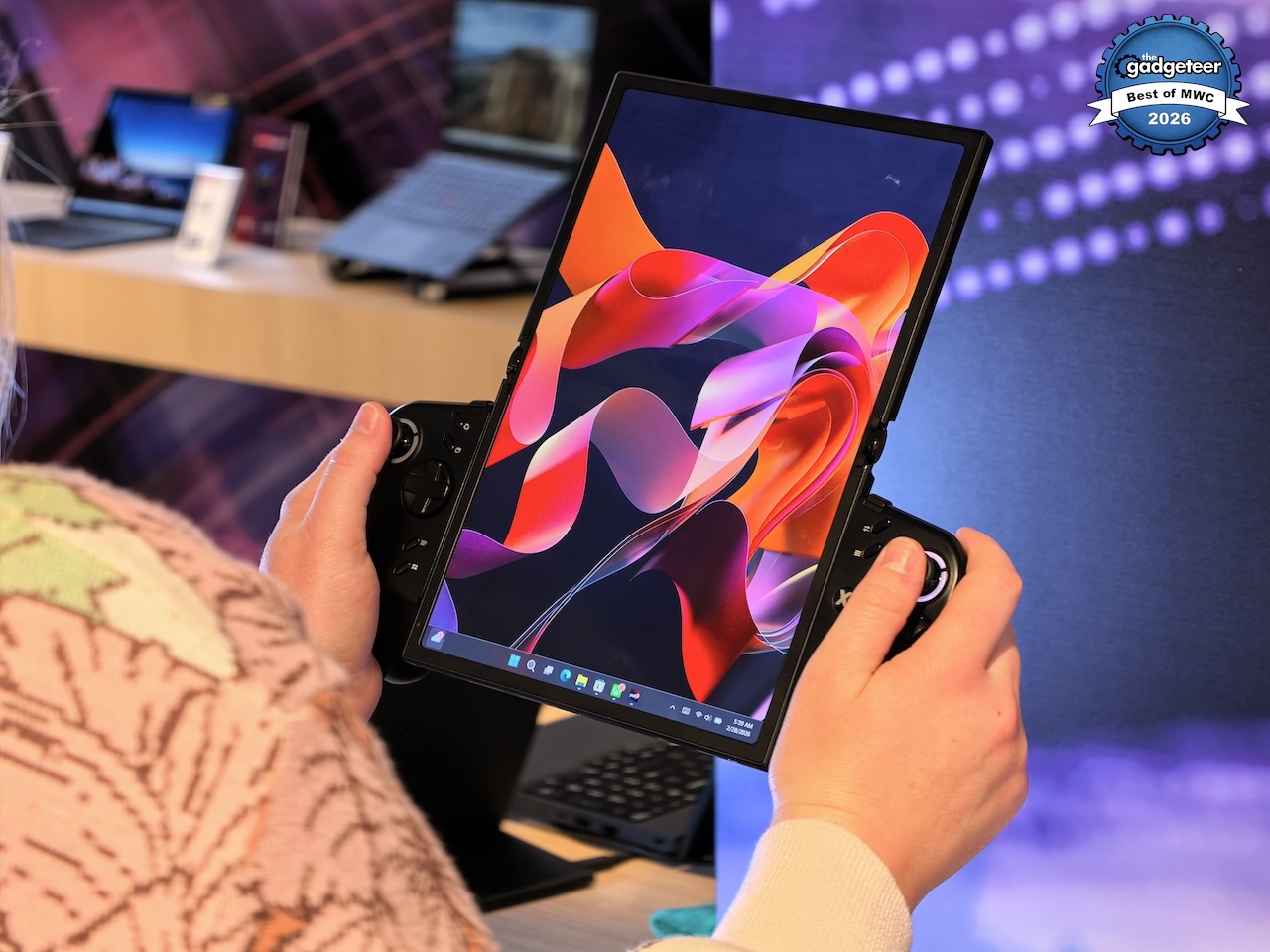
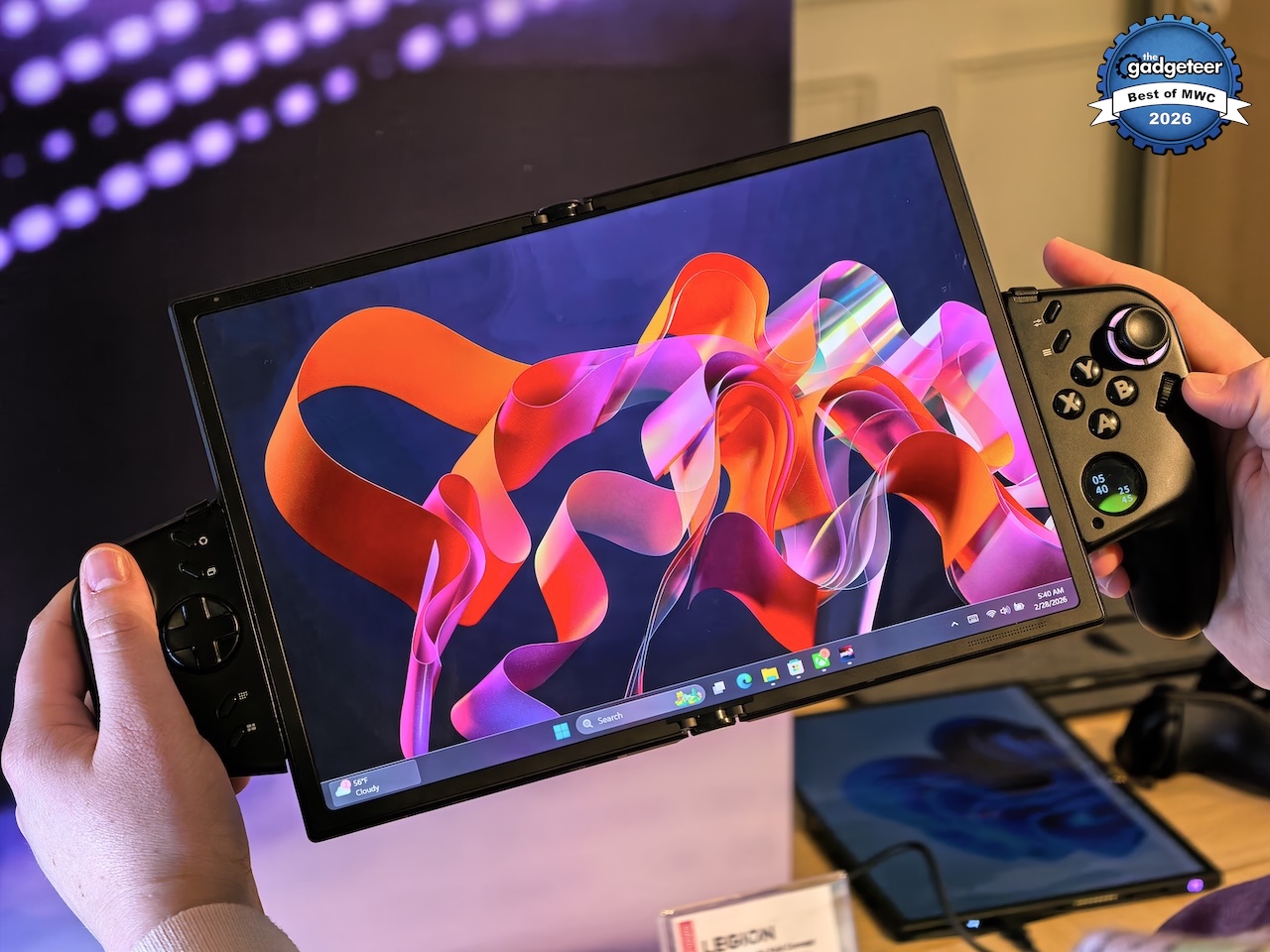
Every gaming handheld on the market asks the same question: how big should the screen be? Lenovo’s answer at MWC 2026 is to stop choosing. The Legion Go Fold is a concept device that folds a POLED display from 7.7 inches up to 11.6 inches, then pairs it with detachable controllers and a wireless keyboard to create four distinct modes from a single piece of hardware. It isn’t a sequel to the Legion Go. It’s Lenovo testing whether a foldable screen can settle the size debate that’s been running since the Steam Deck launched.
The concept debuted at MWC Barcelona 2026, alongside the Legion Tab, the Legion 7a laptop, and several ThinkPad updates. But the Go Fold drew the crowd. Hands-on impressions ranged from genuine excitement to honest notes about how early the hardware feels, which is exactly the kind of split you’d expect from something this ambitious.
Add The Gadgeteer on Google Add The Gadgeteer as a preferred source to see more of our coverage on Google.
ADD US ON GOOGLE
Four modes, one device
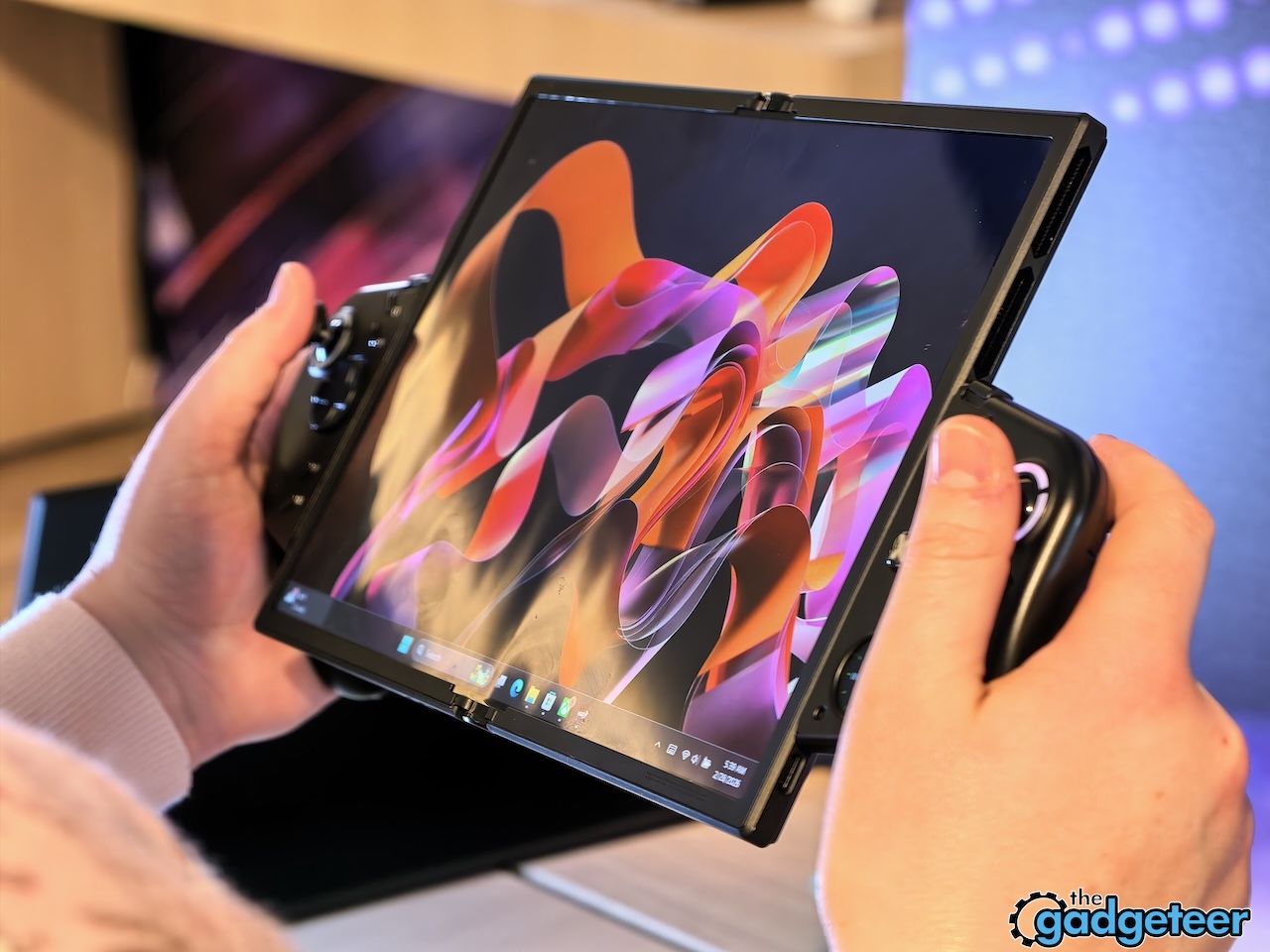
Lenovo built the Legion Go Fold around a POLED foldable panel that works at 7.7 inches when folded and stretches to 11.6 inches when fully opened. That gives you two native aspect ratios, and Lenovo structured four usage modes around them.
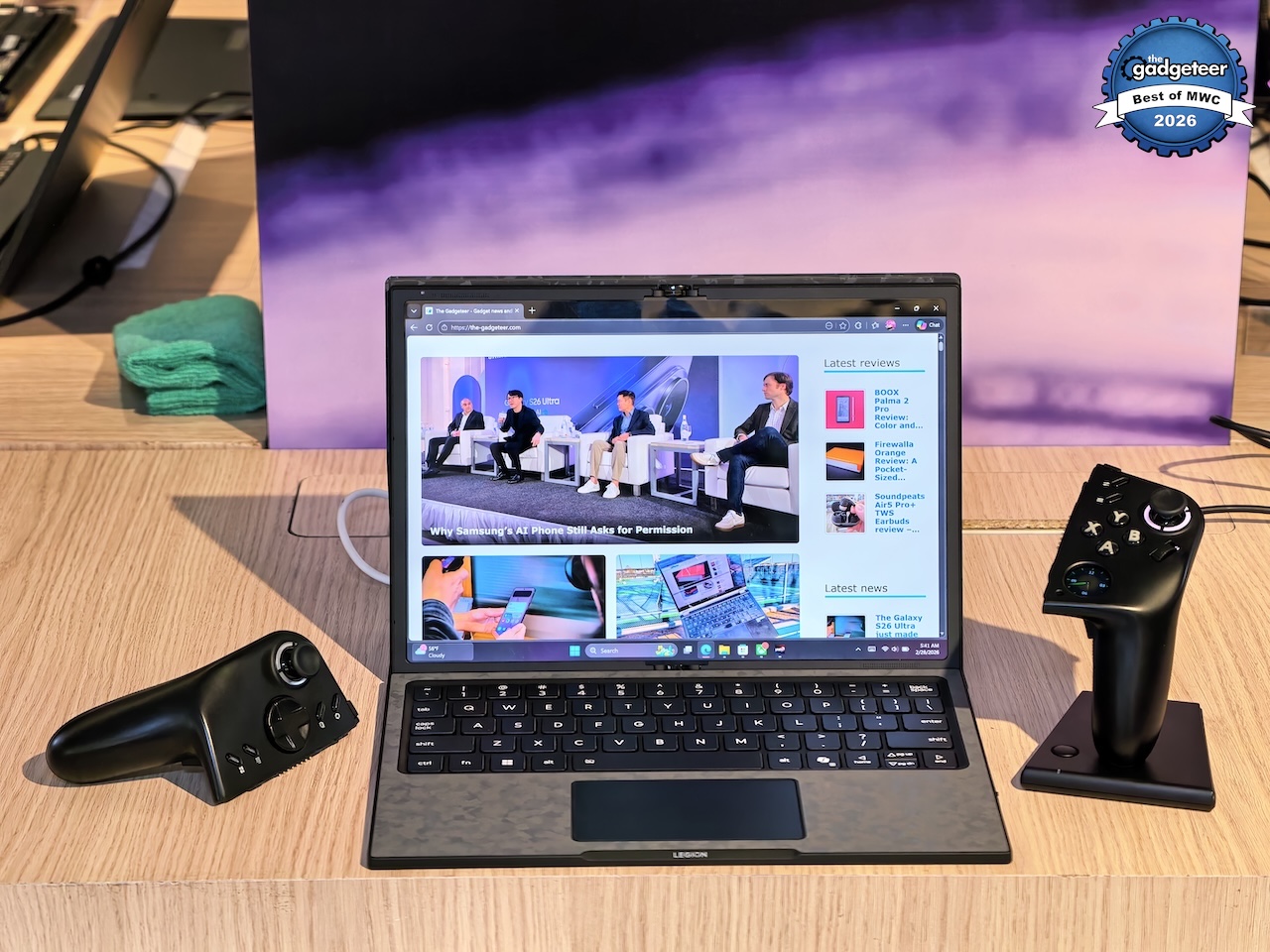
Standard Handheld mode keeps the screen folded with controllers attached on either side. Vertical Split-Screen mode opens the display and stands it upright, splitting into two stacked sections. Horizon Full Screen mode unfolds everything flat for the full 11.6-inch experience. And Expanded Desktop mode adds the included wireless keyboard and kickstand, pushing the setup closer to a lightweight PC workstation.
Most handhelds lock you into one screen size and one way of holding the thing. If you think about how often you switch between couch sessions and desk setups, the flexibility here is a genuinely smart play on Lenovo’s part. So the real question isn’t whether Lenovo can build a foldable handheld. It’s whether cramming four modes into one device solves a real problem for gamers, or whether it creates friction that a simpler design wouldn’t.
What’s running inside
Lenovo equipped the Go Fold with an Intel Core Ultra 7 258V processor from Intel’s Lunar Lake lineup, the same chip powering the MSI Claw 8 AI+. It’s a capable mid-range option rather than a flagship performer. Paired with 32GB of RAM and a 48Wh battery, the internals are solid enough for the form factor, though battery life remains a question mark. Multiple hands-on accounts from MWC noted quick drain during demo sessions.
The chip choice carries some subtext. Intel has been signaling new handheld-focused silicon under the Core G3 branding, built on the same Panther Lake architecture as its Core Ultra Series 3 laptop chips. Putting the 258V in a concept device suggests Lenovo is building the physical design now while keeping the door open for stronger silicon at production.
Storage comes in at 1TB SSD, and the display pushes a 2435×1712 resolution at 165Hz. At 868 grams with controllers attached, the whole thing is lighter than you’d guess for something with this many tricks. Strip the controllers off and the tablet portion drops to 638 grams, closer to a small tablet than a chunky gaming brick. How that weight sits in your hands during long sessions is the kind of detail that changes between concept and production. For a concept, those numbers feel less like placeholders and more like a signal that Lenovo is treating this as a serious design exercise.
What you actually touch
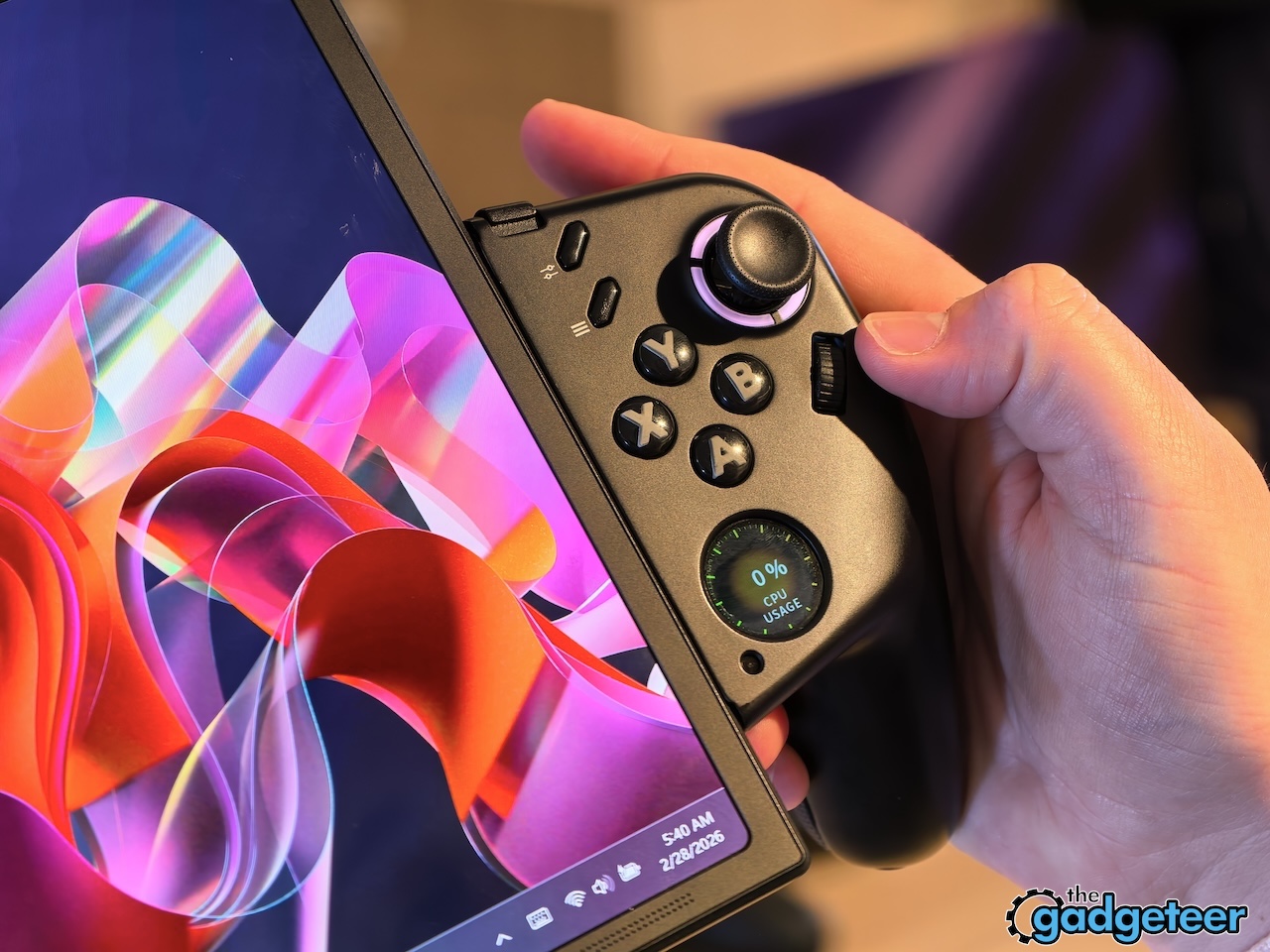
Detachable controllers connect via pin-based attachment points, borrowing the same detachable concept as the Nintendo Switch 2 but with a different mechanism. The right controller includes a small built-in screen that displays CPU temperatures and system data during gameplay, plus a touchpad for cursor navigation. There’s also an FPS Mode that turns the right controller vertical, functioning as a mouse-style input for shooters.
Build quality at the concept stage is openly unfinished. Hands-on reports described the controllers as light but flimsy, with an attachment mechanism that didn’t inspire total confidence. You notice it fast when you pick the thing up.
The wireless keyboard accessory pairs with a kickstand to turn the fully unfolded tablet into something resembling a small laptop. Early testers noted low-profile keys and a rough trackpad, but the idea of dropping into a desktop workflow from a gaming handheld without extra gear is the kind of problem-solving that makes the concept interesting beyond the foldable hook.
Lenovo went with an outward-folding design, meaning the POLED display wraps around the outside when folded. That’s the opposite approach from most foldable phones, which fold inward to protect the screen. Several hands-on previews flagged this as a durability concern. An outward fold exposes the crease and the flexible panel to everyday wear and pocket debris.
The crease itself was visible during MWC demos but didn’t significantly affect viewing. If you look closely, it’s there, but it fades once you’re focused on content. Still, the outward fold is one design decision that would almost certainly change if Lenovo moves to retail. At least one demo unit also got stuck in a vertical display orientation during the show, requiring a full restart. That’s expected at this stage, but it highlights how much software work remains before four constant orientation switches can feel seamless.
Where this fits in the Legion lineup
The Legion Go Fold isn’t replacing anything. It sits alongside the current lineup as an exploration of where handhelds might go next. Lenovo has a track record of converting bold concepts into shipping products. The ThinkBook Auto Twist moved from concept in 2024 to a confirmed production model at CES 2026. That doesn’t guarantee the Go Fold will follow, but it means Lenovo takes its concept devices more seriously than most.
There’s no confirmed pricing or release date. The original Legion Go launched at $700 for its top configuration, and a foldable version with this many accessories would almost certainly cost more. Lenovo hasn’t even signaled whether production is the plan, which makes this a watch-this-space device. But for the handheld market, the concept itself is the story.
The Steam Deck, ROG Ally, and even the Lenovo Legion Go 2 all compete on specs within essentially the same rigid form factor. Lenovo’s foldable approach asks whether the form factor itself should be a variable, and that question is going to shape how the next generation gets designed regardless of whether the Go Fold ever ships.
If you’re the kind of person who already switches between a handheld and a laptop depending on the setting, this concept is aimed squarely at you. If you want something you can buy today with polished software and a proven track record, skip this one and watch from a distance.
Love our content?
Sign up for our newsletter today.
No ads, no spam, just links to our latest articles!