

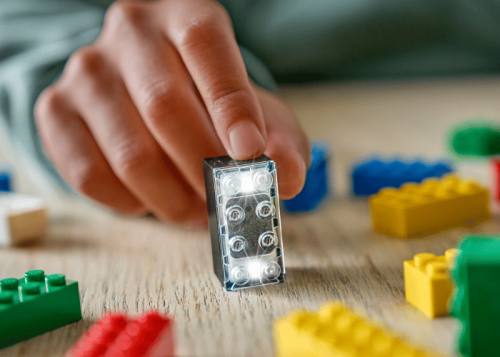
Kids and adults will build sets that react, glow, and respond in real time. Lego Smart Brick turns ordinary bricks into interactive parts that light up, sense motion, and connect wirelessly. This change affects how people play, learn, and design with Lego today. It matters now because screens dominate playtime, and Lego wants to blend hands-on creativity with digital feedback without replacing physical play. The trade-off includes higher costs, battery limits, and new privacy questions for connected toys.
What Lego Announced and When
Lego announced Lego Smart Brick during a company showcase this week at its innovation lab in Billund, Denmark. The company framed the reveal as its biggest building system upgrade in 50 years. Lego designed the Lego Smart Brick to match the size and feel of a standard 2×4 brick. Builders can snap it into existing sets without adapters or special plates.
The brick includes embedded sensors, multicolor LEDs, a small speaker, and low-energy wireless connectivity. Lego plans to roll out the Lego Smart Brick in select sets later this year, followed by standalone packs in 2026. The company confirmed compatibility with current Lego elements, which reduces friction for families with large collections.
Why Lego Smart Brick Matters Now
Lego Smart Brick arrives at a moment when toy companies face pressure from mobile games, short-form video, and declining attention spans. Lego wants to keep kids building longer by rewarding physical actions with instant feedback. Lights flash when a door opens. Sounds play when a vehicle lands. Colors change when bricks align correctly.
This approach supports learning through play. Kids can test cause and effect without staring at a screen. Parents get a toy that feels modern but still tactile. Educators gain a new tool for STEM lessons that focus on logic, sequencing, and experimentation.
Lego also faces competition from interactive toy systems and programmable kits. Lego Smart Brick lets the company push interactivity without forcing users into complex coding platforms. That balance gives Lego an edge in mainstream households.
How Lego Smart Brick Works
Each Lego Smart Brick packs a microcontroller, motion sensors, light sensors, and touch detection. The brick measures movement, orientation, and proximity. Built-in LEDs display multiple colors and patterns. A tiny speaker produces simple tones and sound effects.
The brick uses low-energy wireless connectivity to communicate with nearby smart bricks or a companion app. Lego designed the system to work offline for basic interactions. The app unlocks advanced behaviors like custom light sequences or sound triggers.
Power comes from a sealed rechargeable battery. Lego claims several hours of active play per charge and weeks on standby. Users recharge the Lego Smart Brick through a small contact port built into the underside of the brick.
Latency stays low because most reactions process on the brick itself. Lights and sounds trigger in milliseconds after an action. That speed keeps play feeling natural rather than delayed.
Real-World Play Examples
A castle gate lights up red when an enemy approaches. A race car flashes green when it hits top speed. A bridge creaks and glows when weight shifts. Lego Smart Brick allows these moments without screens or controllers.
Builders can chain multiple Lego Smart Brick units together. One brick can trigger another across a build. This setup allows domino-style effects, puzzles, and interactive challenges. Kids learn sequencing and logic through trial and error.
Lego plans themed behavior packs tied to popular sets. City sets focus on traffic signals and alarms. Space sets add engine hums and warning lights. Lego Smart Brick adapts to different play styles without forcing one experience.
Limitations and Concerns
Lego Smart Brick introduces new challenges. Cost stands first. Smart bricks will cost more than standard elements. Families may limit how many they buy, which could restrict large interactive builds.
Battery life also matters. Rechargeable batteries degrade over time. Lego must support replacements or recycling to avoid waste. Water resistance remains limited, which affects outdoor play.
Privacy raises questions too. Any connected toy invites scrutiny. Lego states that Lego Smart Brick uses encrypted connections and collects no personal data by default. Parents still need clear controls and transparency, especially when apps enter the picture.
Durability counts as well. Lego bricks survive decades of play. Electronics face wear from drops, dust, and moisture. Lego claims it tested the Lego Smart Brick to match its usual durability standards.
How It Compares to Past Lego Tech
Lego has experimented with electronics before. Power Functions, Mindstorms, and Lego Boost introduced motors and sensors. Those systems required special parts and structured builds.
Lego Smart Brick differs because it blends into standard bricks. It does not demand a separate ecosystem. Builders can drop it into freeform creations. That shift lowers the barrier to entry.
Compared to Mindstorms, Lego Smart Brick favors simplicity over programmability. Kids get instant feedback instead of coding interfaces. Advanced users still gain options through the app, but play comes first.
This move also aligns with industry trends. Toy makers now favor modular smart components rather than full smart toys. Lego Smart Brick fits that pattern while keeping Lego’s core identity intact.
Market and Cultural Impact
Lego Smart Brick could reshape how kids expect toys to behave. Static builds may feel less exciting once interactivity becomes common. Competitors will likely explore similar hybrid designs.
Educators may adopt Lego Smart Brick for classrooms. Interactive feedback helps students understand physics, logic, and design principles. Schools already trust Lego as a learning brand.
Adult fans also stand to benefit. Builders can create display pieces that light up or react without custom electronics. That accessibility could expand Lego’s adult market even further.
Retailers may bundle smart bricks with premium sets, raising average prices. Lego must balance innovation with affordability to avoid pricing out families.
Practical Takeaways for Readers
If you already own Lego sets, Lego Smart Brick will integrate without replacing your collection. Expect higher prices but broader play options. Watch for battery care and charging habits to extend lifespan.
Parents should review app settings and connectivity options before use. Educators should explore pilot kits for STEM programs. Adult builders can plan interactive displays without soldering or coding.
Lego Smart Brick does not replace imagination. It enhances feedback. The value depends on how much you enjoy reactive builds versus traditional static ones.
For official updates, visit the Lego Group site at https://www.lego.com.