

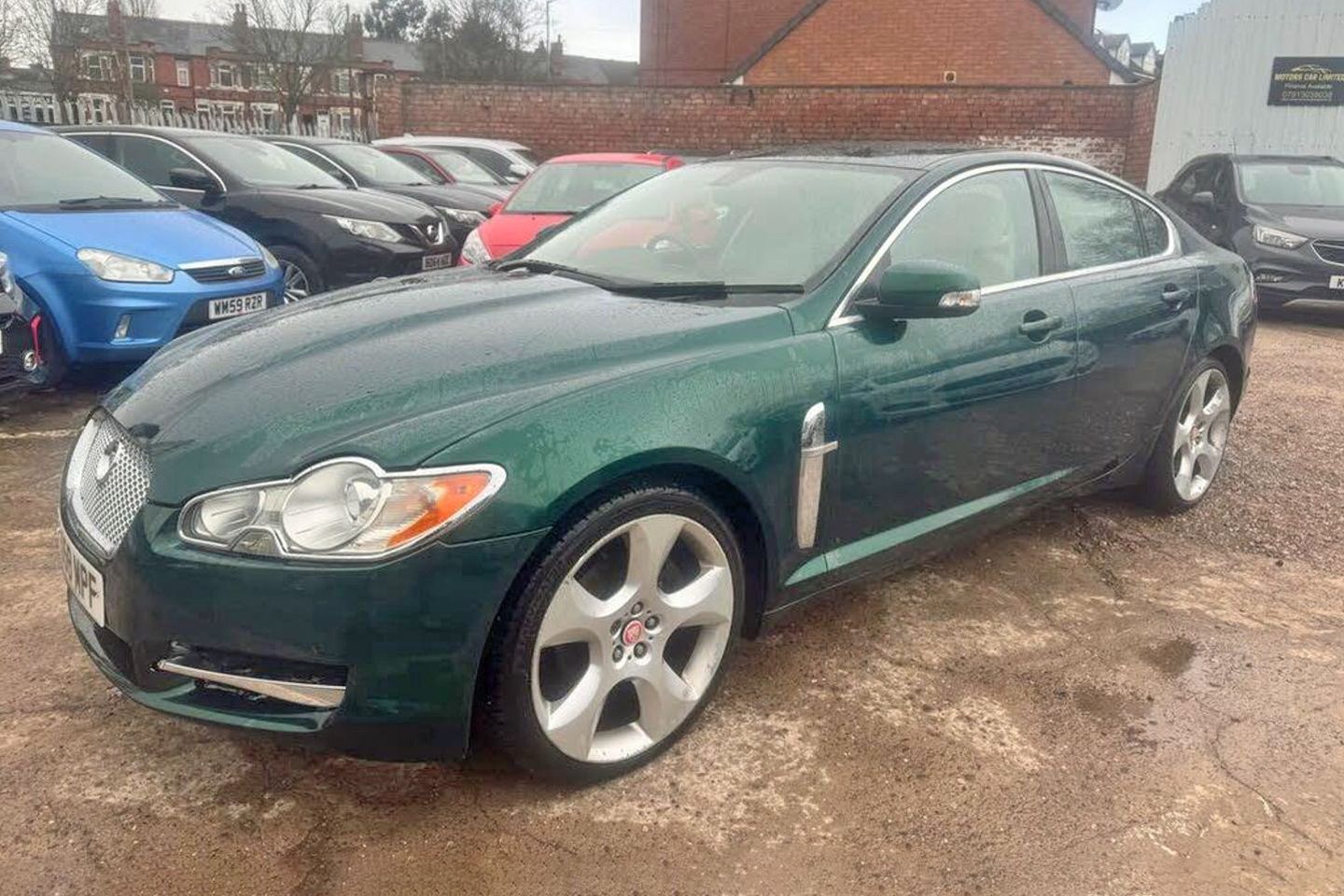
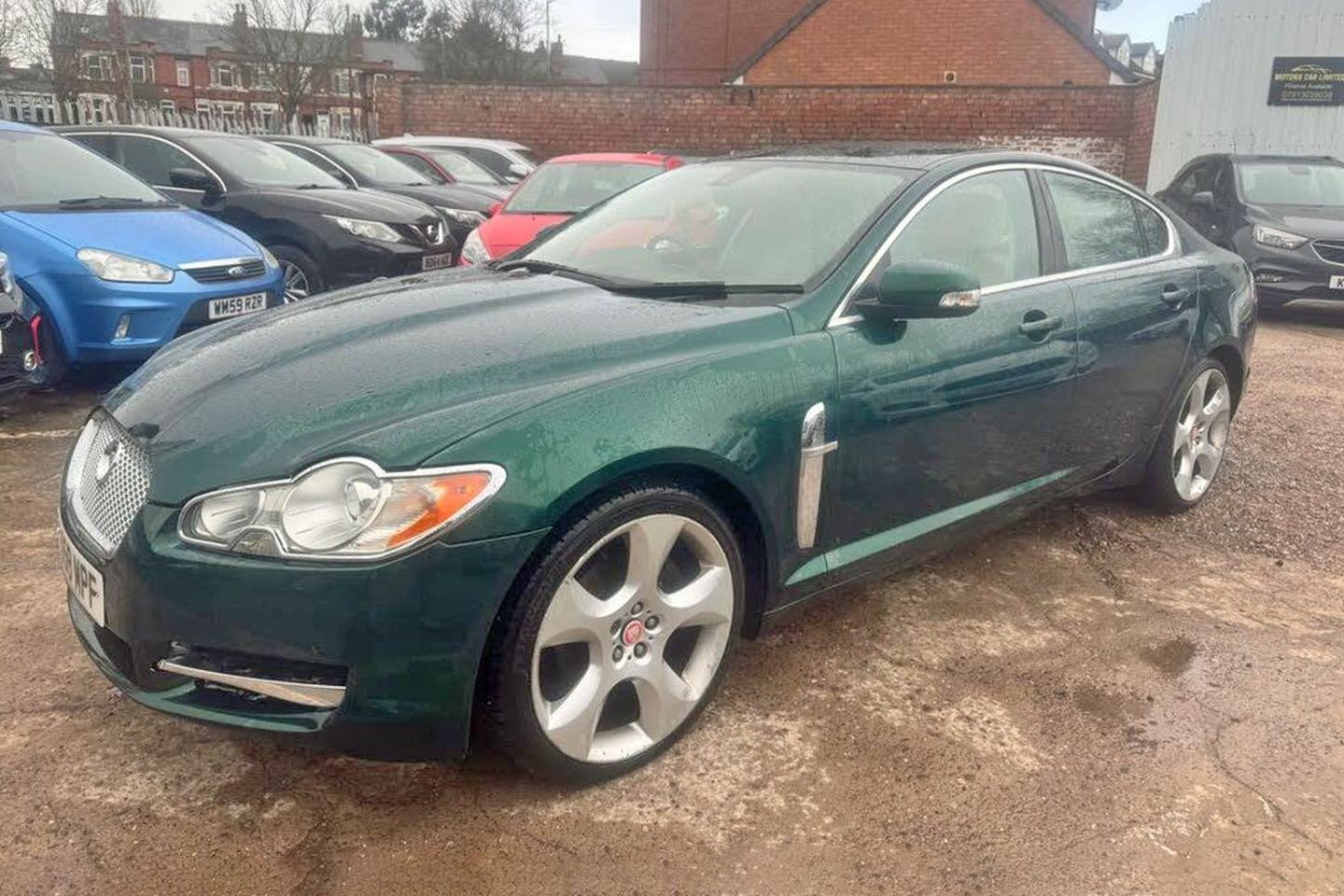
There was supposed to be a £1,750 FN2 Civic Type R on here today but some complete bounder spoiled that plan by buying it. Shed had a good think about something that might come as close as possible to the raw edginess of the Honda, and this is what he came up with: a diesel Jaguar. For an old geezer like him though, an XF is a sporty motor. The paint is British Racing Green and in somewhat better shape than the delacquered Milano red of that Honda. The wheels are unfeasibly large and the leather could do with a clean but with only 113,000 miles on the clock, a £1,599 price tag and a clean (albeit short) MOT, Shed has been experiencing a rare twitching in his trousers.
We have had a couple of XFs on here before, but they were both 3.0 V6 petrols. This one has the 2.7 twin-turbo V6 diesel which, for a certain type of owner, would be the preferred choice even with diesel prices now cresting the £2 a litre mark. If Shed could be bothered to work it out he would attempt to prove to you why, even with diesel costing 30p more a litre than petrol, it’s still his favoured option. Admittedly his diesel driving style is a bit unusual. It consists of chugging around in as high a gear as possible for 99 per cent of the time and spending the other 1 per cent mercilessly thramping up and down the dual carriageway next to the old folks’ home to clear it out.
In terms of real-world progress, there wouldn’t be much between the 205hp/321lb ft 2.7 diesel and the 235hp/216lb ft 3.0 petrol. The torque difference meant the diesel was actually quicker, with a 0-60mph time of 7.7 seconds against the petrol’s 7.9. Fuel consumption of 37mpg versus 26mpg meant you could go an extra 150 miles on a tankful of the black stuff. Jaguar put a lot of effort into quietening the diesel too, and its VED tax should be a relatively affordable £395 a year. Well, in Shed’s mind it should be £35 a year, but his mind isn’t all that closely connected with reality.

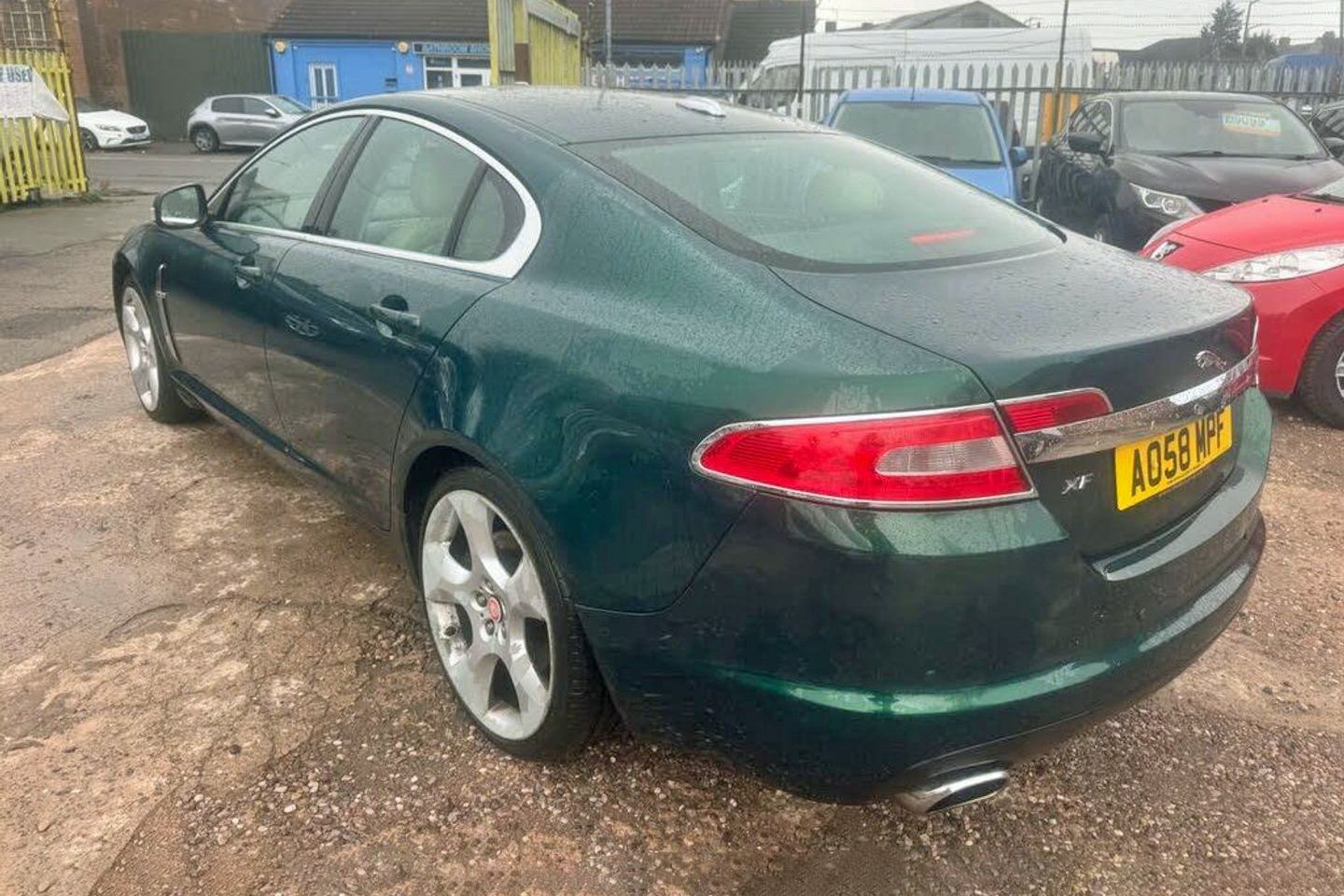
Being a pre-2015 example, our shed will be an X250 made of Ford steel rather than the aluminium they used for the X260. Being a pre-2011 example, it will be a non-facelift car. Being a 2008 example, it’s fair to call it an early XF, production not having started until the very end of 2007. Luxury was the lowest spec, although you couldn’t tell that from the outside because, barring wheel differences and a badge on the SV8, all XFs were deliberately designed to look the same. Great if you were buying a base model, not so much if you’d splashed out on an SV8. ’A customer is buying an XF rather than an XF in a particular trim level,’ sniffed Jaguar’s PR machine at the time.
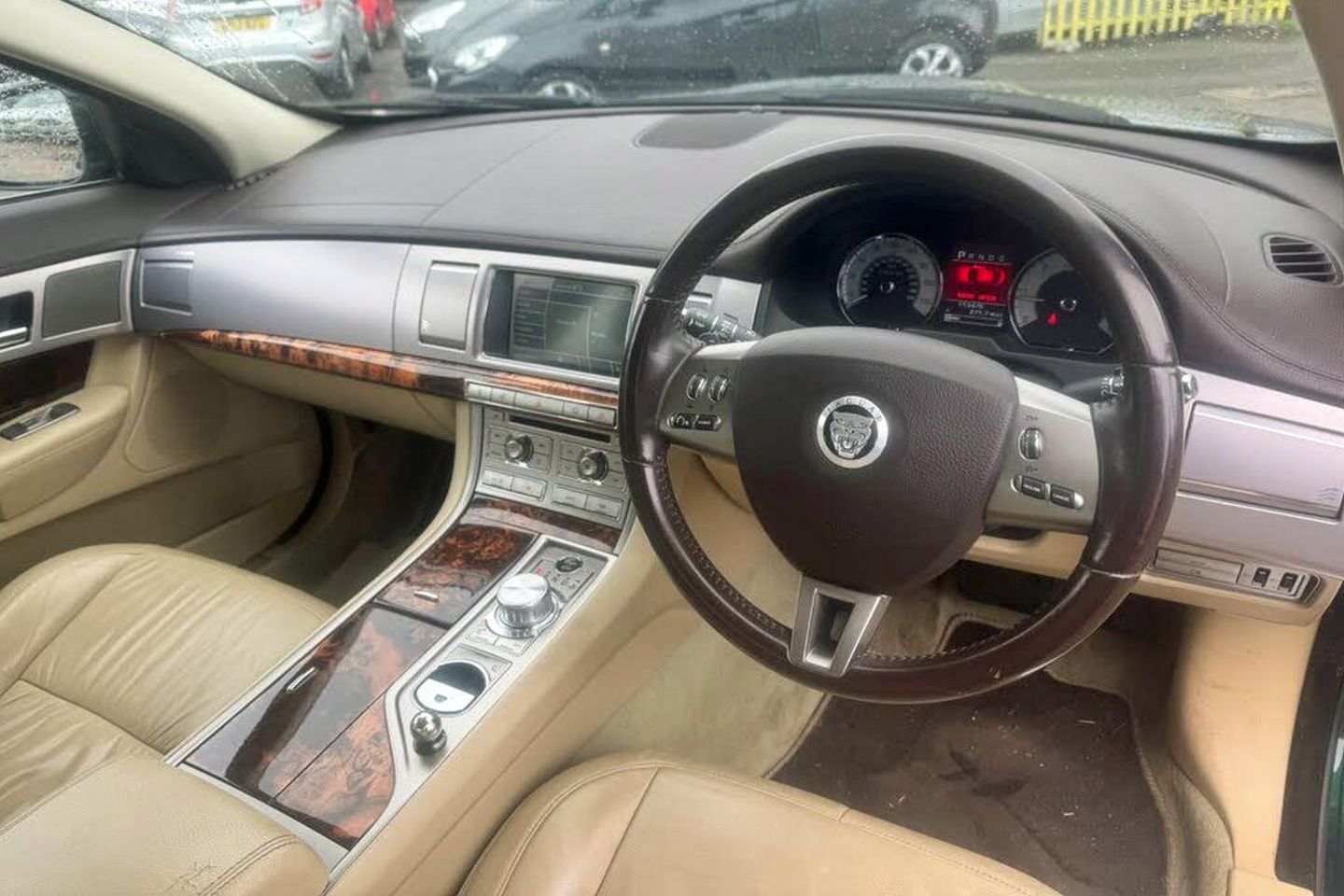
A similar ethos applied to the cabin, where many features were designed to be ‘invisible until needed’. More visibly, the XF boot was class-leadingly large at up to 540 litres. The basic 8-speaker audio setup (as here) sounded decent enough with a high-mounted woofer and a tweeter in each door and DAB as standard. JaguarSense Proximity controls meant you didn’t have to touch the glovebox lid or overhead console lights to operate them, a nice biological bonus for a ten-owner car like this, assuming it’s all still working of course. There was also a Pedestrian Contact Sensing System. Shed is currently scouring the XF online manual to see if this system can somehow be modified to refuse entry to certain people whom he would prefer to categorise as permanent pedestrians rather than passengers. Somebody should tell him what PCSS actually means.
The MOT does only have three weeks left to run, but when the XF was tested last April they couldn’t find anything wrong with it. Consumables apart, the worst thing to befall it so far has been a small diff leak noticed in 2024 and apparently put right at the time, or some time near it at any rate as it didn’t reappear in the next test. Diffs on pre-’09 XFs did suffer from contamination of the ‘lifetime’ fluid, causing wobbly pinion gears and halfshafts and damaged seals. It’s very much worth checking that the rectification work for this has been carried out at some point or you might be in for a whole new unit as they’ve changed the design since.
The Ford/PSA 2.7 ‘Lion’ unit does come with issues, like um crank failure. If it’s any consolation, the 3.0 and 2.2 diesels also had potentially catastrophic faults, which was something nice to think about while you were waiting by the side of the road for the recovery truck.
XF reversing cameras failed. They weren’t standard and there’s no mention of it on the ad so you might be lucky in not having it. Rising gear selectors didn’t always rise, leaving the car stuck in Park. That could be something as simple as a weedy battery, but if it isn’t you’ll need a new selector and as you might guess that won’t be cheap. Clutches for the stepper motors driving the rotating air vents in the dash wear out. That used to be an expensive repair too, requiring completely new vent/motor assemblies. Nowadays clutches are available separately, reducing your initial outlay, but partial dash dismantlery will still be needed. Tyre pressure monitoring sensors were, and probably still are, notoriously fragile.
Shed’s diligent research suggests that those 20-inch wheels are off the SV8. In this application and scabby condition they look more like the wheels off Charlie’s chuck wagon out of Wagon Train after a particularly tough hike through Arizona. On the plus side, SV8 wheels do go for big money in some markets, like the US. They’re not easy to come by in the UK either. Shed could only find a single refurbed one, priced at £229. In the worst-case scenario, you could buy the Jag for £1,599 and flog the wheels. Grab a dozen bricks from the recycling centre and you can be enjoying a good chunk of the Jaguar experience with zero running costs.