

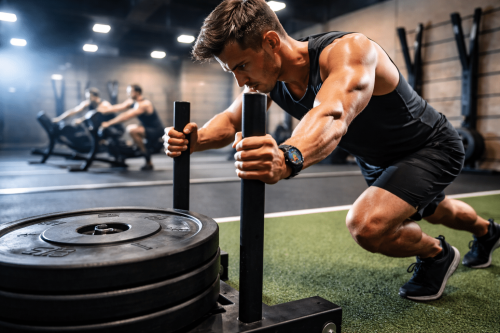
Your next fitness tracker may coach you for sled pushes and burpees, not just long runs. Hybrid athlete training now shapes the direction of wearables and performance gear as brands chase the explosive growth of HYROX-style competitions.
This shift affects everyday gym users as much as elite competitors. Hybrid athlete training blends strength, endurance, and functional movement into one event. Instead of training only for marathons or only for powerlifting, athletes now prepare for mixed formats that demand speed, stamina, and power in the same hour.
Wearable makers, footwear brands, and recovery tech companies now adapt quickly. They see opportunity in a training style that rewards versatility over specialization.
What Happened
Over the past year, major fitness tech brands updated products and marketing to support hybrid athlete training. Companies like Garmin, Whoop, and Polar refined tracking metrics to capture both strength output and endurance strain. Footwear brands launched cross-performance shoes designed for running intervals and heavy lifts in the same session.
HYROX events expanded into new cities across North America, Europe, and Asia. Participation numbers climbed as recreational athletes looked for new challenges beyond traditional road races or bodybuilding shows.
Hybrid athlete training moved from niche social media trend to mainstream competitive category. Fitness brands followed the demand.
Why It Matters Now
Fitness culture shifts in cycles. Ten years ago, long-distance running dominated wearable design. Then high-intensity interval training and CrossFit pushed heart rate tracking and recovery metrics into the spotlight.
Now hybrid athlete training reshapes expectations again. Athletes want gear that supports:
-
Sprint intervals
-
Heavy sled pushes
-
Rowing bursts
-
Sandbag lunges
-
Wall balls
All within a single session.
Traditional devices focus heavily on steady-state cardio. Strength sessions often receive limited insight beyond calorie estimates. Hybrid athlete training forces tech companies to measure muscular load, explosive power, and recovery strain more accurately.
This matters for everyday users too. Many people now train for general fitness instead of one sport. They want fewer devices and more adaptable tools.
How Hybrid Athlete Training Works
Hybrid athlete training combines endurance and resistance work in structured formats. A typical competition might include:
-
1 kilometer run
-
1,000 meter ski erg
-
50 meter sled push
-
50 meter sled pull
-
1 kilometer row
-
100 wall balls
Athletes repeat these cycles in sequence. Performance depends on pacing, strength endurance, grip stability, and cardiovascular efficiency.
Wearables now attempt to capture this complexity. Devices measure heart rate variability, lactate threshold estimates, power output, and recovery windows. Some brands integrate motion sensors that detect lifting tempo and rep speed.
For example, newer trackers can estimate muscular strain by analyzing acceleration patterns and heart rate spikes during resistance sets. Hybrid athlete training pushes developers to refine these algorithms.
The Tech Behind the Shift
Most wearables rely on optical heart rate sensors and accelerometers. For hybrid athlete training, that base layer is not enough.
Brands now add:
-
Multi-band GPS for indoor and outdoor transitions
-
Advanced gyroscopes for movement detection
-
AI-driven workout recognition
-
Recovery scoring models based on sleep and HRV
Some companies also integrate chest straps for more accurate heart rate tracking during explosive movement. Others build strength-focused apps that sync with wearable data to track load progression.
Hybrid athlete training creates demand for deeper analytics. Athletes want to know not only how far they ran, but how efficiently they transitioned between stations.
Footwear and Apparel Adapt
The shift extends beyond wrist-based tech. Shoe companies design hybrid trainers with stable heels for lifting and responsive midsoles for short runs. These shoes avoid the soft cushioning of marathon shoes and the rigid base of weightlifting shoes.
Apparel brands produce moisture-wicking compression gear that supports both endurance and strength movements. Grip-enhanced gloves and breathable knee sleeves gain popularity.
Hybrid athlete training rewards versatility. Gear must perform under varied stress without requiring outfit changes mid-workout.
Limitations and Concerns
Despite excitement, hybrid athlete training presents challenges.
First, data accuracy during strength sessions still lags behind cardio tracking. Wrist-based sensors struggle to measure force production directly. Estimates rely on indirect signals like motion speed and heart rate response.
Second, cost can climb quickly. Athletes may purchase:
Hybrid athlete training may promote minimalism in sport selection but not always in spending.
Third, overtraining risk increases. Combining high-intensity cardio with heavy resistance loads taxes the nervous system. Without proper recovery tracking and coaching, injury risk rises.
Comparison to Previous Fitness Trends
CrossFit paved the way for blended fitness. However, CrossFit focused heavily on gym-based communities and specific programming styles.
Hybrid athlete training often appeals to a broader audience. HYROX competitions take place in large venues and follow consistent global formats. That consistency helps wearables standardize tracking modes.
Marathon training emphasizes steady mileage. Bodybuilding isolates muscle groups. Hybrid athlete training demands balance across energy systems.
This balance influences tech design. Instead of optimizing for one metric, brands optimize for adaptability.
Market Implications
The global wearable fitness market continues to grow. According to data from the International Data Corporation, wearable shipments maintain steady annual increases as consumers adopt health tracking tools. You can review IDC market insights here:
Hybrid athlete training adds fuel to that growth. Brands now market devices as performance ecosystems rather than simple step counters.
Subscription models also expand. Recovery insights, advanced analytics, and personalized training plans often require monthly fees. Companies frame these subscriptions as coaching layers for hybrid athlete training.
Gyms respond too. Many facilities now add sled tracks, turf lanes, and functional fitness zones. Equipment manufacturers benefit from increased demand for rowing machines, ski ergs, and sled systems.
Cultural Shift Toward Versatility
Hybrid athlete training reflects a broader cultural move toward well-rounded fitness. Social media highlights athletes who run fast and lift heavy. Versatility becomes aspirational.
For everyday users, this approach feels practical. Real life requires strength and stamina. Carrying groceries, climbing stairs, and playing with children demand mixed physical skills.
Fitness tech companies align messaging with that practicality. They promote durability, balance, and longevity rather than extreme specialization.
Practical Takeaways
If you train for hybrid athlete competitions or mixed workouts:
-
Choose a wearable that tracks both cardio and strength metrics
-
Monitor recovery, not just performance
-
Rotate footwear based on session focus
-
Prioritize mobility work to prevent injury
If you are new to hybrid athlete training, start gradually. Build base endurance first. Add strength intervals slowly. Track how your body responds.
Avoid chasing every metric. Use data to guide decisions, not dominate them.
The Bigger Picture
Hybrid athlete training now shapes product roadmaps across the fitness industry. Wearables, shoes, apparel, and gym layouts evolve together.
This trend may reduce the need for multiple niche devices. Instead of separate running watches and lifting logs, users want unified systems.
The brands that succeed will deliver accurate tracking, meaningful recovery insights, and durable gear built for varied stress.
Hybrid athlete training does not replace traditional sports. It adds another path for people who crave challenge without choosing a single lane.
As competitions expand globally, expect continued innovation. Fitness tech will keep chasing the same goal: help athletes move stronger, recover smarter, and perform better across every station.