

Share

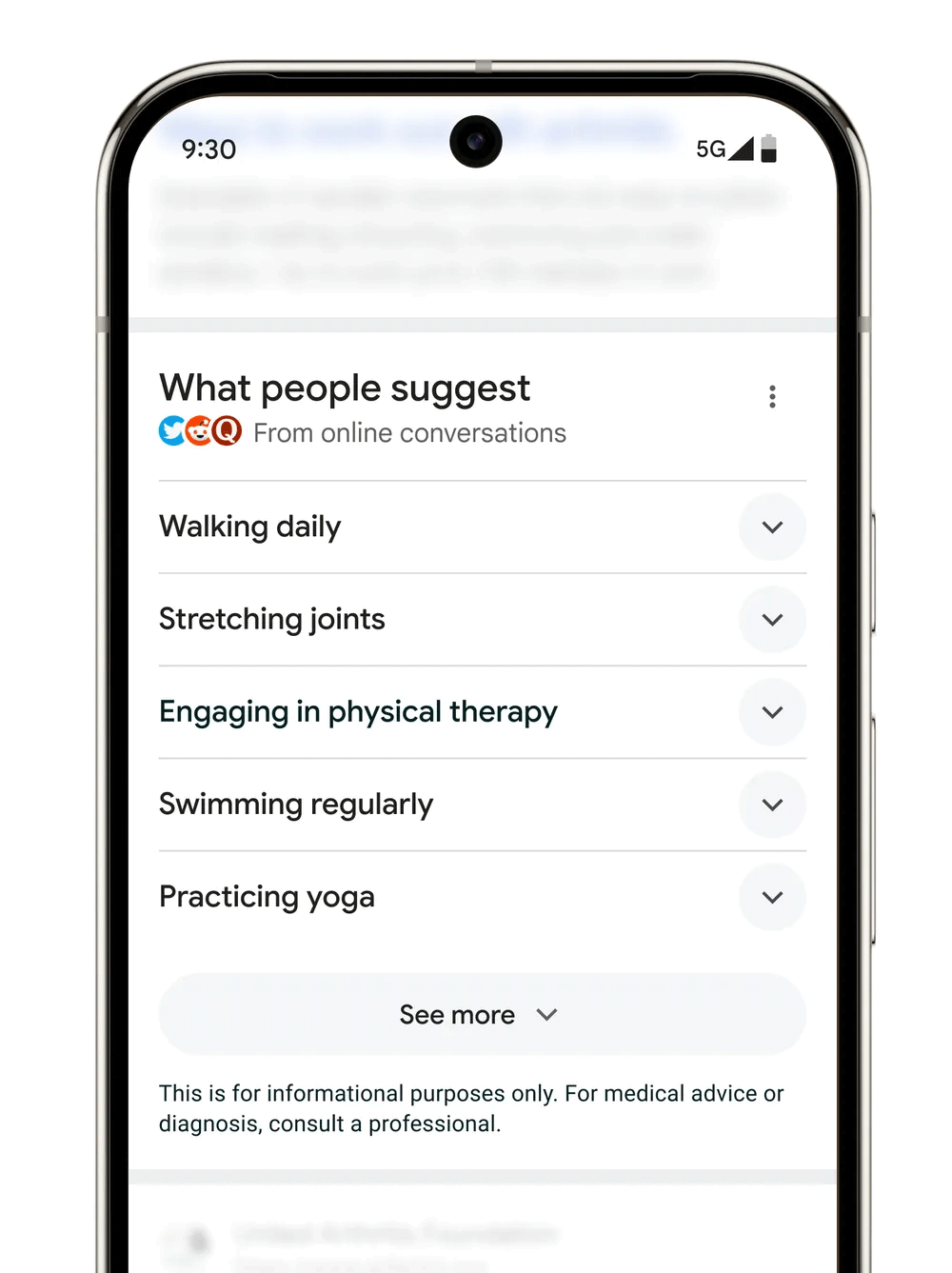
Google has dropped a new artificial intelligence search feature that gave users crowdsourced health advice from amateurs around the world. The company had said its launch of “What People Suggest”, which provided tips from strangers, showed “the potential of AI to transform health outcomes across the globe”. But Google has since quietly removed the feature, according to three people familiar with the decision. A Google spokesperson confirmed “What People Suggest” had been scrapped. Guardian
Apple today unveiled AirPods Max 2, with key upgrades including the H2 chip, increased active noise cancellation, improved sound quality, and features such as Adaptive Audio, Conversation Awareness, Voice Isolation, and Live Translation.

The new AirPods Max have the same overall design as the previous generation, with most of the new features coming from the upgrade to the H2 chip. MacRumors
Organisations worldwide are racing to develop a universally recognised label for “human-made” products and services as part of the growing backlash against AI use. Declarations like “Proudly Human”, “Human-made”, “No A.I” and “AI-free” are appearing across films, marketing, books and websites. It is in response to fears that jobs or entire professions are being swept away in a wave of AI-powered automation. BBC News has counted at least eight different initiatives trying to come up with a label that could get the kind of global recognition that the “Fair Trade” logo has for ethically made products. BBC

JD.com has launched its Joybuy online marketplace across the UK and five European markets on Monday, expanding the Chinese e-commerce group’s international push and positioning the platform as a competitor to Amazon in the region. The platform has launched simultaneously in the UK, Germany, France, the Netherlands, Belgium and Luxembourg, marking a significant step in JD.com’s efforts to grow outside its domestic market. The company is seeking new growth opportunities as Chinese retailers expand abroad in response to intense competition and weaker consumer demand at home. Retail Systems

In October 2024, I took Honda up on an invitation to visit the future. The future of Honda, of electric cars… heck, the future of the entire car world. The epicentre was naturally Japan, which to a Westerner always feels like a portal to a world 30 years more advanced than our own. Honda is usually secretive. This was exciting. What I was presented with wasn’t a new car, but a new philosophy of car making. A philosophy which, 18 months later in early 2026, Honda has spectacularly binned. Top Gear
Volkswagen likes to distil the essence of the brand down to three simple ideas: Emotion, efficiency and engineering. Those three pillars are meant to underpin every model the company produces…Volkswagen’s upcoming ID. Cross is designed to embody all of that in one of the most important and lucrative parts of the electric car market. This new compact SUV is part of the Volkswagen Group’s new Electric Urban Car Family, a range of smaller electric vehicles that will all be built in Spain, with development led by Cupra. Independent
John Maynard Keynes predicted in 1930 that a century later, technological advances would mean that the average worker may have to toil for no more than 15 hours a week. In 2026, with four years left on his timeline, the chances of his bet paying out appear slim. The average full-time employee spends 36.7 hours a week at work – double the economist’s prediction and a figure that has hardly budged in 30 years. When computers, advanced machinery and instant communication gave us the choice of working less or doing more, we chose the latter. Telegraph
Related Posts
Discover more from Tech Digest
Subscribe to get the latest posts sent to your email.