


TRANS-AM to bring new level of precision to advanced therapies
Life
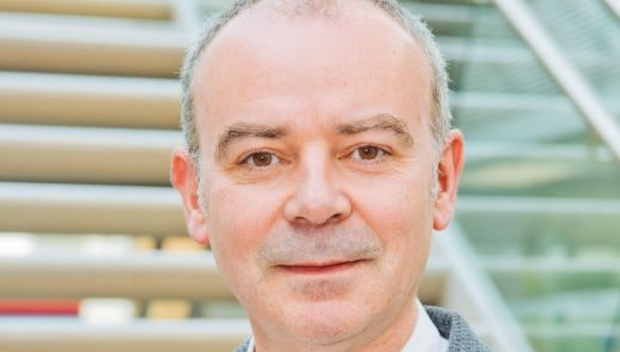
Prof Niall Barron
As a new €2 million gene therapy research project funded by APC Microbiome Ireland and Research Ireland is announced, we speak with the project lead Prof Niall Barron about its potential and how Ireland is positioning itself in this revolutionary research area.
The project, TRANS-AM (Transformation of Advanced Medicines Manufacture), is a collaboration between APC, the National Institute for Bioprocessing Research and Training (NIBRT), and University College Dublin (UCD). Its focus will be on gene therapies, and specifically how to finetune the manufacturing process so that these advanced therapies become more cost effective and more accessible.
Gene therapies are treatments aimed at addressing diseases at their genetic source. Instead of giving patients traditional medicines to manage symptoms, gene therapy can replace the faulty gene responsible for the disease.

Prof Barron explains that the diseases that respond to gene therapies are those “that have their foundation in a genetic mistake in a person, as opposed to something like a bacterial infection… one example would be hemophilia”.
With hemophilia, a patient is typically missing a key blood-clotting factor (which is a protein). “What gene therapy seeks to do is try and give [the patient] the gene that encodes the missing factor, and then that gene will take up residence in, for example, liver cells, and now their own liver becomes the factory for that missing factor. You’re not making [the blood factor] in a bioreactor in a pharmaceutical company, you’re giving the person that gene, and if you’re very lucky, that therapy will be permanent.”
Consistency and quality
The potential of gene therapies is undeniable, but there are challenges around the manufacturing of these advanced therapies, namely improving manufacturing efficiency and ensuring product consistency and quality.
Prof Barron explains that there are different ways of delivering genetic therapy, but the method this project is concerned with is viruses. “Viruses are an effective means to get genetic material into a patient. We choose viruses that are essentially harmless and don’t cause disease. The one we’re focused on is called AAV (adeno-associated virus), a tiny viral particle inside of which is a small, little piece of DNA which we replace with the therapeutic gene.”
“Why viruses? Because viruses have been spending hundreds of millions of years learning how to effectively get into a host cell.”
When you’re talking about viruses and cells, and elements at a particle level, the challenges of the manufacturing process become a little clearer.
“We grow cells in a bioreactor and we introduce into them all the different genes required to build an AAV virus, including the therapeutic gene. That’s not something we can ask a chemist to do in a test tube. It’s just too complicated. We have to use living cells. And let’s not forget, while viruses have been spending hundreds of millions of years learning how to get into cells, cells have been spending just as long learning to defend themselves from that process. This project, then, will seek to understand not just the genetics of the virus, but also the genetics of the host cells to build those viruses, to try and identify certain genes that are switched on or off in the host cell that we’re using. Can we overcome them so that host cell becomes defenseless and has to make more viruses for us?”
At the end of the day, efficiency in this instance means more yield of virus. But Prof Barron is quick to point out that together with higher yield, consistency and quality are vital. Every virus has to be made correctly and needs to contain the exact genetic material, to ensure that each dose given to patients is safe and effective.
“Our goal is to make sure we’re putting the same type of medicine into every patient. If there’s a variation in patient outcome, we’re trying to figure out is it the patient, or is it that we put badly made medicine into them? Manufacturing has a huge part to play in making sure that consistency of quality is there.”
There are other elements to the project too, that will help to position Ireland as a potential leader in advanced therapy research. The project will prioritise the training of PhD students and postdoctoral scientists with the skills needed for this evolving field. It is also focused on fostering close collaboration between academic institutions like NIBRT, and industry partners like APC, to ensure that research translates into real-world impact.
Can Ireland be a global innovator in gene therapies? Prof Barron says that while we are not quite there yet, there is reason for optimism. He points to Ireland’s history of success in biopharmaceutical manufacturing, our strong collaborations between academia and industry, investments like this in workforce training and infrastructure, and the current momentum in research and development.
“We’ve done a lot in the last few years. This announcement is another great stepping stone for Ireland in this area.”