

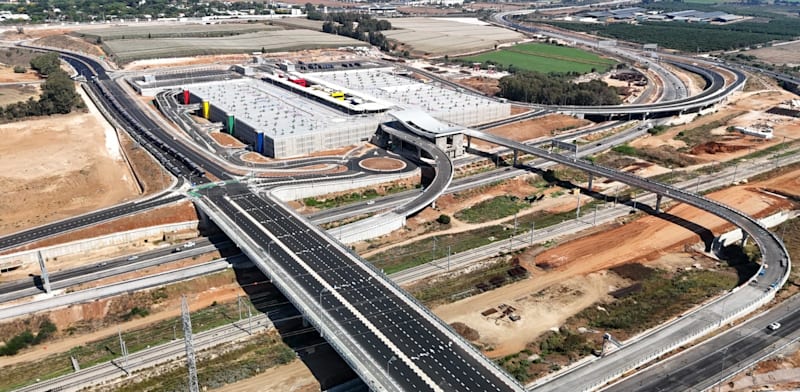
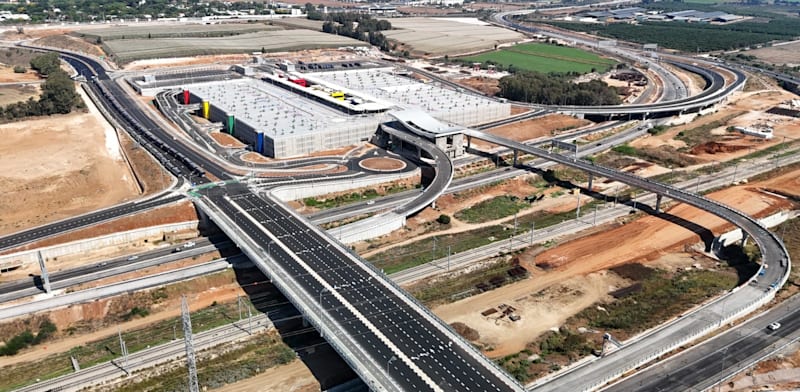
On March 1 the fast lane into Tel Aviv from Netanya via Kibbutz Shefayim in the north is due to open, while in June the fast lane from Rishon Lezion-Mevo Ayalon into Tel Aviv will open.
Meanwhile the Knesset Economics Committee has approved regulations that will allow toll collection on the planned fast lanes on the Coastal Highway (Road 2) and Ayalon Highway (Road 2). This is a regulatory stage designed to enable the operation of the project, which aims to reduce congestion by prioritizing public transport and carpooling.
According to the regulations, the lanes will be divided into seven segments, with the toll set for each segment separately and ranging overall from NIS 7 to NIS 105 per vehicle, depending on the level of congestion on the regular roads. Public transport, special shuttles, and vehicles with three or more passengers will be exempt from the toll. Vehicles with only a driver or two passengers will be able to use the lane and pay.
The lanes will operate on the Coastal Highway and Ayalon, from the Netanya Interchange in the north to the Mevo Ayalon Interchange south of Rishon Lezion in the south. As part of the project, two free park-and-ride parking lots have been built. A parking lot in Shefayim with 6,800 parking spaces, which is scheduled to open this March, and another parking lot in Mevo Ayalon with 3,800 parking spaces, which is scheduled to open in July. The parking lots will also include facilities for cyclists and showers, and free shuttles to central destinations will be operated from them.
The toll will be used as a tool for demand management. If the speed on the fast lanes drops below 70 kilometers per hour, paying vehicles will be temporarily blocked in order to maintain a continuous flow of traffic on the lane. Two-wheeled vehicles will not be allowed to use the route, among other things for safety reasons. The cost of the project is an estimated NIS 8 billion. Part of it has been carried out directly by the Ayalon Highways Company, and part through a private concessionaire, who will receive payment over a 14-year construction and operation period.
The regulations were approved despite reservations raised in the Knesset Economics Committee, mainly around the maximum possible toll. The Ministry of Transport and the Ministry of Finance explained that this is a mechanism designed to regulate the use of the route and allow priority for public transport and shared travel.
Published by Globes, Israel business news – en.globes.co.il – on February 9, 2026.
© Copyright of Globes Publisher Itonut (1983) Ltd., 2026.