


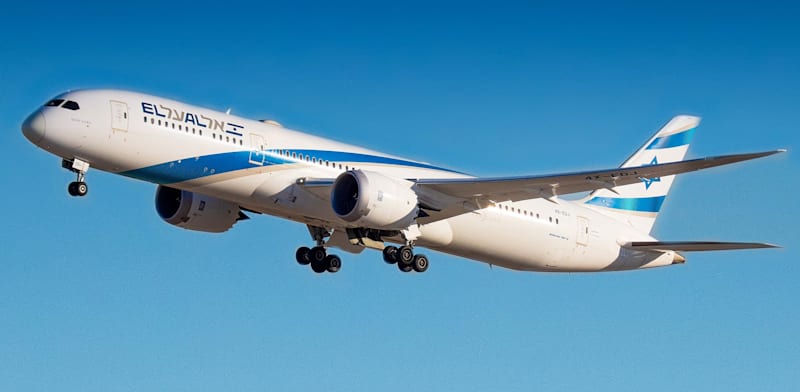
El Al Israel Airlines Ltd. (TASE:ELAL) is coming to the end of 2025 with the lowest enterprise value in its history despite strong financial reports, high operational efficiency and a much stronger balance sheet than in the past.
Yet, the stock embodies an extremely negative scenario, perhaps mainly because of the fear of a return to sky-high competition. In my opinion, the fears are exaggerated: the international market has not yet returned to its pre-war capacity, and El Al has taken the opportunity to strengthen its frequent flyer club, its fleet of aircraft and its balance sheet, to expand its scope of activity and to consolidate its position on its main routes.
The market is missing the big picture here, and the best way to understand the extent of the distortion is through the “cold” numbers. Today, El Al is trading at a fully diluted market cap of about $2.4 billion. But, and this is a huge but – there is about $2.1 billion in cash in the coffers, compared with financial debt of only about $700 million. What does this mean? The true enterprise value is only about $1 billion – the lowest enterprise value in the airline’s history.
To understand the depth of the pricing distortion, one must scrutinize cash flow. Even in a conservative scenario of a return to full competition, El Al is expected to generate free cash flow of $420-520 million per year. This means that the company is trading at a cash flow multiple of only two, while its counterparts in the US and Europe are trading at multiples of 3 to 7. This anomaly is glaring when you factor in the anchor assets – the frequent flyer club, which alone generates a cash flow profit of about $110 million a year ahead, interest income on the mountain of cash, and the value of the aircraft fleet, which is worth about $1.8 billion. The bottom line is unfathomable: the market is currently pricing El Al’s main aviation activity, the core of the business, at zero or even negative value. It is difficult to find other companies with such a deep business “moat” and dominant positioning that are trading at such a pricing that makes no economic sense.
Who is afraid of competition?
The weak point in the negative thesis is the assumption that competition is returning “in full force.” In reality? Competition on critical routes to the US is still limited: United is expected to return only in April 2026 to about 60% of the volume of activity it operated in 2023; American Airlines has not returned at all (it will resume with only one flight per day starting in April), and Delta, together with Air Canada, operates only about 20% of the volume of the past. Faced with this vacuum, El Al has expanded its frequency to 7 daily flights (compared to 4-5 before the war) to the US. In the East, competition is also significantly lower than the historical alternative, and El Al has taken advantage of this to strengthen its presence. The bottom line, on the ground, the capacity gap in its favor is still strong and exists.
RELATED ARTICLES
El Al again reports record profits
El Al appoints Levy Halevy as CEO
El Al can pay dividend, but far from paying tax
El Al VP: There is imbalance between supply and demand
Global market conditions continue to support El Al. In addition to stiff demand and relatively low supply, especially on transatlantic routes, oil prices are significantly lower than the peak levels of the last two years, which supports profitability and offsets some of the risks of increased competition and a weakening dollar.
In terms of operations, El Al’s management has not stood still. The fleet has been expanded by eight aircraft (most of them wide-body). At the same time, efficiency has been improved in terms of personnel and fuel consumption, the frequent flyer club is making an increasing contribution, and the codeshare agreements with leading airlines are improving the distribution of destinations and the profitability of each seat, steps that support profitability even in weaker periods.
The balance sheet: The dramatic change
The real dramatic change is hidden in El Al’s balance sheet. By the end of 2025, a huge sum of about $2.1 billion is expected to have accumulated in the airline’s coffers. It is important to neutralize the accounting ‘background noise’ here: Similar to the prevailing approach among foreign analysts, I believe that lease obligations (rent) should not be offset from this cash. The reason is simple: in the current market, long-term leases are a strategic asset and not a burden. Treating them as ordinary financial debt creates a “double penalty” and distorts the company’s economic value downward.
This capital provides a significant safety cushion and generates financing income that can enable future resupply without “breaking” the balance sheet. Which places El Al in a completely different place compared with the years when there were fears it would become a “going concern.” The company has resumed distributing dividends: 30% of profit in 2025 and 40% in the next two years. This is no longer a company just surviving but a company that distributes profits.
The bottom line
Is everything rosy? No. There is still uncertainty and there are geopolitical and competitive risks. In addition, CEO Dina Ganancia Ben-Tal has stepped down and is being replaced by CAL-ICC CEO Levy Halevy. The new management will stand the test. But in relation to the pessimistic scenarios that the market attaches to the stock, there is a significant “quality cushion” here.
El Al is leaping forward – operationally, commercially and financially. The reports confirm this, and the sectoral tailwind is stronger than the market is currently pricing. As long as competition on the route to the US falters and flight prices around the world remain high, the negative sentiment on the stock seems disconnected from reality. The burden of proof now is, of course, on performance, but when the gap between the stock market price and the economic value is so significant, closing it could be a matter of timing.
The author is an analyst and investment manager. The opinions and conclusions presented in the article are the author’s opinion only. The above should not be considered a recommendation or advice and is not a substitute for personal investment advice that takes into account the needs and situation of each individual.
Published by Globes, Israel business news – en.globes.co.il – on December 9, 2025.
© Copyright of Globes Publisher Itonut (1983) Ltd., 2025.