


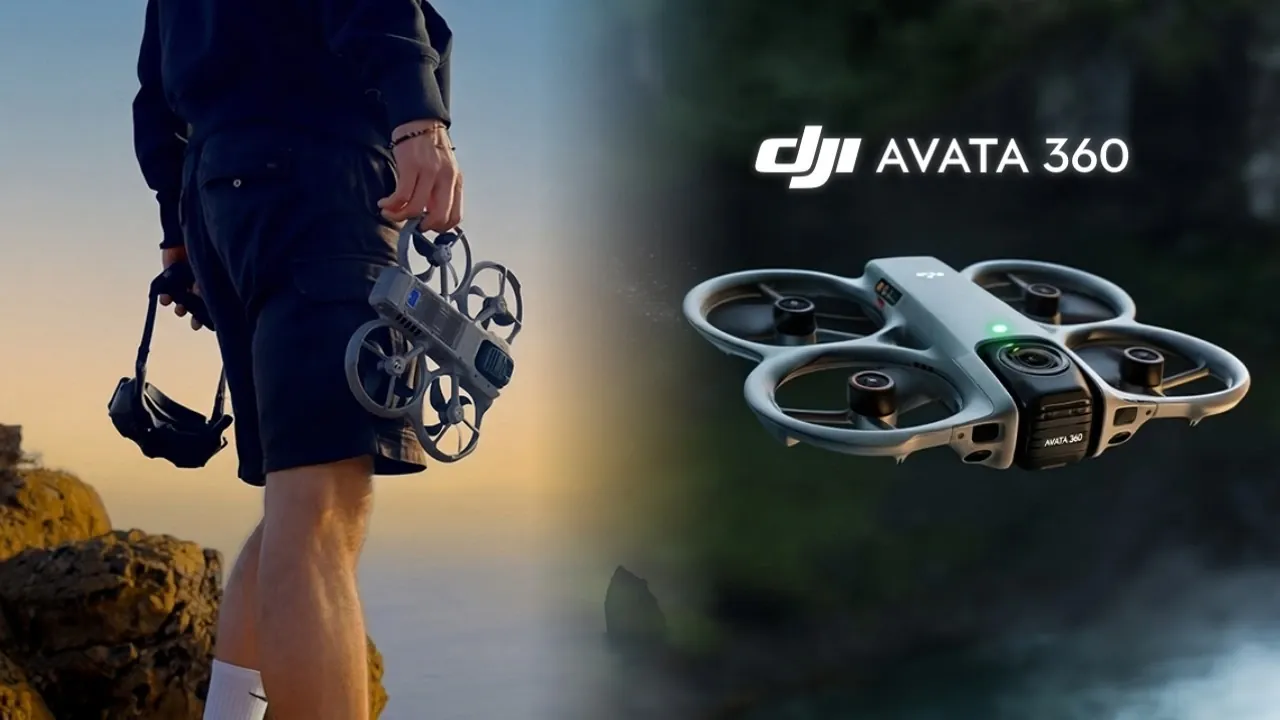
The DJI Avata 360 is a compact drone designed to capture immersive 360-degree footage, offering features like the DLOG-M color profile for advanced post-production flexibility and solid performance in low-light environments. In this hands-on review, Dominic Hayles examines how the drone performs in real-world conditions, including its ability to withstand rain and wind during outdoor shoots. One key limitation noted is its 16-minute battery life, which may require careful planning for longer filming sessions.
Explore how the DJI Avata stacks up against alternatives like the Antigravity A1 and VA 2 in terms of image quality, portability and ease of use. Learn about its dual-lens system and how it enhances creative options, as well as the practical implications of its intuitive controls for operators of varying experience levels. This review also addresses important factors such as the lack of ND filters and the complexities of editing 360-degree footage, providing a comprehensive look at its capabilities and constraints.
Exceptional Image Quality and Performance
TL;DR Key Takeaways :
- The DJI Avata excels in image quality, offering 8K resolution at 60fps in 360-degree mode, with DLOG-M color profile for professional-grade post-production flexibility.
- Its low-light performance is exceptional, producing detailed, noise-free footage, rivaling competitors like the VA 2 in dim environments.
- Built for durability, the Avata’s robust design withstands crashes and harsh weather, making it reliable for outdoor shoots in challenging conditions.
- While user-friendly with intuitive controls, the Avata’s 16-minute battery life and lack of ND filters or full manual flight mode are notable limitations.
- Compared to competitors, the Avata stands out in versatility and image quality, but its heavier design and shorter flight time may not suit all creators’ needs.
The DJI Avata delivers outstanding image quality, shooting in 8K resolution at 60 frames per second in 360-degree mode. This high resolution allows you to reframe shots or create slow-motion effects without compromising clarity. The inclusion of the DLOG-M color profile further enhances post-production flexibility, allowing precise color grading for professional-quality results.
In low-light conditions, the Avata performs exceptionally well, producing detailed and noise-free footage. Its low-light capabilities rival those of the VA 2, a drone renowned for excelling in dim environments. This makes the Avata a reliable choice for capturing twilight scenes, indoor settings, or any scenario with limited lighting.
Built to Withstand the Elements
Durability is a defining feature of the DJI Avata. During rigorous testing, it demonstrated the ability to withstand crashes and exposure to challenging weather conditions, including rain, wind and snow. Its robust design ensures continued functionality even after minor accidents, while the dual-lens system remains intact without frequent replacements. This resilience makes it an excellent choice for outdoor shoots in unpredictable environments, where reliability is crucial.

Deep dive into the latest in drones by exploring our other resources and articles.
Battery Life: A Notable Trade-Off
One of the Avata’s limitations is its battery life. Each battery provides approximately 16 minutes of flight time, which may feel restrictive for extended shoots. To mitigate this, you’ll need to carry multiple batteries and plan your flights carefully to maximize efficiency. While this limitation is common among drones in this category, it’s an important consideration for creators working on projects that demand longer operational times.
User-Friendly Design
The DJI Avata is designed with accessibility in mind, making it suitable for both beginners and experienced drone operators. Its intuitive controls allow you to capture FPV-style shots without requiring advanced flying skills. This feature is particularly appealing if you’re looking to achieve dynamic, immersive visuals without investing significant time in mastering complex maneuvers.
How It Compares to Competitors
When compared to competitors like the Antigravity A1 and VA 2 drones, the DJI Avata stands out in terms of image quality and versatility. Its dual-lens system offers more creative options than the A1, while its low-light performance matches that of the VA 2. However, the Avata’s heavier and bulkier design makes it less portable than its competitors. For instance, the Antigravity A1, with its sub-250g weight, is easier to transport and complies with certain regulatory requirements, making it a more convenient option for frequent travelers.
Key Limitations to Consider
Despite its strengths, the DJI Avata has a few notable drawbacks:
- The absence of ND filters limits your ability to control shutter speeds in bright conditions, which can affect motion realism in footage.
- The lack of a full manual flight mode restricts advanced FPV-style maneuvers, which may disappoint professional pilots seeking greater control.
- Editing 360-degree footage can be time-intensive, requiring more effort compared to standard video editing workflows.
Tips for Getting the Best Results
To make the most of the DJI Avata’s capabilities, consider the following tips:
- Use a wider field of view to maintain image quality and reduce distortion in your footage.
- Plan your flight routes carefully to minimize shakes and stitching issues when capturing 360-degree visuals.
- Simplify keyframes during editing to create smoother and more polished final results.
Who Should Consider the DJI Avata?
The DJI Avata is ideal for creators seeking innovative angles and FPV-style shots without requiring advanced flying expertise. It serves as an excellent complementary tool for capturing unique perspectives, rather than a replacement for other drones. If you prioritize image quality, durability and ease of use, the Avata is a strong choice. However, if portability, extended battery life, or advanced manual controls are critical for your projects, alternatives like the Antigravity A1 or VA 2 may better suit your needs.
The DJI Avata offers a compelling combination of features and performance for creators looking to push the boundaries of aerial cinematography. While it has room for improvement in areas like battery life and advanced controls, its strengths in image quality, durability and user-friendly design make it a valuable addition to any creator’s toolkit. Whether you’re a beginner or an experienced drone operator, the Avata provides the tools to create stunning, immersive visuals that elevate your creative projects.
Media Credit: Dominic Hayles
Filed Under: Camera News, Gadgets News, Top News
Disclosure: Some of our articles include affiliate links. If you buy something through one of these links, Geeky Gadgets may earn an affiliate commission. Learn about our Disclosure Policy.