

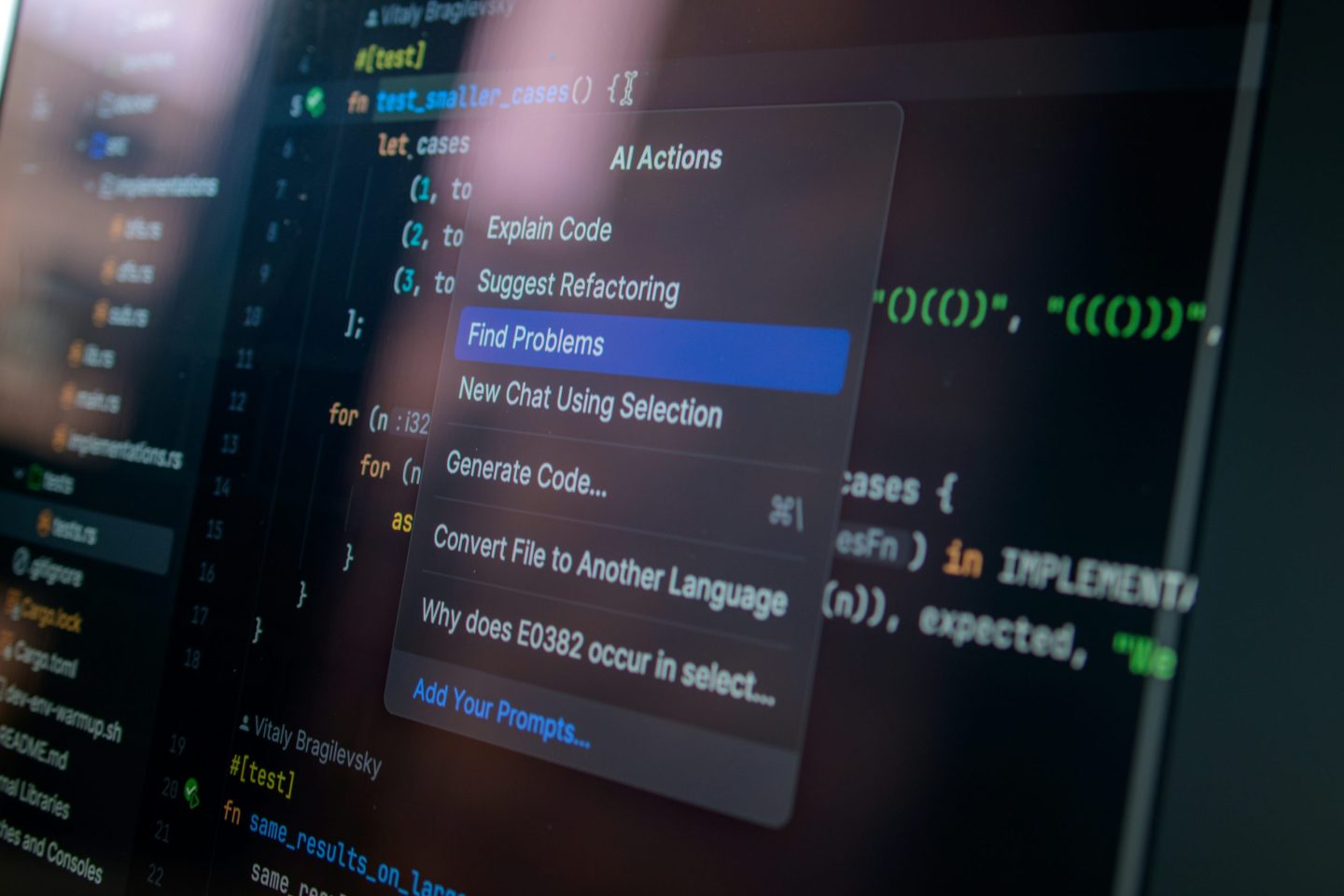
AI coding assistants are no longer limited to suggesting lines of code. They are starting to take on full tasks, with the developer moving into more of a supervisory role.
Cursor has introduced Cursor 3, which brings agent-based workflows into the coding environment. Instead of acting like a smart autocomplete tool, the system can plan and execute tasks across a project. The update reflects a broader move across the industry, with tools beginning to handle parts of the development process on their own.
Moving past autocomplete in AI coding tools
Earlier coding tools focused on suggestions. Systems like GitHub Copilot or earlier versions of Cursor would predict the next line of code or help complete functions, while keeping developers in direct control of each step.
According to Wired, Cursor 3 allows developers to assign tasks to an AI agent, which then works through the problem across multiple steps. The report says users can “spin up AI coding agents to complete tasks on their behalf,” and in some cases run multiple agents at once.
Instead of writing and editing each part manually, the developer reviews what the agent produces and adjusts where needed. The workflow starts to look less like typing code and more like managing a process.
Competition is building around coding agents
Systems such as OpenAI Codex and Claude Code are also expanding their capabilities beyond autocomplete.
According to Wired, Cursor 3 was developed as a response to tools that let developers offload entire tasks to AI agents. The report also notes that these systems have gained traction with developers, in part because of pricing and usage limits.
All three aim to reduce the amount of manual coding required for routine or structured tasks. They differ in how they approach execution, but the goal is similar: let the system handle more of the workload while the developer focuses on higher-level decisions.
These tools can still struggle with complex logic, edge cases, or unclear instructions, but each update pushes toward more autonomy.
IDEs are starting to act as coordination layers
As these systems take on more responsibility, the IDE is becoming a space where tasks are assigned, tracked, and reviewed. Instead of writing code from start to finish, a developer may:
- Define the task
- Let the agent attempt a solution
- Review and correct the output
This loop can repeat several times before the code is ready, with the developer still playing a central role.
While some tools allow developers to run more than one agent at a time, current systems are still focused on task management rather than clearly defined agent roles.
Changes in how developers work
One change is the need to write clear instructions. If the system is handling more of the execution, poor prompts can lead to flawed results that take time to fix.
Developers may spend less time writing code and more time checking what the system produces. One of Cursor’s engineering leads told Wired that developers are moving toward “conversing with different agents, checking in on them, and seeing the work that they did,” rather than writing every line themselves.
Developers also need to understand what these systems can and cannot do, since over-reliance can lead to errors, especially in complex systems.
Repetitive work, such as boilerplate code or simple updates across files, can be handled more quickly, freeing up time for more complex problems.
Limits and risks remain
Agent-based coding tools are not fully reliable. They can produce code that looks correct but fails under certain conditions, or misunderstand instructions and miss context within a larger system.
Automated changes across multiple files can introduce security risks if not reviewed carefully, especially in large codebases where dependencies and interactions are complex.
Current reporting does not suggest that developers can fully step away from the process, as these tools still require active oversight and validation.
A gradual shift in AI coding tools
The move from autocomplete to task-based agents is unfolding through steady updates across multiple tools. Cursor 3 shows that coding tools are starting to take on broader tasks, not just assist with small pieces of work.
Developers need to adapt, but also stay cautious as errors, limits, and edge cases remain part of the workflow. This shift suggests a change in how work is structured, rather than replacing developers. Coding tools are becoming more capable, but still depend on human input, review, and judgment.
That shift may change how software is built in the coming years. It does not remove the need for developers, but it does change what their work looks like and where their time is spent.
(Photo by Daniil Komov)
See also: Google releases Agent Development Kit for Java
Want to learn more about AI and big data from industry leaders? Check out AI & Big Data Expo taking place in Amsterdam, California, and London. The comprehensive event is part of TechEx and is co-located with other leading technology events including the Cyber Security & Cloud Expo. Click here for more information.
Developer is powered by TechForge Media. Explore other upcoming enterprise technology events and webinars here.