

Share

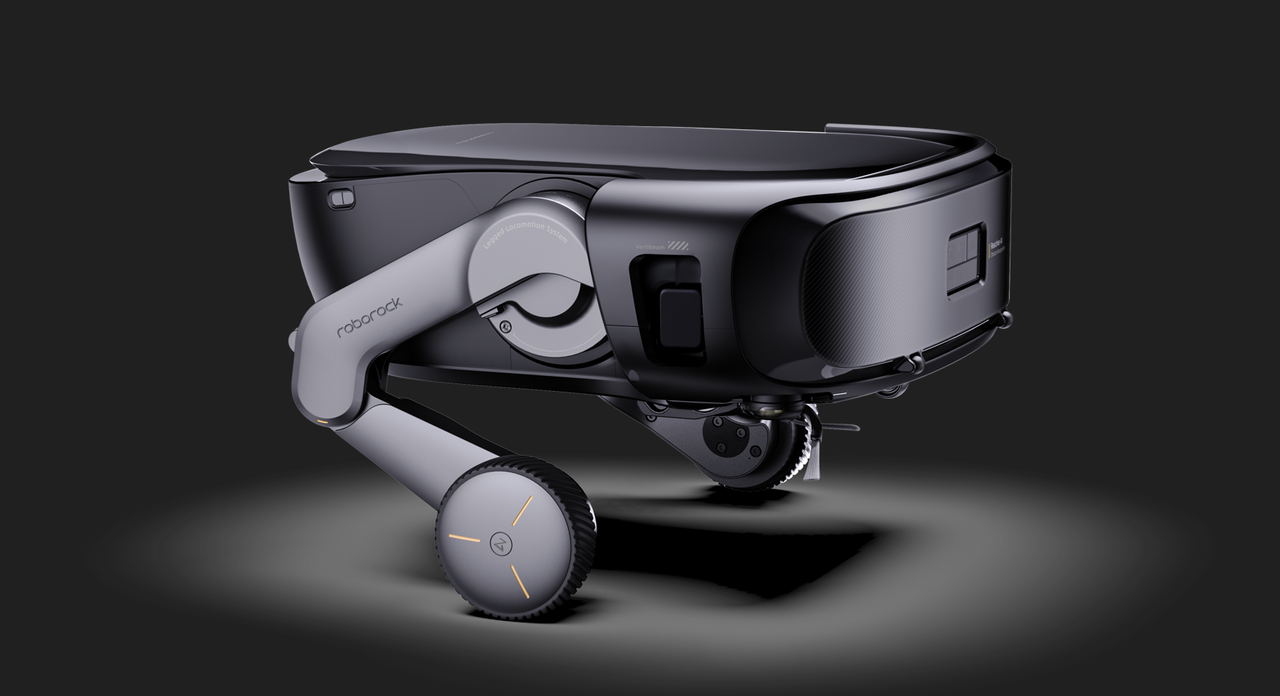
Roborock has redefined the boundaries of domestic robotics at CES 2026 with the unveiling of the Saros Rover, a robot vacuum cleaner with legs!
This flagship device represents a significant pivot in the industry, signalling a transition toward a new generation of “legged” robots designed to navigate the multi-level complexities of modern homes.
The Saros Rover’s most striking feature is its pair of wheel-tipped, limb-like mechanisms. Unlike previous designs that relied on external ramps or specialized treads, the Rover uses these legs to physically lift its chassis from one step to the next. This biological approach to movement allows the device to mimic the gait of a bird or a frog, wedging itself upward while maintaining its center of gravity.
While stair-climbing prototypes have appeared in recent years, Roborock’s entry is distinct for its ability to clean the surface of the stairs as it ascends. During live demonstrations at the Las Vegas Convention Center, the Rover successfully navigated five large steps in under 40 seconds.
It paused on each level, using one leg for stabilization while rolling its body across the step to ensure a thorough vacuuming of the surface – a capability that has eluded earlier models.
The agility of the device was further highlighted by its performance on steep ramps and curved staircases. The Rover demonstrated a unique ability to pause and reverse mid-descent, maintaining total control over its speed and balance.
This movement toward legged mobility is gaining momentum across the sector. Industry competitors, most notably Dreame, have also introduced legged or tread-hybrid systems such as the CyberX and the X50 Ultra.
While many of these competing models currently rely on additional shells or “rover” platforms to assist with elevation, they represent a broader industrial shift toward robots that can overcome architectural barriers such as high thresholds and steep inclines.
Beyond its climbing prowess, the Saros Rover is equipped with the AdaptiLift Chassis 3.0, which allows it to adjust its height dynamically. This enables the robot to clear obstacles up to 3.3 inches tall and navigate high-pile carpets with ease.
Its navigation is powered by an AI algorithm working in tandem with 3D spatial sensors, allowing it to identify and react to fast-moving obstacles such as pets or children in real-time.
While a specific release date and final pricing have not yet been announced, the Saros Rover is expected to be positioned at the high end of the market, potentially exceeding the $2,599 launch price of the previous Saros Z70.
Related Posts
Discover more from Tech Digest
Subscribe to get the latest posts sent to your email.