

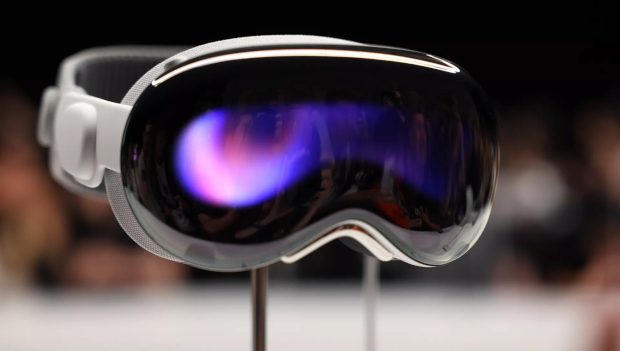
Lack of consumer interest attributed to unit cost, desig, lack of apps
Life
Image: Getty via Future
The long-awaited Apple Vision Pro virtual reality headset is struggling to gain a foothold in the market. Despite the initial buzz surrounding the tech giant’s potentially groundbreaking headset, sales have lagged well behind expectations. According to a report by the Financial Times, only 390,000 units have been sold since its launch in 2024. Those disappointing results have prompted Apple to take decisive action.
The company is significantly reducing its production and marketing efforts for the Vision Pro. Apple’s Chinese manufacturing partner Luxshare had already halted production early last year. Now Apple itself is scaling back its own production. In addition, the report reveals a drastic 95% cut in digital advertising budgets for the Vision Pro in key markets such as the United States and the United Kingdom.
Market analysts estimate that Apple shipped only 45,000 Vision Pro units in the crucial Christmas quarter, underlining that the device cannot compete with established bestsellers such as the iPhone, iPad and MacBooks. With international availability limited to 13 countries and no plans for expansion, the Vision Pro’s market reach remains constrained. Its steep price of €3,699 is still a major barrier to widespread adoption.

Several factors are contributing to the sluggish sales. Analysts cite the prohibitive cost, the bulky design and the scarcity of apps designed specifically for the VisionOS platform as the main deterrents. Critics also point to the weight of the headset, the discomfort during prolonged use and the relatively short battery life.
Despite these issues, Apple is actively working on improvements. In October, the company unveiled an updated version with a more powerful chip and improved battery life. Rumours also suggest a more affordable variant is in the pipeline. For now, however, Meta dominates the VR market with its Quest devices, which command an 80% market share thanks to their significantly lower price.
Business AM