

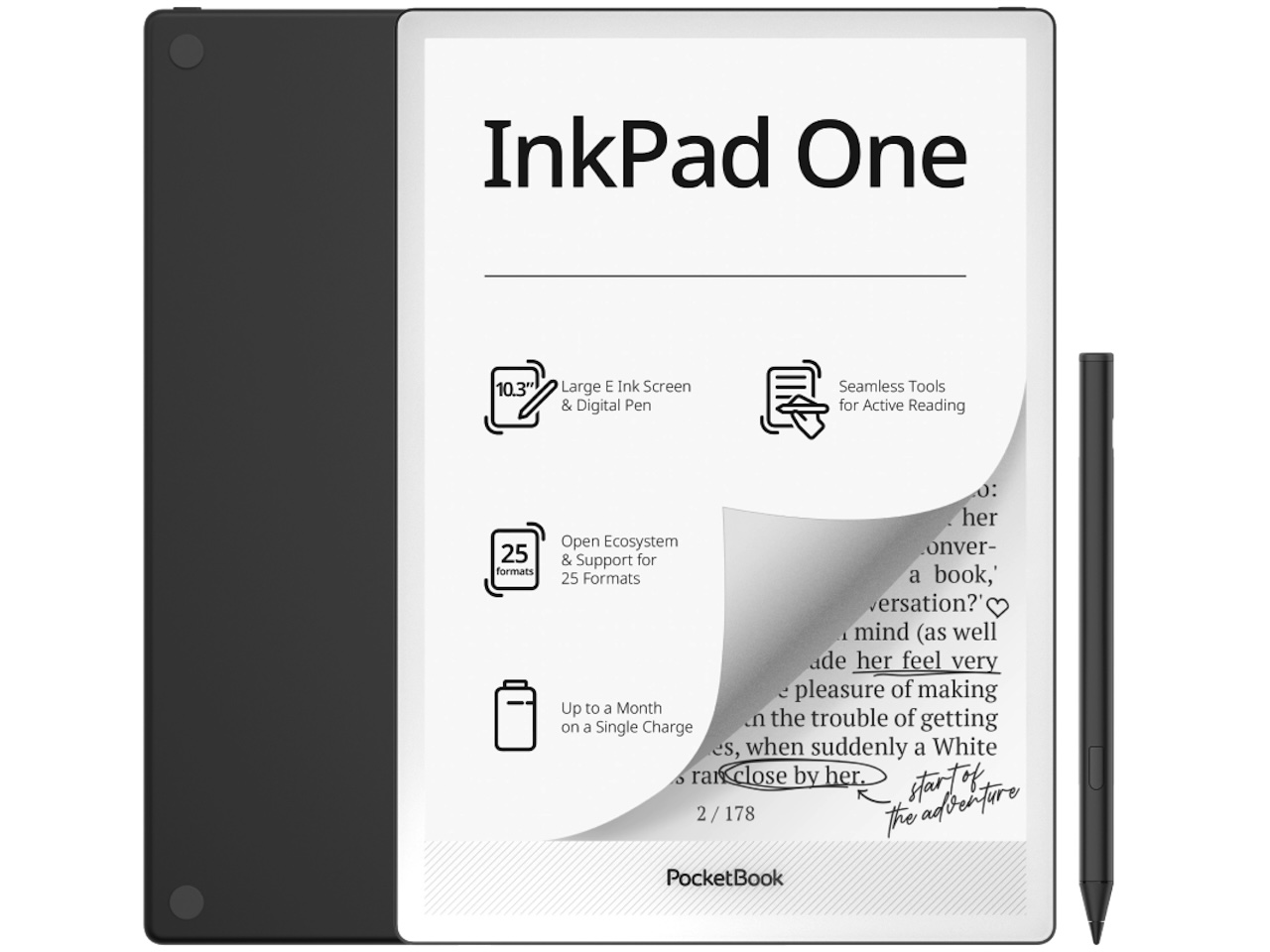

Somewhere along the way, large E Ink devices became the kind of purchase you have to sleep on. The Kindle Scribe starts at $500 and now tops $630 for the color version. The reMarkable Paper Pro runs $629 and gates cloud sync behind a monthly subscription. If you just want a big screen that feels like paper and a pen that writes on it, you’ve been paying luxury prices for what should be a straightforward idea.
Price:: $360
Where to Buy: Pocketbook
PocketBook looked at all of that and shipped the InkPad One for $360 with the stylus already in the box.
That price isn’t the interesting part, though. The interesting part is what PocketBook decided not to include. No color display. No app store. No multimedia ambitions. No subscription. The InkPad One is a 10.3-inch E Ink reader and notebook, and it treats that limitation like a feature rather than a compromise. In a category where every competitor keeps adding things nobody asked for, PocketBook built something that does two things and stops.
Add The Gadgeteer on Google Add The Gadgeteer as a preferred source to see more of our coverage on Google.
ADD US ON GOOGLE
Thinner than your phone, bigger than your notebook
The InkPad One measures 5 mm thick. That’s thinner than an iPhone 16 Pro, which sounds made up until you actually hold the thing. PocketBook used a flexible E-Ink Mobius display instead of glass, which drops the weight and makes the whole device more durable. The aluminum body and completely buttonless front face give it a clean look that probably photographs better than it has any right to.
Going all-in on gesture navigation is a bold call for an e-reader. No page-turn buttons, no home button, nothing. The bezels are wide enough to grip without triggering phantom touches, a detail you won’t appreciate until you’re reading in bed at midnight and realize you haven’t accidentally skipped forward once.
PocketBook’s SMARTlight system handles front lighting with adjustable color temperature, from cool white during the day to warm amber when your eyes start complaining. Battery life runs up to a month per charge, which is the kind of number that makes you stop thinking about battery life entirely. You charge it, you forget about it, and it’s still running when you remember.
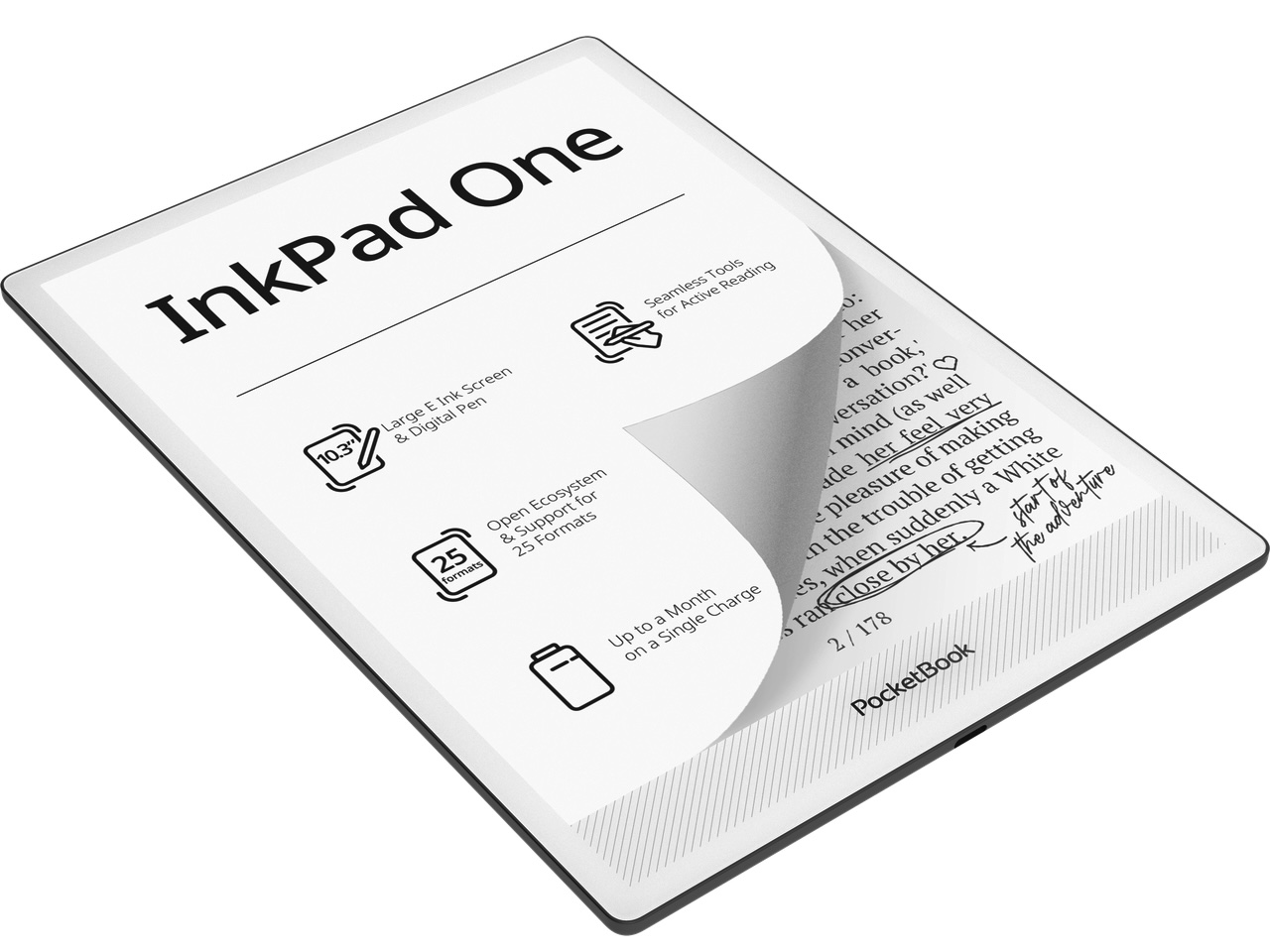
Every engineering decision here points in the same direction. No high-refresh mode for video. No attempt to be a tablet. Just a reading and writing surface that weighs less and lasts longer because it isn’t trying to do everything.
The proportions feel considered rather than accidental. You notice the thinness the instant you pick it up, and that first impression carries through every time you pull it from a bag or a stack of papers. Aluminum, flexible E Ink, a month of battery, and a form factor that slips into a messenger bag without announcing itself. It’s the kind of restraint that only registers once you’ve used a heavier device for comparison.
The stylus costs $0 extra (yes, really)
Here’s where PocketBook gets a little cheeky. The included Stylus 2 ships in the box, factored into that $360 price, and it isn’t some throwaway accessory. Comment Mode separates finger input from pen input, so you flip pages with your hand and write with the stylus without the two fighting each other. Notes land directly on the page you’re reading rather than floating in a separate annotation layer, which means your scribbled “THIS IS IMPORTANT” actually sits right next to the paragraph that made you write it.
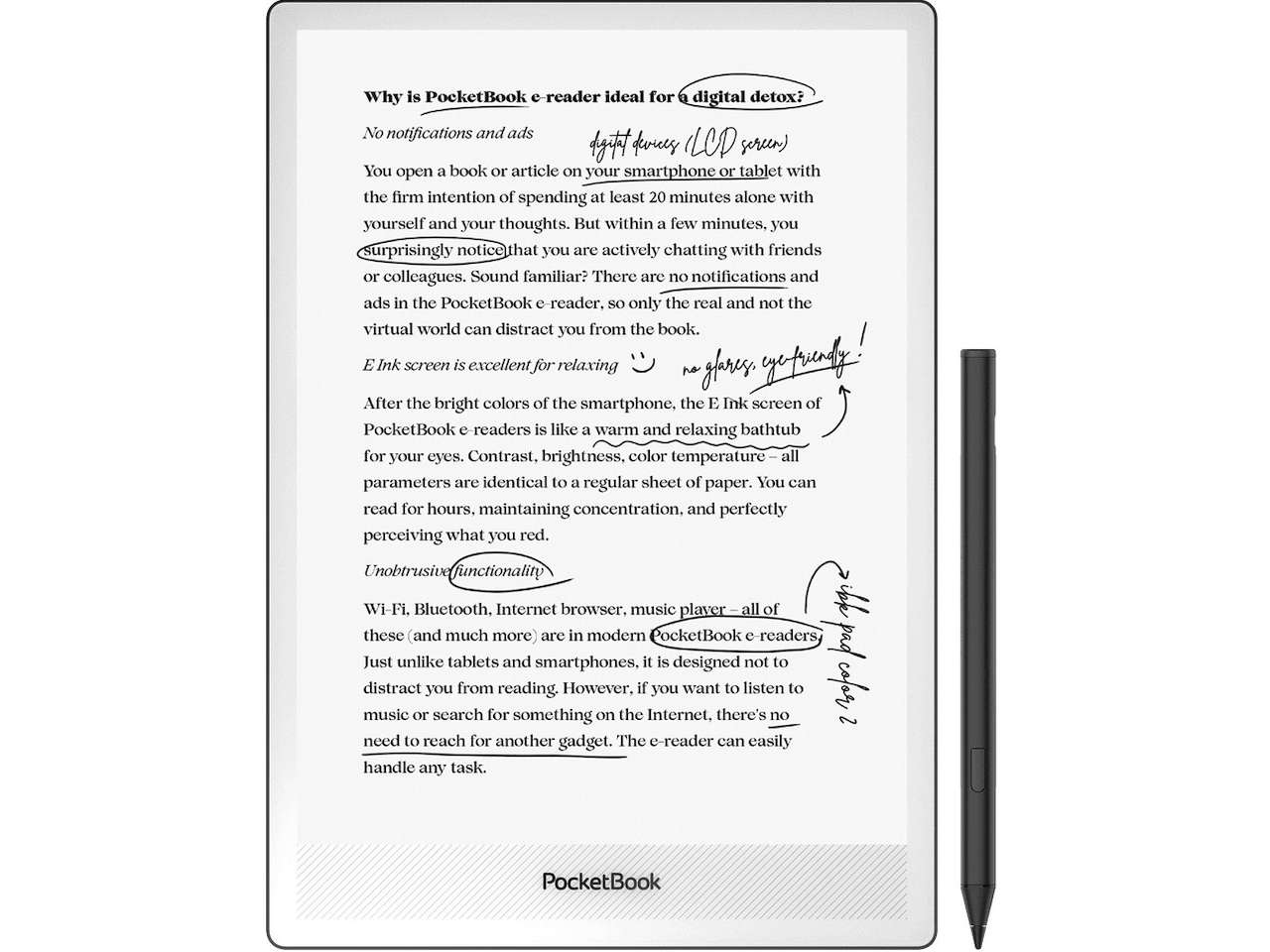
The 10.3-inch canvas makes a real difference for anyone who works with PDFs. Research papers, textbooks, contracts, anything with margins worth writing in. On a 6-inch screen, annotating feels like trying to take notes on a Post-it. On the InkPad One, you’ve got room to think.
The Kindle Scribe and reMarkable both include their pens now, but they also start at $500 and $629 respectively. PocketBook matches the pen-in-box standard at a price point that undercuts both by a wide margin, and that gap is hard to ignore once you see the spec sheets side by side.
Writing on the InkPad One feels closer to a good ballpoint on smooth paper than it does to dragging plastic across glass. The latency stays low enough that your brain stops thinking about the technology and starts thinking about what you’re writing. That’s a subtle thing, easy to overlook on a spec sheet, but it’s the difference between a note-taking device that works and one you actually want to use.
It reads 25 file formats and doesn’t care where you bought them
The InkPad One reads 25 formats natively. EPUB, PDF, CBR, CBZ, and a pile of others. No conversion software, no sideloading drama, no format compatibility chart you need a magnifying glass to read.
Both Adobe DRM and LCP DRM work out of the box. That means library books from services like Libby just show up. You borrow a book from your local library, it appears on your screen, and nobody asks you to install a plugin first. PocketBook Cloud syncs across devices, but there’s no mandatory account, no forced cloud connection. You can drag and drop files over USB like it’s 2009, and nobody judges you for it.
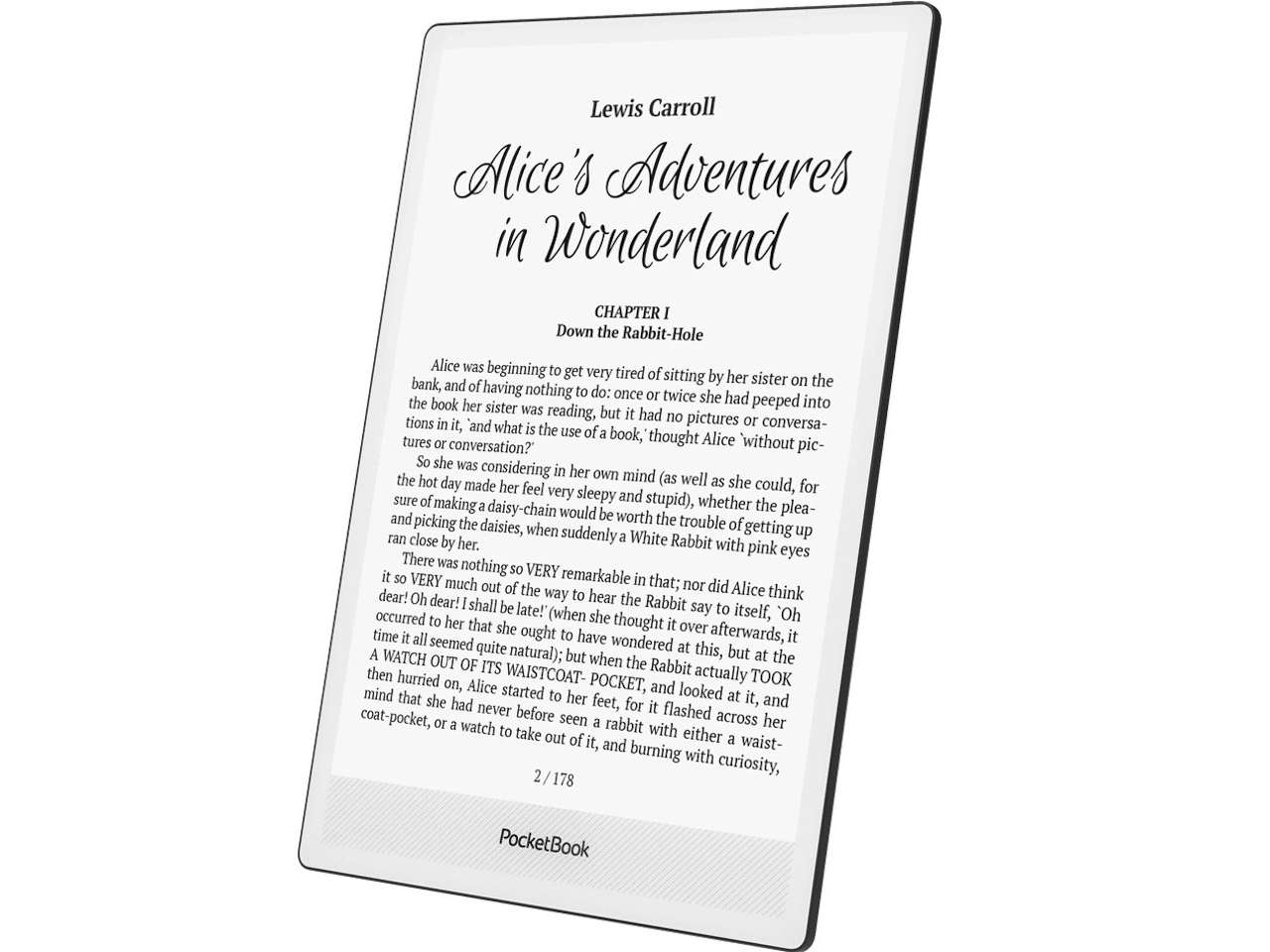
That openness is the quiet headline here. Amazon locks Kindle users into its ecosystem. The reMarkable focuses on note-taking and charges a monthly fee for features that probably should have been free. PocketBook lets you bring your entire digital library, regardless of where you bought it, and read everything on one screen. Bluetooth audio and text-to-speech round things out for when your eyes need a rest but the chapter doesn’t.
In 2026, a device that just lets you use your own files without asking permission feels almost radical. The whole philosophy of the InkPad One leans toward trust. PocketBook assumes you know what files you have and where they came from, and it doesn’t try to redirect you toward a storefront every time you turn it on.
The math works out in your favor
The PocketBook InkPad One costs $360 in the US, €299 in Europe, and £270 in the UK. At a time when every large-format E Ink device keeps creeping toward laptop territory pricing, PocketBook built the case that reading and writing on a paper-like screen doesn’t need to be a $500 commitment.
Skip the InkPad One if you need a color screen, an app ecosystem, or anything that plays video. This is a reading and writing device, and it’s better for knowing exactly what it is. For everyone who reads PDFs, annotates documents, or just wants a large e-reader that isn’t locked to one company’s bookstore, the InkPad One does all of it at a price that makes the competition look a little awkward.
Price:: $360
Where to Buy: Pocketbook
The device is available now through PocketBook’s website. Sometimes the smartest thing a gadget can do is stop adding features and start shipping.
Love our content?
Sign up for our newsletter today.
No ads, no spam, just links to our latest articles!
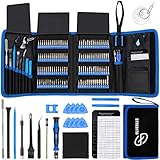
STREBITO Electronics Precision Screwdriver Sets 142-Piece with 120 Bits Magnetic Repair Tool Kit for iPhone, MacBook, Computer, Laptop, PC, Tablet, PS4, Xbox, Nintendo, Game Console
(as of February 21, 2026 09:16 GMT -06:00 – More infoProduct prices and availability are accurate as of the date/time indicated and are subject to change. Any price and availability information displayed on [relevant Amazon Site(s), as applicable] at the time of purchase will apply to the purchase of this product.)