

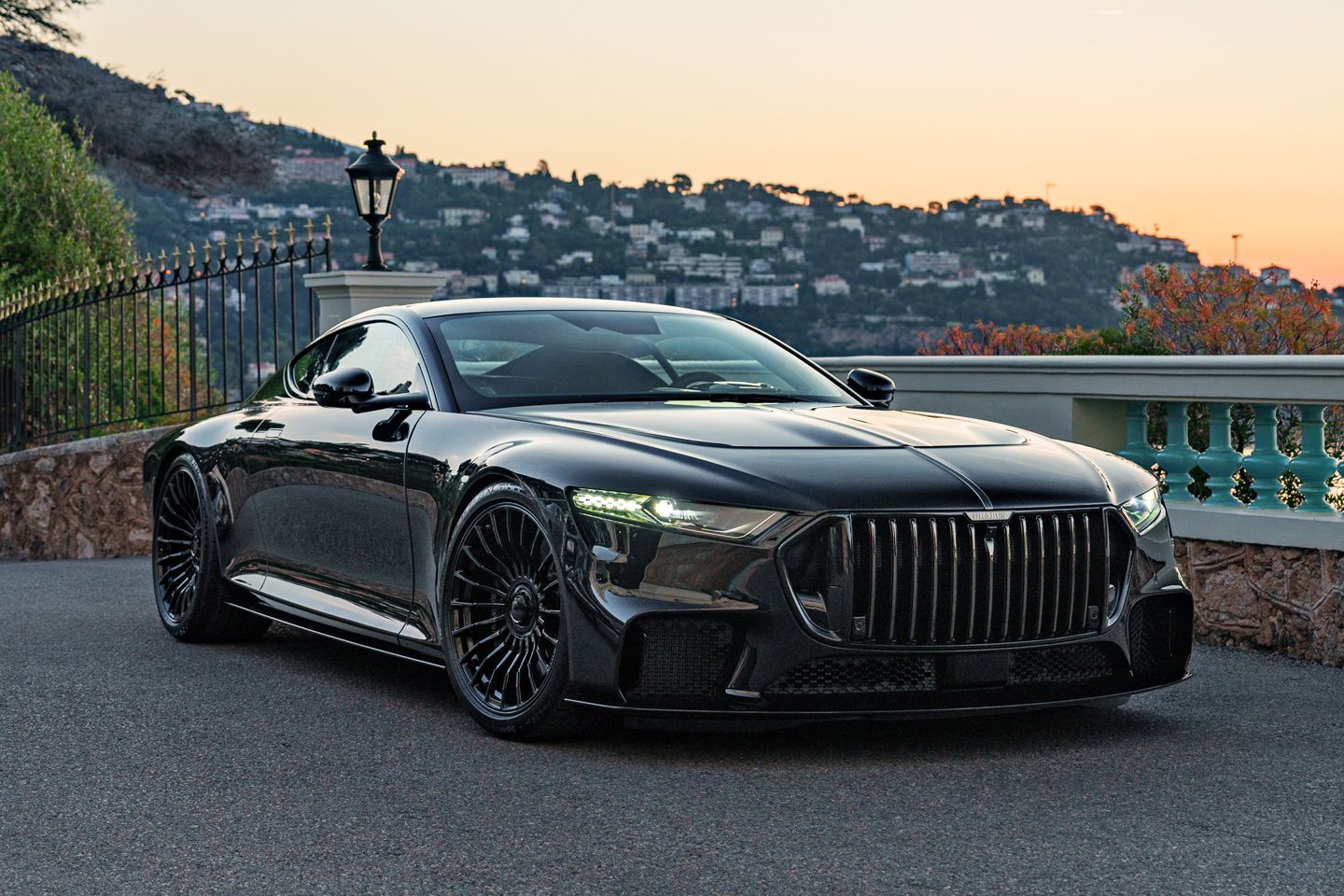
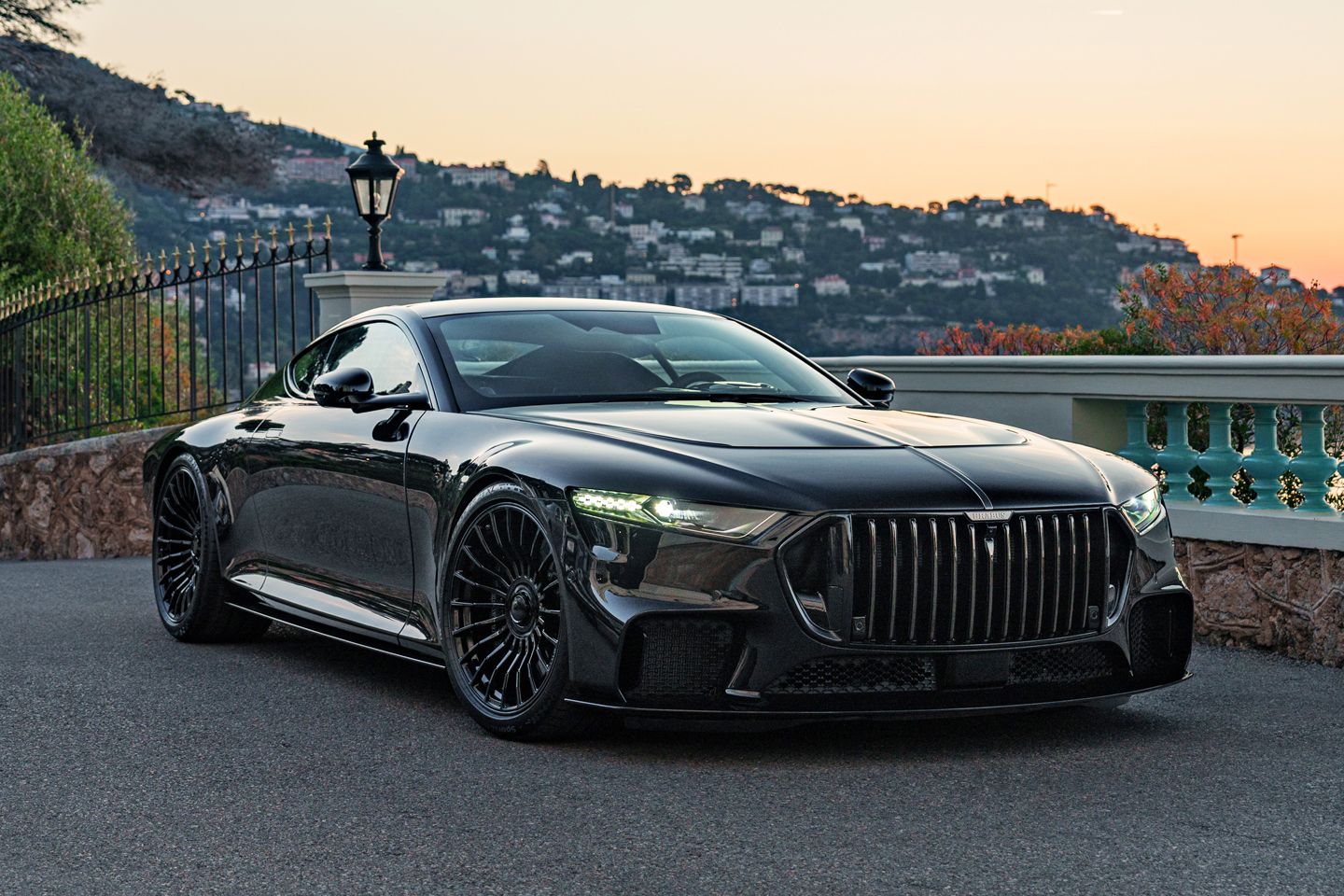
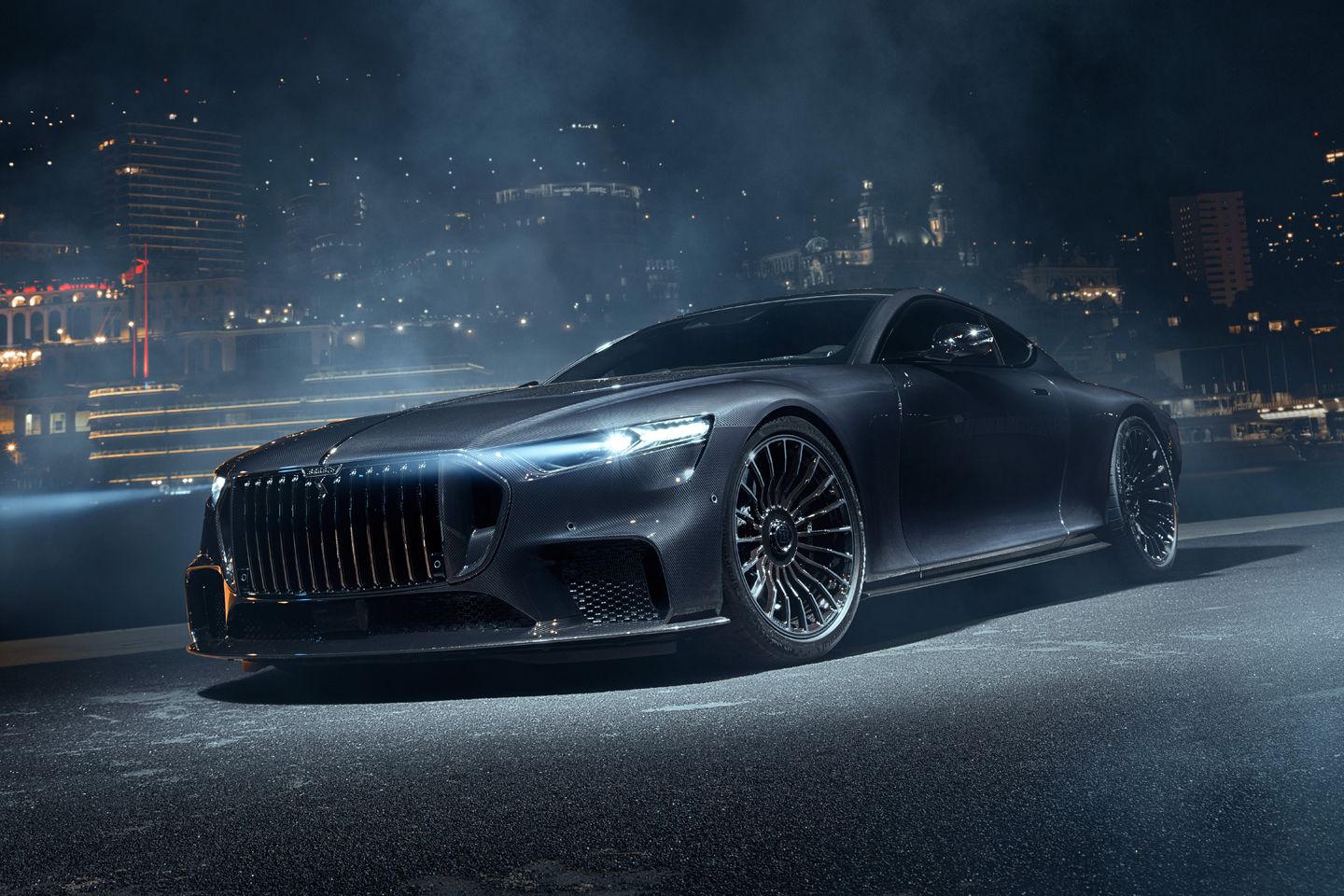
Brabus has been building up to something like the Bodo for a long while. According to CEO Constantin Buschmann, son of Brabus’s original founder, the idea of a supercar has been percolating for nearly two decades, and can be traced back to his father’s vision of a ‘next-level Gran Turismo’. In the meantime, the firm has repeatedly proven its willingness to think outside the Mercedes box and apply its name to all manner of coachbuilding projects. Now, partly as an homage to Bodo Buschmann, it has made the final leap and produced a 1,000hp 2+2 ‘Masterpiece’ said to be capable of 223mph. It retails at one million euros.
The price is not just indicative of the limited supply – there will be just 77 examples produced – nor the level of performance emanating from the turbocharged 5.2-litre V12, but also the fact that the Bodo is built upon the bones of the Aston Martin Vanquish. Which is a bit like basing your movie on The Godfather. Though Brabus doesn’t make mention of its underlying donor, its identity is surely an integral part of its ‘one-second-wow’ strategy – what better way to justify the seven-figure cost than by quietly explaining that one of the world’s finest GT cars (arguably the finest) is underwriting all the cheques being cashed by the custom-made body?
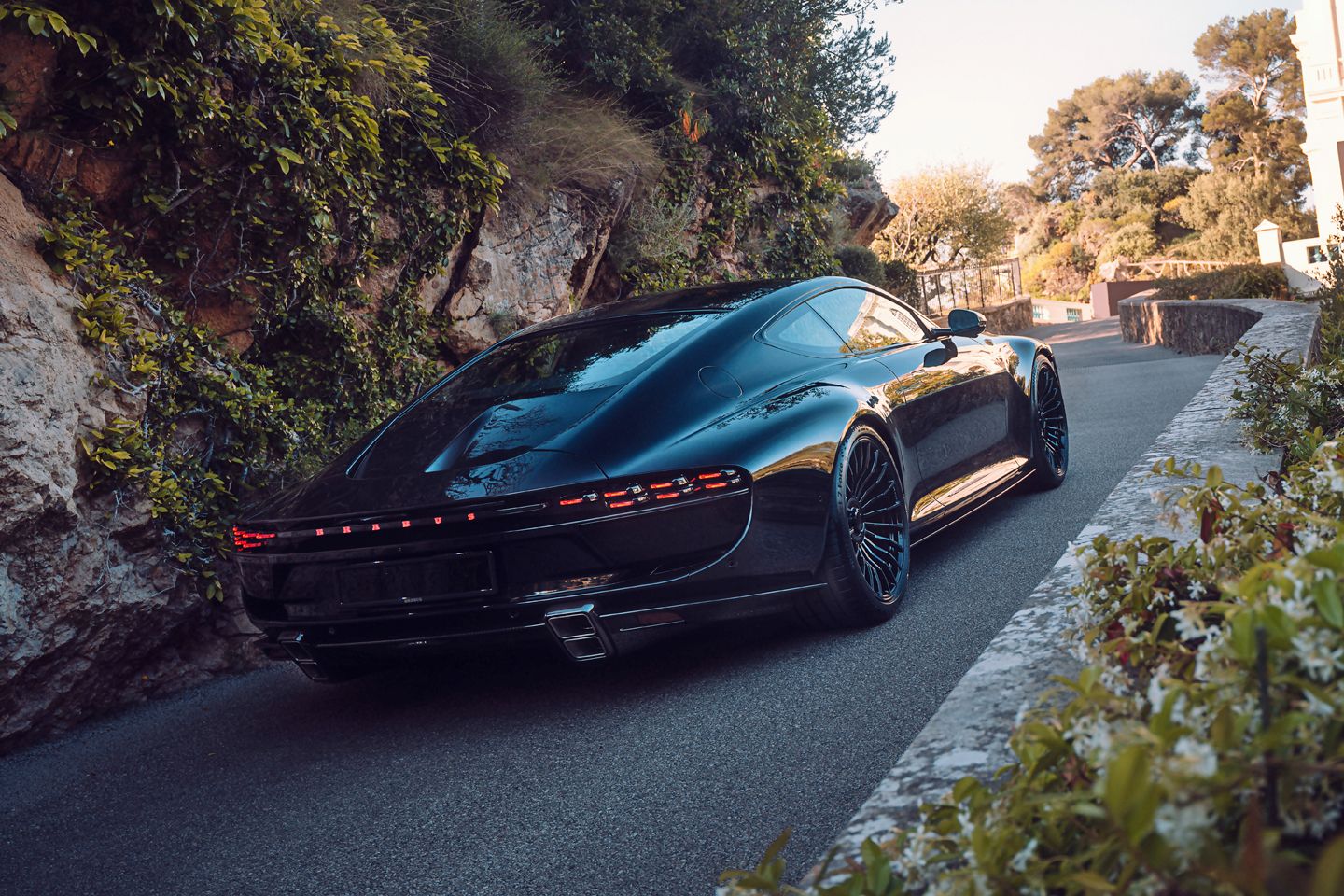
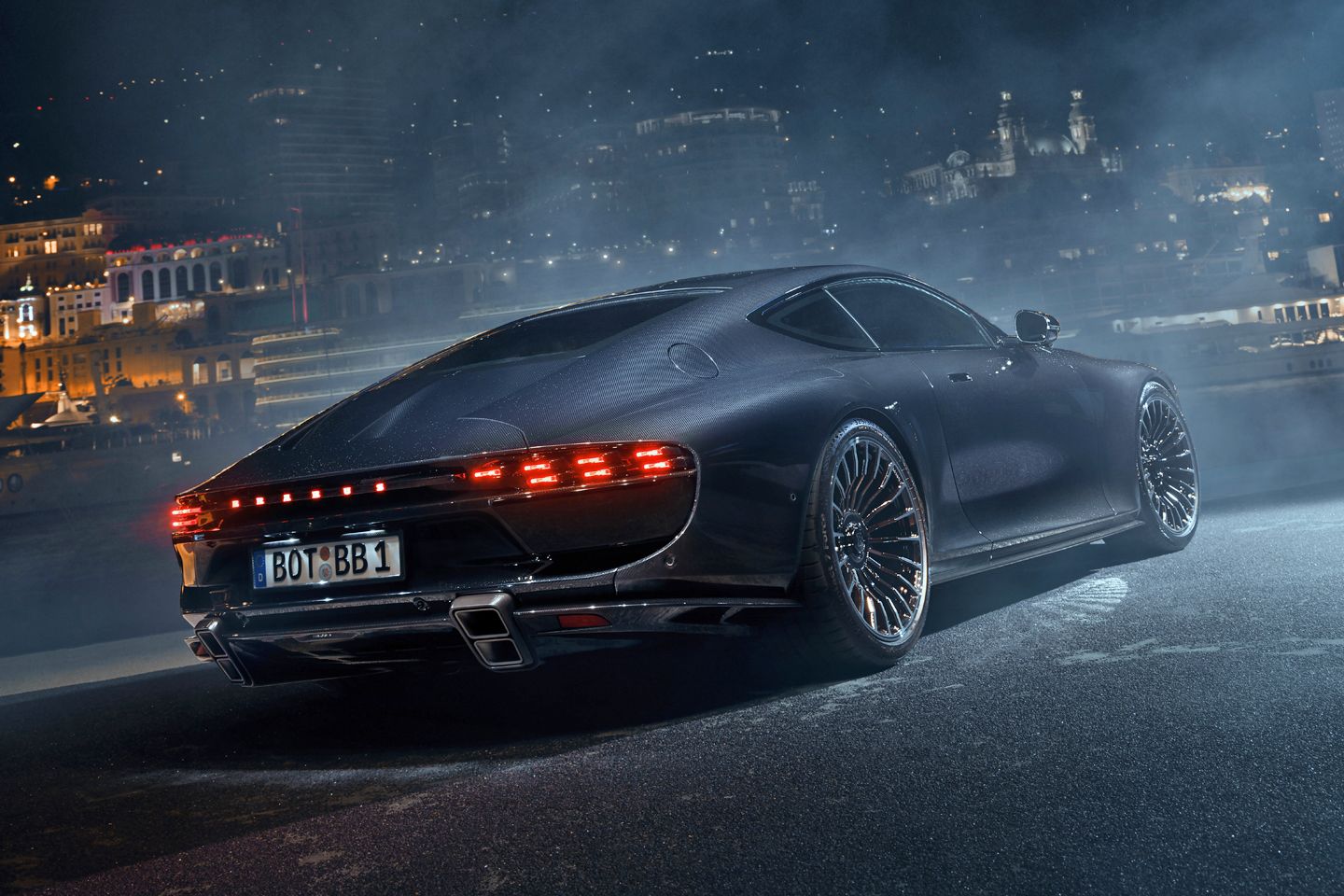
Of course, if you’re inclined to think that body not nearly as handsome as the one Marek Reichman came up with, you’re not alone – although no one would deny that the four-foot-tall Bodo is a striking piece of design, one apparently devoted to the kind of aerodynamic efficiency you need when targeting 360km/h (for the record, the Vanquish’s claimed top speed is 214mph). The wholesale difference between the two also reflects Brabus’s mastery of modern-day coach building – not just for the skill required to produce the body entirely from carbon fibre, nor to shape it for the kind of load incurred beyond three-figures, but also to ensure that sufficient air is being fed to the monstrous V12.

Little wonder then that Brabus points to the two Ram-air ducts integrated into the new 13-slat radiator grille. These help to feed a two ‘specially developed’ turbochargers, which, alongside a new airbox and ‘highly efficient’ charge-air cooling – not to mention an elaborate, vertically-stacked stainless steel exhaust system – are responsible for nudging the 5.2-litre unit well beyond the 835hp it produces in the Vanquish. Aston is itself widely believed to be cooking up an ’S’ branded version of its flagship, though it will be interesting to see whether it is minded to replicate the 885lb ft of torque that Brabus claims to have found between 2,900 and 5,000rpm.
The tuner makes no mention of modifying the eight-speed automatic nor the sophisticated e-diff, so we’ll assume they remain much as Aston left them, though it suggests it has partnered with KW to develop an ‘electronically controlled [suspension] featuring aluminum coilover struts, specifically tuned to the coupe’s 21-inch wheel and tyre combination’, the latter a variant of the new Continental SportContact 7s produced specifically for the Bodo. The 20-spoke forged alloys are said to reduce unsprung mass (though the quoted 1,774kg dry kerbweight is identical to the Vanquish’s) and, as you might expect, the carbon-ceramic composite brakes remain standard fit.
This is the kind of peace of mind you want when slowing a 5m-long, 2m-wide car capable of hitting 124mph in 8.5 seconds. Moreover, Brabus reckons the additional power buys the Bodo a 0.3-second advantage when it comes hitting 62mph, and the car must be reined in electronically at its targeted top speed. For additional help, the car can rely on its electrically deployable rear spoiler, which not only continuously adapts its position to enhance rear-axle stability, but also functions as an air brake if you’ve thrown out an anchor above 87mph. Which is comforting when you consider the dramatic taper of the Bodo’s back-end, where the arrangement of LEDs, diffuser, rectangular tailpipes, and exposed carbon boot lid could be said to have trumped the Vanquish’s more abrupt Kamm tail.
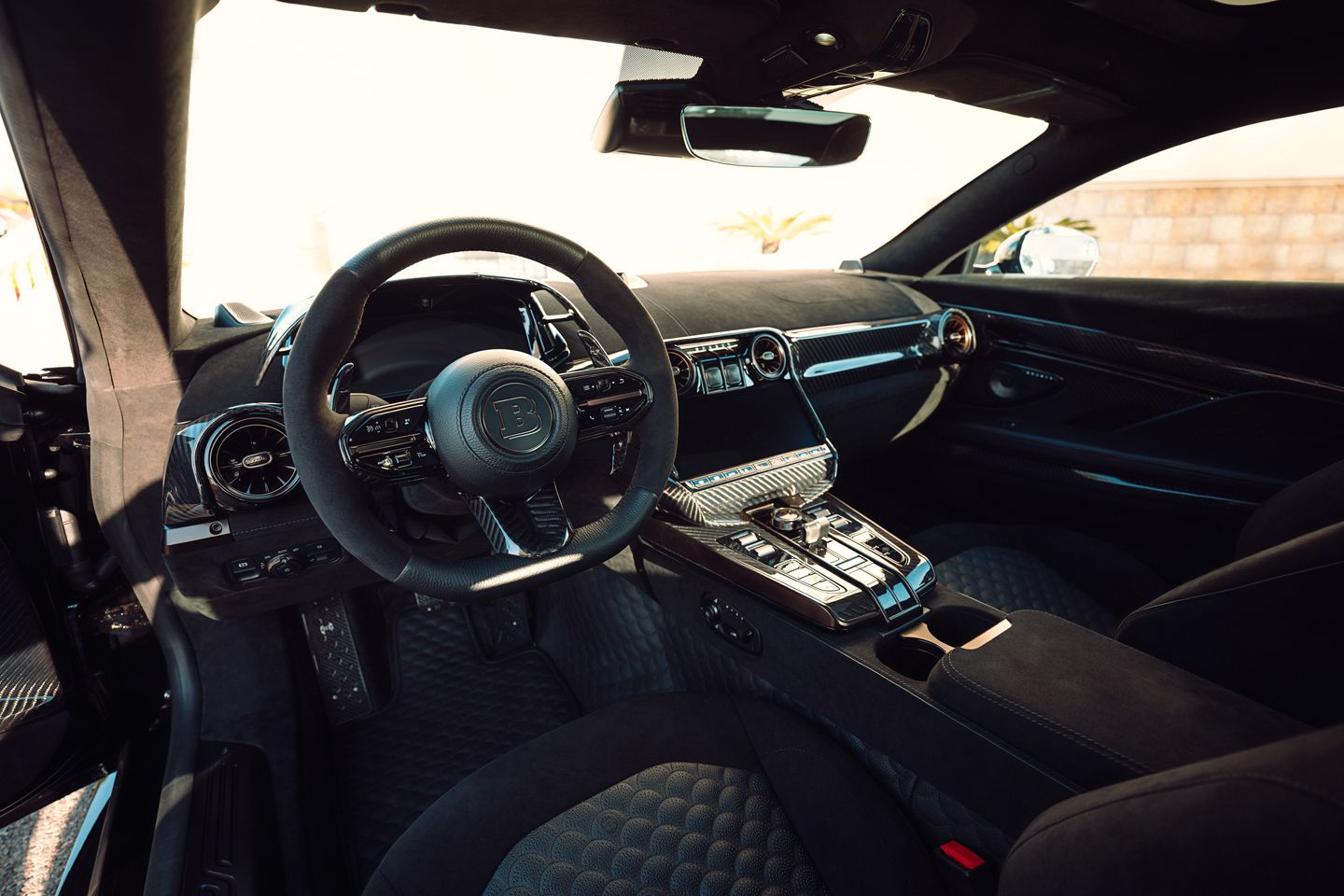
Inside, the architecture is a little more obviously carried over, though you’d hardly accuse Brabus of failing to go to town. Much like the exterior, black is an overriding theme (though rest assured, other colours are available), as is the extensive use of composite. Elsewhere, in inimitable fashion, the tune has employed black leather of ‘various finishes’ to virtually every available surface. There’s much additional embroidery atop this base level, not to mention wall-to-wall quilting, though the eagle-eyed among you will notice that no little time and effort has been expended on altering the appearance of the Bodo’s air vents, if not their physical location. The centre console, with its many clickable buttons, appears to be unaltered.
That this is the primary means of identifying the Vanquish says much about the car’s transformation, and the unprecedented amount of work it has required. “Nearly fifty years ago, my father decided to start his own business. His passion is what built Brabus,” noted Buschmann. “However, there was one car he would often talk about, which, in the end, he never got to realize. It was a dream he had for a very long time. Today, we are honoring his legacy by finally bringing this dream to life.” In this regard, whether or not that vision exceeds the one concocted by Aston Martin is probably beside the point: the Brabus Bodo lives. For its maker, and 77 lucky customers, that is surely enough.