

Staff should not physically assess any suspected patients without PPE, which should include disposable gloves and a long-sleeved gown, a full face visor and an FFP3 respirator mask.
Whenever possible, telephone triage should be used to assess symptoms and the risk of the virus before face-to-face contact.
Practices should urgently notify their regional health protection team of any suspected cases and seek advice on transfer to secondary care and any immediate precautions they need to take.
NHS England has provided a case definition (see below) and said all providers need to establish a clinical pathway for the isolation and management of suspected cases.
Hantavirus outbreak
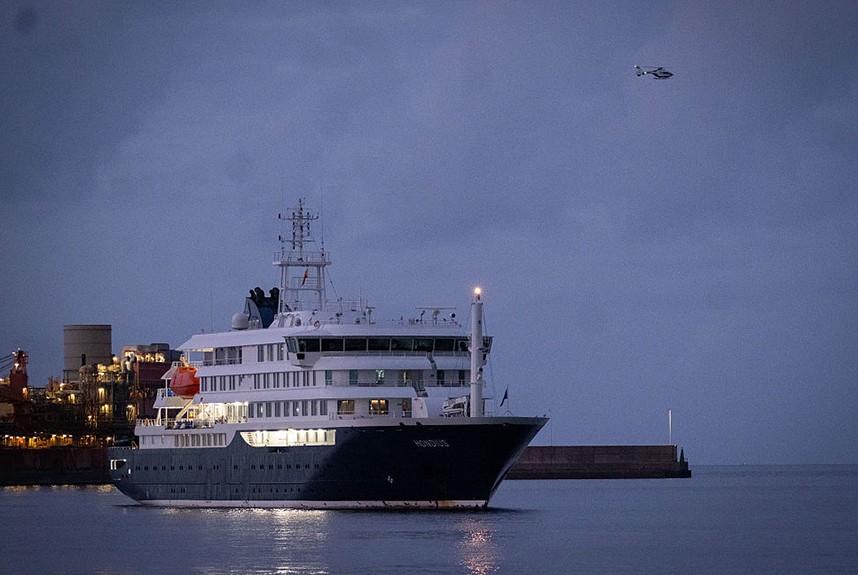
NHS England has published the guidance in the wake of the hantavirus outbreak on the Dutch cruise ship MV Hondius, which began its voyage in Argentina. Laboratory testing has confirmed it is an outbreak of the Andes virus (ANDV), a species of hantavirus. Three people have died in connection with the outbreak.
Contacts of cases are known to have disembarked from the ship and travelled onwards, making contact tracing more complex. However, health officials have advised that the risk to the public is very low as hantavirus is not spread through social contact.
British nationals who were on the cruise ship returned to the UK on 10 May and underwent clinical assessment and testing. They will isolate at home or other suitable locations for 45 days from their last exposure and undergo regular testing, the UK Health Security Agency said.
Transmission and clinical features
The NHS England guidance says that the route of human-to-human transmission has yet to be established, but ‘prolonged or close contact (within two meters) with a symptomatic infected individual is necessary’.
‘Transmission through the air is a possibility and is currently considered a potential route of spread in the current outbreak.’
The average incubation period of ANDV is 18 days, but it has been reported to range from 4 to 40 days post-exposure. ‘As a precautionary principle, it should be assumed that there is potential for presymptomatic transmission 2 days prior to symptom onset (including prodromal symptoms),’ the guidance says.
Clinical features of ANDV typically include an initial phase featuring influenza-like or non-specific febrile illness with fever, chills and myalgia, and sometimes gastrointestinal symptoms (nausea, abdominal pain, diarrhoea and vomiting), lasting around 3 to 5 days.
A cardiopulmonary phase characterised by rapid deterioration over 24 hours follows. Neurological complications are uncommon, but can occur.
Practices are reminded to ensure that all staff are aware of infection prevention and control (IPC) measures. Decontamination procedures should also be followed if a suspected case has attended the practice.
Case definition
Any symptomatic individual who meets the definition of a possible or probable case MUST be managed according to high-consequence infectious disease (HCID) pathways. Current case definitions are:
Possible case
A person presenting with symptoms compatible with ANDV infection (fever, fatigue, myalgia, gastrointestinal symptoms (abdominal pain, vomiting, diarrhoea, nausea) or respiratory symptoms/ acute respiratory distress syndrome (ARDS)
AND
had contact* with someone who travelled on the cruise ship MV Hondius from 1 April 2026, in the 45 days before symptom onset
AND
no other pathogen consistent with illness presentation identified**
Probable case
A person presenting with symptoms compatible with ANDV infection (fever, fatigue, myalgia, gastrointestinal symptoms (abdominal pain, vomiting, diarrhoea, nausea) or respiratory symptoms/ acute respiratory distress syndrome (ARDS)
AND
no other pathogen consistent with illness presentation identified†
AND EITHER
travelled on the cruise ship MV Hondius from 1 April 2026
OR
had contact* with a confirmed or probable case from the MV Hondius in the 45 days before symptom onset
Confirmed case
A person testing positive by PCR for hantavirus in blood or other clinical sample
AND EITHER
travelled on the cruise ship MV Hondius from 1 April 2026
OR
had contact* with a passenger from the MV Hondius in the 45 days before symptom onset
OR
is on one of the relevant UK Overseas Territory islands
*For these purposes, contact means close contact – that is, within 2 metres. Please discuss with your health protection team if further information is needed.
**Even if another pathogen is identified, these individuals remain under surveillance for the duration of the potential incubation period.
Not meeting the operational ANDV case definition does not preclude the patient from other HCID or infectious disease considerations. Patients should be managed according to their clinical presentation.
Source: NHS England guidance