

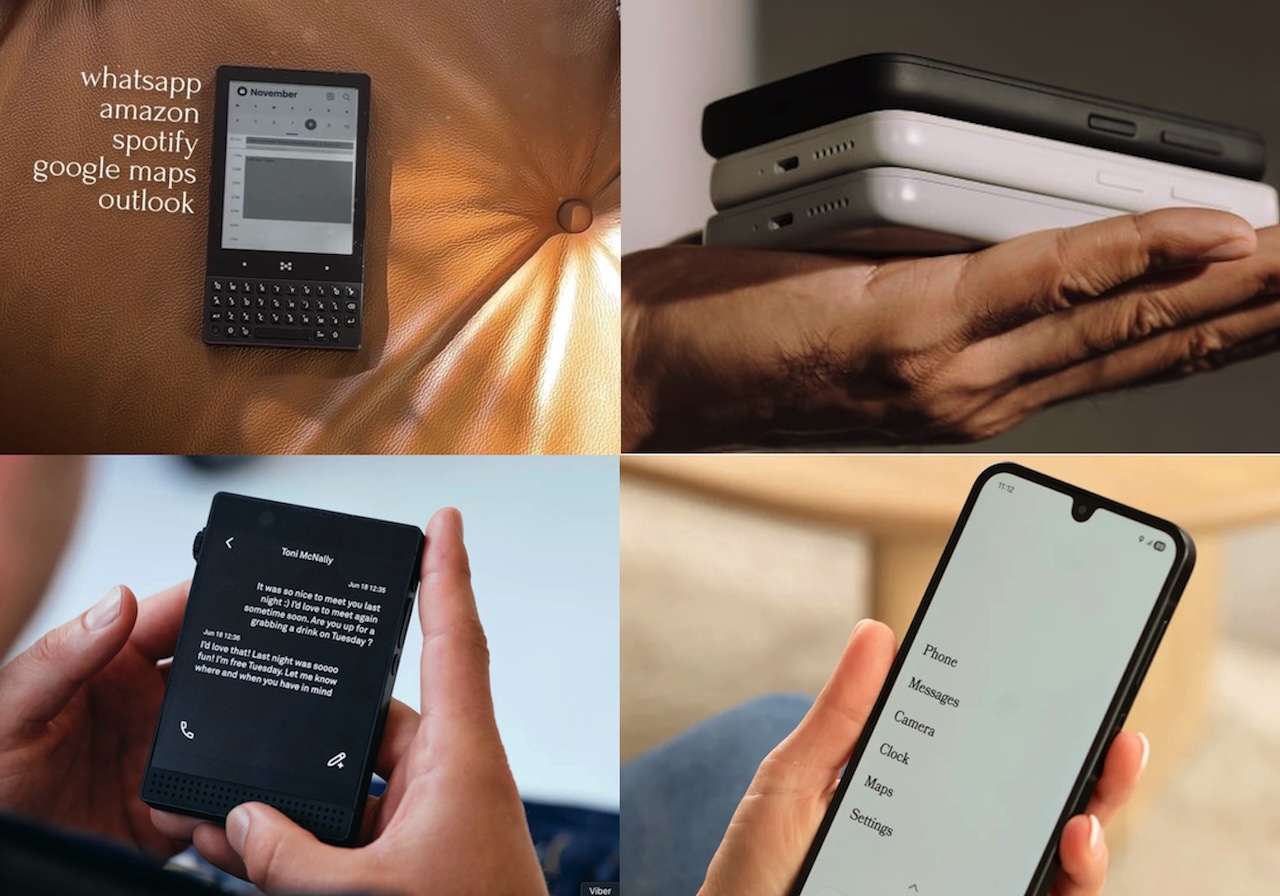
Everybody wants less screen time until the checkout page loads. The Light Phone III asks $699 to $799. A Mudita Kompakt with a barely usable camera lists at $439 and runs $379 to $399 in regular sale. The Wisephone II is $399 plus a $14.99 monthly subscription that, if it lapses, takes most of the phone’s utility with it. A modern Pixel 9a costs roughly $200 less than the Light Phone III pre-order, $300 less at full retail, and takes objectively better photos.
So what are you actually paying for? Not raw hardware. You’re paying for software restraint, hardware-enforced focus, and a small hardware company’s design and build margins. That’s a real product, but it isn’t free, and it isn’t always worth it.
This follow-up to our April rundown cuts the list to four phones that work as actual daily drivers in 2026. Then we’ll talk about who should put their wallet away.
Add The Gadgeteer on Google Add The Gadgeteer as a preferred source to see more of our coverage on Google.
ADD US ON GOOGLE
Light Phone III
The Light Phone III is the flagship of the intentional-tech movement. The 3.92-inch matte AMOLED display reads in sunlight and gets out of the way at night. It’s pocketable at 124g. There’s 5G, 4G LTE, an NFC chip for future tap-to-pay, and a clicky side wheel for navigation that makes the phone feel like a piece of hardware, not a slab of software.
What’s missing is the point. No social media. No browser. No email app. No app store. What you get is calls, messages, directions, podcasts, calculator, alarm, notes, and a 50MP rear camera that exists, in the company’s own framing, for moments worth keeping. There’s no Spotify or third-party music streaming, just the built-in tools.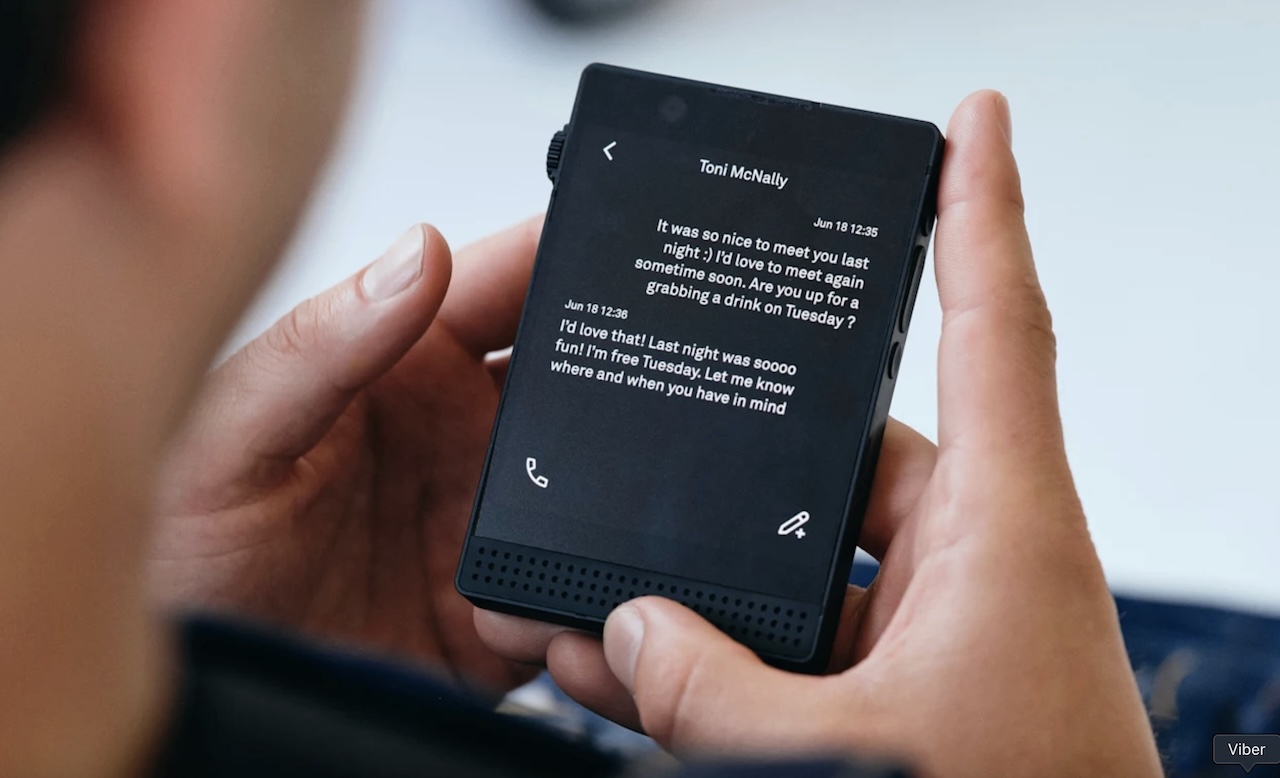
Price: $699 pre-order, $799 at full retail
Where to Buy: Light Phone
New pre-orders ship in September 2026, with early batches arriving back in March 2025. That’s a long wait. The price isn’t the only barrier. But if you want the most polished version of the minimalist phone idea, this is it. It feels premium. It looks designed. It does less without feeling cheap.
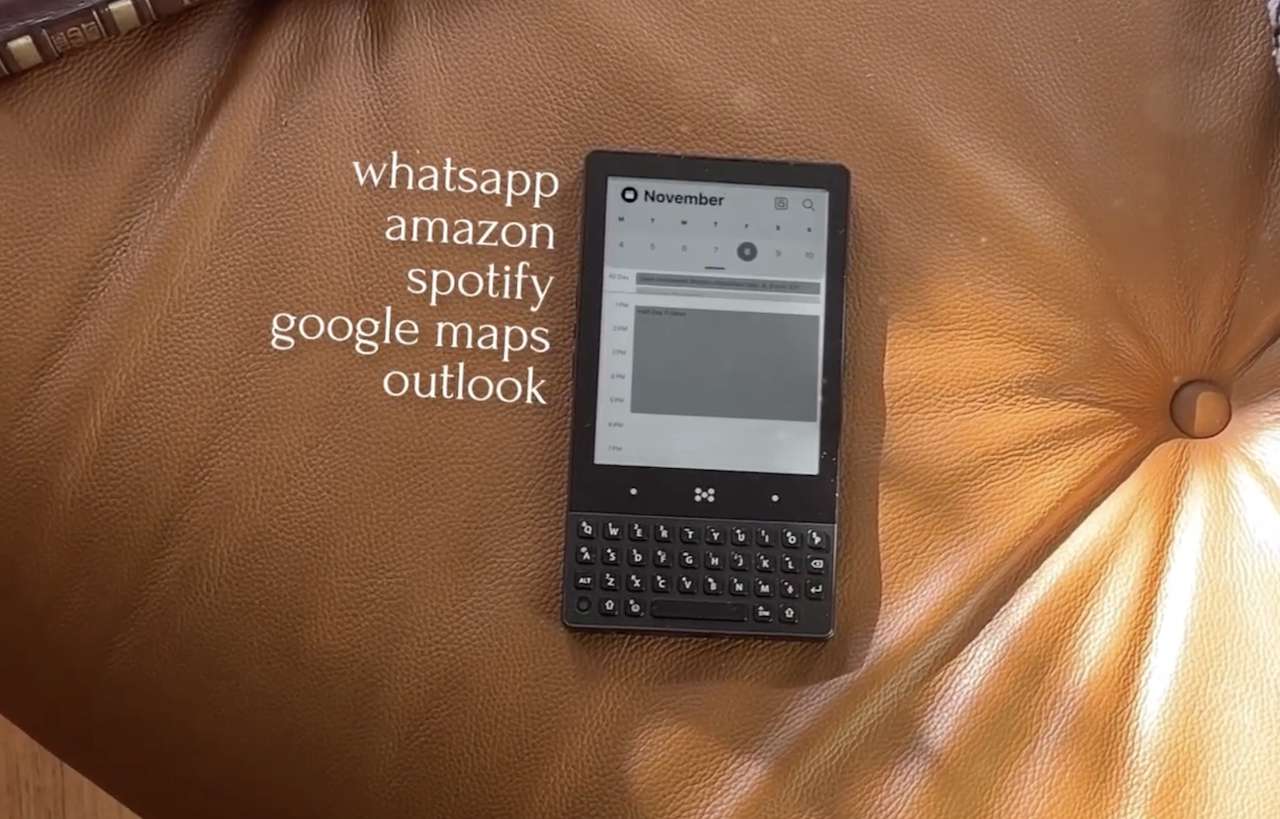
The Minimal Phone is the one a lot of digital-minimalism communities won’t shut up about, and there’s a reason. It’s a 4.3-inch E-paper display with a tactile QWERTY keyboard sitting on top of stock Android 14. You whitelist the apps you want. Maps, Spotify, your bank, your camera. Everything else stays off. Social apps are technically there. They’re just nearly unusable on a black-and-white refresh-laggy E-paper screen, which is the whole point.
It’s the closest thing on this list to a real smartphone replacement. The Android base means your work logins, banking, and rideshare apps still function. The screen does the discipline work for you.
Price: $399 (6GB/128GB), $499 to $599 (8GB/256GB)
Where to Buy: Minimal
The asterisk: shipping has been rough. Plenty of 2025 buyers waited months past their estimated dates. Check current lead times before you commit. If you can stomach the wait and the typing learning curve, you’ll get a phone that genuinely doesn’t let you doomscroll.
Mudita Kompakt
The Mudita Kompakt is the privacy pick. It runs MuditaOS K, a custom de-Googled Android variant that doesn’t track you, and pairs that with a 4.3-inch E-ink display at 800 x 480. The screen is sharp, glare-free, and looks more like a planner than a phone. The build feels solid and considered.
It handles calls, texts, a basic music player, calendar, contacts, alarm, meditation tools, and offline navigation. No social media. No browser. No app store.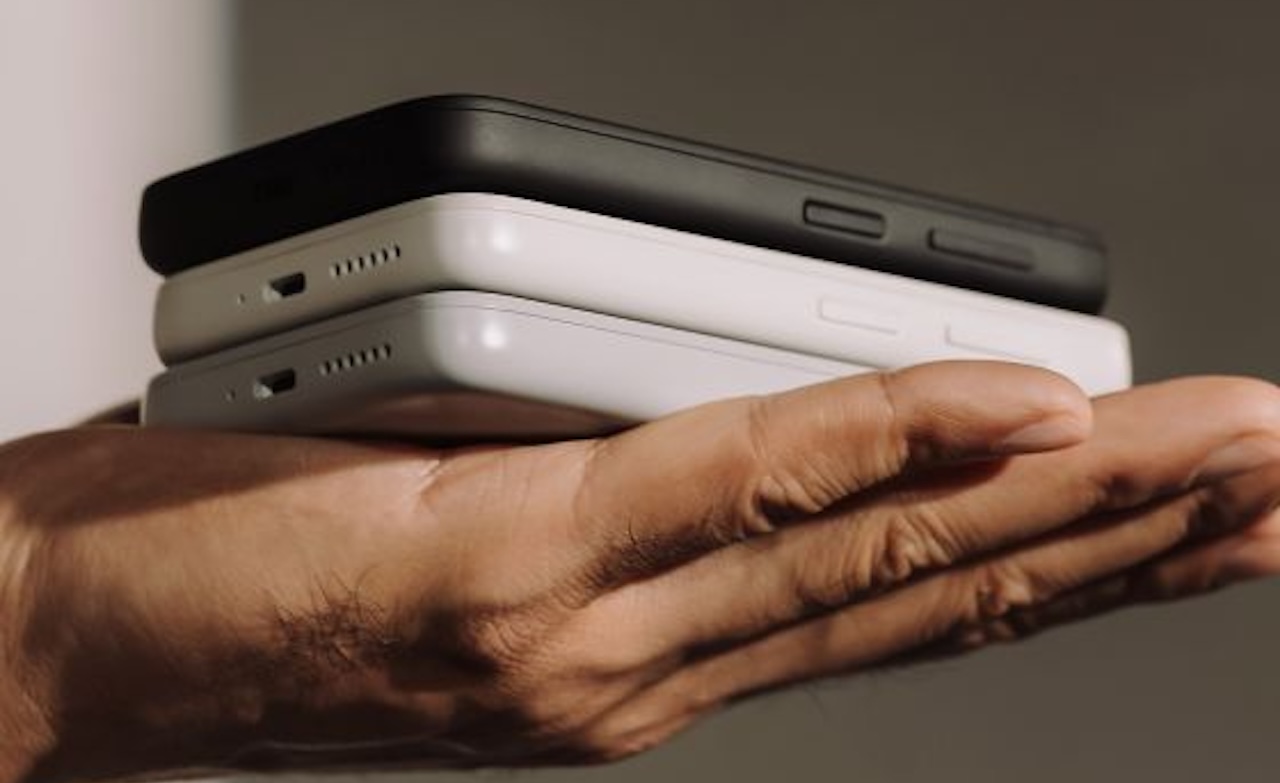
Price: $399 at Mudita direct, $379 on sale at third-party retailers, $439 list
Where to Buy: Mudita
The camera, to be straight with you, is not really usable for anything you’d want to keep. That’s the trade. You’re getting distraction-free and surveillance-free in one package, and at $379 on sale it’s actually one of the better-priced premium minimalist phones. If you care about not being tracked and you’re fine with E-ink lag, this is the most thoughtful option in the category.
Wisephone II
The Wisephone II is the smartest dumb phone on this list, and probably the best fit for people who want minimalism without giving up modern hardware. Techless built it on Samsung Galaxy A16 5G hardware, then layered WiseOS on top: about a dozen core tools (phone, messages, camera, maps, music, calendar, calculator, clock, notes, photos, flashlight, 2FA) and a curated Tool Drawer with vetted apps like Uber, Cash App, Waze, and WhatsApp. No browser. No social media. No open app store.
The payoff is real. You get a proper color touchscreen, 5G, a 50MP camera that actually works, and none of the rabbit holes.
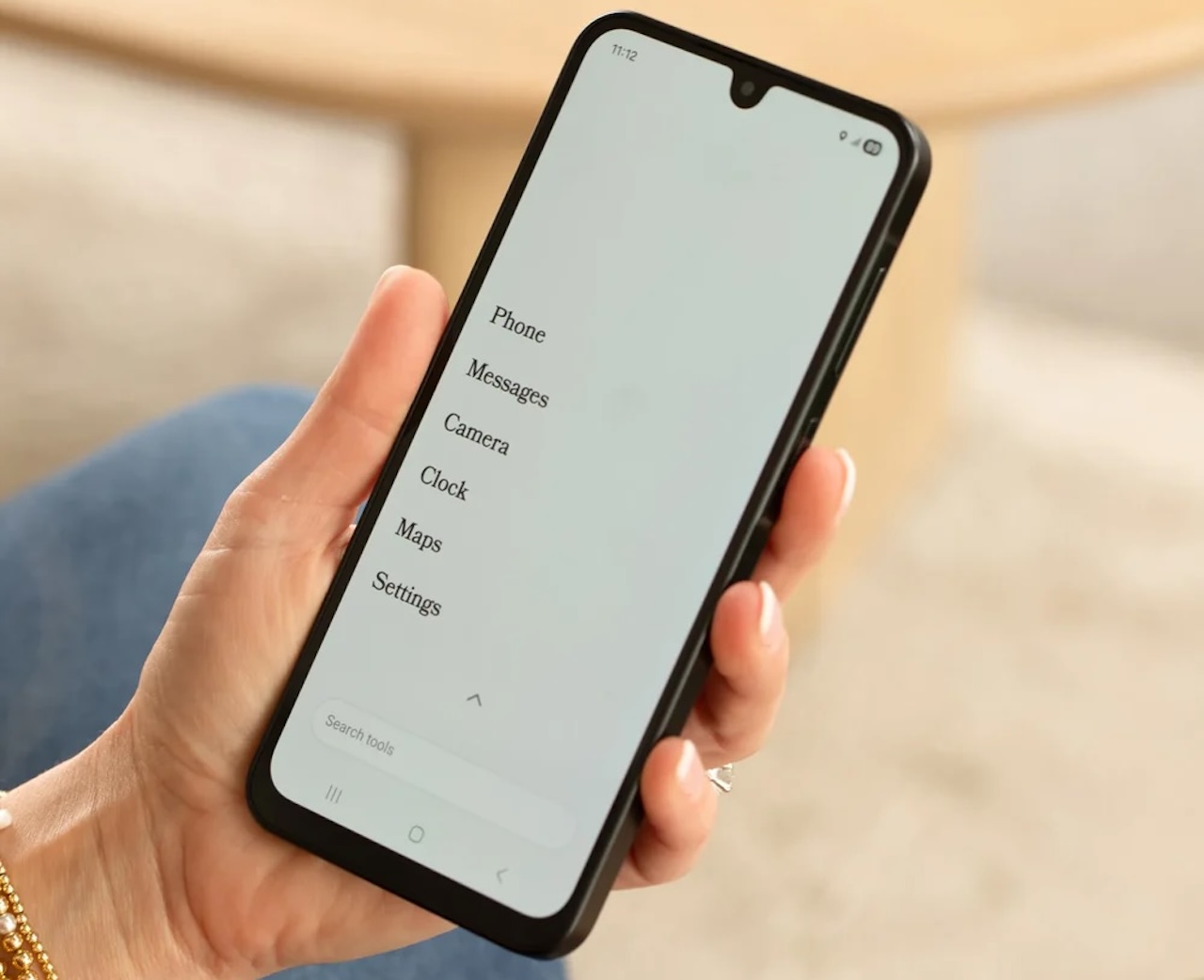 Price: $399 plus $14.99/month WiseOS subscription
Where to Buy: Wisephone
The subscription is the catch, and it’s a big one. $14.99/month on top of $399 hardware adds up fast, and if you ever stop paying, the phone loses most of what makes it useful. You’re not buying a device so much as renting a software discipline layer on top of one. That’s a fair tradeoff for some buyers and a non-starter for others. Know which one you are before you click buy.
What you actually give up
Minimalist phones aren’t smartphones with fewer icons. They come with real compromises. The cameras are the most obvious: the Mudita Kompakt and Minimal Phone shoot photos you wouldn’t post anywhere, which is fine until your kid does something cute and you can’t catch it.
Work tools are the next hurdle. Slack, Teams, Zoom, and most corporate SSO and MFA setups either don’t run or run badly on E-ink and curated-OS devices. Wait times stack on top: the Light Phone III’s newest pre-orders don’t arrive until September 2026, and the Minimal Phone shipped months late for many 2025 backers.
Speed is the quiet cost. E-ink phones feel slow on purpose, and even the AMOLED Light Phone III runs a deliberately minimal OS that feels sluggish after a flagship. The Wisephone II adds subscription risk: $14.99/month keeps it working, and if you stop paying, you’ve spent $399 on a generic Galaxy A16. Maps coverage varies too. Light Phone’s directions app is solid but limited next to Google or Apple Maps, and some minimalist phones don’t do navigation at all.
Who should skip the hardware and just use Focus mode
If any of these describe you, save the $400 to $800.
You rely on work apps on the go and your team uses Slack or Teams. You need a real camera, even just for kid photos. You’re not willing to wait months for delivery. You don’t want a subscription dependency. You travel and need turn-by-turn navigation everywhere. You’re a heavy social-media user who hasn’t actually decided to quit, you just feel guilty.
For that profile, a software fix does more than a hardware swap. Set Screen Time limits on iOS or Digital Wellbeing on Android. Turn on grayscale. Install a minimalist launcher like Olauncher or Niagara. Move social apps off the home screen. Toggle Focus mode aggressively. You’ll cut hours of screen time without spending $700 to relearn how to text.
The honest pick for most buyers
If you actually want this and you’ll commit:
- Want the most refined version of the idea and have $700 to spend? Light Phone III
- Want a real smartphone replacement that physically resists doomscroll? The Minimal Phone
- Care about privacy, hate Google, and don’t take photos anyway? Mudita Kompakt
- Need maps, music, and a working camera, and you’re okay paying monthly? Wisephone II
For the broadest “my phone is ruining my attention span and I want help” use case in 2026, the Wisephone II is the closest to a normal phone you can hand someone without the doomscroll traps. The Minimal Phone is the right answer for anyone who actually wants to feel the friction of typing on a keyboard again.
And if you’re still not sure? Try Focus mode for a month first. If you white-knuckle it through 30 days and still want hardware-enforced minimalism, then spend the money. Most people figure out somewhere around day 12 that the problem wasn’t the phone.
Love our content?
Sign up for our newsletter today.
No ads, no spam, just links to our latest articles!

Lenovo ThinkCentre M710q Tiny Desktop, Core 6th Gen, 8GB DDR4 RAM, 256GB SSD, DisplayPort, Keyboard & Mouse, WiFi, BT, Windows 11 Pro (Renewed)
(as of May 5, 2026 15:40 GMT -05:00 – More infoProduct prices and availability are accurate as of the date/time indicated and are subject to change. Any price and availability information displayed on [relevant Amazon Site(s), as applicable] at the time of purchase will apply to the purchase of this product.)

KAMRUI Pinova P1 Mini PC Computer, AMD Ryzen 4300U (Beats i3-10110U/3500U), 16GB RAM 256GB SSD, Mini Desktop Computer Support Triple 4K, USB-C, WiFi, Bluetooth, Ethernet for Business, Education, Home
(as of May 5, 2026 12:09 GMT -05:00 – More infoProduct prices and availability are accurate as of the date/time indicated and are subject to change. Any price and availability information displayed on [relevant Amazon Site(s), as applicable] at the time of purchase will apply to the purchase of this product.)