

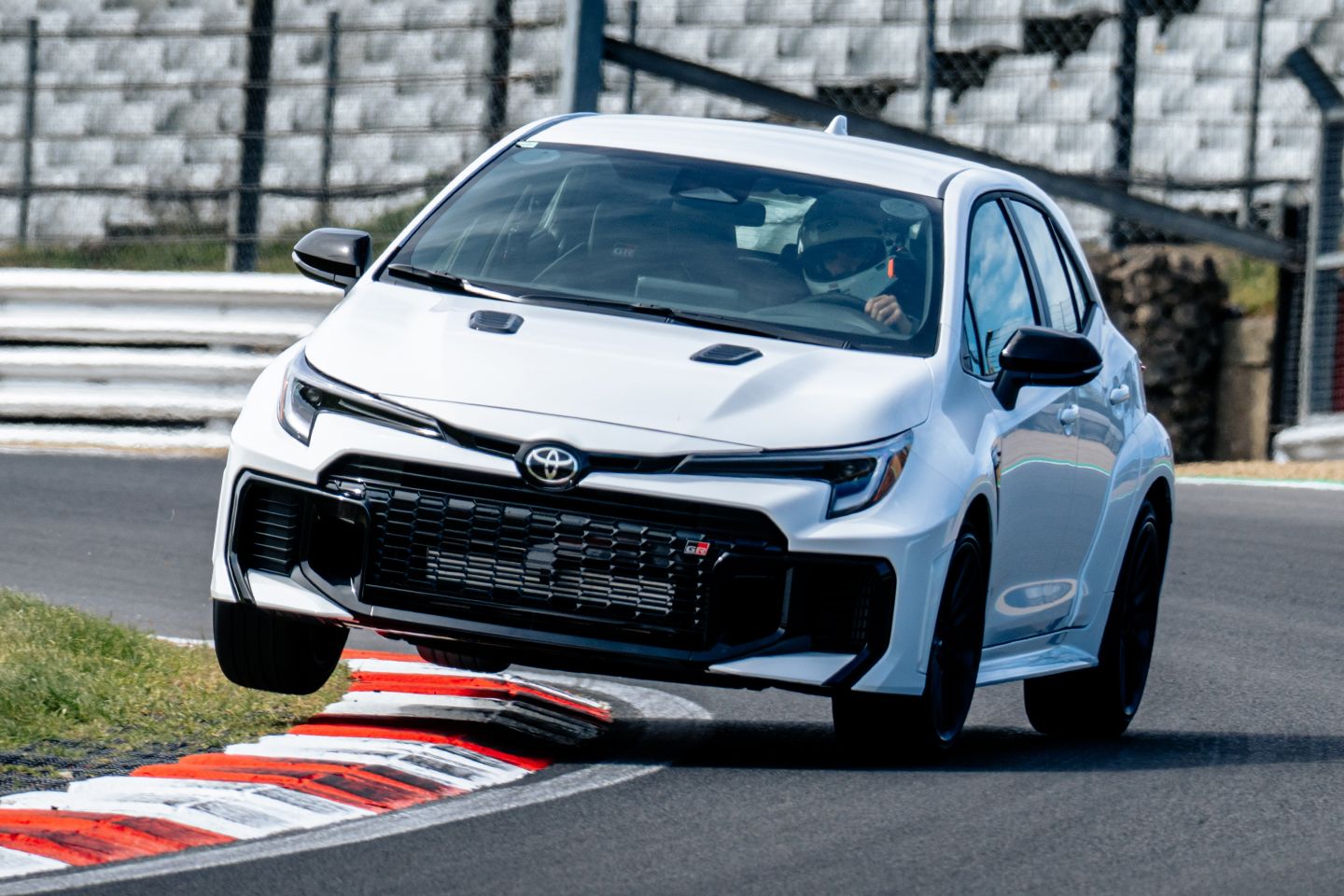
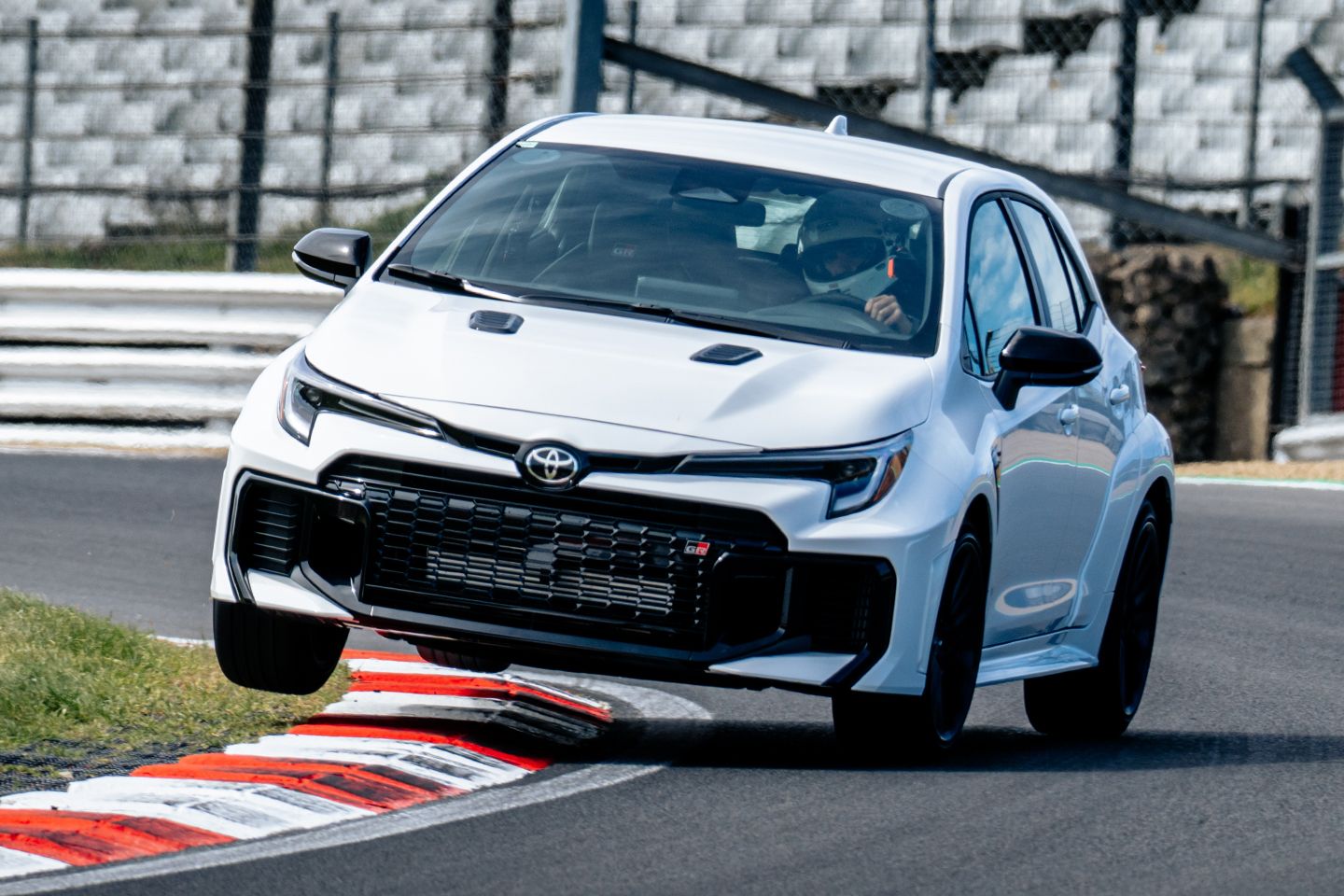
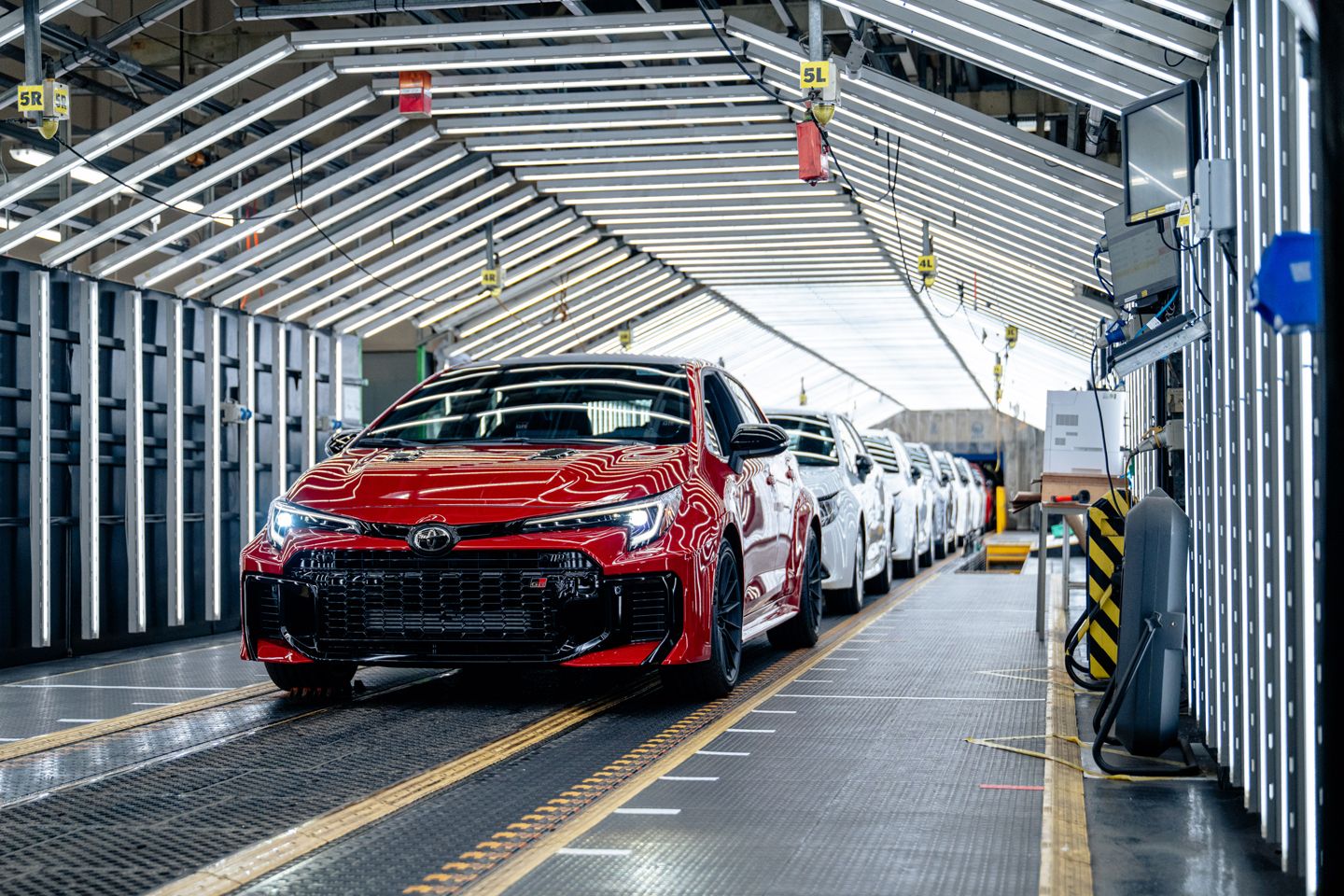
While anyone who read Mike’s review of the GR Corolla back in 2023 will be well aware of how brilliant it is to drive, the fact it’s not sold in Britain has become even more confounding when you consider that’s now built here. Or to put a finer point on it, the GR Corollas (and normal Corollas, for that matter) headed to the US and Canada are built here; those sold in Japan and beyond are still being made at the Motomachi plant in Aichi. But the salient point remains: a large proportion of Toyota’s family-sized hot hatch is made from the ground up in Burnaston, Derbyshire, and then exported away from the market plenty would argue it is perfectly suited to. Talk about a travesty.
This, by the way, is coming from someone who still prays at a shrine of Renault Sport every night before bed. Because while recent experience of VW’s rapid Golf GTI Edition 50 confirmed that we’re not completely lacking in 250hp-plus five-doors capable of blending performance thrills with daily usability, they are not exactly thick on the ground. The Megane RS is long dead; Hyundai killed off its i30 N prematurely, Ford discontinued the Focus ST along with the rest of the range, and Honda has stopped selling the FL5 Civic Type R. Where now the track day-capable lunatics?
Granted, the Toyota GR Yaris is a brilliant WRC homologation road car with plenty of excitement up its sleeve. But its box of rally-derived tricks means it feels more at home power-oversteering up zig-zagging mountain passes, or filling the mirrors of far more senior sports cars on a damp day, than it does as a track day hack. Heck, for some of us, it’s never quite nailed the B-road blast brief either – an opinion confirmed by a refresher drive in one at Brands Hatch, where the supermini delivers a quick lap around the Indy layout, but it’s one that’s stable and neutral rather than deeply thrilling.

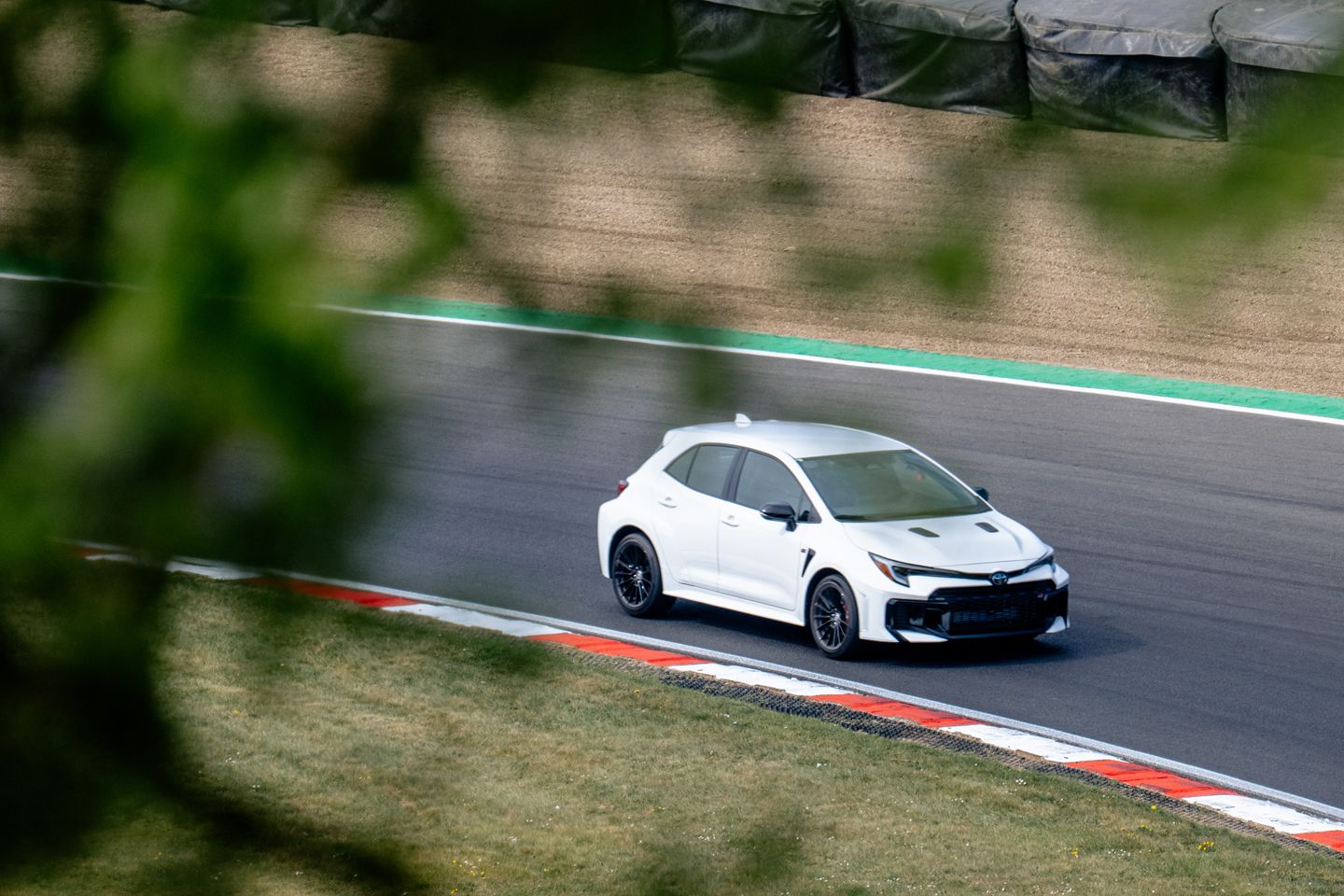
The latest GR Corolla meanwhile – not merely assembled at Burnaston, but built from sheet metal pressed and welded into a body-in-white, all the way into fully working order – couldn’t be more different on circuit. It uses the same boosted 1.6-litre three-pot, mated to a variable torque all-wheel drive system and six-speed manual (unless you go for the auto, which we’ll get onto in a bit), yet with an extra 20hp, an 80mm longer wheelbase, and modified spring and damper rates, you know it’s going to drive differently. But my assumption that the US market Corolla would feel heavier, softer and less nimble than the Yaris couldn’t have been more wrong.
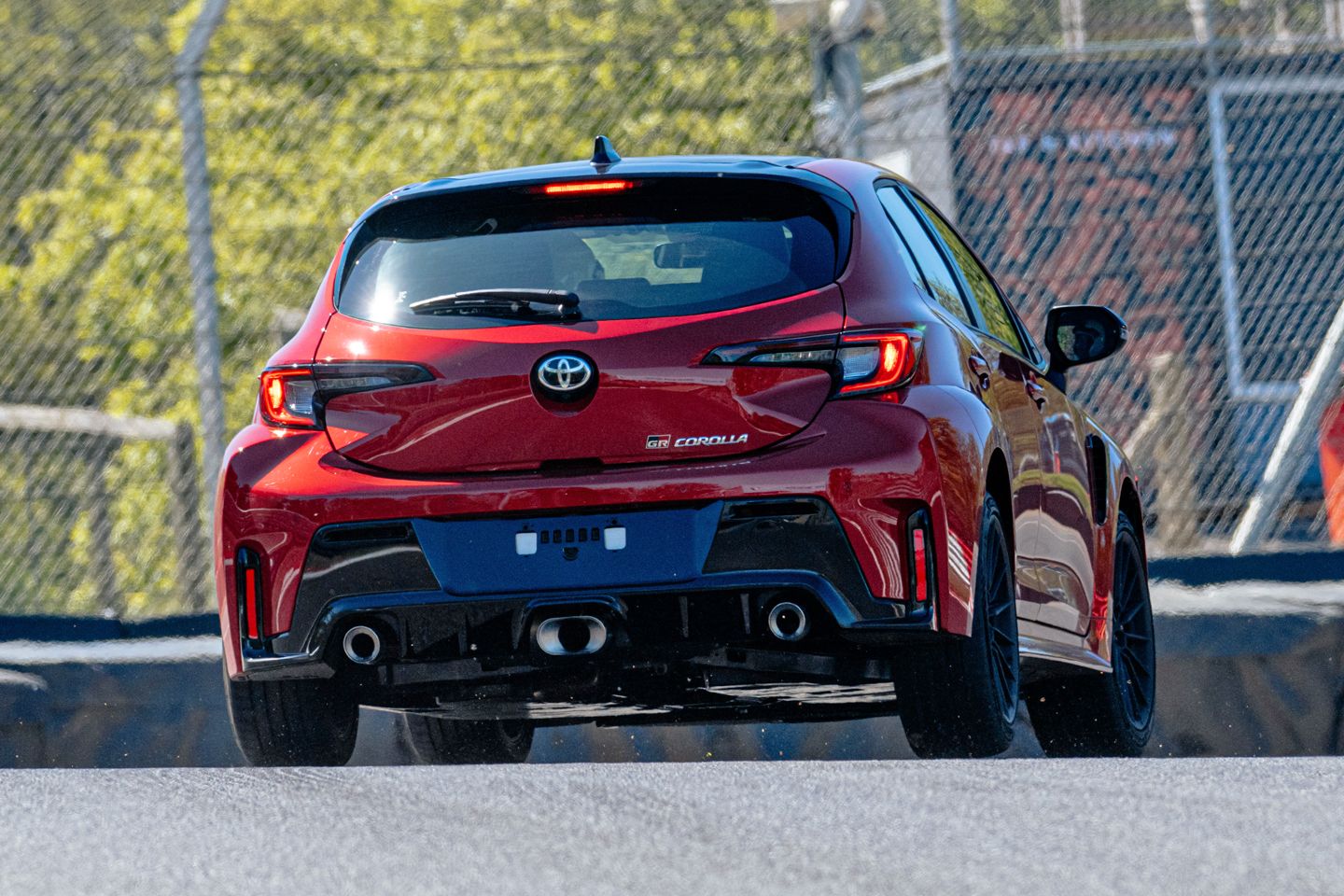
At higher speeds (without the use of the handbrake at 100mph, obviously), where the Yaris needs real encouragement to go from neutral to mild levels of corner-entry rotation, the Corolla provides it willingly with barely a lightly trailed brake. This GR feels as grippy as its smaller sibling when you’re powering through fast corners, but when you ask for agility into tighter ones, it’s keener on the nose and less bolted down at the rear. That’s maintained through and out of the corners too, and because the shift from grip to slip is so manageable, you can use the all-wheel drive system to dance the car away with minimal corrective lock.
It doesn’t feel heavier either, partly because the GR brakes are unfazed by constant abuse but also because the body control is superb and manifestly tighter than the Yaris’s, while also not feeling too stringent to be lobbed up a kerb or two at Brands. Mike seemed happy enough with the ride on a US road back in 2023, and two stints on circuit suggest that this pliancy remains intact in the British-built 2026 version.
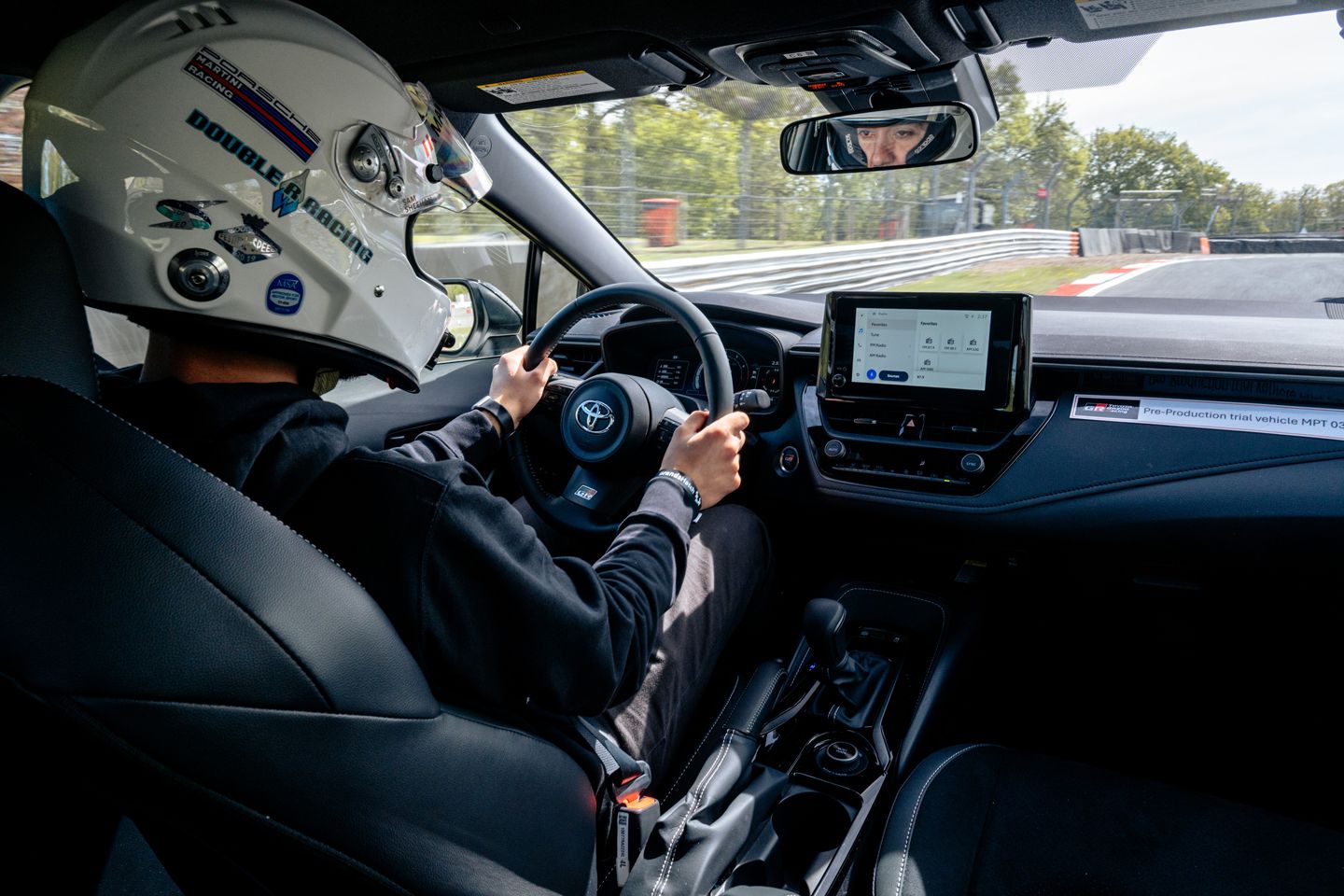
You would not call it perfect, of course. One key area of superiority for the Yaris is the front seats. Its Euro-spec buckets are tighter and better bolstered, where the ones meant to suit North American customers – presumably adapted for the average local waist size – left yours truly ultimately relying on the driver’s door as a brace. Perhaps that comes as no great surprise in an ergonomic sense, though it did directly contribute to another: the automatic GR Corolla proved to be by far the most fun variant driven during my time at Brands.
The reason is simple; the auto fixes the problem of reaching for things when you’re sliding around in the driver’s seat like Sandra Bullock on a runaway bus. In the manual Corolla, the clutch and gear lever can be a stretch depending on the corner you’re in, but with just paddles on the wheel to worry about, those reach-related issues are gone, leaving you free to concentrate on what’s coming next.
Admittedly, the auto has its own issues. Sure, it’s quick to shift up and down, and even its plastic paddles are sufficiently large to feel more special than a Golf GTI’s fiddly ones. But the kick down button under the throttle pedal can’t be switched off, even in Track and ‘manual’ mode, meaning several attempts to cut torque with a short upshift out of Druids hairpin were met instead with a belligerent downshift. Less of a problem on the road perhaps, but still one you’d want expunged from the software.
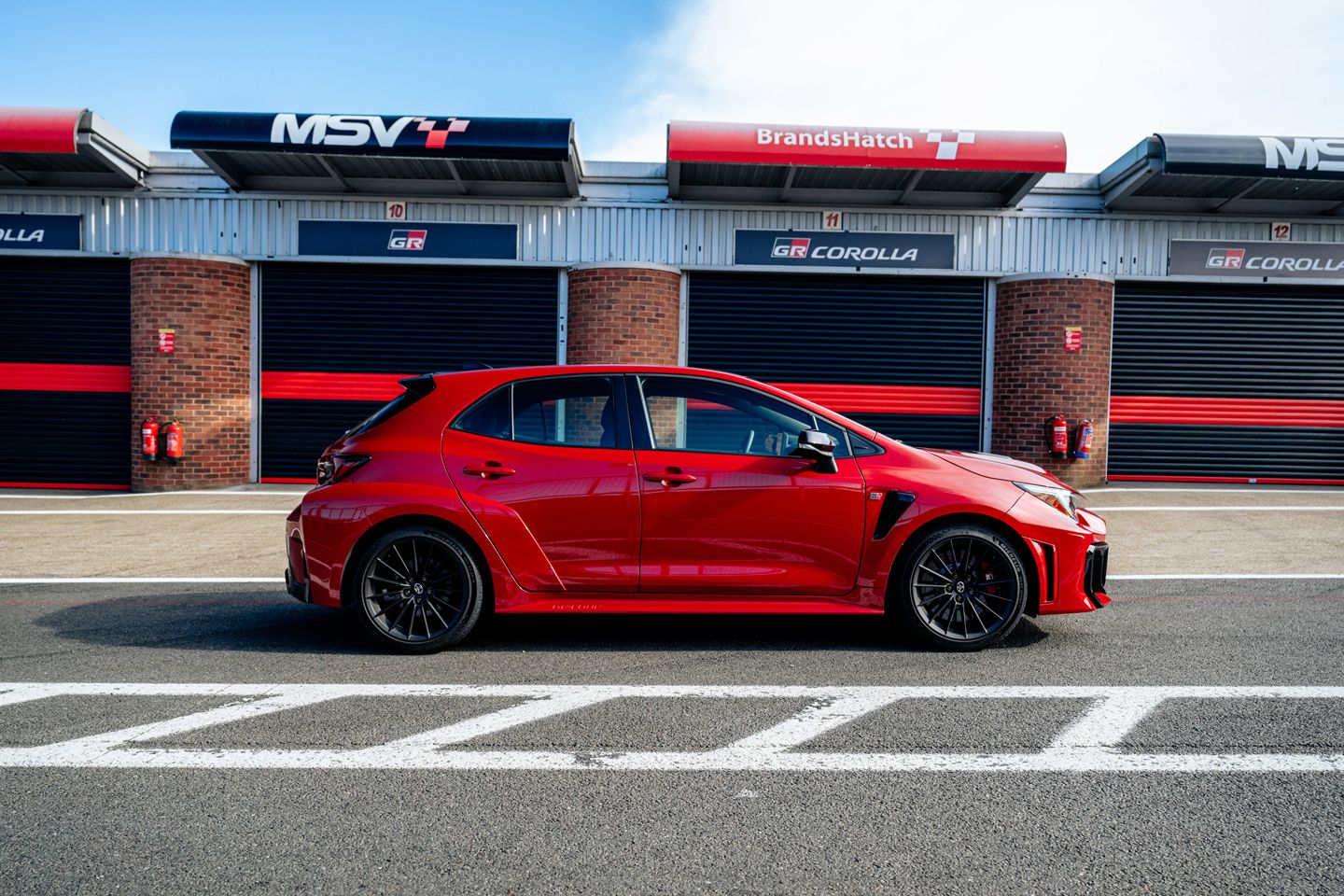
Alternatively – and appropriate to the UK, surely – would be a manual car fitted with the Yaris’s slimmer bucket seats. Then, genuinely, you’d have a hot hatch with the agility and underlying playfulness to rival any of the models no longer with us – one made all the more compelling by its surfeit of traction everywhere else and a gearbox that makes 300hp seem endlessly punchy. Factor in more rear legroom and a proper boot (not to mention the pleasing thought that it was built just up the road, by the first non-domestic Toyota plant ever considered good enough to mass produce GRs) and you’ve arrived at no-brainer status before you can say ‘how much’.
Or to put it another way, why not sell it here? Well, for now Toyota has its reasons – the one related to PH suggests that buyers in Japan who best resemble a typical British customer are still drawn toward the Yaris, despite having both models available to them. There is the WRC connection to consider, too, alongside the usual machinations of an unimaginable giant corporation, where A plus B does not necessarily equal C. That Burnaston does an exceptionally good job of building and shipping Corollas might be enough to satisfy an exec board spreadsheet that must remain in the black; manufacturing cars in one country and selling them exclusively in another is hardly novel for Toyota.
But this is Britain. Hot hatch country. Treasure Island. The market does not need cultivating or explaining, its appetite is a known quantity – one tragically undernourished by the shortsightedness (or lack of investment, willpower, imagination etc) of others. Toyota will know the goal is open, even if it opts not to deliver the right ball to kick into it. Previously it has shown little inclination to do so, and even this chance to revel in all that is good about the GR Corolla at Brands was pitched more as a flag-waving exercise for Burnaston than a prelude to an official launch. Nevertheless, the fact that it has a potential class-leader in its locker is not lost on anyone engaged in building or marketing Toyotas in this country. They know the importance of keeping us on the edge of our seats, too. Let’s all hope they eventually have a good reason for doing so…
SPECIFICATION | TOYOTA GR COROLLA
Engine: 1,618cc three-cylinder, turbocharged
Transmission: Six-speed manual, all-wheel drive
Power (hp): 300 @ 6500rpm
Torque (lb ft): 273 @ 3250rpm
0-60mph: 5.0sec
Top speed: 143mph
Weight: 1,465kg
MPG: 24 (US)
CO2: 186g/km (US)
Price: $41,405 (£30,563)