

Key considerations
- Available for £49,000
- 5.5-litre V8 petrol twin-turbo, all-wheel drive
- Mad whooshing power reined in by weight and tech
- Fuel costs will be high but maintenance costs needn’t be
- Not too many issues
- Still one of the ultimate statement vehicles
In this buying guide we’ll be looking at one of the longest-lasting vehicle ranges in motoring history, the Mercedes G-Wagen. There are interesting historical parallels between the Land Rover and the Gelände-Wagen, and not just in the fact that ‘Gelände-Wagen’ could, depending on whether you capitalise the ‘w’, be translated as ‘land rover’. Coincidence? Well, when both the UK and Germany needed to rebuild after the war, rugged no-nonsense vehicles were very much part of the plan to make that happen. Mercedes’s statement purchase of Unimog in 1950 came just two years after the launch of the first Landie in 1948, which was the year of Unimog’s founding.
Technically, the G-Wagen stopped being a G-Wagen in 1998, when it became a G-Class, but if we set such pedantry aside we can say that this vehicle has been beetling along public highways for a remarkable 47 years, or over half a century if you count the first driveable road-car prototype of 1974, or longer than that even if you count the first military vehicles. Since 1979, a boggling array of styles including cabriolets, landaulets, six-wheelers and Popemobiles has been produced from the same basic starting point.
The posher and more refined GL was supposed to replace the G-Class in 2006, but G fans had other ideas. Unlike the outcry which failed to reprieve the Land Rover Defender, the protest to save the G actually worked and the flat-windowed wonder lives on to this day.

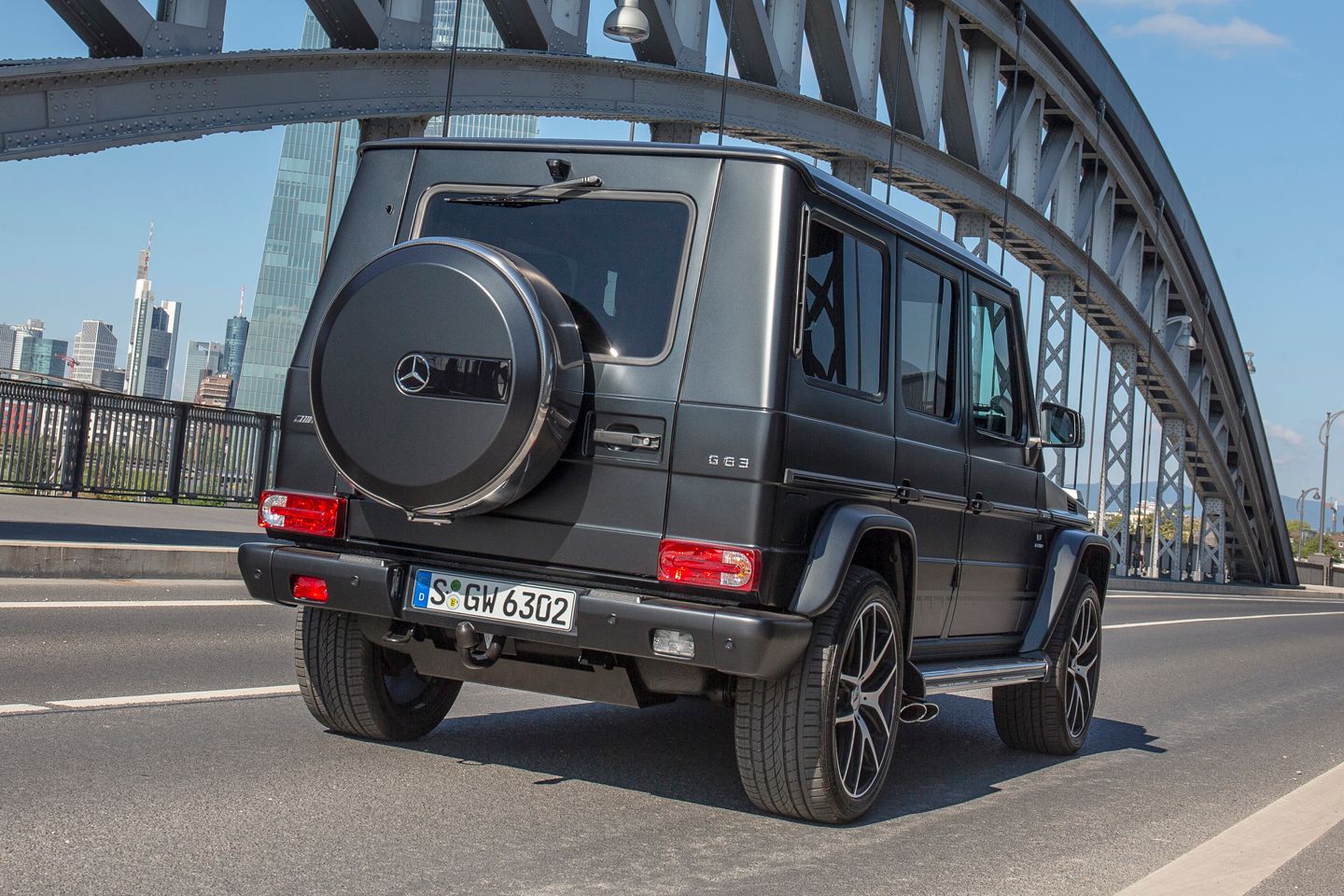
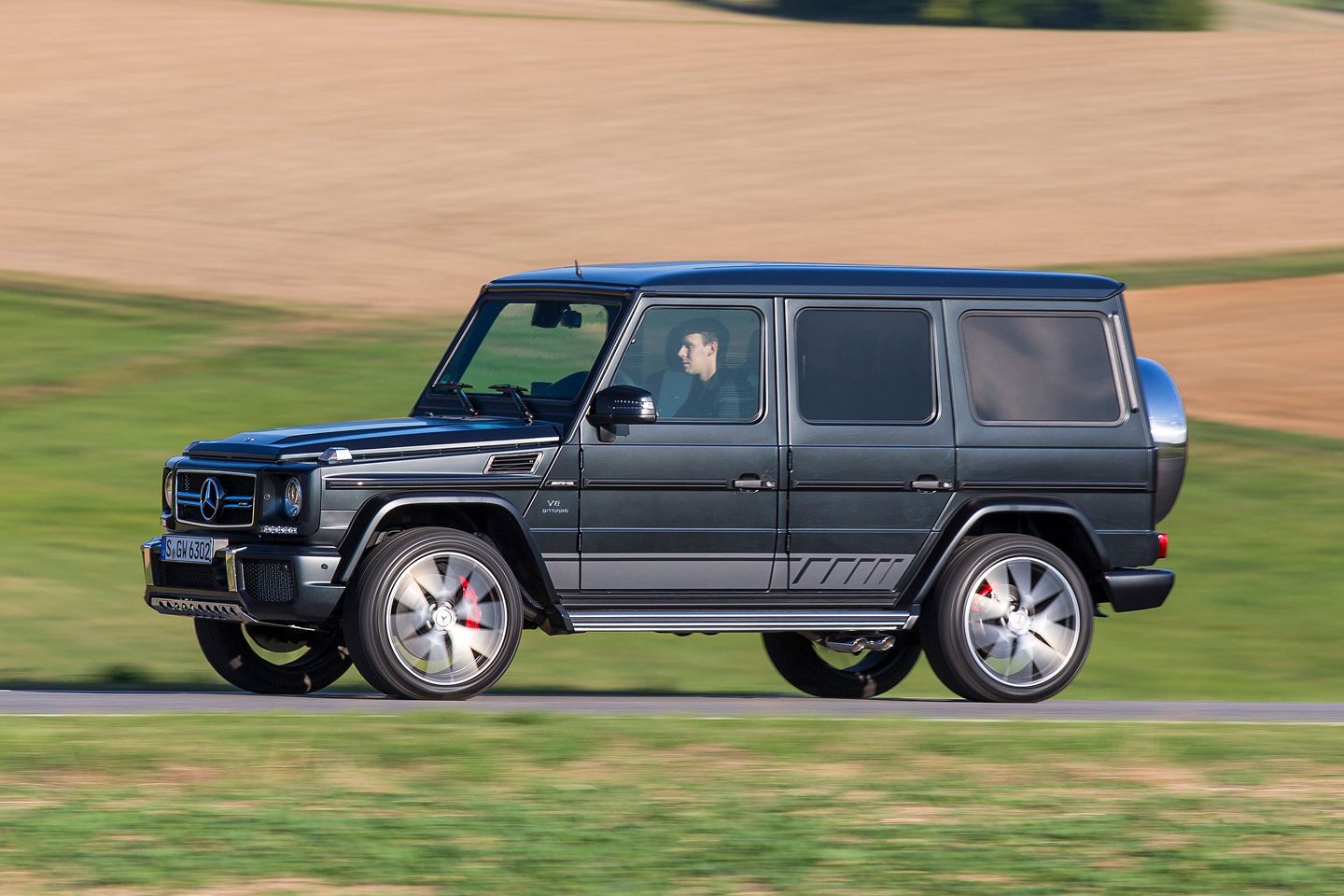
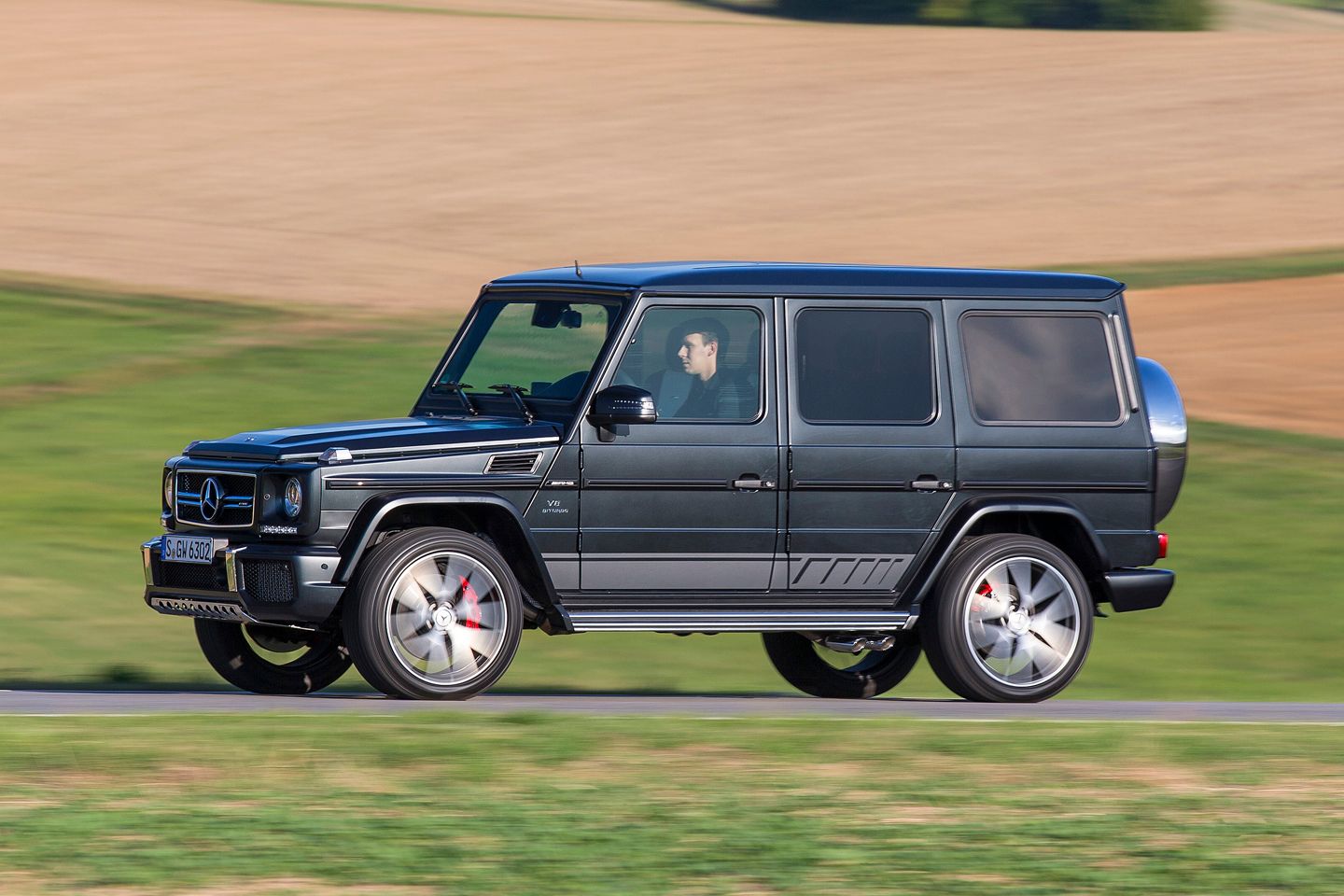
Mercedes’s G concept centres on a pressed steel body bolted to a strong ladder-frame chassis with enclosed side- and cross-members. Besides the boggling range of body styles and chassis layouts there’s been a huge spread of diesel, petrol and latterly hybrid engine options to choose from. We’d have to requisition a vast portion of internet real estate to cover them all, so we’re arbitrarily narrowing it down to the one that we reckon a few PHers might like to see lurking outside their gaff, namely the 5.5 litre twin-turbo V8 G 63 AMG that was on sale from 2012 to 2018. V8s have been part of the G-Class offering for a good while. There’s just something about the distinctive rumble of this engine format that fits perfectly with the G’s bluff ‘up yours’ appearance.
Gs of any stripe are never cheap. Even high-mileage examples with dubious bodykits effortlessly hang on to their value. That’s partly due to supply and demand. We don’t know how many G 63s are sold in the UK now, but in the early 2010s the annual number was below 200. There were easily more than 200 oligarchs, celebrities and footballers in the country to hoover that lot up, let alone ordinary people who might have wanted one too. Four in ten Gs built at that time were AMGs.
The other reason for the G 63’s good value retention is its durability. A reasonable programme of maintenance will keep them going for a long time, a bit like Landies, but the bonus with Gs is that they are considerably less prone to corrosion than Landies. You’re very unlikely to need to replace major structural parts or the entire chassis on a G 63, a level of ground-up rebuilding that is seen by many Defender owners, somewhat incredibly when you think about it, as par for the course.
The succeeding post-2018 4.0 litre V8 G 63 (which we’ve covered previously) would make most people very happy, but price-wise that’s a six-figure car on the used market. The 5.5 G 63s start at under £50k. You won’t notice that much difference in outright ability or performance between the old and new Gs because the main limitations with the G are not in the powertrain but in the size, shape and weight of the design. In the real world, a 5.5 will do much the same job as the 4.0 for around half the money.
The 5.5 G 63 received regular mechanical and electrical/infotainment revisions throughout its six-year life. The most affordable example we found for sale in the UK in April 2026 was a left-hand drive 89,000-miler from 2014 at £45,000. The cheapest RHD car was a 72,000-miler, also from 2014, at £49k. There’s plenty of G 63 choice in the £50k-£60k bracket. £65k will get you a Brabus Widestar-bodykitted 2017 example with 68,000 miles. With £70k in your fund you can snip about 20,000 miles off that.
SPECIFICATION | Mercedes W463 G 63 5.5 Biturbo (2012-2018)
Engine: 5,461cc V8 32v twin-turbo petrol
Transmission: 7-speed auto, all-wheel drive
Power (hp): 537@5,500rpm
Torque (lb ft): 561@2,000-5,000rpm
0-62mph (secs): 5.4
Top speed (mph): 131 (llimited)
Weight (kg): 2,550
MPG (combined): 18.8
CO2 (g/km): 322
Wheels (in): 9.5 x 20
Tyres: 275/50
On sale: 2012 – 2018
Price new (2012): £128,000
Price now: from £49,000 (RHD)
Note for reference: car weight and power data is hard to pin down with absolute certainty. For consistency, we use the same source for all our guides. We hope the data we use is right more often than it’s wrong. Our advice is to treat it as relative rather than definitive.
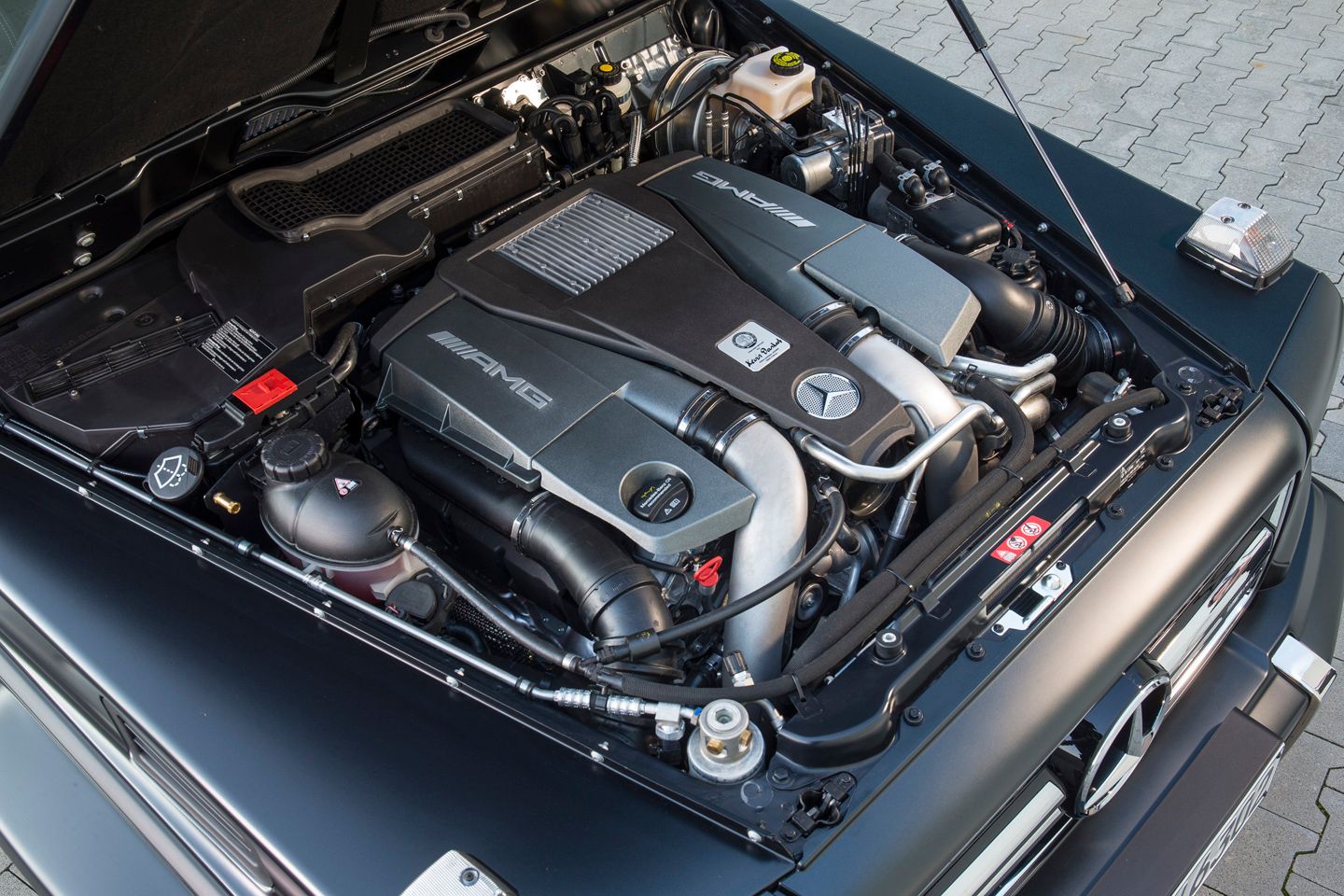
ENGINE & GEARBOX
The 5.5-litre M157 engine used in the G 63 was the AMG-enlarged and tuned version of the 4.7-litre twin-turbo M278 used in the S-Class, SL, GL and other Mercedes models. In the S-Class, the M278 produced 449hp and 516lb ft. In the 2012 G 63 the M157’s extra displacement and higher turbo boost pressure of 15psi took the outputs up to 537hp and 561lb ft. That was more than 40hp and 40lb ft over and above what the old G 55 Kompressor’s supercharged 5.4 litre V8 had generated, making the 2.5-tonne G 63 quicker through the 0-62mph run than a Porsche Cayman.
The G 63’s emissions figure was still mad at 322g/km but that was actually a big improvement on the lung-clogging 378g/km chucked out by the G 55. The 63’s fuel tank held 96 litres, or just over 21 gallons. That sounded like a lot but it wasn’t if you were swigging petrol at 10mpg, a figure easily reached if you had the throttle open all the time, as you surely would to fully appreciate the fruity bellow of the twin pipes exiting below each of the rear doors. In gentler use 20mpg+ was achievable, but the combined estimate of not quite 19mpg showed that there was no getting around the devil’s brew combo of a large-capacity twin-turbocharged engine and a body with styling inspired by a wardrobe.
After a brief discussion between Mercedes and Mother Nature the top speed was pegged at 131mph. The way it swooshed up to that speed told you it had more than enough power to go a good deal faster, but carnage-fearers in M-B’s legal department understandably put the blocks on that idea.
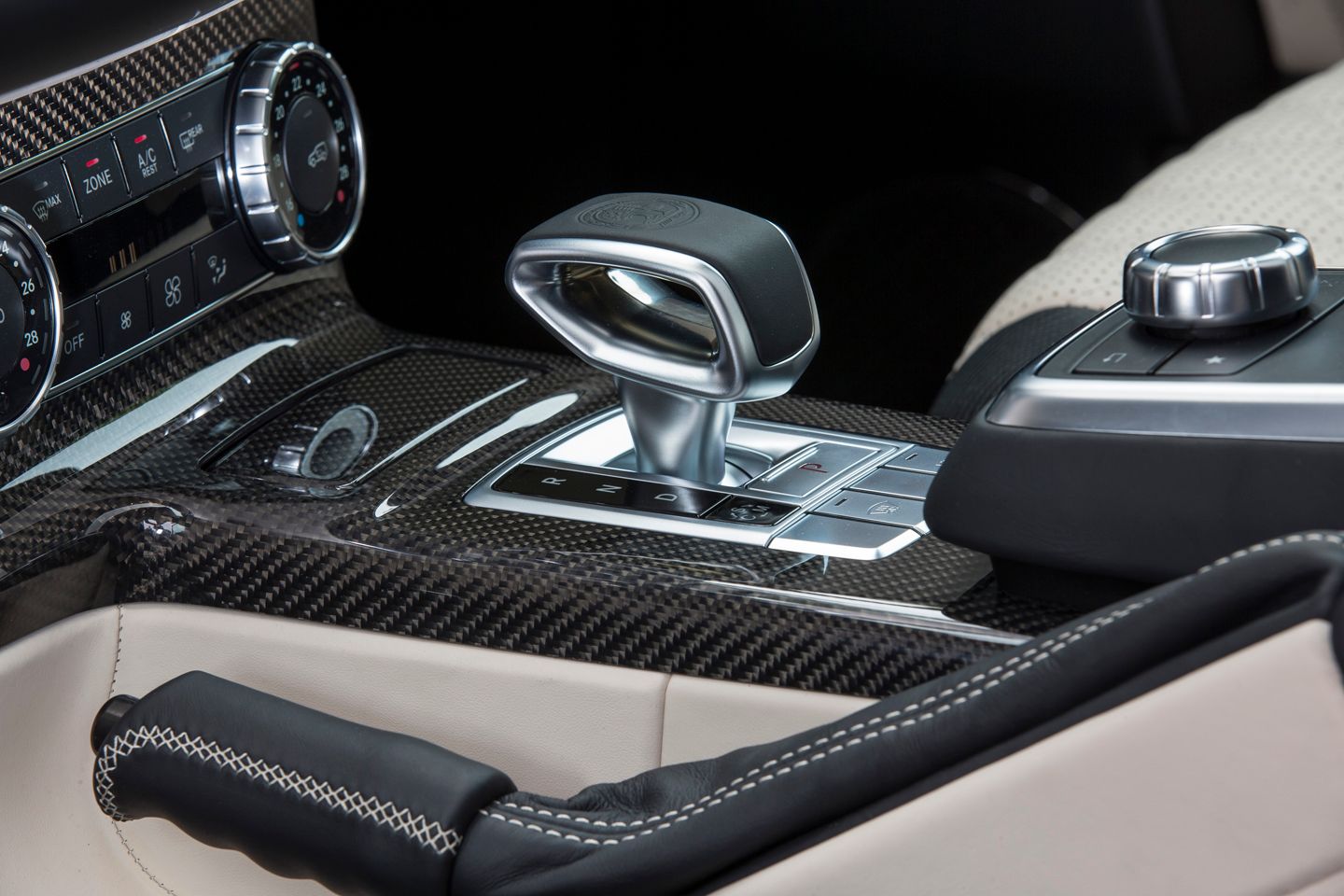
Fuel apart, G 63s can be reasonably cheap to run. Oil leaks from the valve covers, turbos and sump gaskets can happen, and coolant leaks might start to appear at around the 100,000-mile mark, but the actual hard metal bits themselves (rather than the seals and hoses) rarely go wrong. Saying that, there have been some problems with cylinder bore scoring, most often on tuned cars. Using the right grade of quality oil is important.
To handle the gobbets of torque the G 63 was fitted with the built-to-last Speedshift Plus 7G-Tronic torque converter gearbox. Any tendency toward sloppiness in the changes could usually be put right through diagnostics rather than spanner labour.
The G 63 was a superb towcar if you could afford to fuel it. Double-axle caravans approaching two tons were dragged around like toys and with incredible stability too thanks to the ESC system that quickly eliminated any tendency to fishtail.
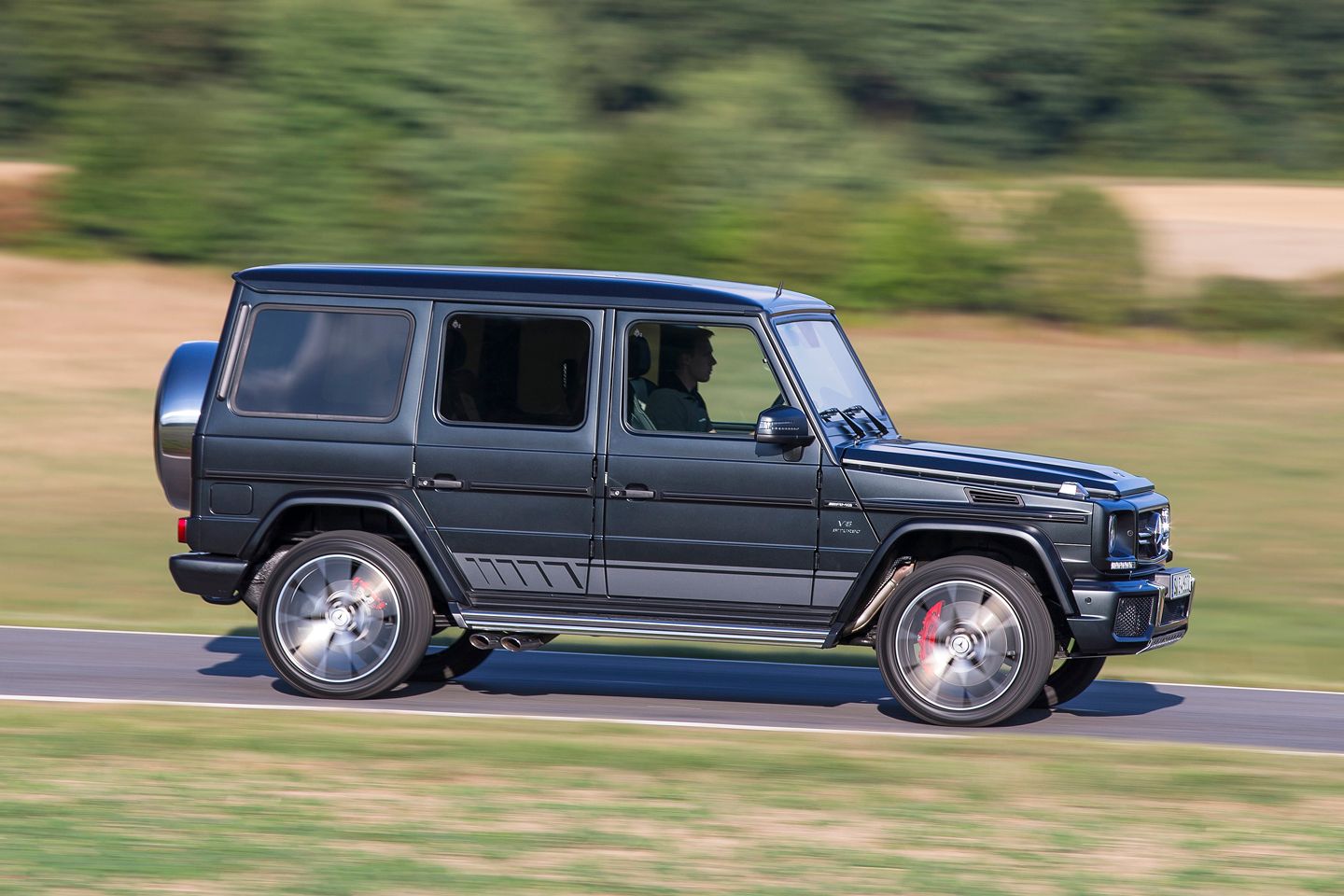
CHASSIS
Permanent all-wheel drive was routed through three mechanical differentials, each of which could be individually locked from inside the cabin. The G 63 was the only SUV sold in Europe at that time to have that capability. Full fluid changes at the 50,000 mile mark weren’t cheap because you had the transmission and the transfer case to sort out as well as the front and rear diffs. Keep the schedule up though and the whole system would last for a very long time.
Off-road performance was real and mighty. Sixty-odd armies around the world choosing G-Classes for military use couldn’t all be wrong. The 5.5 G 63 had more ground clearance and a better front approach angle than its successor but the rear departure angle was slightly less. Not much would stop either of them. It was overkill for the vast majority of urban-bound owners, which is partly why anyone in a Mercedes showroom in 2012 asking serious questions about off-roading would be politely led over to the G 350 CDI.
We’re not saying that experience piloting a narrowboat along one of Britain’s canals was good preparation for driving a G 63 along one of Britain’s B or even A roads, but it wouldn’t do you any harm. Even Mercedes’ own engineers had wryly admitted that on older models you needed to be making steering inputs three seconds before an autobahn corner. You can only go so far with live axles and recirculating ball steering, but you had to admire the sheer stubbornness of Mercedes in sticking with such an antediluvian spec.
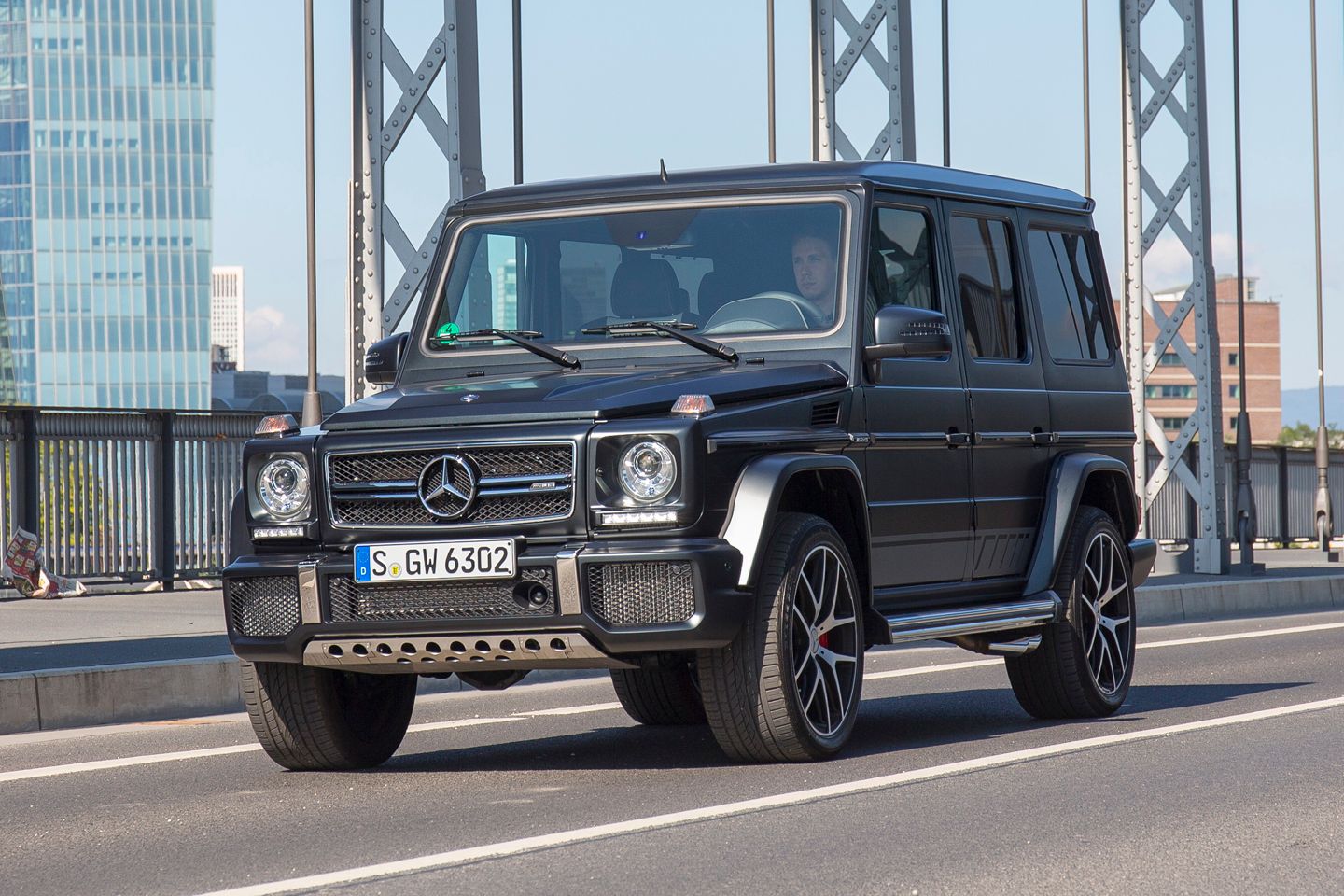
The new 63 was safer than the old 55, but it was stretching things to say it was better. Steering feel was still basically non-existent. The transmission was great at booming you out of gentle bends but the stability control system had other ideas about that on twistier roads. It was very stern. Technically you could disable it, but at the merest hint of reckless driving on a track (its least happy place) it reintroduced itself, crudely jamming on whichever brake was required to prevent any potential body-toppling. Relentless understeer was the order of the day no matter how hard you pressed the throttle.
A G 63’s ride could never be described as plush even on the most up-to-date G 63. There was a suspension upgrade in 2015 but overall the ride was borderline nobbly even on smooth roads, which seemed out of kilter with the fore and aft pitching under heavy acceleration and braking that would normally indicate a soft setup. Over time that nobbliness would cause the interior trim parts to rattle.
Without context you might guess that the wheels were 18-inchers. In fact they were 20s. Correspondingly large brakes (375mm front, 330mm rear) were more than up to the task of repeatedly hauling the beast to a straight line stop without protest or fade, but on bendier roads owners were well advised to learn how the car’s brain apportioned braking and grip. The brake pads were hard and the discs were ‘soft’ so they tended to wear out at similar rates..There was plenty of safety tech to bale you out including emergency braking and an anti-creep function for city traffic. The turning circle was 13.5 metres, or just over 44 feet. Dried-out power steering hoses could spring a leak.
BODYWORK
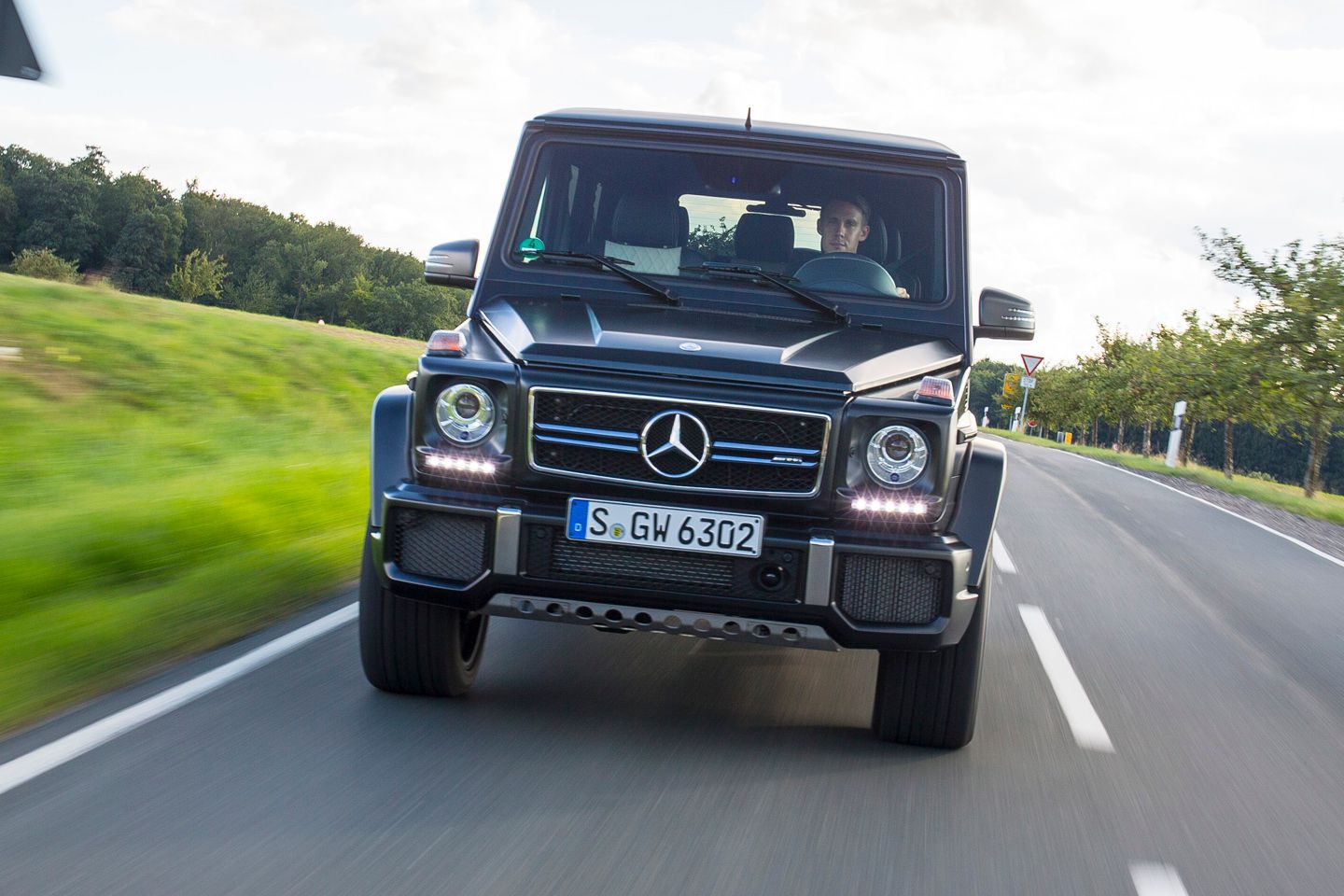
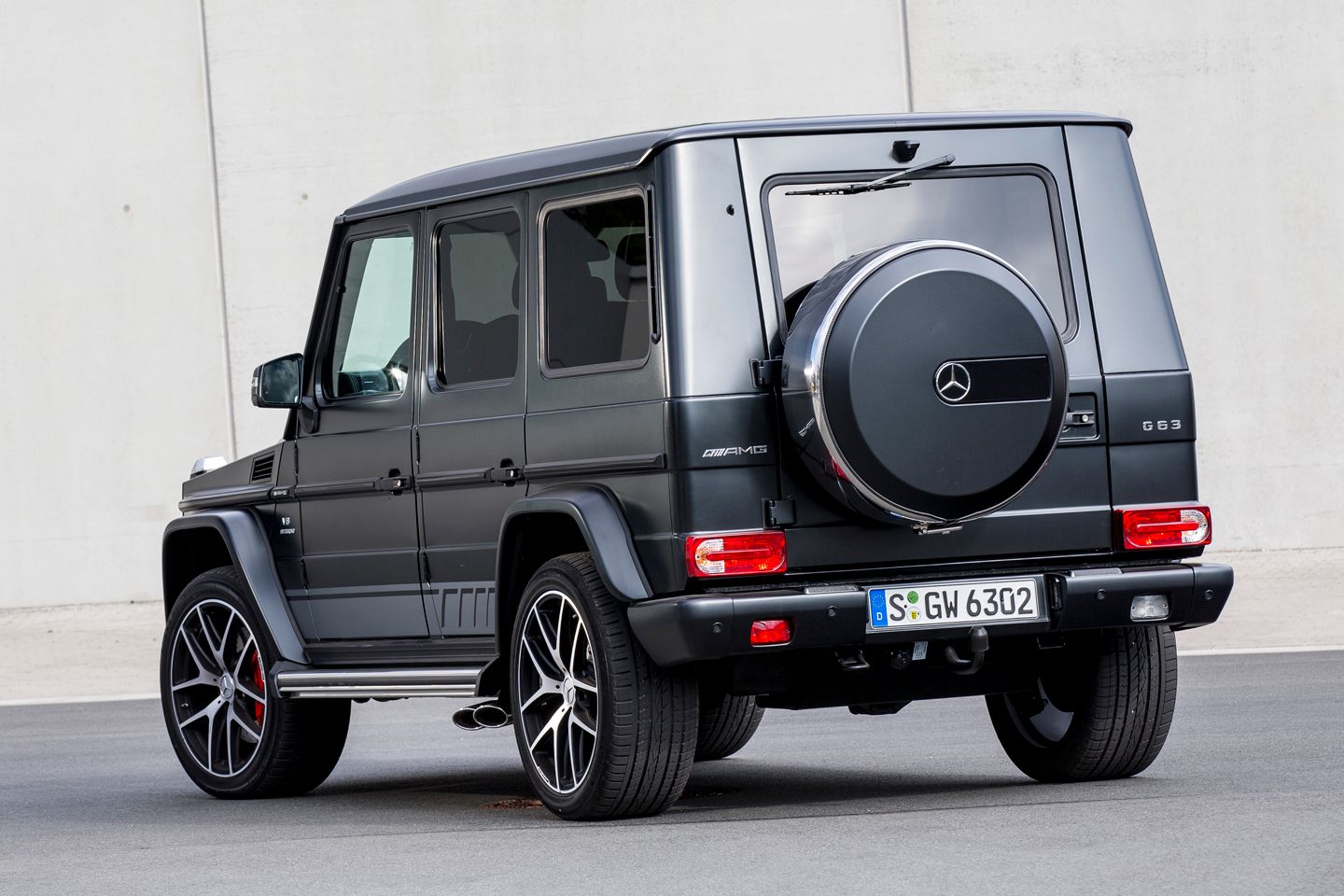
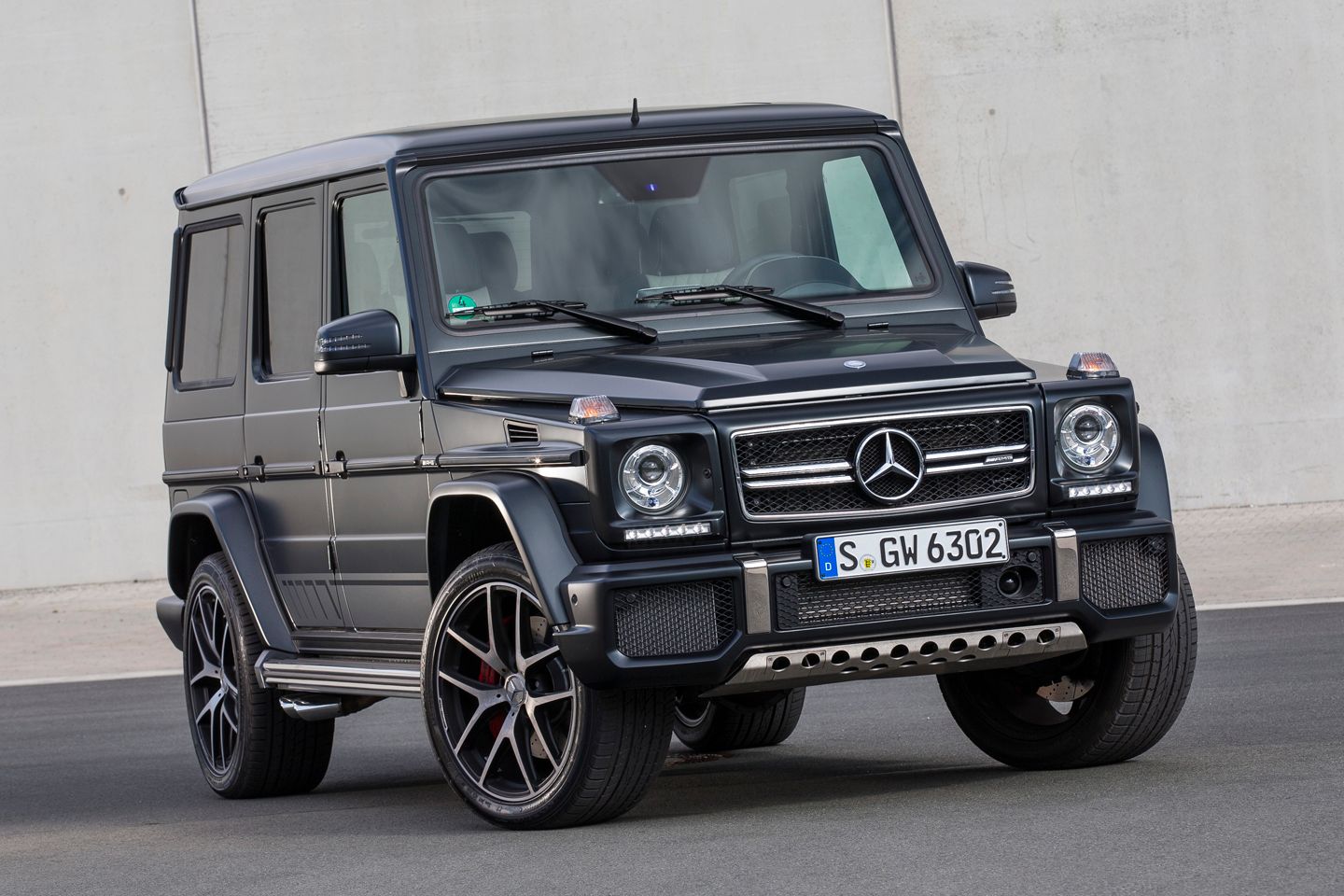
The 5.5 G 63 made a powerful debut at the 2012 Beijing motor show, its impact boosted in no small measure by a new front end featuring a two-slat grille and rabbit-swallowing air ducts, but also you suspect by the outrageous overall size of the thing.
Swing open the side-hinged rear door with the spare mounted on it and you’ll begin to understand how a car can manage to top the 2.5 tonne mark even without the burden of heavy batteries. The catch for that rear door seemed hugely over-engineered. Road testers scoffed at its chunkiness, but owners looked at it and thought ‘that’ll last forever’. A mighty clunk when moving off from rest signified that the door locks had just engaged.
As far as we’re aware this model of G 63 was never Euro NCAP-tested but it’s hard to imagine it coming second best in most car accidents. Insects didn’t cope well with that flat screen either. It quickly filled up with meat. Although they were a lot more rust-resistant than Defenders, G 63s are not totally immune to it, especially this model, older examples of which are now 14 years old. The areas around the front screen, the sills, and near the door hinges and handles are vulnerable. We’re not aware of any major issues with the separate chassis however.
Wind noise, unsurprisingly, was a thing on these. The wing mirrors were smaller than on the old G 55, which did reduce the decibels a bit. The trick was to reach a speed where the roar of the exhaust drowned out the noise of large quantities of air being rudely shoved aside. Don’t go buying a G 63 if big panel gaps make your teeth itch, but do buy one if you value the sense of finality that comes with every door slam. Hood latch cables can stretch on older cars and doorhandles can fail.
INTERIOR
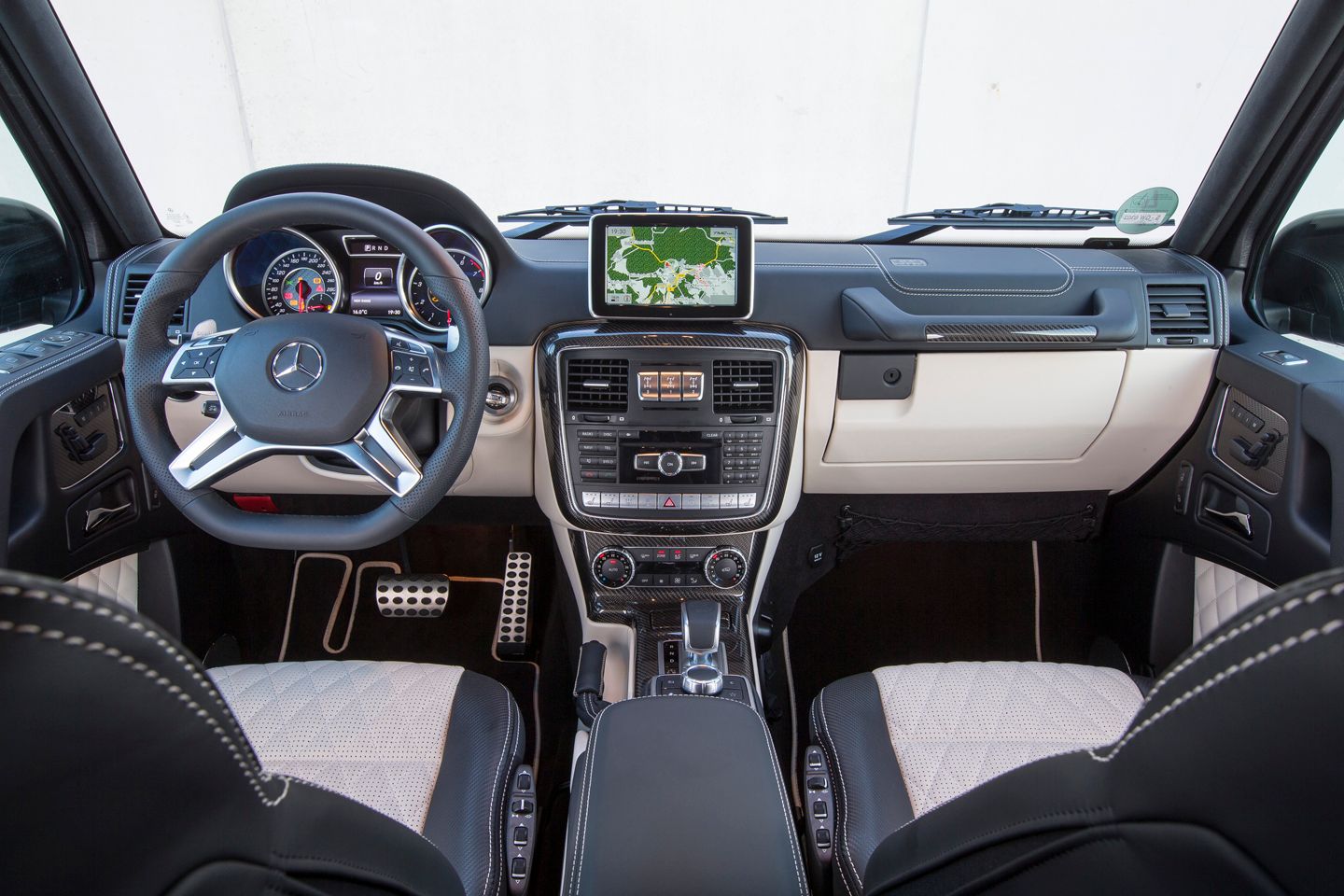
Constancy was the name of the game as far as Mercedes was concerned. Although the dash looked new, it also looked old somehow, and not in a bad way. There were other historical hark-backs. When Chris Harris tested the G 63 for PH he was convinced that the grab handles were the same as those used in ’70s W123 E-Class saloons. He also said it was the last Mercedes to have a manual handbrake, which could well be true as the discontinuation of the old foot-operated parking brakes had started phasing in a couple of years before the G 63’s 2012 launch.
Luckily another historic Mercedes attribute was present and correct in the G 63, namely fine build quality. Having said that, the headliner could start to sag on older or medium-mileage (40-50k) cars. A new design of steering wheel was added to late model (2017-2018) cars. 2015-on cars had better infotainment tech.
Space for five adults was OK, with not all that much leg or headroom for those in the rear. Inserting a child seat into the rear compartment isn’t easy either as the door aperture is quite short front to back. The normal seats-up boot space of 480 litres increased to a van-like 2,250 litres when they were folded away.
Bluetooth, sat nav, heated/electric leather seats, climate control and an electrically adjustable steering column were all standard equipment, with radar cruise, blind spot warning, ventilated seats and a rear entertainment system among the many options. Sun visors went wrong on not just the G-Class but other high-profile Mercs of the time such as the S-Class. These were reassuringly expensive to put right, though nobody knows why. Window regulators blew out too, as did the air con.
PH VERDICT
A Range Rover makes more sense than a G 63 on just about every common-sense level, but a G 63 isn’t about common sense. You’ll never fall in love with its on-road handling but you will with its character. That’s what will have drawn you to it in the first place. The look of it, the noises it makes, the build quality, the effortlessness with which it pulls a load and the terrific off-road capability all pile up the appeal and make you forget about the awfulness of the small-roads handling. Just woofling it up and down a straight road will be more than enough compensation for most owners. It feels special, maybe more special than a Range Rover, though of course that’s subjective.
Today, in 2026, a new 4.0 V8 G 63 comes with light hybrid assistance, 603hp, 627lb ft, a 9-speed TCT gearbox, independent front suspension, rack and pinion steering (woo!) and a bunch of electronic tricks to disguise the fact that it’s still a massive, high C of G, live-axle car that still won’t reach 140mph and that will still drink fuel like there’s no tomorrow. One of those 4.0s will cost you at least £185,000 in its most basic form, or well over £200k for a top-speccer. That’s before any discounts you might be able to secure (good luck with that) or any options you will probably talk yourself into adding.
Against those numbers, a well-prepped G 63 5.5 starts to look like good value at prices starting from £45,000 for left-hookers or not quite £50k for RHD examples. You will need to be able to look past the fact that a ‘cheap’ one will be over ten years old, with general wear issues to match, but with a private reg plate on it most onlookers will be fooled into thinking it’s a much younger car. The unchanging familiarity of the styling, if we can dignify it with that word, helps there too.
The most affordable G 63 5.5 in PH Classifieds at the time of writing in April 2026 was this low-mileage (54,000) one-owner 2013 car with the rear entertainment system, priced at £58,995. Throwing another £10k into the kitty will chop 12,000 miles and four years off that in this two-owner car. For £85k you could be dominating the stairs and just about everything else in the neighbourhood from behind the wheel of this 18,000-mile Brabus 700 from 2016.