

The sports car as we know it is gone. For the first time in more than 20 years, there isn’t a Porsche Cayman on sale; for the first time in 30, the Boxster is absent as well. TT, Z4, 124 – all gone, unlikely to return. The glorious Alpine A110 isn’t long for this world, emphatic proof of just how good a great modern two-door can be, and it’s hard to be too enthusiastic yet about an electric one. Toyota continues to tease us with mid-engined Yarises and cryptic WRC tests, but the fact remains that the UK GR lineup lacks a Supra or an 86. We’re already pining for F-Types like good old boys were for Es half a century ago. The Lotus Emira is a £100k prospect with a V6. Thank goodness for the Mazda MX-5…
It’s all a far cry from the segment’s heyday 20 years ago, those years just prior to 2008 when anything seemed possible. £30k in the UK bought a V8 Aussie brute, a Busso-engined Alfa beauty, an 8,200rpm Celica (with change), one of BMW’s best looking coupes with one of its best straight sixes… the list goes on. Yet even amongst all that, these three – the Honda S2000, the Mazda RX-8 and the Nissan 350Z – stood out as the cream of the crop. All with fun very much front and centre (and rearwards, come to think of it), yet with markedly different approaches.
There was the resurrection of the lightweight, high-revving Honda roadster, the kind of car that hadn’t been seen since the S800 of the ’60s; there was the 21st century reimagining of the Nissan Z cars, ditching the tech of the previous 300ZX for naturally aspirated charm; and the rotary curio from Mazda, another sports car that removed the twin turbo setup of its predecessor for an enticing value proposition. In 2008, an RX-8 R3 (the facelift) cost £24,995, the 313hp 350Z was £26,795, and an S2000, £28,000. All are longstanding members of the PH Heroes hall of fame. You know they’re great, we know they’re great; the demise of the traditional sports car is a nice hook to hang a retro test on, but really, no excuse was necessary. These are the modern classic coupes to get excited about.

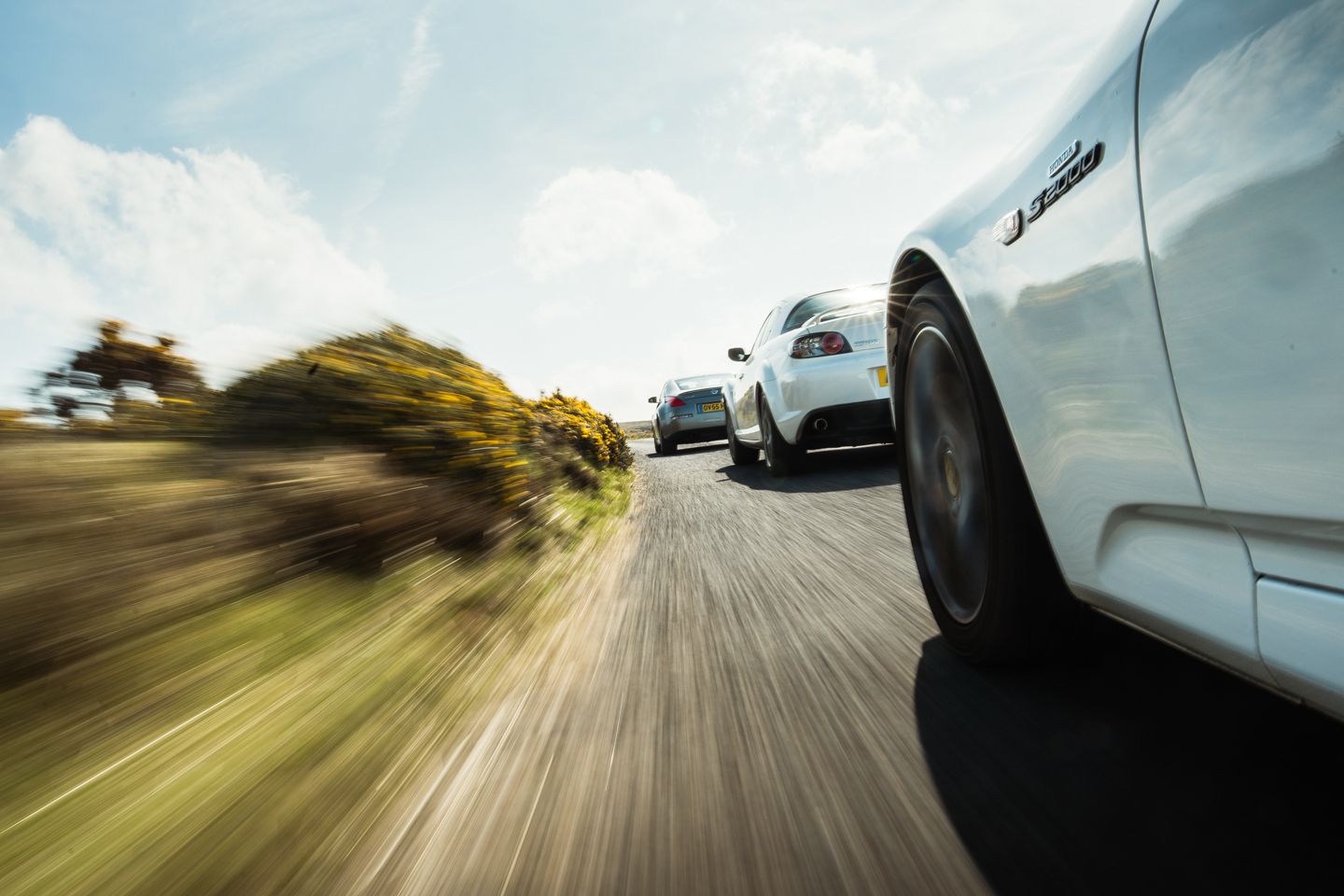
While the S2000 is the oldest design here, arriving in 1999, all are very much of the same era, with the Mazda and Nissan launched in 2003. All hung around for a good while, too, the Honda surviving until 2009, the Mazda killed off (by emissions – shock) in 2010, and the 350 morphing into the 370Z before the decade was out. At a time of disposable income, 100 per cent mortgages and cheap credit, all were popular: HowManyLeft suggests there were almost 7,500 S2000s on our roads in early 2009, and about the same number of Nissans, joined by 23,500 (!) RX-8s, with a few more R3s still to come.
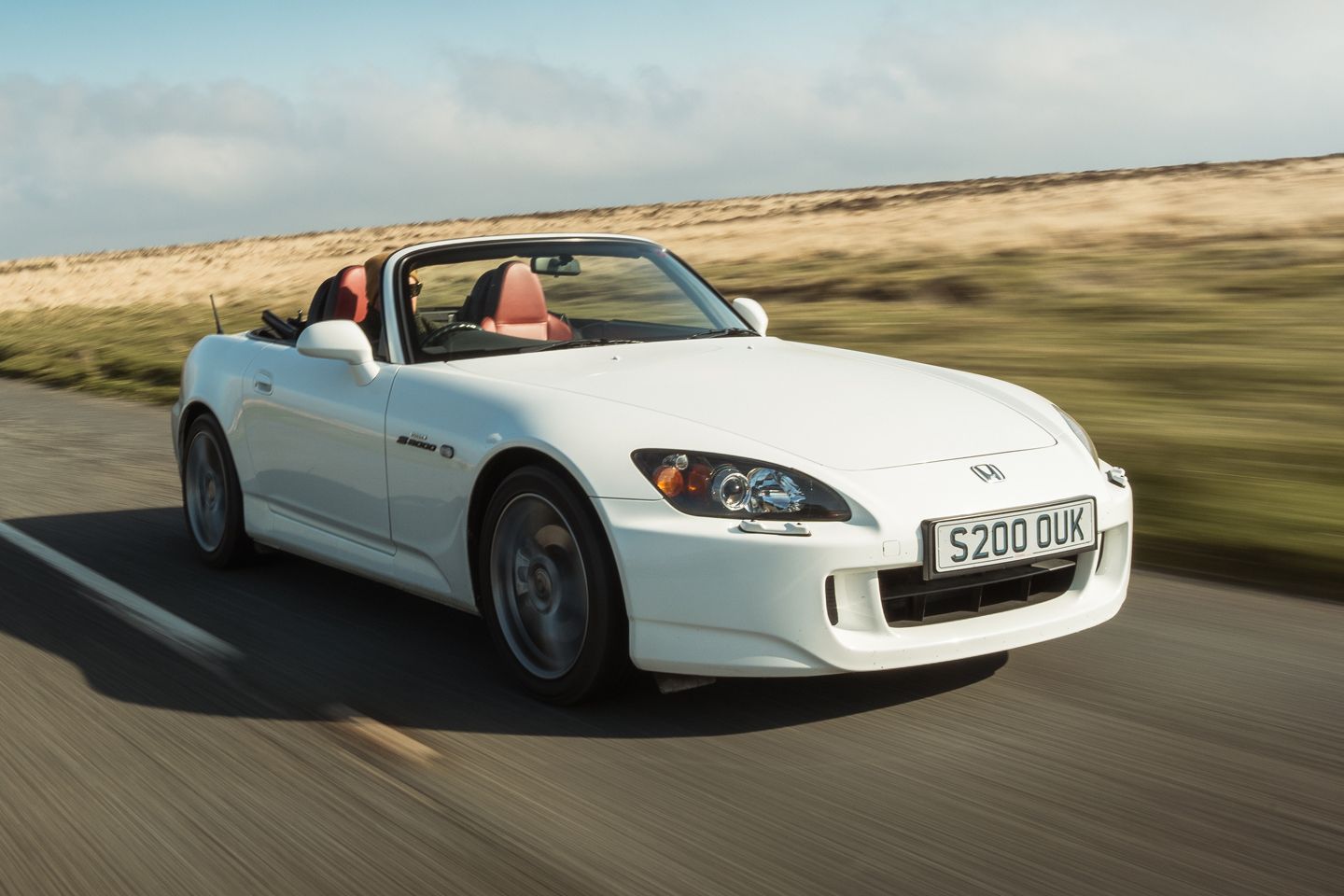
Their respective fortunes have diverged somewhat since then. The Honda, despite never really being regarded as the best sports car in the world – ‘It’s fast, fun, pretty and capable, but it’s not the last word in sub-£30K, two-seat, soft-top, rear-wheel drive motoring’, read one 2008 review – is now a VTEC pin-up. Never replaced by Honda, it enjoys a special place in the hearts and minds of fans thanks to its looks, engineering and front-engined, rear-drive purity. Once as cheap as £4k, the clamour for combustion (and with a few more having been smashed) means S2000 prices now start at £12k; you’re looking at £15,000 for one of the more desirable facelifts. For a limited edition GT 100 like this one, set aside double that.
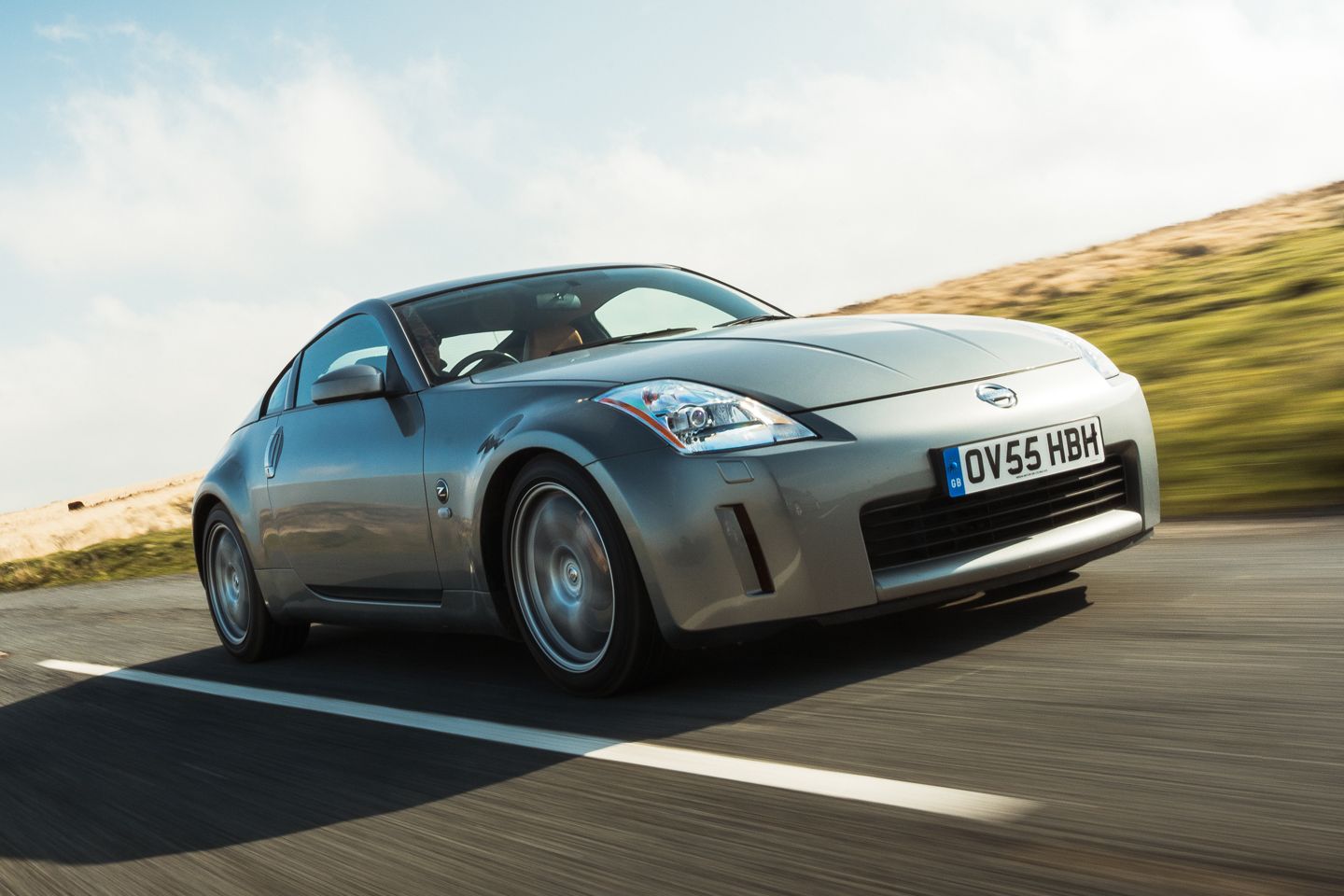
The 350Z could never claim such treasured status, despite evoking a terrific sports car past for its maker as well, for the simple fact that it was replaced by the 370. The later model wasn’t as handsome, but it boasted more power, spawned a NISMO variant, and soldiered on much further into the 2010s than it probably should have. So this Z doesn’t have that one-of-a-kind specialness associated with the Honda. The benefit of that being that there are late, decent-looking Zs for sale at £8k. Spend £15k and you can get an absolute minter. Which, for some obvious (and a few less obvious, which we’ll come to) reasons, ought to appeal in 2026.
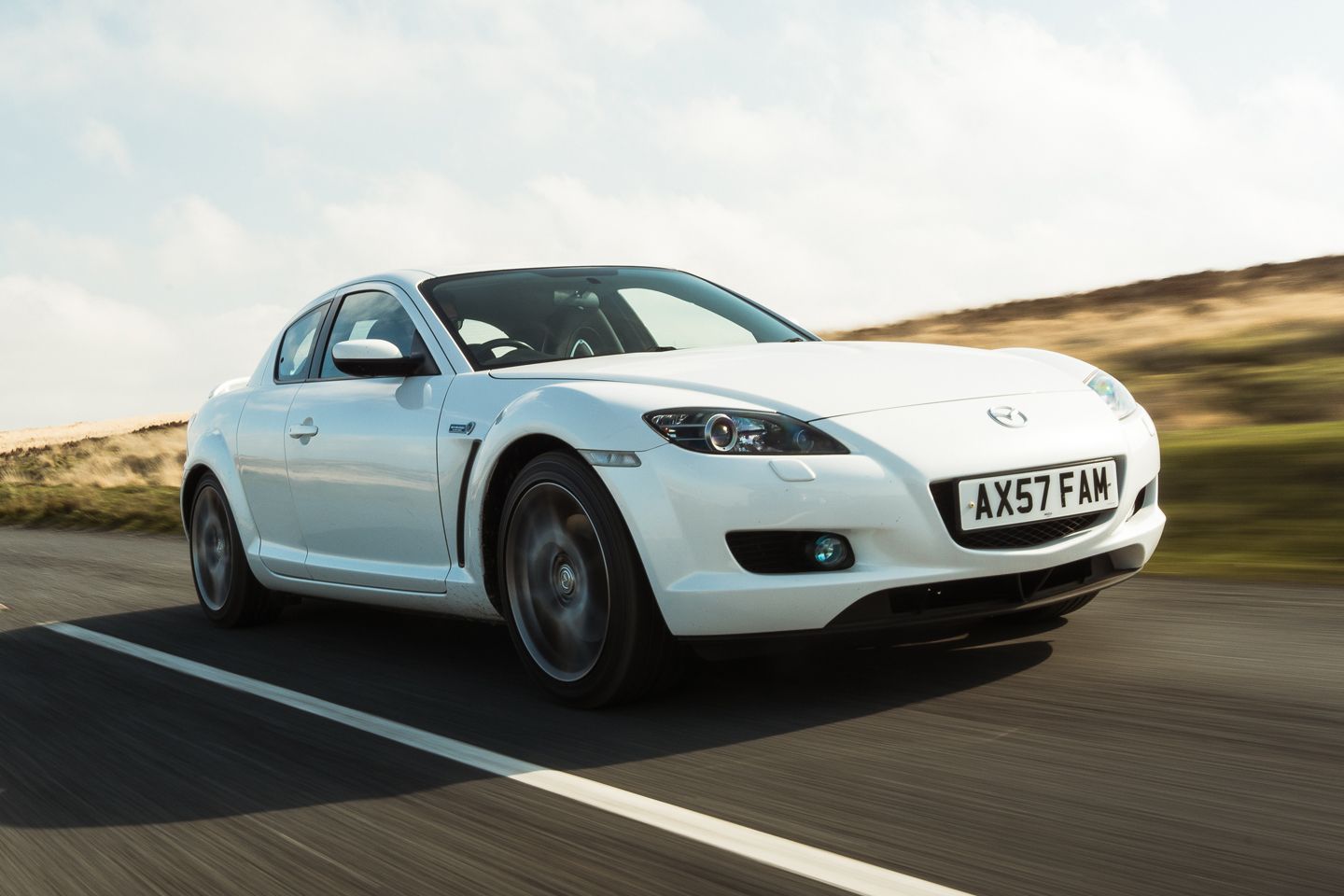
Then there’s the RX-8. Goodness gracious, the RX-8. An entire feature could be dedicated to the Mazda as a used car over the past 20 years, but suffice it to say that many weren’t cared for in the exacting fashion that rotary engines require. Meaning that many expired long before their time. Add that to rust, formidable running costs (even in this company), a multitude lost to the oversteer overlords, and you start to see why its numbers have been decimated: fewer than 10 per cent of those RX-8s on our roads in 2009 survive registered to this day. As recently as 2024, MOT failures were being scooped up for banger racing. It’s a horrible fate for a car so revered when new and which, in its own esoteric fashion, remains compelling to this day. It will also help explain why values are slowly but surely creeping up, as the best cars have survived the wipeout with dedicated owners to keep them going. Good on them.
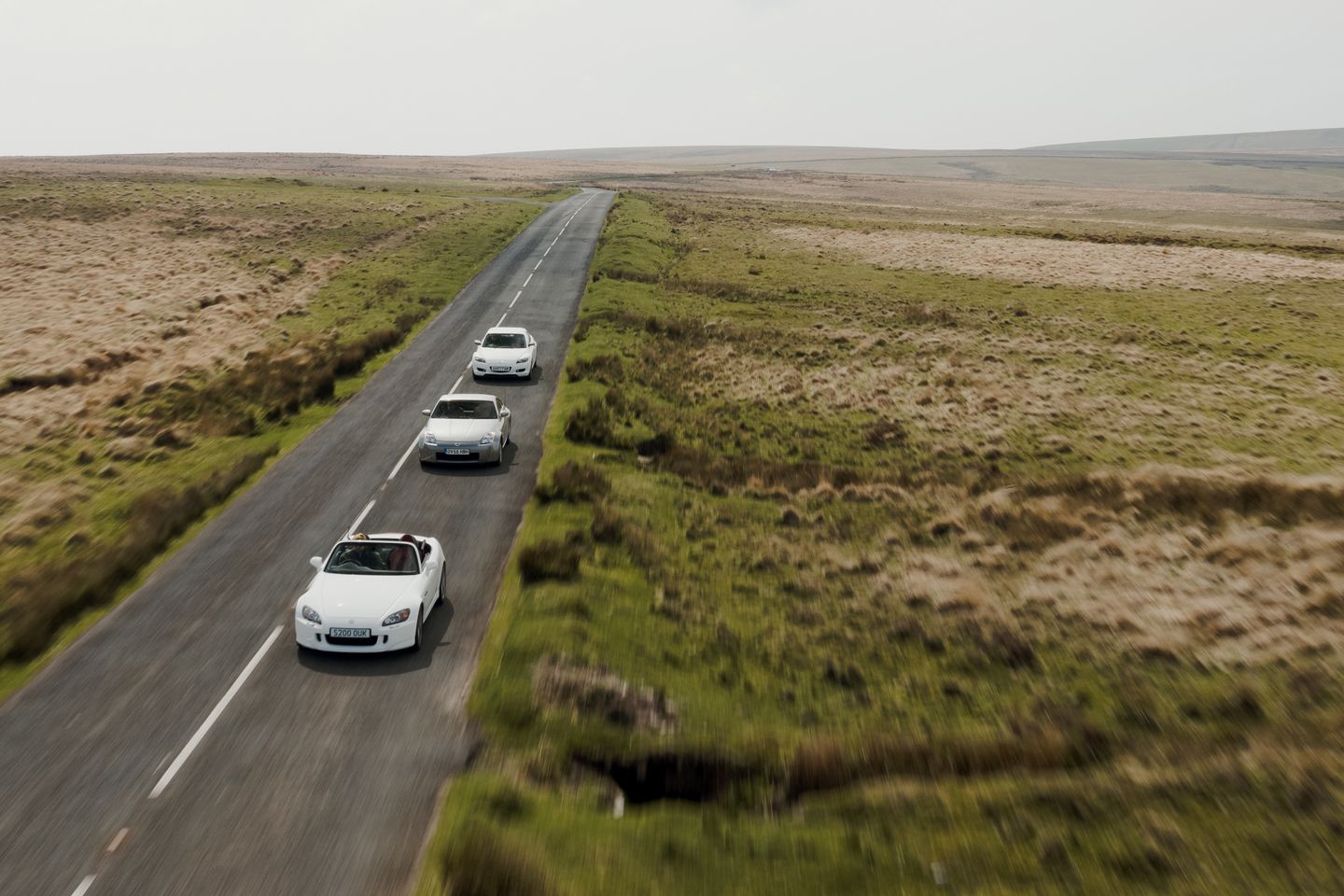
The test begins in the RX-8, mostly because it requires a trek from its home at Mazda’s heritage HQ in Tunbridge Wells to Exmoor – meaning plenty of time to get acquainted. Even when warming up, there’s no escaping the uniqueness of the engine, blessed with so little inertia – and such a sweet six-speed gearbox – that every action is gratifying. There’s an immediate Mazda-ness to the RX-8, a cohesion across the control weights that brims you with confidence from the off. These cars (in)famously need a lot driving, so it’s good that everything is absolutely at your disposal to do just that. Fears about stalling when cold, using too many revs when cold or generally making a mess of a very specialised engine are swiftly allayed by just how responsive and synchronised an RX-8 feels.
As the roads get faster, the car cruises quite maturely, the Bilsteins of this 40th Anniversary car find their flow, and it becomes second nature to use about 2,000 revs more than usual (plus at least a gear lower than you’d think) to get along. This little torque and this many revs ought to be a chore, and perhaps my disposition towards the RX-8 is more favourable than most, but when the car is such a joy to operate, it really is a pleasure to exploit an RX-8’s potential. The first half of a tank netted 24.5mpg, too…
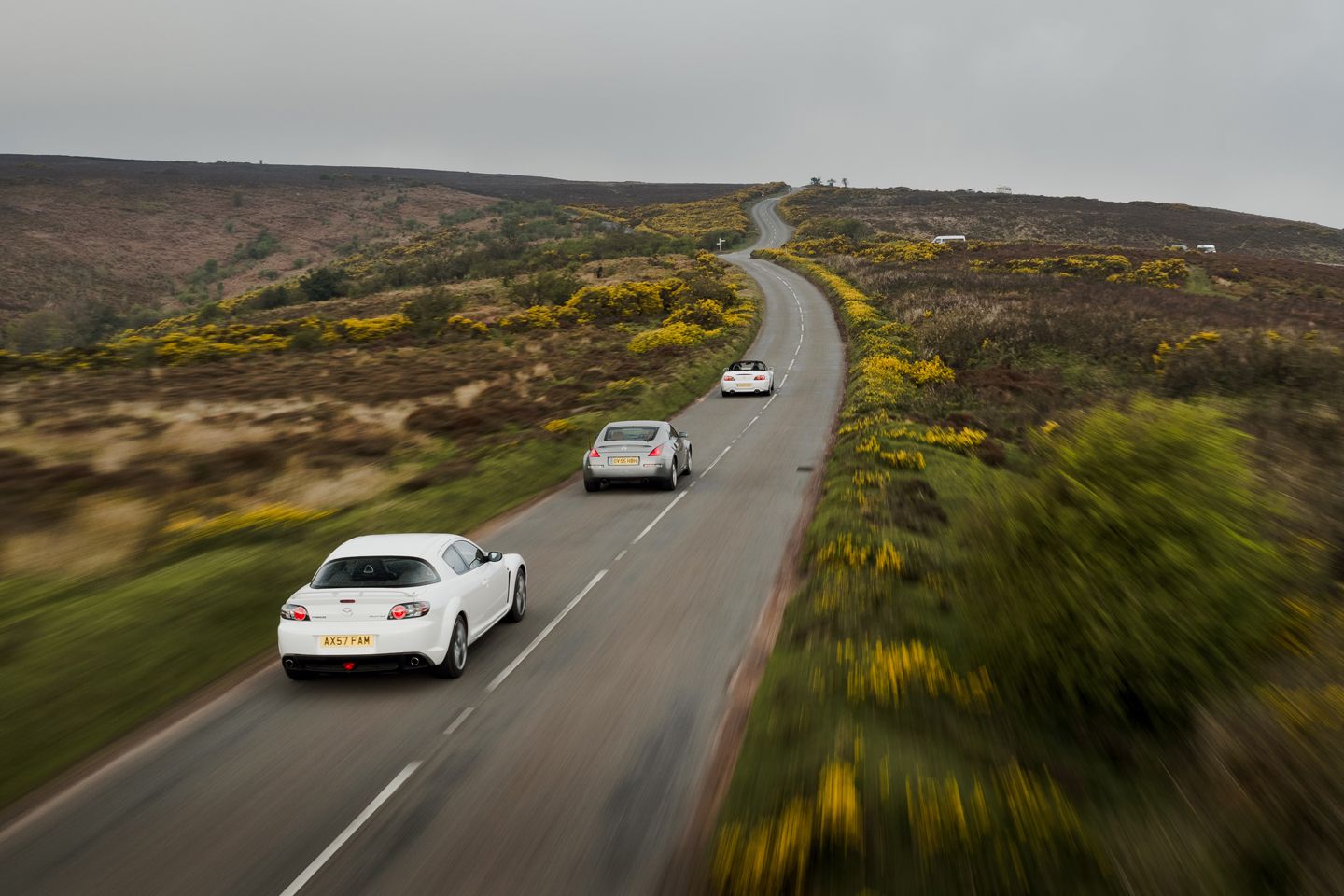
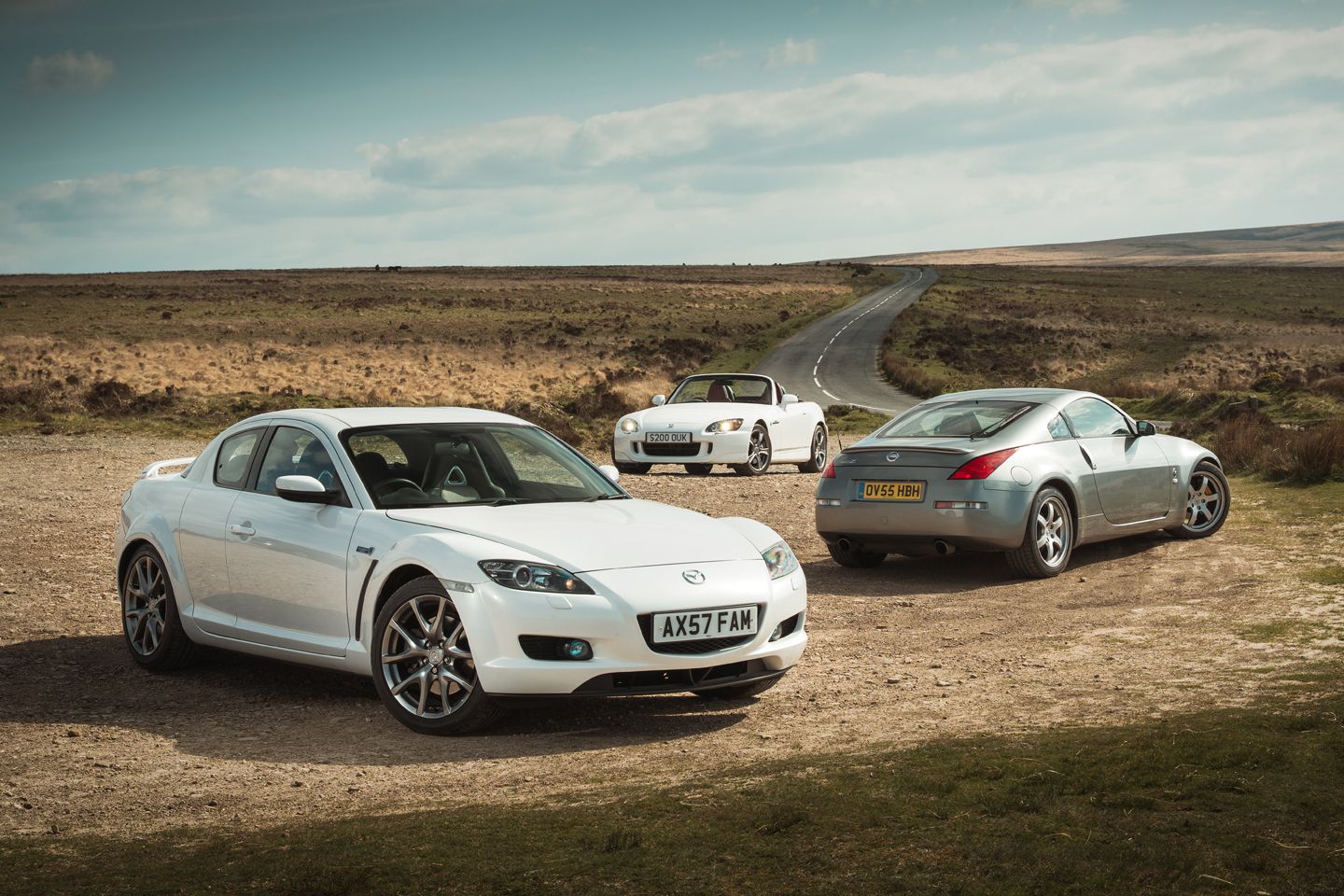
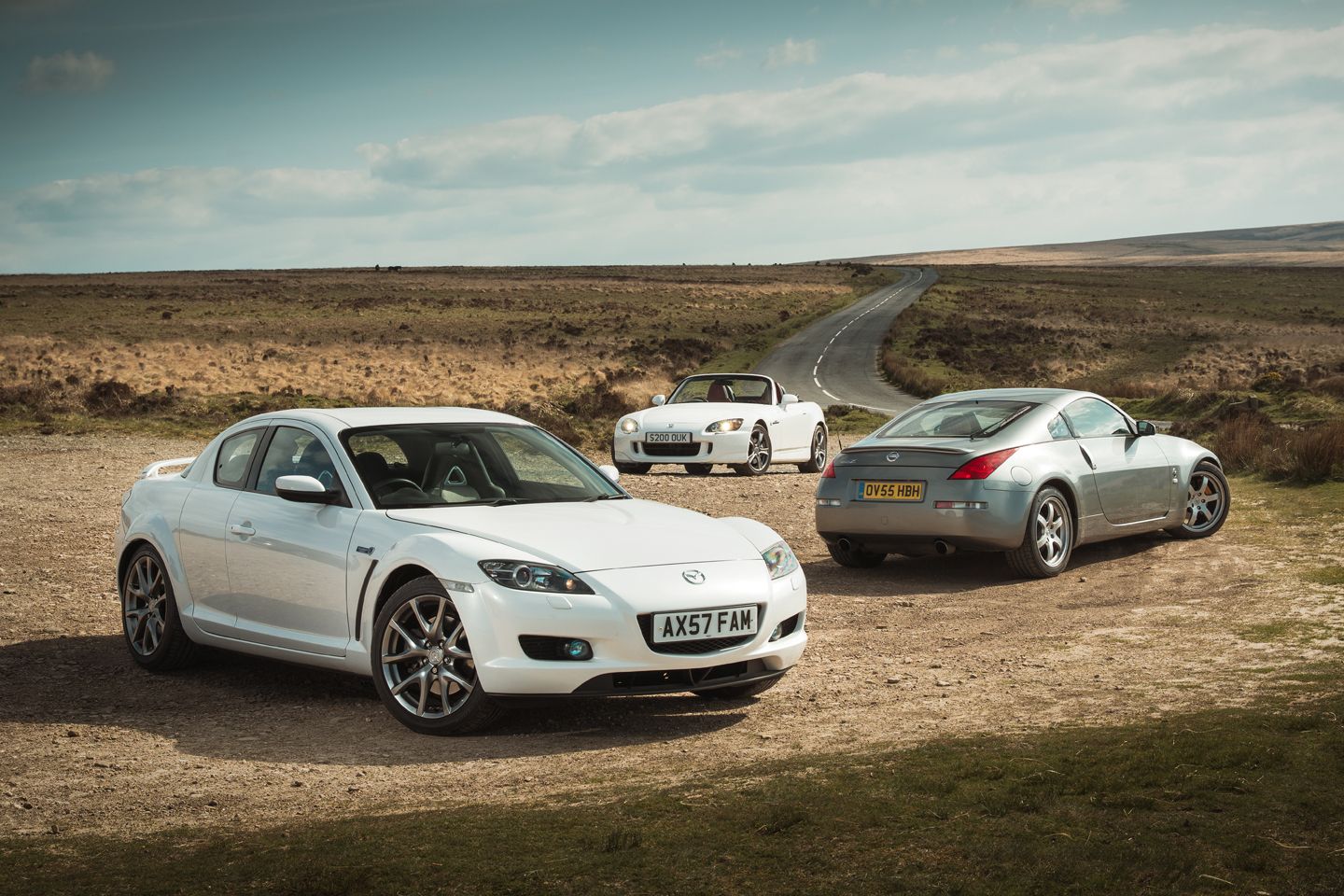
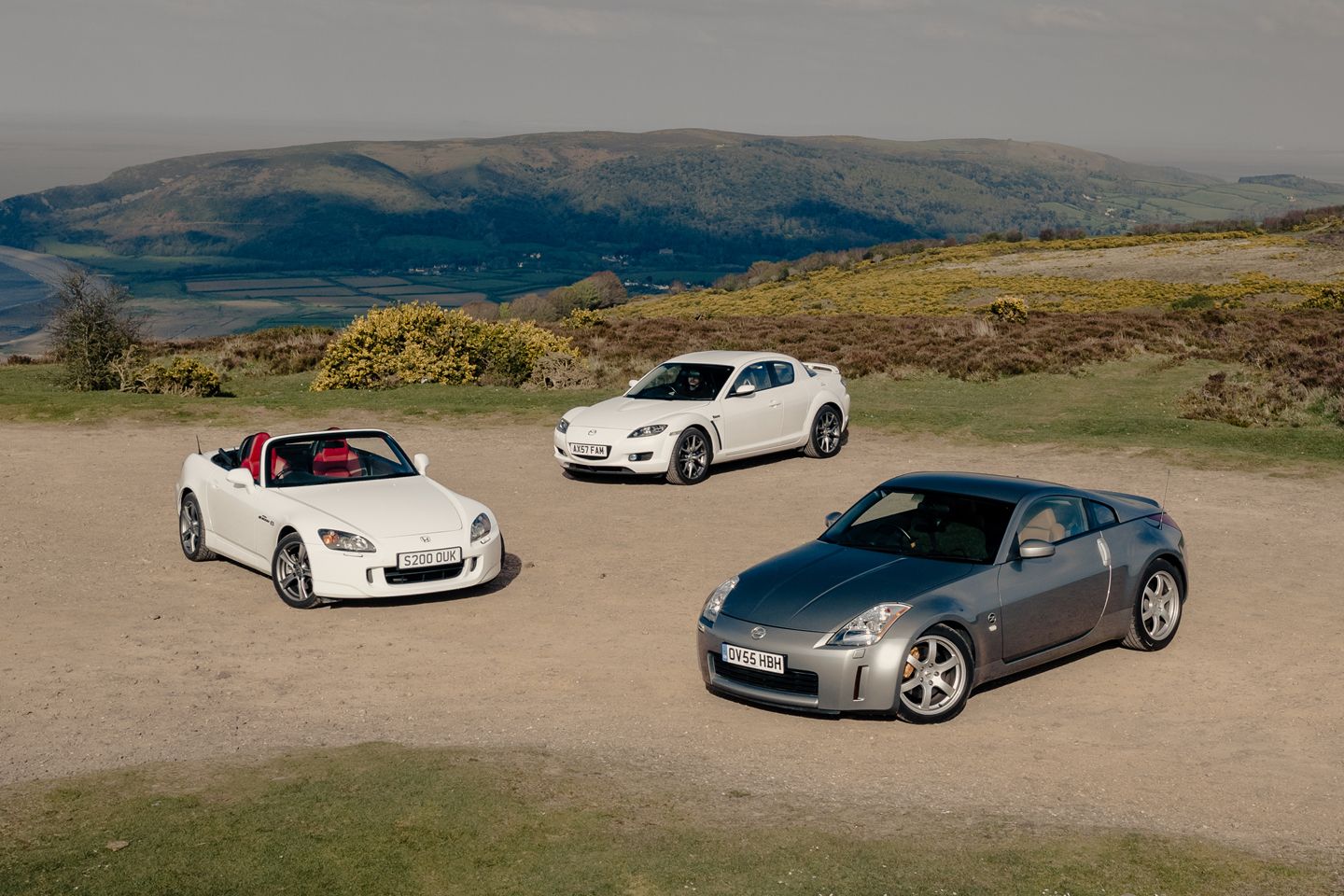
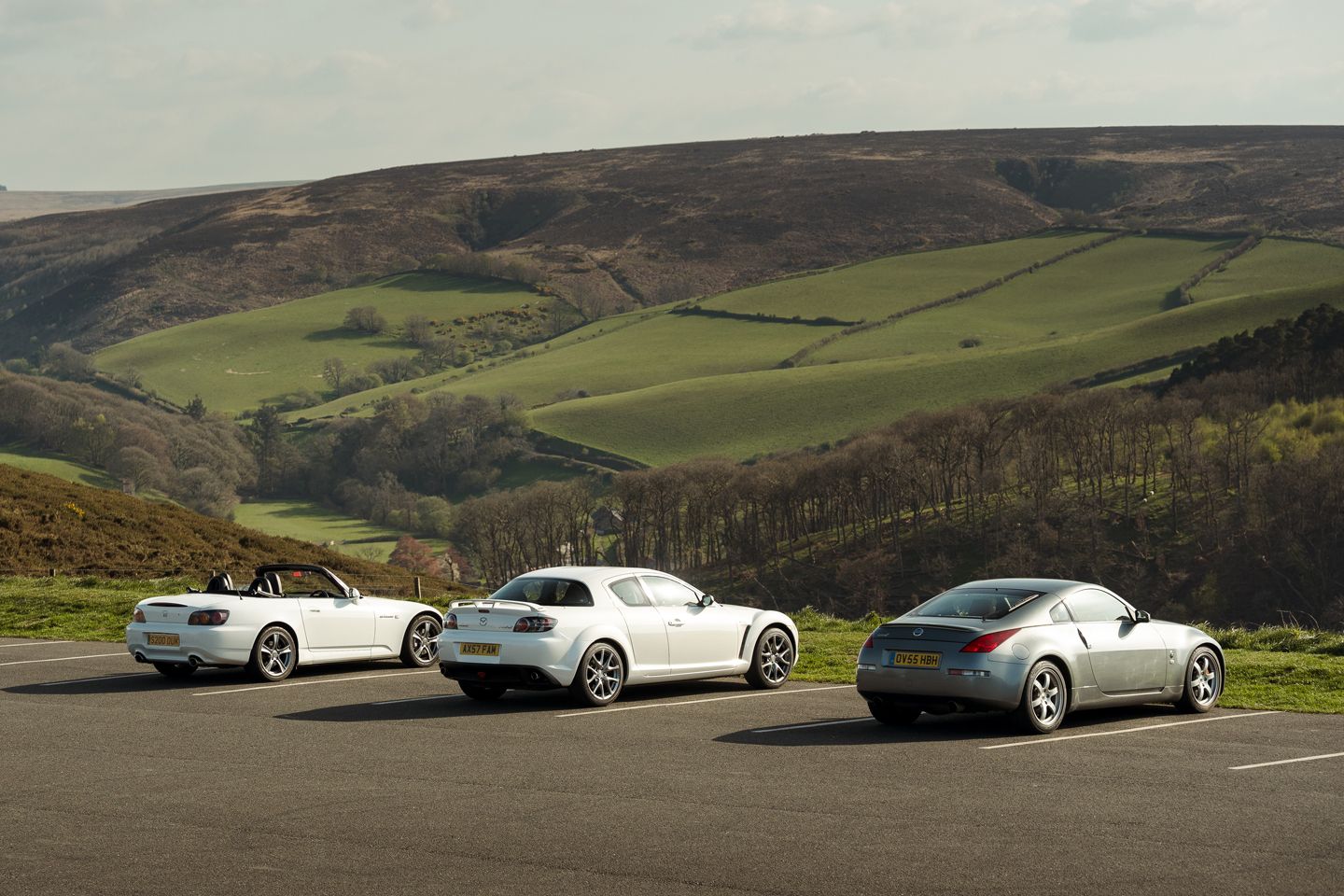
All three lined up on the edge of the Earth (otherwise known as Exmoor National Park) isn’t half a sight for sore eyes. Such is the popularity of the Nissan, Honda and Mazda in the aftermarket that seeing them bone stock is the first nice surprise. But also in 2026, it’s the compact dimensions of all three that are so pleasing, alongside the relative lack of adornments: these are taut, distinctive, clean designs; of their time undoubtedly, but also attractive all these years on. Even embellished from the factory – the 350Z’s GT pack wheels, the RX-8’s spoiler, the Honda’s leather – none feel OTT, which will surely only aid their appeal as they age. One of these parked outside is going to raise a smile, even on the days you can’t drive.
The Nissan is built like a loosehead prop, all powerful haunches and unflinching muscle, yet there’s some real finesse to the surfacing and details as well. Remember the first Fairlady Zs arrived in other markets in 2002 – or 25 years ago next year. It remains a crisp, cool coupe a quarter of a century on. More stylish than its replacement, too. The RX-8 maybe isn’t as conventionally pretty, though it’s no less fascinating: the engine keeps the bonnet line very low, the wheelbase that fits rear seats in makes for a good stance, and you’ll never tire of the rotary easter eggs dotted around the design. Furthermore, the Mazda can claim the rarely seen accolade of appearing for production looking sharper than it did as a concept; what was a tad plain for the motor show was snazzier for the showroom.
The same is true for the S2000, the 1999 production car undoubtedly prettier – though certainly influenced – by the 1995 SSM concept. It goes to show just how much the Japanese makers cared about these cars that they really went the extra mile to ensure the showroom specimen was something special. It’s easy to make an attention-grabbing concept; far harder is to transfer that glamour to the road. Much less build upon it.
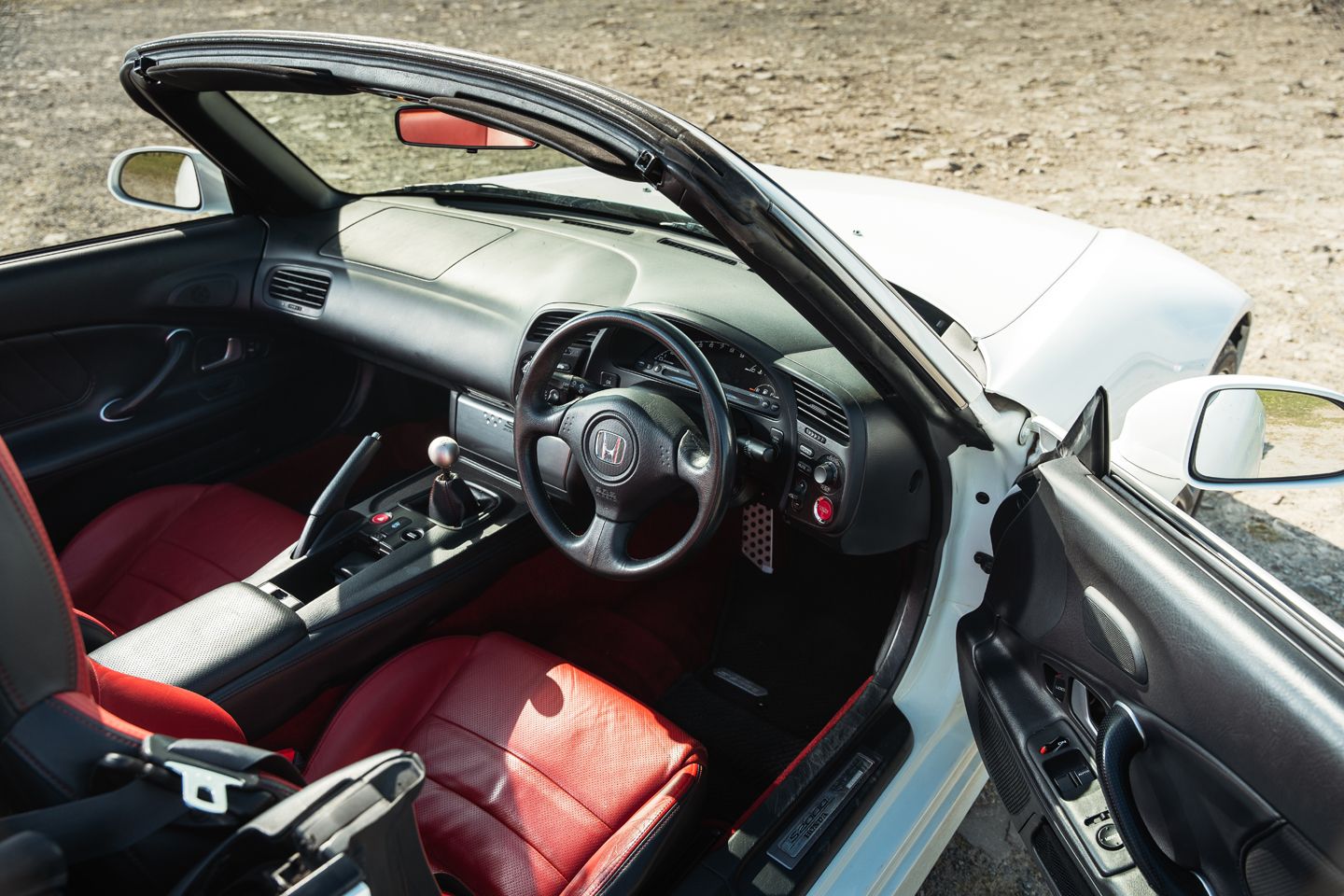
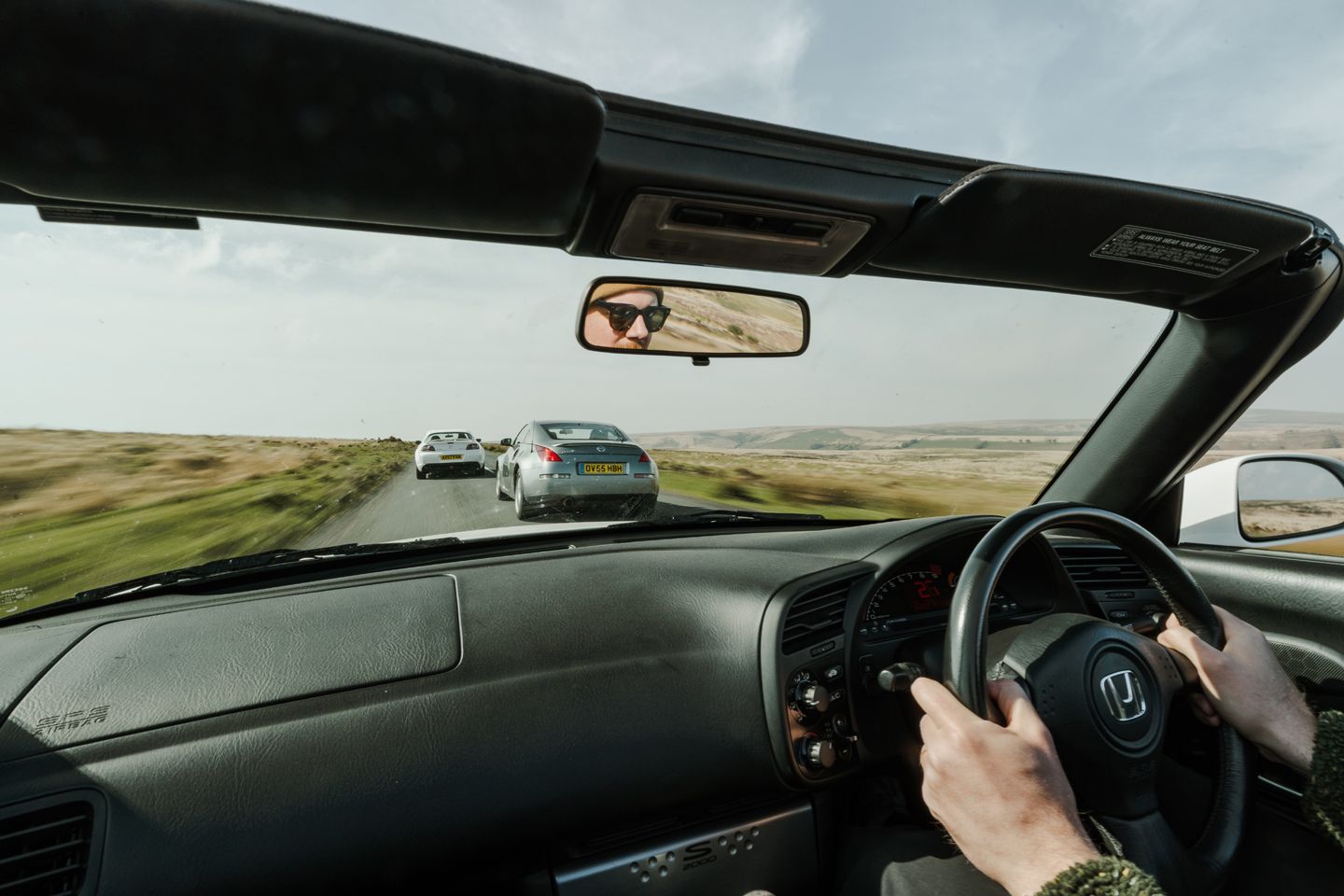
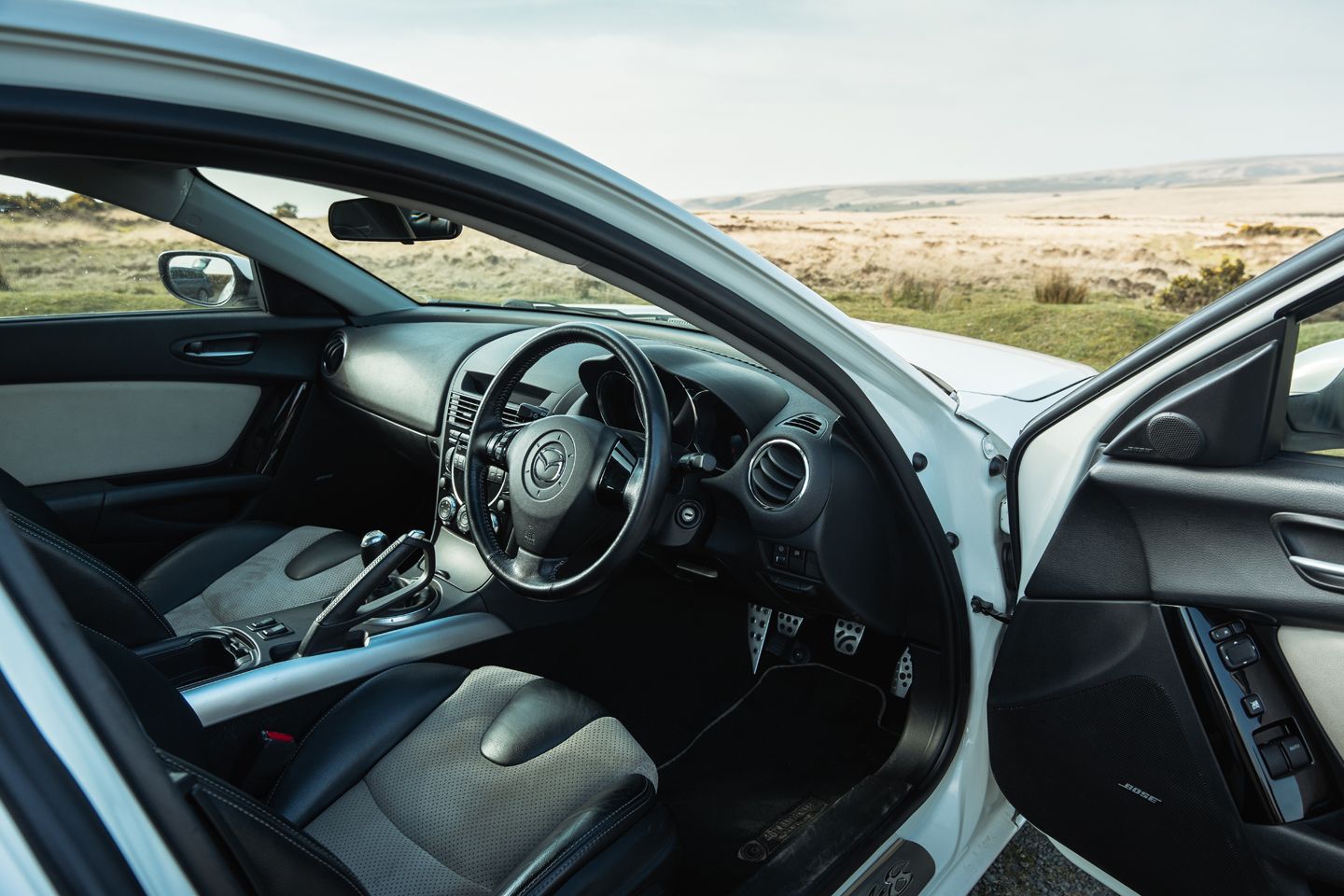
The inside of the S2000 can be seen as a less extreme interpretation of the SSM’s vibe, driver’s view dominated by a digital dash and all the important controls a short reach way. It’s as unashamedly focused on the driving as something like an LCC Rocket, or perhaps even a motorbike. You just need to worry about your shifts, your revs, and your steering, with even the radio tucked away behind a plate, and the controls that are there to do that are perfect: unadorned wheel, great clarity to the tacho (still), and that gorgeous titanium lozenge of a gearlever that deserves a spot in MoMA on its own. For a sense of sports car occasion, i.e. prioritising the important stuff and minimising distractions, the Honda nails it.
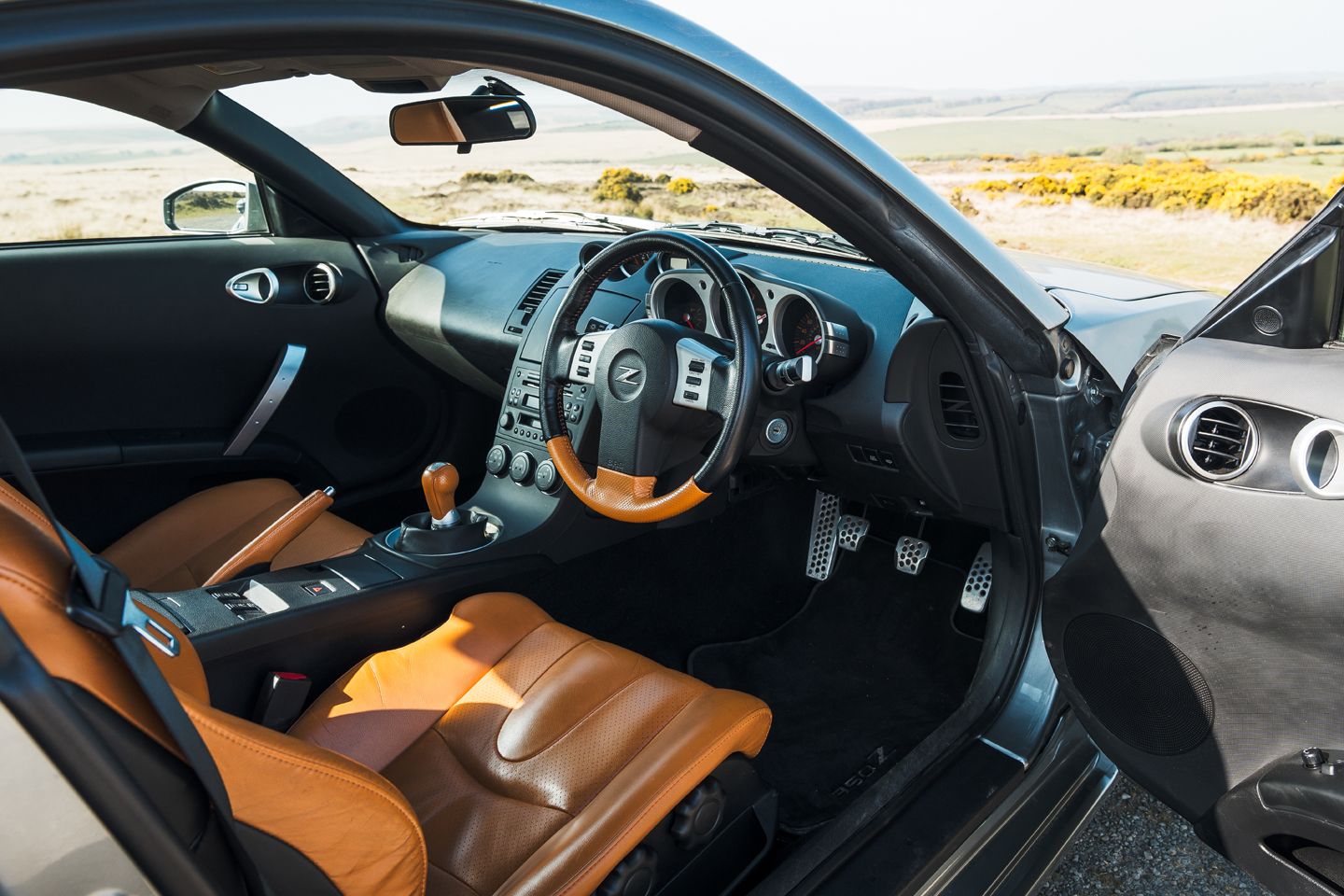
The biggest distraction in the Nissan is a brace of seats that seem to have come straight from the set of Footballers Wives, an incredible orange never seen before or since. (If the cars are from the 2000s, the gags should be also.) And imagine asking anyone born this century what the tape player is there for. It too, however, makes the driver feel right at home, seat going low and central tacho (with its modest red zone in this company) always visible. While the 350Z can feel basic in places, with vast expanses of plastic on the door cards and a huge cubby where the nav would have sat, nice touches like the auxiliary gauges set the right tone. The Mazda’s dash is the most businesslike of the three (ideal for those company car drivers in their 1.3-litre, four-door family cars two decades back), but it offers another decent driving position with the important stuff – fuel level and oil pressure – rendered nicely. Seeing a revcounter read to 10 and only going red shortly before will never, ever get old.
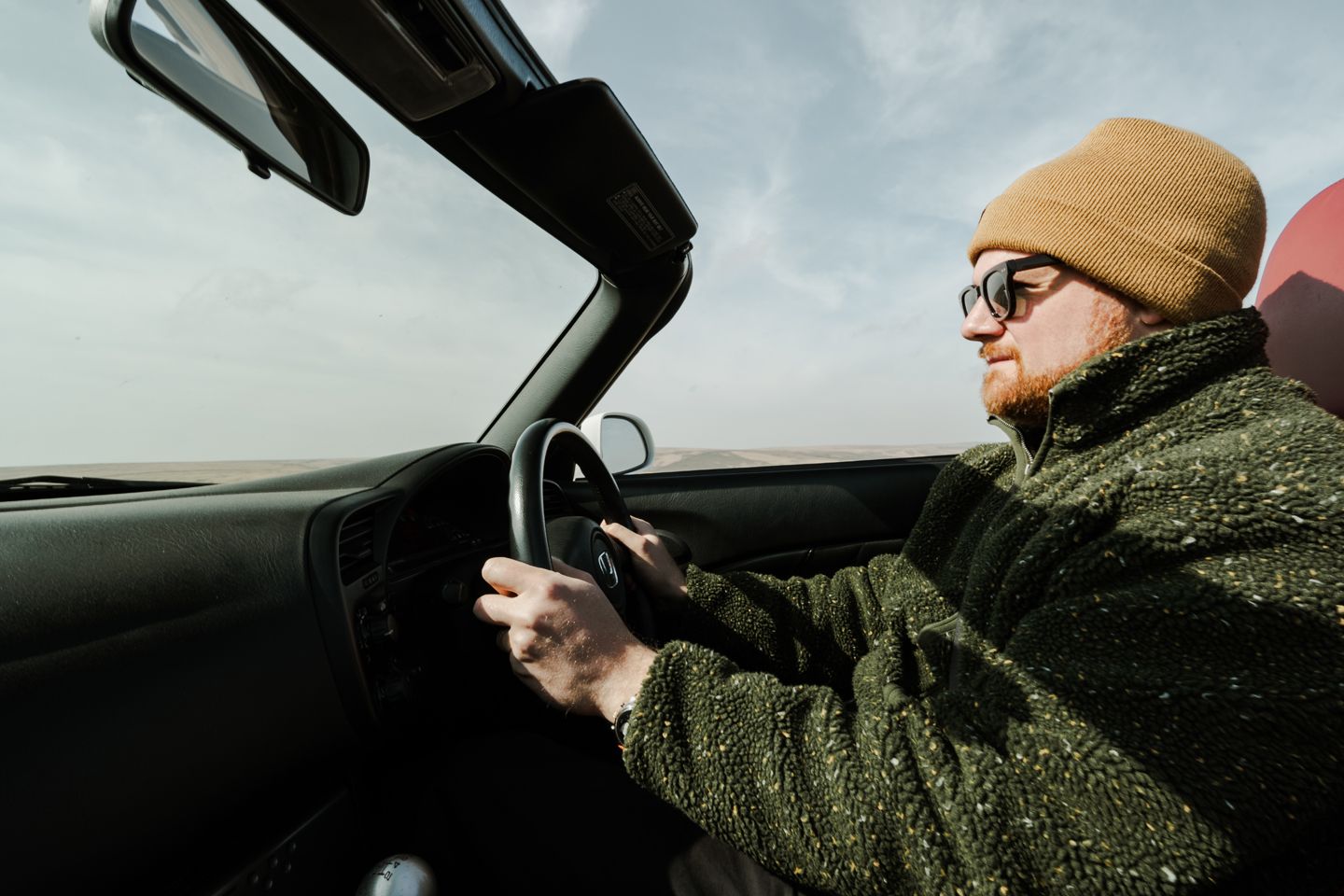
Hopefully this isn’t contentious to say, even if it still feels like it might upset a few: the Honda S2000 isn’t an immediately beguiling car to drive. The cohesiveness that characterises the RX-8 experience from the get-go is absent here, components working individually rather than as a collective. So there’s a wonderfully precise brake pedal and probably the finest gearshift ever to grace a sports car, but also numb steering and a firm suspension setup that’s writing cheques that the structural rigidity can’t possibly cash. All while you’re sat higher than is ideal. The mismatch is frustrating, and makes it hard to establish a flow.
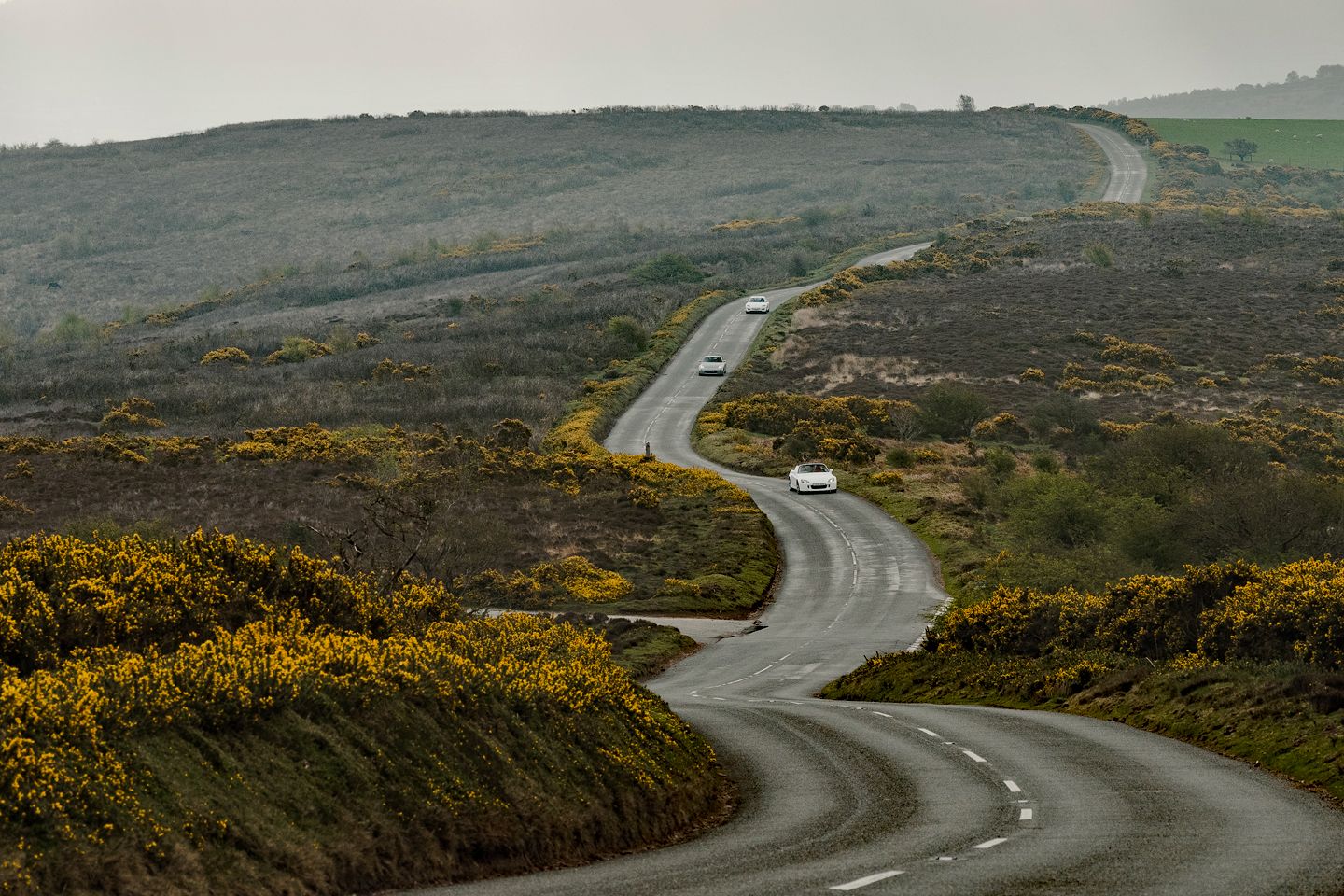
But we all know what comes next. Twenty years ago the howl of a Honda F20 on its spicier cam was enough to gloss over some flaws, and in a time of mild-hybrid mediocrity it’s little short of spellbinding. The final third of the rev range, with peak torque achieved at 6,500rpm and on the way to max power at just over eight, is manna from heaven for a sports car. It gets faster and faster almost all the way to the limiter, intake growl becoming a full-on shriek and with ratios to take full advantage. Safe to say that bit most certainly still feels pretty beguiling.
And there are thrills in the S2000, for sure. Its Vehicle Stability Assist is one press away from off (as for the other two cars as well), and with the revs kept high it will corner in a more spirited fashion. But it always feels approximate and a tad skittish, your inputs with the steering never as precise as, say, the throttle inputs on downchanges. There’s magic in here, and when it’s good the S2000 is really good, but those opportunities are too seldom. The fact remains that there are front-drive Hondas – Type R ones, yes, but front-drive ones nonetheless – that are more satisfying from behind the wheel.
Safe to say that there aren’t any front-drive Nissans that are more entertaining than the 350Z. It’s easy to dismiss the old Zed as the muscle car in this company, the bruiser that’s all big engine and bigger attitude, but that would do a disservice to the Nissan. There’s some real polish and sophistication to the way it drives, with much nicer steering than the Honda, an abiding sense of superior stiffness (thanks not just to the roof, but also its very prominent braces), and good balance. There’s clearly a big lump of V6 up front, though the experience isn’t totally dominated by it. With another 100lb ft over either Mazda or Honda, there’s easy effort charm abundantly available in the Nissan, happy to saunter along in fourth gear in a fashion totally alien to the other two.
But there’s plenty more to discover, too. This must be the best third-placed gearbox ever in a triple test, weighty, short and accurate in throw, if without quite the same tactility of the others. The gutsy old engine might not be the revviest, calling time below 7,000rpm – remember the later HR actually stood for High Rev – but response is good and performance ample. If you want to grab second gear and fling it at a sharp turn, the Z is more than game, its steering accurate and composure impressive.
It’s no mere drift machine or straight-line hot rod, basically, with much more dynamic depth on offer. That being said it doesn’t take long to discover the Z’s additional talents should you go looking; while the S2000 requires hurried inputs to gather up, time seems to slow down in an oversteering 350, and correcting it feels like the most natural process in the world. Two decades on from Tokyo Drift, it’s little wonder DK made it look so easy. The 350Z may not have been a revolutionary sports car, but they don’t all need to be. Sometimes you just need power at the front, drive to the rear, a burly six-speed and a limited-slip diff. Predictable, old-school fun can be just as rewarding as any other.
The Mazda combines elements of both S2000 and 350Z in its drive. More even than the Honda it needs revs, with even less torque to move more weight. And nothing will ever kick in, either, apart from maybe the fuel light. On the other hand, no car – not even the S2000 – feels as comfortable at several thousand rpm as the RX-8, the Renesis wankel spinning apparently unencumbered by anything so crude as metal and oil. Initially the approach feels dangerous, worried as you are about such a fragile powertrain, but it’s undoubtedly where the RX-8 delivers its best.
The sound is like a Group C Nutribullet, whirring and buzzing through middling revs before the full brap, crackle and pop comes from 6,000rpm. It’s a totally addictive aural experience, another one alien in a modern context and even more captivating for it. Soon you’re desperate for the shorter final drive of the later R3, to get 231hp up in those epic upper echelons just a little sooner. To heck with the costs – this is truly spectacular. Not often the six-cylinder coupe has the least exotic engine, either…
With so little weight up front (and shoved right up towards the bulkhead), the RX-8 turns in absolutely beautifully. The feeling of all the important weight being close around you and carried low makes long corners feel great, and while it won’t skid as insouciantly as the Zed, requiring more commitment and revs, it feels if anything even more natural when it does. Often lost in the angst around its engine is the fact that a lot of what underpinned the RX-8 was also found in the NC MX-5. So imagine what a 9,000rpm, hardtop MX-5 might drive like, with even less weight up front. A simplistic take, sure, if an easy way to explain just how joyous an RX-8 is to drive.
Before getting too carried away, it’s worth pointing out that, of course, none of the three is perfect. You want more torque to better access the Mazda’s finely wrought balance, but that would add weight in the wrong place and compromise its fleet-footedness; the Nissan’s engine lacks star quality in this company, even if its chassis does not; the S2000 wants the attention of whoever did Honda’s later electric steering. Despite these things, all three prioritise driving pleasure above all else, and that deserves celebrating now more than ever.
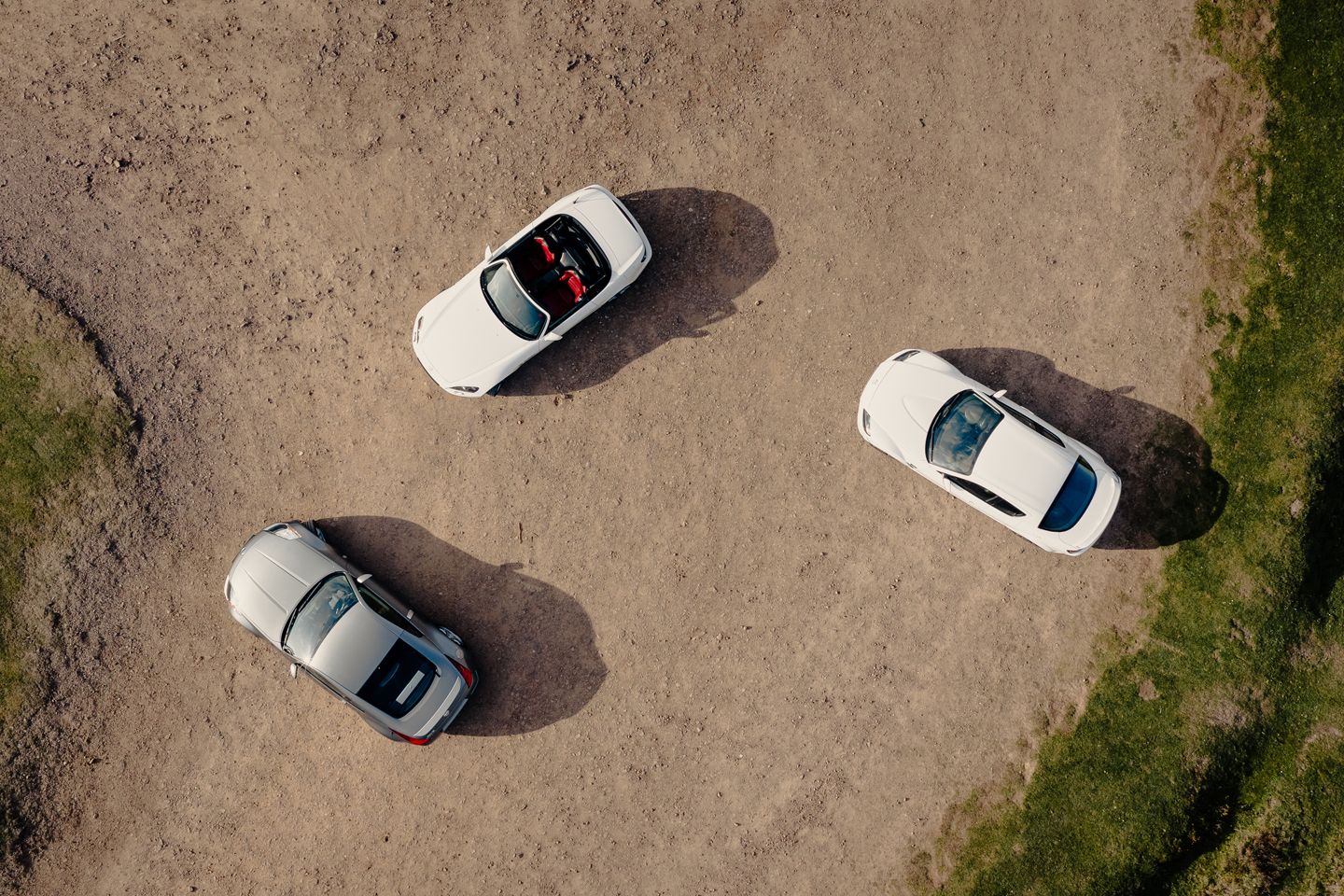
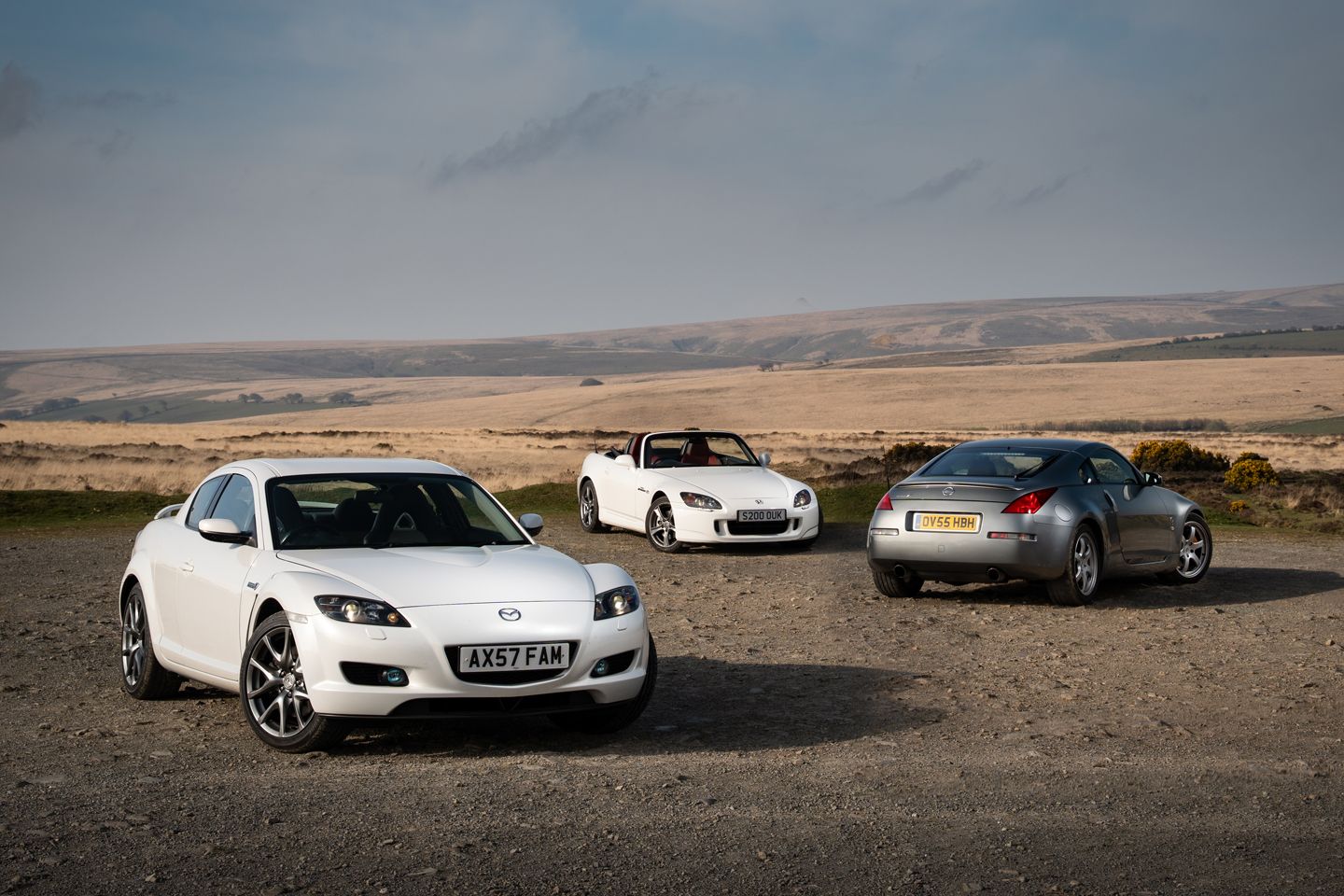
They all demonstrate just what’s possible by keeping it simple, too, with passive suspension, conventional setups and no modes to meddle with; it’s an approach, in fairness, that largely extends to today’s MX-5 (with a few concessions to modernity). A sports car built right doesn’t ever need a driver to choose their brake pedal feel or adjust the throttle map, and a fabulous day in all three proves that (as well as many other things) beyond doubt. Faster, more powerful, more valuable cars of a similar remit exist, but never was S2000, RX-8 or 350Z less than enthralling company.
Is there a winner? Not really, no. There’s only one car here that will work if you want a drop-top, for example. And another that’s the sole 2+2. They’re different sports car experiences for different sports car buyers, all eminently recommendable in their own intriguing ways. Even with the current cost of fuel and VED (and oil), the style and the swagger of the Nissan, the raw energy of the Honda and the weird wonderfulness of the Mazda are all hugely likeable. They remind us how special the humble sports car can be, and that 20 years ago was definitely as good as we remember. Perhaps better, in fact. All with a combined value of less than a new RS3. The plight of new sports cars is sad, no doubt, but don’t be surprised if it seems much less of a problem behind the wheel of one of these three.
SPECIFICATION | HONDA S2000
Engine: 1,997cc 4-cyl
Transmission: 6-speed manual, rear-wheel drive
Power (hp): 240@8,300rpm
Torque (lb ft): 162@6,500rpm
0-62mph: 6.2 sec
Top speed: 150mph
Weight: 1,285kg
MPG: 28.3
CO2: 236g/lm
On sale: 1999-2009
Price new: £28,000 (2008)
SPECIFICATION | MAZDA RX-8
Engine: 1,308cc twin-rotor rotary
Transmission: 6-speed manual, rear-wheel drive
Power (hp): 231@8,200rpm
Torque (lb ft): 156@5,500rpm
0-62mph: 6.4 seconds
Top speed: 146mph
Weight: 1,381kg
MPG: 25.2
CO2: 284g/km
On sale: 2003-2010
Price new: £24,995 (2008)
SPECIFICATION | NISSAN 350Z
Engine: 3,498cc, V6
Transmission: 6-speed manual, rear-wheel drive
Power (hp): 280@6,400rpm
Torque (lb ft): 268@4,800rpm
0-62mph: 5.9sec
Top speed: 155mph (limited)
Weight: 1,446kg
MPG: 24.1
CO2: 280g/km
On sale: 2003-2009
Price new: £26,795 (2008)