

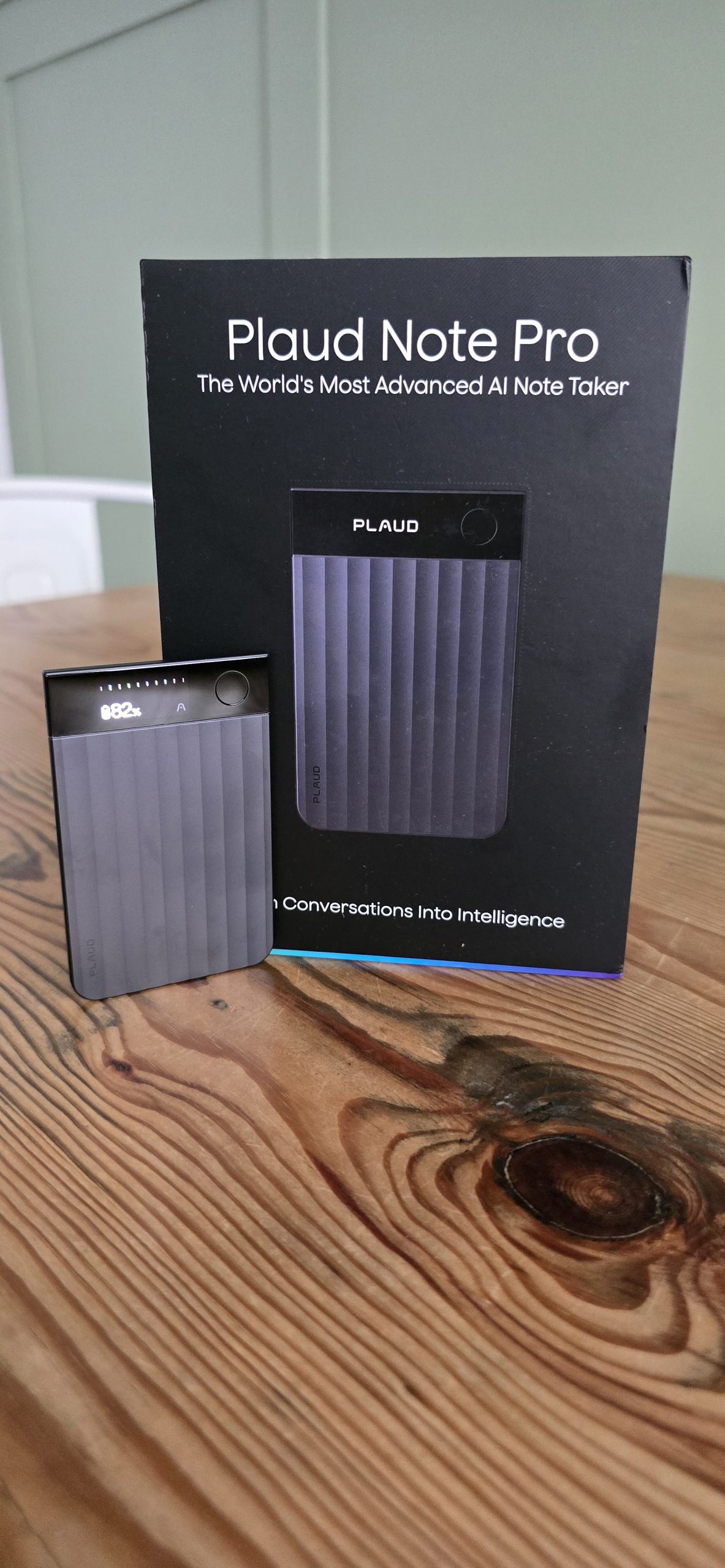
It’s a Tuesday here at Coolsmartphone Towers, and the postie has just dropped off something that feels like it’s been beamed in from a future where we’ve finally solved the problem of my terrible handwriting.
I’ve been diving deep into the digital archives, scouring the wider web, and crunching through the data (think of it as me doing the hard yards in the library so you don’t have to) to bring you the lowdown on the Plaud Note Pro.
If you’ve been following my ramblings for a while, you’ll know I’ve got a bit of a love-hate relationship with “AI” gadgets. Usually, they’re just a fancy wrapper for a ChatGPT subscription that’ll be in a desk drawer gathering dust within a fortnight. But this? This credit-card-sized slab of aluminium might actually be the real deal.
The “Why Bother?” Factor.
First, let’s address the elephant in the room. You’ve already got a smartphone. It’s got a microphone. It’s got a voice memo app. So why on earth would you spend your hard-earned quid on a separate dedicated recorder?
Well, if you’ve ever tried to record a phone call on an iPhone without looking like a dodgy private investigator from a 70s B-movie, you’ll know it’s an absolute nightmare. Apple treats call recording like it’s a national security threat.
Then there’s the battery drain, the storage issues, and the sheer faff of trying to find that one specific minute in a three-hour meeting where your boss finally agreed to give you Friday off.
The Plaud Note Pro isn’t just a recorder; it’s basically an external hard drive for your brain. It’s the successor to the original Plaud Note, which was already pretty decent, but the “Pro” tag here isn’t just marketing fluff—they’ve actually put some proper thought into the hardware this time.
Design: Thinner Than My Patience.
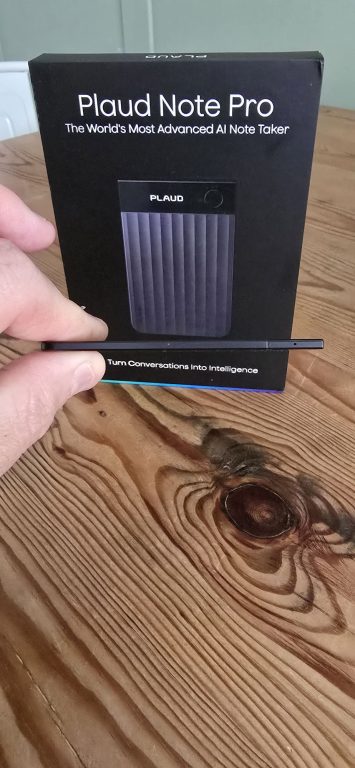
When I pulled this thing out of the box, I genuinely thought I’d been sent a dummy unit. It’s 2.99mm thin.
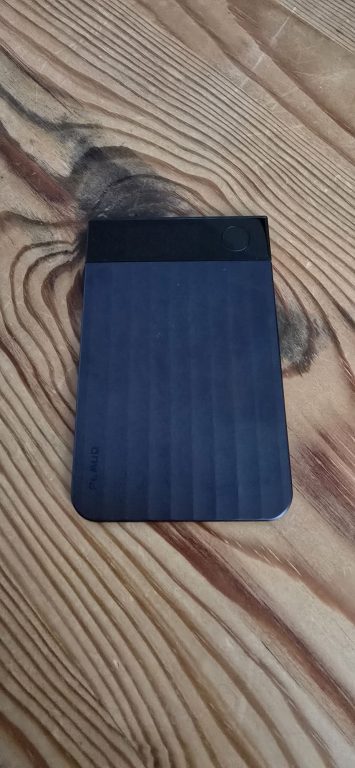
To put that in perspective, that’s about three credit cards stacked together. You could slide this into your wallet and forget it’s there, which I almost did before realizing I needed to actually review the thing.
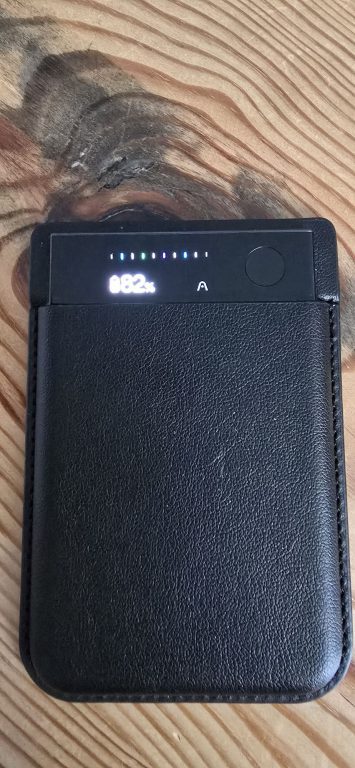
The build quality is top-notch. We’re talking matte aluminium alloy that feels premium in the hand—none of that creaky plastic you get from the cheap and cheerful recorders down at the local tech shop. The “Pro” model also introduces something the original was crying out for: a proper 0.95-inch AMOLED screen.
Now, look, I’m not saying you’re going to be watching Netflix on a one-inch screen, but having a visual indicator of your battery life, recording status, and which mode you’re in is a godsend.
On the old model, you were basically playing a game of “Red Light, Green Light” with a tiny LED, hoping for the best. Now, you’ve got 600 nits of brightness staring back at you, making it readable even if the British sun decides to make a rare five-minute appearance.
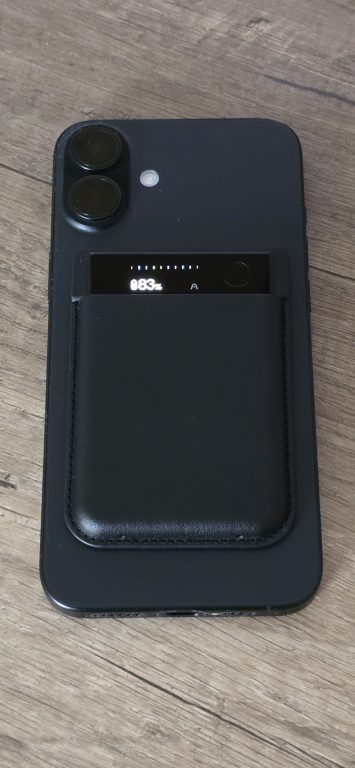
Snap it onto the back of your phone via MagSafe, and it looks like a sleek accessory rather than a bulky add-on. If you’re an Android user (the “proper” way to live, let’s be honest), they include a magnetic ring you can stick on your case. It’s a bit of a workaround, but it works.
The Hardware: Mics, Mics, and More Mics
Under the hood, Plaud has gone a bit mad with the microphones. While the original had two, the Pro packs four MEMS microphones and a dedicated Voice Processing Unit (VPU).
Why should you care? Because “Beamforming.” It sounds like something out of Star Trek, but in practice, it means the Note Pro can “focus” its ears on the person speaking while ignoring the bloke in the corner of the pub who’s had one too many and is shouting at the telly.
The range has been bumped up to 5 metres, which is plenty for even the largest, most boring boardroom meetings.
However—and there’s always a however—my deep dive into the user feedback shows a bit of a “pro” vs “casual” divide here. In its “Enhanced” mode, the AI can sometimes get a bit over-excited. It processes the audio so heavily that if someone turns their head or mumbles, the AI occasionally decides that word wasn’t important and clips it. If you’re a doctor or a lawyer where every “not” or “maybe” matters, you might want to stick it in “Endurance” mode. It sounds a bit noisier, but it’s more “honest” audio. It’s like the difference between a heavily filtered Instagram photo and a raw snap—one looks better, the other is more accurat
The Magic: Software and AI Tools
This is where the Plaud Note Pro earns its keep. Once you’ve finished your recording, you sync it to the app via Wi-Fi Direct or Bluetooth 5.4. And then, the magic happens.
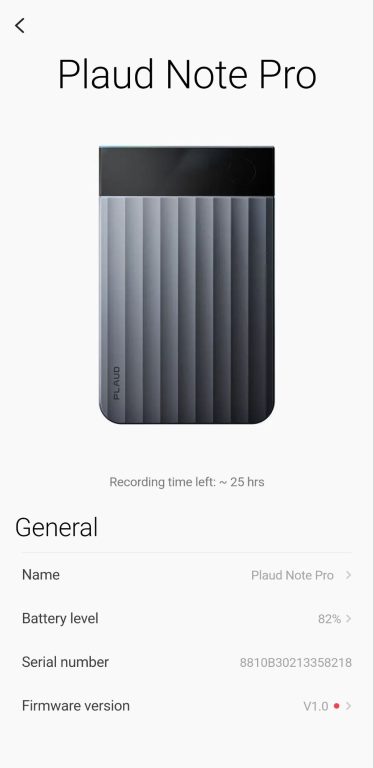
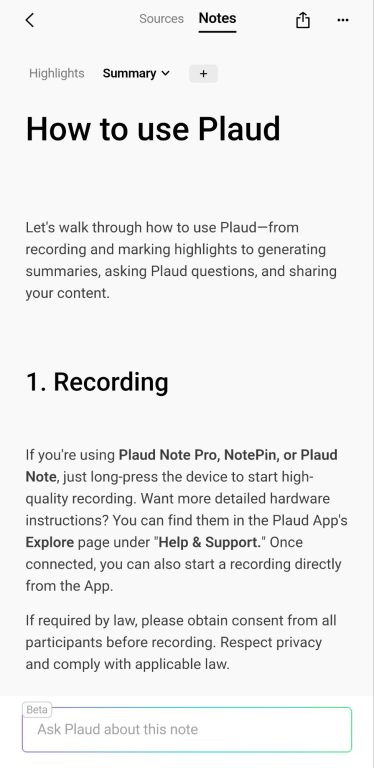
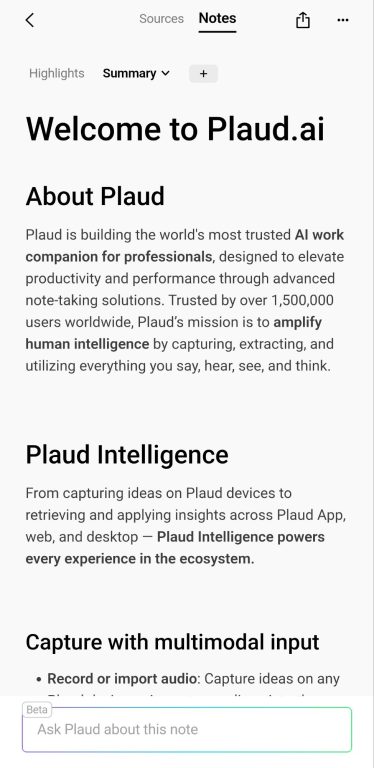
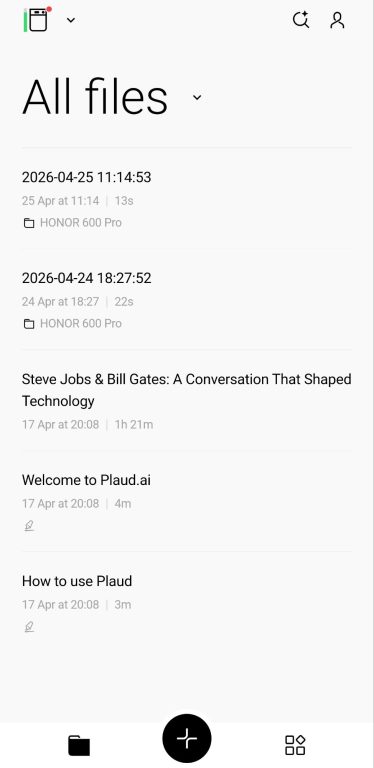
- The Transcription (Powered by Whisper): Plaud uses OpenAI’s Whisper technology, which is arguably the gold standard right now. It supports 112 languages. I reckon it could probably handle a thick Glaswegian accent after three pints, though I haven’t tested that specifically yet. The accuracy is usually around 90-95%.
- The Summaries: This is my favorite bit. You can choose different templates: Meeting Minutes, Brainstorming, Interview, or even a Class Lecture. The AI (using GPT-4o or Claude 3.5) takes that hour-long ramble and turns it into punchy bullet points, action items, and follow-up tasks
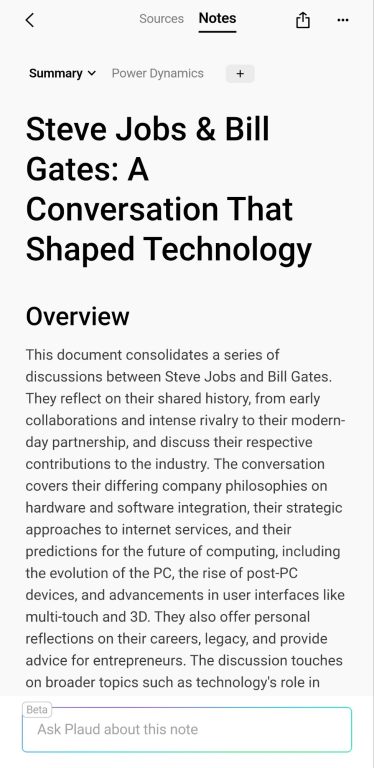
- Multimodal Capture: New to the Pro is the ability to take a photo of a whiteboard or a slide deck within the app while you’re recording. The AI then “reads” the photo (OCR) and integrates that text directly into your summary.
“Ask Plaud” and Mind Maps: If you’ve got a massive 4-hour recording, you can literally chat with the recording. “Hey, what did the boss say about my holiday?” and it’ll point you to the exact timestamp.
The “Dodgy” Bits (Brutal Honesty Time)
Right, it’s not all sunshine and rainbows. Let’s talk about the bits that’ll have you gritting your teeth.
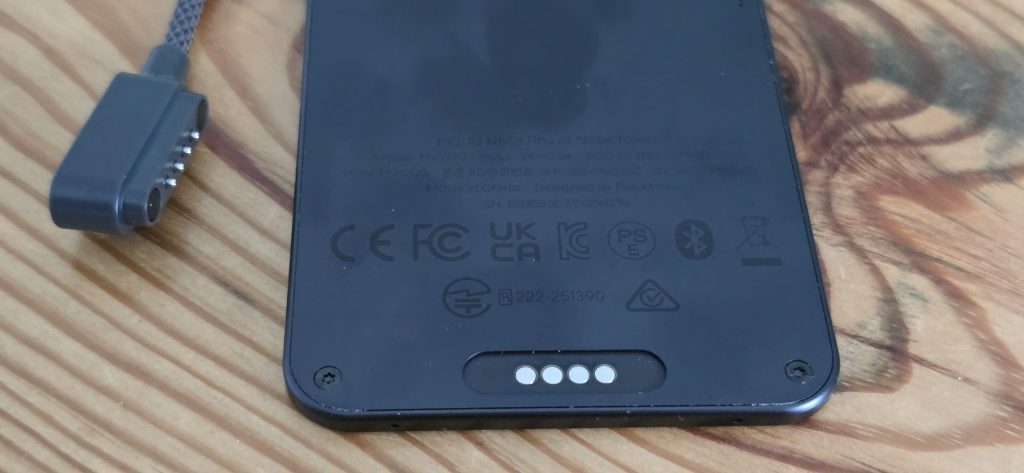
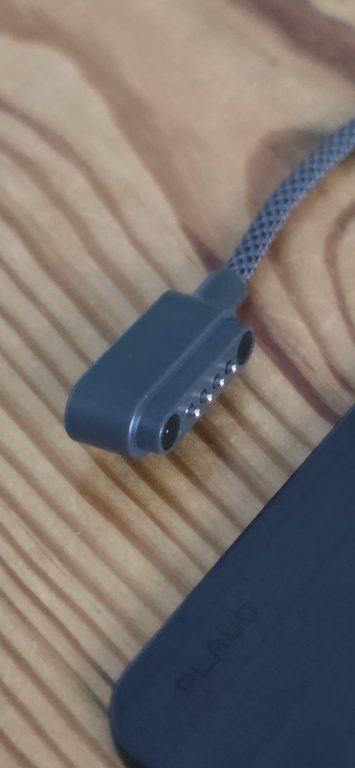
The Charging Cable of Doom: Plaud, my old mates, what were you thinking? In a world where everything—even the iPhone—has finally moved to USB-C, the Note Pro uses a proprietary magnetic charging pin. If you lose that cable while you’re on a business trip, you’re stuffed. You can’t just nip into a petrol station and buy a replacement.
The Cloud Tether: You need to understand that the “brain” of this device lives in the cloud. You can record offline (it’s got 64GB of storage, which is roughly 480 hours of audio), but to get that sweet, sweet transcription and summary, you have to upload it.
The Subscription Model: You get a chunk of free transcription hours when you buy it, but if you’re a power user, you’re eventually going to have to fork out for a subscription. In a world where we’re all “subscription-ed” to death, adding another one to the pile feels a bit heavy.
Real World Use: The “Everyman” Test.
I took the Note Pro out for a spin, and the “Smart Dual Mode” is genuinely clever. It uses sensors to detect if it’s snapped to your phone (for call recording) or sitting on a table (for meetings).
Capturing phone calls on an iPhone is smooth. You just slide the switch to the phone icon, and it captures the audio through vibrations in the handset (the VPU at work). No “beep” to alert the other person, and the quality is crystal clear.
In a meeting, it’s discreet. It doesn’t look like a “recorder.” It looks like a battery pack or a card holder. People don’t tense up like they do when you put a giant Dictaphone in the middle of the table.
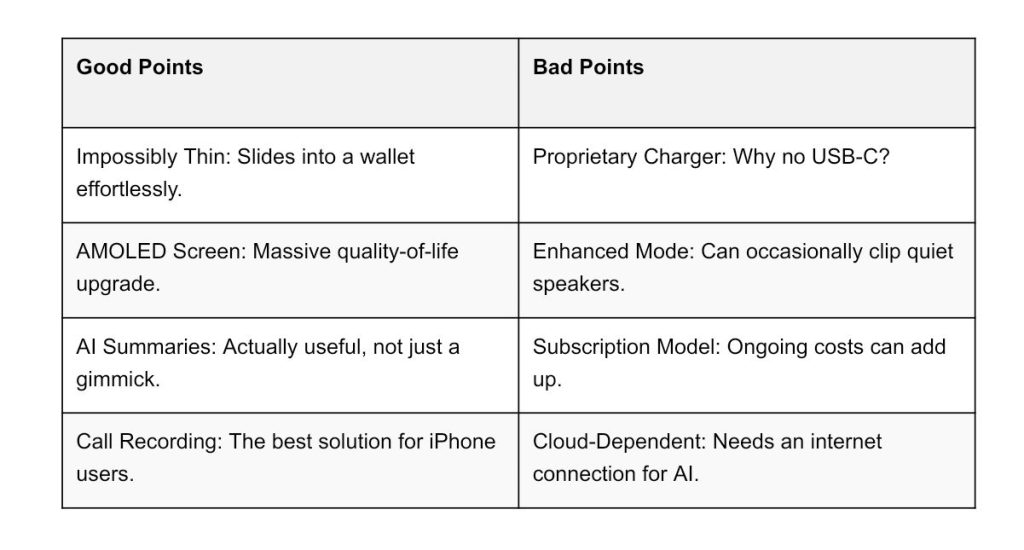
The Verdict: Good Points vs Bad Points.
Conclusion: Should You Buy It?
Right, let’s wrap this up. Is the Plaud Note Pro worth your hard-earned cash?If you’re a journalist, a student who actually wants to pass their exams, or a professional who spends half their life in meetings wondering “what did we actually agree on?”, then yes. It’s a specialized tool that does its job brilliantly. It turns the chaos of a three-hour conversation into a 30-second read.
The Plaud Note Pro is available from Plaud AI for £169.