

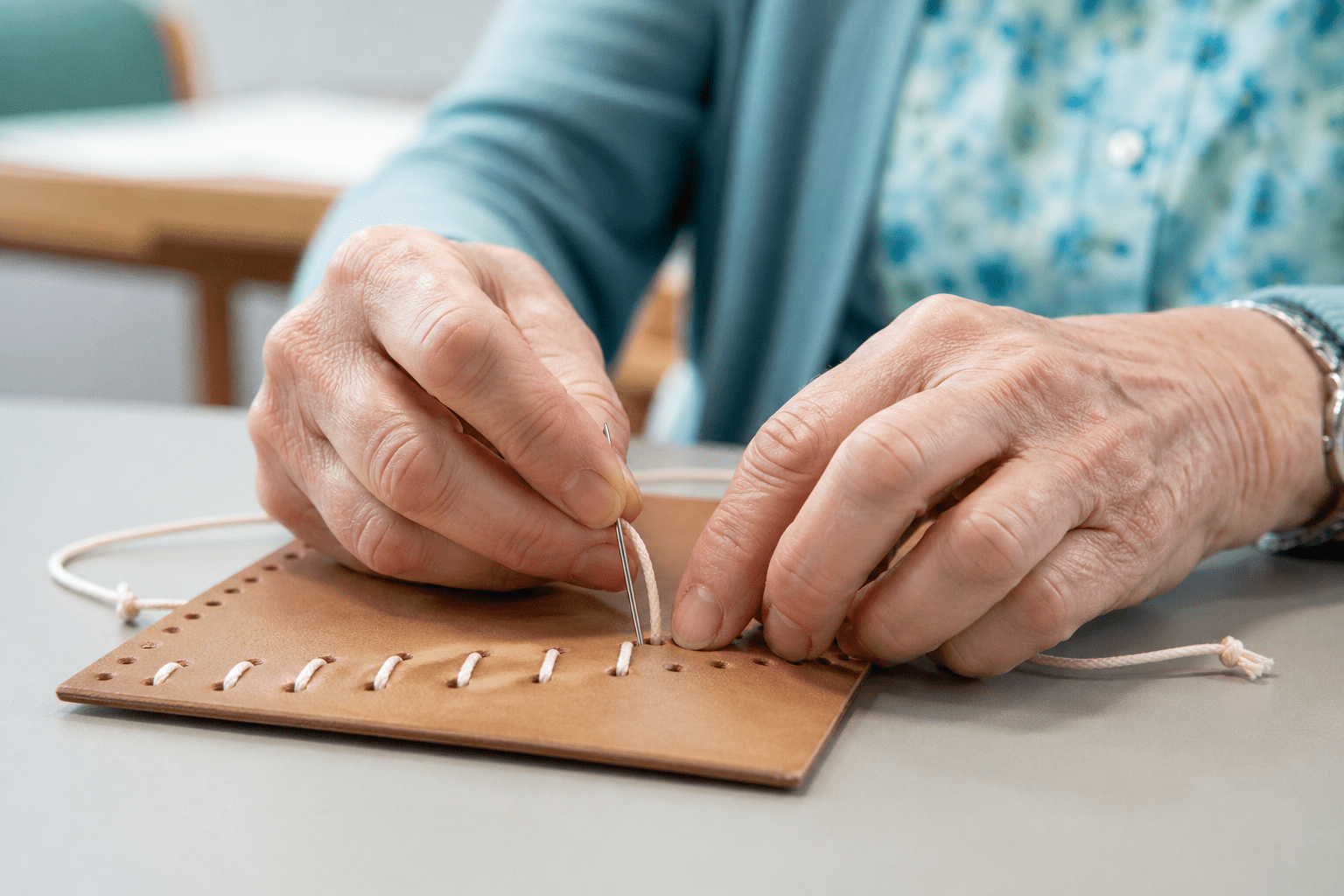
A leather-lacing task used by occupational therapists for decades may be measuring far more than manual dexterity. A new review of research spanning nearly 40 years suggests that the Allen Cognitive Level Screen, a performance-based cognitive assessment tool, reliably captures how the brain processes and organises information during purposeful activity, offering clinicians a distinctive window into a person’s mental functioning. The findings were published in Psychology Research and Behavior Management.
The Allen Cognitive Level Screen, known as the ACLS, asks individuals to complete a series of stitching tasks of increasing complexity. Occupational therapists use the results to gauge how much environmental support or carer assistance a person may need in daily life. Despite being one of the most widely used functional cognitive assessments in the United States and beyond, questions have persisted about exactly which cognitive abilities it measures.
Researchers conducted a scoping review of 24 studies published between 1988 and 2023, covering nearly 2,000 participants across six diagnostic groups including schizophrenia, Alzheimer’s disease, acquired brain injury, and substance use disorders. They examined 117 statistical relationships between ACLS scores and standardised cognitive tests, finding that nearly three quarters were statistically significant. The strongest associations emerged in the areas of global cognition, social cognition, and executive function, with significance rates exceeding 80% in each case.
The findings suggest the ACLS is particularly well suited to capturing integrated, real-world cognitive functioning rather than isolated mental abilities. This matters because there is a well-documented gap between how people perform on laboratory-based cognitive tests and how they actually cope with everyday tasks. Someone may score adequately on a memory test yet struggle significantly with cooking, managing finances, or following a daily routine.
Executive function, which encompasses planning, problem-solving, and the ability to regulate and adapt behaviour, showed a consistently moderate association with ACLS scores across multiple populations. The review authors suggest this reflects how the stitching task requires sustained attention and the sequential organisation of actions, processes that parallel the demands of daily living. Attention and processing speed also showed strong links to ACLS performance, further supporting the tool’s value as a measure of functional cognition.
By contrast, the ACLS showed weaker and more variable associations with memory, visuospatial abilities, and orientation. The researchers argue this is not a flaw in the assessment but rather reflects the nature of what the test is designed to observe. The ACLS captures moment-to-moment information processing during a hands-on task, which is a fundamentally different cognitive process from encoding and retrieving stored memories.
One significant concern raised by the review is the near-absence of research on the latest version of the tool, the ACLS-6, which was published in 2016. Only a single study examined this updated version, leaving much of its psychometric profile unverified. The authors call this an urgent research priority, noting that clinicians should exercise caution when drawing conclusions from ACLS-6 scores until more validation data are available.
The practical message for clinicians is that the ACLS should complement rather than replace traditional cognitive assessments. It offers valuable insight into how a person functions in activity-based contexts, but should not be used as a standalone measure when precise diagnosis or targeted treatment planning is required.