

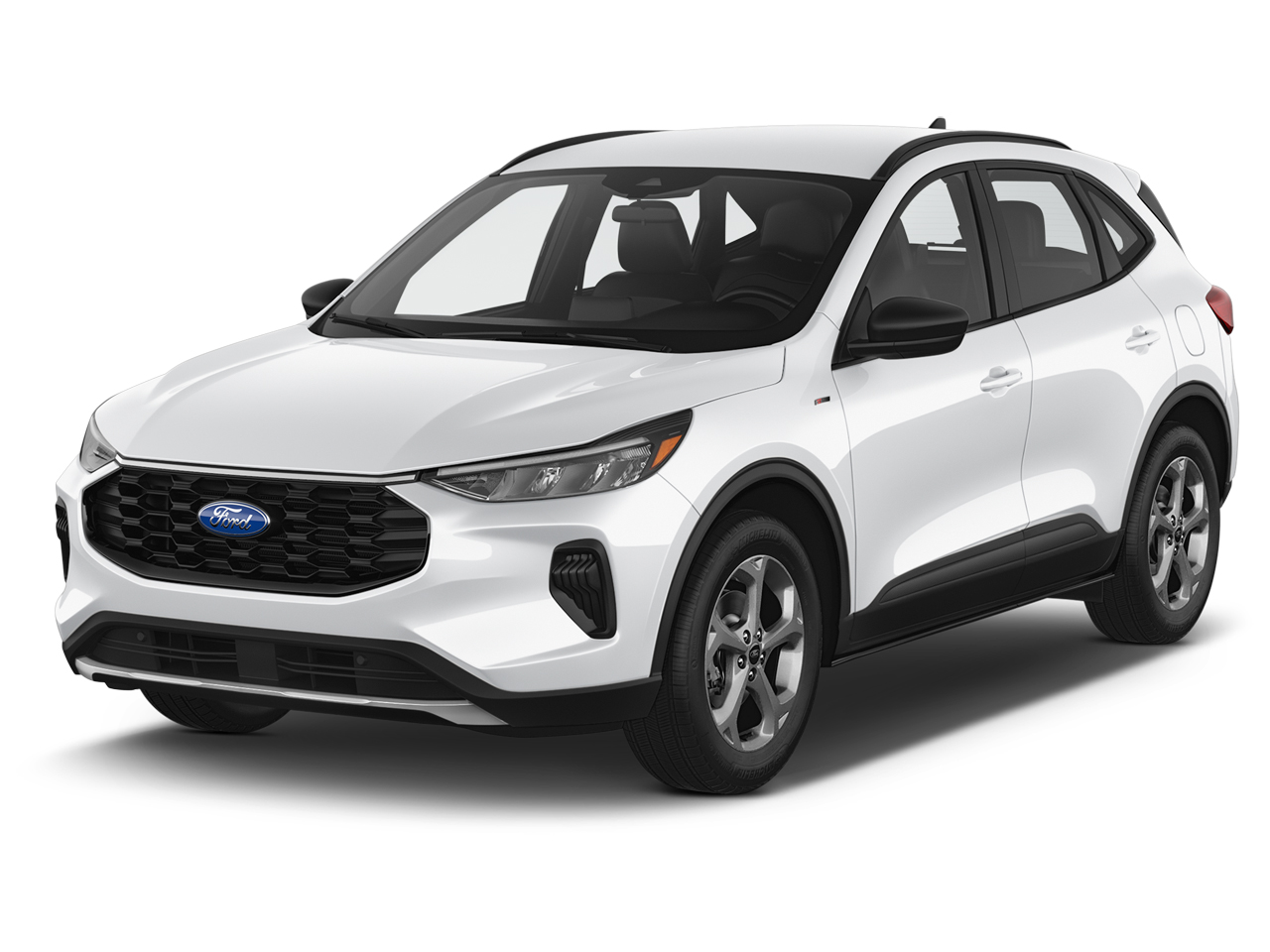
The 2026 Ford Escape enters its final model year with the same curvy, hatchback-like profile it adopted a few years ago, and the driving manners mostly justify its sportier look. Handling is a strong suit. The steering is quick, body roll is kept in check, and the Escape feels eager to change direction on a winding back road, even in workhorse Active trim.
The powertrain story is split. The standard 1.5-liter turbo three-cylinder in Active and ST-Line trims delivers punchy power for city traffic and highway ramps, helped by an 8-speed automatic that responds quickly. In testing, it scoots to highway speeds in class-appropriate time, yet real value shoppers will notice that fuel economy from this engine is only good, not standout, and it comes with some coarse vibration around lower engine speeds.
The hybrid setup, available on upper ST-Line Select, Platinum, and ST-Line Elite trims, is the Escape at its most convincing. It is both smoother and a bit quicker than the base engine, and it can glide silently on electric power at low speeds. In measured driving, it delivered significantly better mileage than the gas-only version, especially in All Wheel Drive form, putting it near the top of the compact SUV class for efficiency without feeling slow or labored.
Ride quality tilts firm, yet the body settles quickly after sharp hits, which helps the Escape feel solid on longer drives. Road and wind noise are kept in check on most surfaces, and hybrid versions are impressively quiet around town, with only a bit of engine flare during harder acceleration tipping you off that the gas engine has joined in.
Practicality remains a big draw. The rear seat is generous even for adults, and the sliding bench lets you trade leg room for extra cargo space when needed. Fold the seatbacks flat, and the cargo floor is wide and usable, with underfloor storage and a 12-volt outlet to power small gear. Towing capacity can reach the higher end of the class when properly equipped, enough for a small camper or a pair of personal watercraft, although hybrids and the base engine have lower limits.
The safety kit is strong for this price bracket. Every 2026 Escape leaves the factory with forward collision warning, automatic emergency braking with pedestrian detection, blind spot warning, rear cross traffic warning, and lane keeping assistance. Optional adaptive cruise control with stop and go and lane centering can take the edge off long commutes, and the available LED headlights do a solid job of lighting the road with automatic high beams standard since recent model years.
Trim coverage is wide for a compact SUV, and the 2026 Escape line is split into two main tracks: value-focused gas models and better-equipped hybrids and plug-in hybrids. At the entry point, the Active trim in front wheel drive form starts at just over $30,000 and pairs the 1.5-liter turbo three cylinder with an 8-speed automatic. It is the simple, practical choice, with seating for five, a claimed tank that can stretch to long highway stints, and a focus on function rather than flash. All Wheel Drive is available on Active for drivers in snowier regions, nudging the price slightly higher but adding extra traction.
The ST-Line trim, also offered with front or All Wheel Drive, keeps the same base engine and transmission but adds sportier styling, 18-inch wheels on many versions, and partial vinyl and cloth seats that look and feel a bit richer than the standard cloth. Pricing is only a small step above Active, so shoppers who like the idea of a more athletic appearance without a large payment spike will gravitate here.
The ST-Line Select with All Wheel Drive is where the Escape lineup starts to branch. It can be configured either as a hybrid using a 2.5-liter four-cylinder with an electronic continuously variable transmission, or with the stronger 2.0-liter turbo four and 8-speed automatic. The hybrid version promises far better fuel economy for drivers who cover a lot of miles, while the 2.0-liter turbo option brings a useful bump in power for towing or frequent highway passing. This trim also opens the door to more advanced driver assistance and technology packages, including the larger 13.2 inch touchscreen and adaptive cruise control with lane centering.
Sitting near the top, the Platinum All Wheel Drive and ST-Line Elite All Wheel Drive trims build on the same hybrid or 2.0 liter turbo structure, again mixing the 2.5 liter hybrid system with its two-speed CVT-style gearbox or the punchier 2.0 liter engine and 8 speed auto. These models bring more polished cabin materials, available full ActiveX seats that wear more like leather, and an expanded roster of convenience extras. Expect prices that land in the mid to upper $30,000 range, depending on configuration, which puts them up against better-equipped versions of rivals from Toyota, Honda, and Hyundai.
For buyers who want to cut gasoline use sharply without going full electric, the Escape PHEV sits in its own lane. It uses the 2.5-liter hybrid engine with a larger battery and a dedicated two-speed CVT, and it is Front Wheel Drive only. Priced just under the upper trims of the All Wheel Drive lineup, it offers the ability to cover a useful daily commute purely on electricity when charged, yet still works like a regular hybrid on longer trips when the battery is depleted. The tradeoff is that you give up All Wheel Drive and some towing capacity compared with the 2.0-liter turbo models.
As competent as the 2026 Escape is, there are compromises that shoppers should weigh carefully. The standard 1.5-liter three-cylinder is the biggest one. It delivers a strong punch when you put your foot down, but the vibration at common cruising speeds and a slightly tinny engine note make the SUV feel less refined than several four-cylinder rivals. Considering that some competitors manage a better real-world economy without resorting to a three-cylinder layout, the trade does not fully pay off unless your budget cannot stretch to a hybrid.
The ride tuning favors control over plushness. On smooth highways, the Escape feels composed, but constant small impacts from potholes and patched pavement get tiring if you live in an area with rough roads. Larger wheels on the ST-Line variants and upper trims can make that stiffness more noticeable. Emergency handling is secure, yet in avoidance maneuvers, the electronic stability system can clamp down abruptly, scrubbing speed and widening the line, which erodes driver confidence.
Ford has leaned heavily on touchscreen controls, and that is not always a win. The 13.2-inch Sync 4 system in higher trims looks modern but suffers from lag, and burying most climate functions in a thin strip at the bottom of the screen turns basic tasks like changing fan speed into a distraction. Lower trims with the smaller 8-inch screen and physical climate knobs are actually easier to live with day to day, even if the graphics are less dramatic.
The cabin itself reads better in photos than it feels in person. Padded areas on the dash help the first impression, but flimsy door panel inserts, shiny silver trim, and a plasticky steering wheel on cheaper versions remind you that Ford cut costs here. The front seats are flat and short on thigh and back support, particularly noticeable on long drives. Several rivals offer more sculpted seats with better bolstering and a wider range of adjustment at similar price points.
Visibility could also be better. Thick front roof pillars and large mirrors block part of your view at intersections, and the chunky rear pillars create blind spots when shoulder checking. The standard driver assistance tech goes a long way toward mitigating those weaknesses, but they are worth noting if you regularly navigate crowded city streets or tight parking garages.
Our Take
With 2026 marking the final year for the Ford Escape, this compact SUV feels like a known quantity. It drives with more agility than many competitors, carries people and cargo with useful flexibility, and backs it up with strong safety equipment. Yet the base engine’s vibration, the firm ride, and the unremarkable cabin quality keep it from clear class leader status. Treated smartly, though, it can be a very savvy buy. Focus on the hybrid trims if you want a smoother, thriftier daily driver, consider the PHEV if your routine fits regular charging, and cross-shop the upper ST-Line or Platinum models against better-finished rivals to see whether the Escape’s lively feel is enough to win you over.