

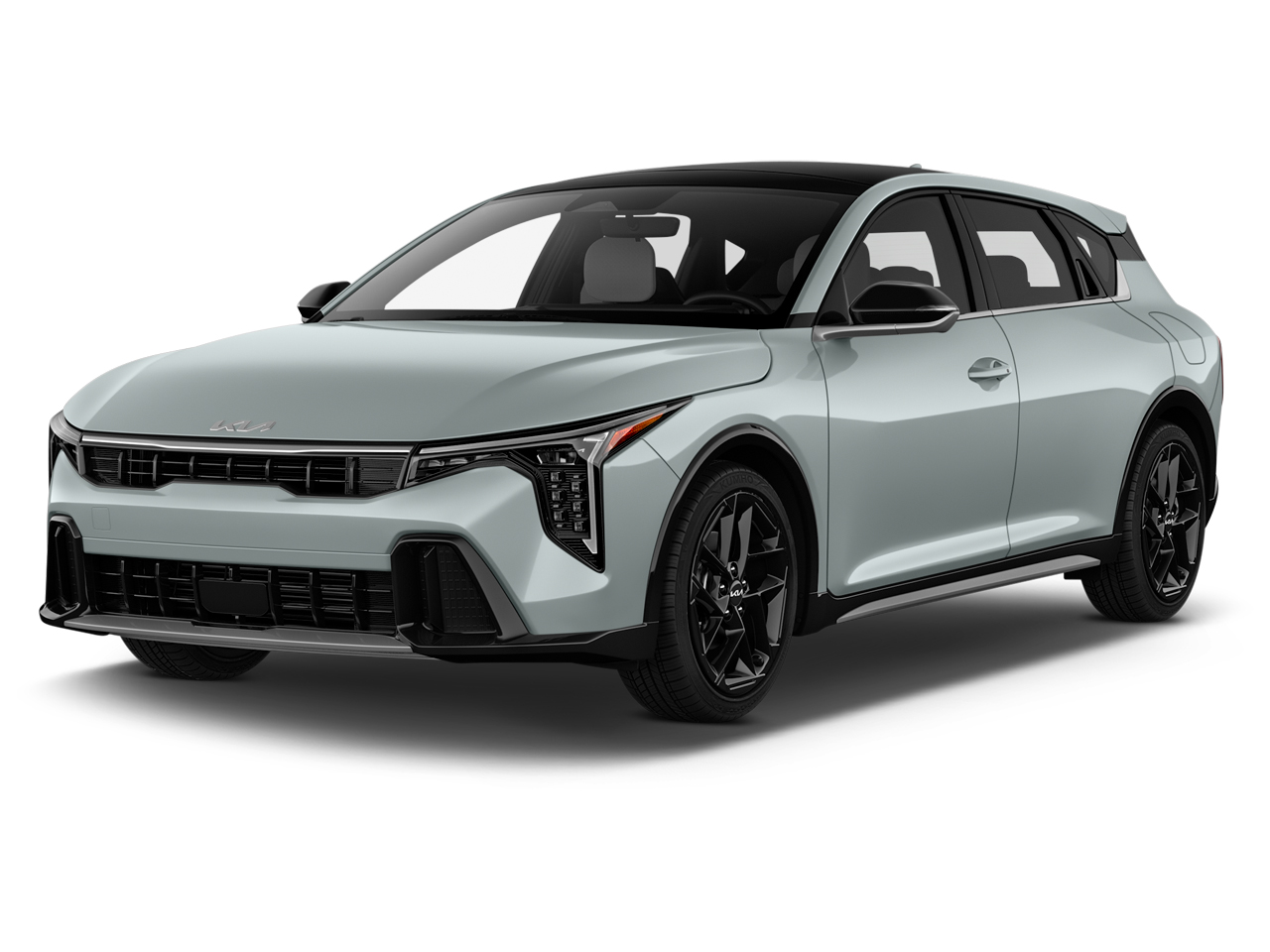
The 2026 Kia K4 replaces the Forte and immediately feels like a step up in maturity. It is slightly larger, so passengers and luggage get more room to spread out, yet pricing still hovers in budget compact territory. In a market where many new cars ask roughly double what a well-equipped K4 costs, that matters.
The standard 2.0-liter four-cylinder and CVT are carried over in spirit, but the tuning is smarter. Around town, the car pulls away cleanly with no low-speed hesitation, and when you dig into the throttle, it simulates traditional shifts instead of pinning the revs at a drone. You still need to press the pedal fairly deep for highway passing, but the engine responds quickly enough for real-world merges.
Fuel economy sits near the top of the conventional compact sedan class, and the K4 stretches a gallon farther on the highway than many rivals despite its larger footprint. Kia does not offer a hybrid variant here, so if you want ultimate efficiency, you will need to look at a Hyundai Elantra hybrid or a Toyota Corolla hybrid, but for a straightforward gas sedan, the K4 sips politely.
Ride quality is where the K4 feels like it should cost more. The suspension calmly takes the edge off potholes and patchy pavement, even on long commutes, and avoids the jittery feel that plagues many small sedans. There is a bit of float at higher interstate speeds, yet body motions stay controlled and never sloppy. Combine that with one of the shorter dry panic stopping distances in the class, and you get an easygoing car that still feels secure when you need to brake hard.
The cabin itself is quiet for the segment. Wind and road noise are present but well muted at normal speeds, and the engine mostly hums in the background if you are gentle with the throttle. It will sound buzzy when you really work it, though, for day-to-day commuting, the quiet idle and subdued soundtrack make the K4 feel more refined than the plastic surfaces would suggest.
Practicality is another strong card. The rear seat has knee room that would not be out of place in some midsize sedans, and feet can slide under the front seats for a more relaxed posture. The trunk swallows a family weekend of luggage with room to spare, and the split folding rear seatbacks make it easy to haul a stroller or a flat pack furniture box without losing all your passenger space.
The dashboard layout is refreshingly straightforward. A large central touchscreen sits next to a digital instrument display in a single housing, but Kia resisted the urge to bury basic features in submenus. Dedicated physical buttons under the screen cover core functions, the climate panel uses real switchgear, and the gear selector is a traditional lever. Someone trading out of an older sedan will acclimate in minutes, which is not something you can say about every tech-heavy rival.
The K4 family splits into sedan and new hatchback body styles, each with a familiar trim walk. On the sedan side, the LX opens the range with the 2.0-liter engine, CVT, seating for five, and a touchscreen with wireless Android Auto and Apple CarPlay. It keeps costs impressively low, but also skips a few safety and comfort items that many shoppers will want.
The sweet spot for most buyers is the LXS sedan. It keeps the same powertrain and the relatively small wheel and tire package that helps ride quality, then adds blind spot warning, rear cross traffic warning with automatic braking, and Safe Exit Warning. Audio steps up from four to six speakers, which makes daily listening less tinny, and you still avoid the extra expense of higher trims.
The EX sedan moves the K4 into more upscale territory with dual-zone automatic climate control, so the driver and passenger can pick their own temperatures. It also dresses the car up with larger wheels and more convenience features. The tradeoff is that the shorter sidewalls can introduce a little more impact harshness compared with the LXS, particularly over broken pavement or sharp expansion joints. If your roads are rough, factor this into your test drive.
Sportier buyers will gravitate to the GT Line sedan, which layers on a more aggressive look, handling-focused tuning, and additional equipment. Even more serious is the GT Line Turbo sedan, which swaps in a 1.6-liter turbocharged four-cylinder and an eight-speed automatic. Power jumps noticeably, and highway passing becomes effortless, but fuel use rises compared with the base engine. These top trims also pick up a more sophisticated rear suspension that sharpens handling, making back roads feel tighter at the expense of some of the plush ride that characterizes the regular models.
The hatchback lineup mirrors the sedan, with EX, GT Line, and GT Line Turbo versions. The extra cargo flexibility of the hatch makes them attractive for cyclists, dog owners, or anyone who regularly loads bulkier items that would be awkward to drop into a sedan trunk. Pricing sits a little higher than the equivalent four-door, but the added practicality will be worth it if you frequently haul gear.
Across the range, Kia Connect brings app-based features like remote lock and unlock, vehicle locating, and climate preconditioning. These are handy in winter and summer, although full access turns into a paid subscription after the trial period. Safety gear is generous on every trim, with automatic emergency braking for vehicles, pedestrians, and cyclists, lane keeping assistance, lane centering, adaptive cruise control with stop and go, and automatic high beams. Just remember that you need at least the LXS if you want blind spot and rear cross traffic coverage.
Cost control shows up clearly in the K4 cabin. Hard plastic dominates the dashboard, door tops, and center console, and the few padded sections on the armrests feel firm. Fit and finish are solid enough that it does not feel fragile, but if you are coming from a Civic or Mazda3, the lack of soft-touch surfaces will be obvious. The cloth upholstery on lower trims also feels a bit coarse compared with some rivals.
Seat comfort is a mixed bag. The basic shape is supportive, and the side bolsters hold you in place through ramps, yet the manual driver seat in LX and LXS models offers limited adjustment. You cannot tilt the front of the cushion up, so taller drivers may feel short on thigh support, and broad-shouldered drivers can find the upper backrest too narrow. Armrests are set nicely in terms of height, but the padding is so firm that elbows can get sore on long drives.
The driving position also has some quirks. When the steering wheel is dropped into a comfortable low setting, the rim can block key elements at the top of the digital instrument screen, including turn signal and headlight indicators. The squared-off steering wheel looks sporty, yet it feels odd when you need to shuffle steer in tight parking maneuvers. These are small annoyances, but ones you will notice every day.
Access to the rear seat is not as friendly as the space itself. The K4 rides low, so sliding in and out demands more of a squat than a similarly sized crossover. The rear door handles sit high and partially hidden near the window line and open at an unusual angle, which feels like design for design’s sake rather than genuine usability. The rear door shape and intruding wheel arch can also brush your legs if you are not careful.
The driver assist technology is abundant, yet not always polished. Lane keeping generally does a decent job nudging the car back toward the lane, but the lane centering function tends to ping pong with lots of small corrections instead of holding a steady line. Adaptive cruise control is quick to react to vehicles cutting in, which sounds good in theory, but in practice, it often hits the brakes harder than a human would and takes its time accelerating again once traffic clears. On busy highways that can feel jerky and slightly irritating.
While automatic high beams are standard, the system can react a bit late to oncoming traffic and does not default back to automatic every time you restart the car if you turned it off in the menus. That makes it easier to simply leave it off, which negates its benefit. Kia also relies on an indirect driver monitoring approach that looks only for steering inputs instead of watching eye attention with a camera, so the car cannot tell if you are looking at your phone while the active lane assist is working.
Family buyers should take particular care with child seats. In testing, infant seats proved difficult to secure in the K4’s rear positions, and the tight lower LATCH anchors require some wrestling to connect and disconnect. The package shelf-mounted tether anchors are easy to see, but demand that you reach in fairly far. Three child seats across is very unlikely, and even two plus a booster can crowd the buckles. If you have more than one child in seats, a long try-before-you-buy session in the dealer lot is smart.
The manual climate setup in LX and LXS also feels a little half-baked. Temperature is controlled by a handful of colored dots instead of a clear numerical scale, and there is no obvious neutral point between hot and cold. Fan and temperature controls sit at opposite ends of the panel, which forces you to reach back and forth more than necessary. None of this is a deal breaker, but it takes away from the otherwise simple control layout.
Our Take
The 2026 Kia K4 is exactly the kind of small car many shoppers say they want but rarely find: affordable without feeling cheap to drive. Ride comfort, quietness, and usable space are all strong, and the base engine and CVT do their work without drama. Safety tech coverage is solid if you avoid the base trim, and the new hatchback adds welcome flexibility on top trims. If you can live with a hard plastic interior, a few ergonomic quirks, and driver assists that still need polish, the K4, especially in LXS or EX form, stands out as one of the smartest ways to get a modern, family-ready sedan or hatchback without blowing up your budget.