

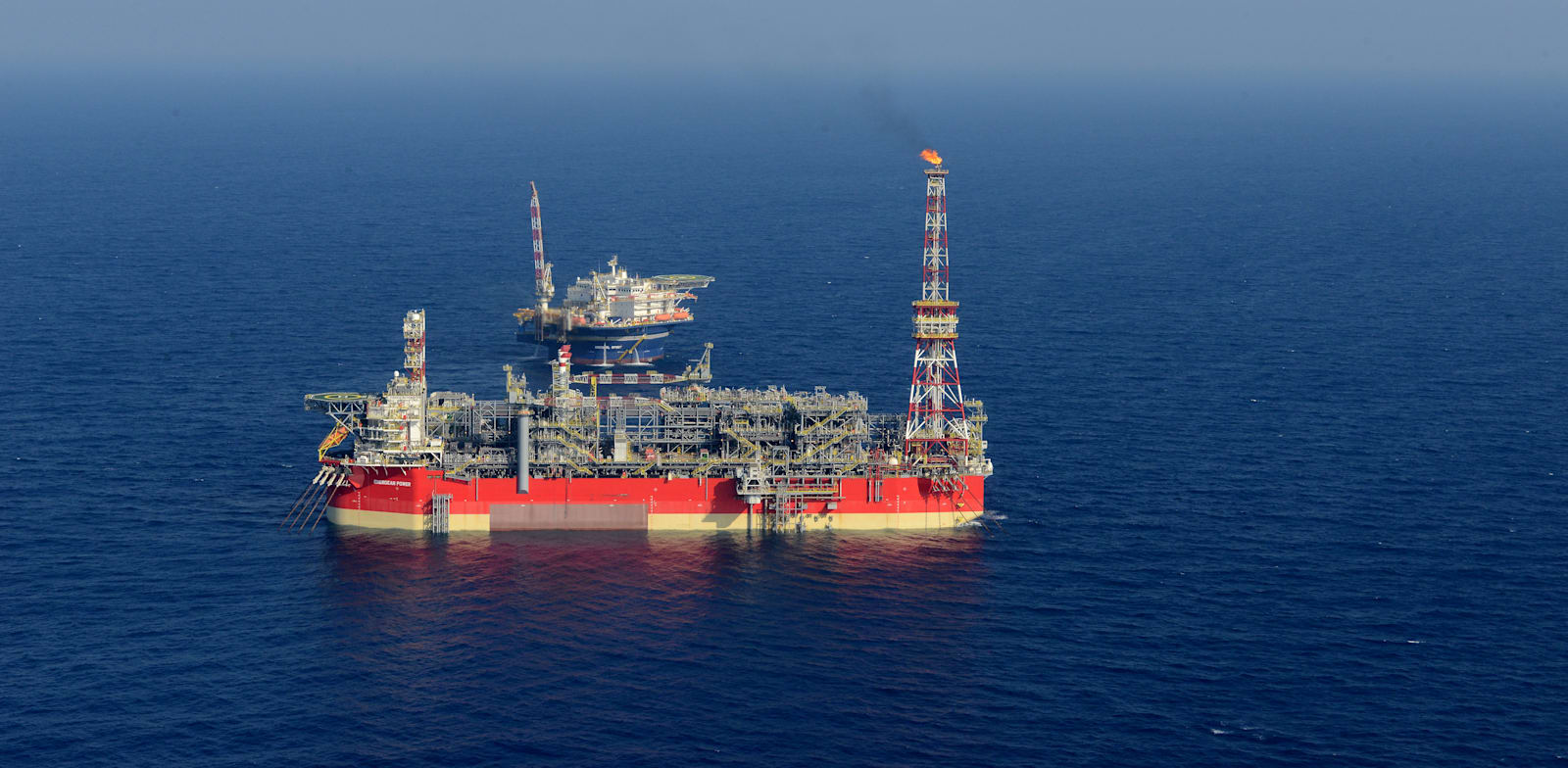
Following the ceasefire between the US, Israel and Iran, the Karish offshore gas rig is also back in operation, despite its location close to Lebanon and the absence of a truce between Israel and Hezbollah.
The Karish platform has been idle for 40 days, and is the last to resume production, after the Leviathan field recommenced operations about a week ago. The Tamar field continued operating throughout the war.
Energean (LSE: ENOG; TASE: ENOG), which operates the Karish rig, said, “We are working to resume production safely and return operations to normal in accordance with procedures.” This follows a dispute between the Ministry of Energy and Infrastructure, which wanted to return the energy sector to normal operations, and the Ministry of Defense, which wanted to reduce risks as much as possible.
The Ministry of Energy said, “Following assessments of the situation and examination of all relevant considerations, the ministry decided to instruct Energean to begin restoring the Karish rig for activity. The ministry continues to work to ensure the continuity of energy supply to all consumers in the Israeli economy and is monitoring developments and is working together with all parties in the energy sector and with the security agencies to this end.”
Use of coal reached the maximum
At the start of the war on February 28, the Leviathan and Karish offshore gas fields were shut down, while Tamar, the field that supplies most of the gas for the domestic economy, continued to operate continuously throughout the war.
In normal times, Israel’s electricity grid is based mainly on local gas reserves: Leviathan, Tamar (including Tamar Southwest) and Karish (including Tanin, Katlan and Dragon). Beyond that, there is production using renewable energy and a small amount of coal. But from the moment the latest war with Iran broke out, Leviathan and Karish were shut down to protect them from an Iranian attack (and later, from Hezbollah).
Instead, according to data from the previous war against Iran, coal use rose to a maximum. During peak consumption times, when even that was not enough, Israel’s grid even switched to using diesel, which is the country’s emergency fuel. This led, for example, to the Ministry of Finance’s decision to dramatically reduce the excise tax on diesel fuel to the same level as the additional tax on natural gas for electricity production. This was done to prevent excessive increases in electricity rates.
RELATED ARTICLES
NewMed Energy signs MOU to sell Aphrodite gas to Egypt
Leviathan gas field resumes operations
On April 2, after 32 days of fighting, the Leviathan field was allowed to resume production. This was due to a combination of the reduced risk it faced, as the rig is relatively close to the coast, and pressure from Egypt and Jordan via the US, as those countries are particularly dependent on gas from Leviathan. Egypt imposed power outages because of the gas shortfall from Leviathan.
Unlike the Leviathan field, which is relatively close to the Israeli coast, the Karish field is dozens of kilometers out at sea, and in the north not far from the Lebanese coast. However, it was decided to open the Karish field, as the ceasefire with Iran, reduces risks.
Total damage from gas field shutdown was about NIS 1.7 billion
Due to the high costs of coal and diesel, relative to natural gas, which is relatively cheap in Israel, the shutdown of the gas fields caused damage to Israel’s economy: BDO chief economist Chen Herzog estimates that the shutdown of Leviathan for a month cost the Israeli GDP about NIS 1 billion due to the increased cost in producing electricity, loss of revenue for the state and losses for the natural gas companies. The shutdown of the Karish field cost about NIS 500 million per month, meaning that a 40-day shutdown cost an additional NIS 660 million. Total damage from the shutdown of the gas fields was NIS 1.7 billion.
Published by Globes, Israel business news – en.globes.co.il – on April 9, 2026.
© Copyright of Globes Publisher Itonut (1983) Ltd., 2026.